China Faces a Convergence of Economic and Political Pressures That Threaten Global Stability

NEW DELHI — Over the past two decades, the international community has navigated a relentless succession of seismic shocks. From the protracted conflicts in the Middle East during the 2000s to the ongoing wars in Ukraine and the volatile geopolitical friction involving Iran, the global order has been severely tested. These geopolitical convulsions have coincided with structural economic tremors, most notably the 2008 global financial crisis, the unprecedented societal and economic disruptions of the COVID-19 pandemic, and the disruptive trade and diplomatic policies of successive American administrations that have upended long-standing multilateral alliances.
Yet, even as global policymakers grapple with these accumulated crises, a new and potentially more consequential shock is quietly emerging on the horizon. Although geopolitical analysts and financial institutions have largely hesitated to speculate publicly, a mounting convergence of economic deceleration and systemic political vulnerabilities is threatening to create a "perfect storm" within the borders of the People’s Republic of China. According to macroeconomic assessments and geopolitical forecasts, if current domestic and international trends persist, the Chinese state could find itself dangerously exposed to an overlapping succession crisis, a persistent structural economic slowdown, and a severe deficit of the financial and institutional resources required to maintain stringent internal control while projecting power abroad. Such an outcome would carry profound, far-reaching repercussions for global trade, geopolitical stability, and international security.
The Anatomy of China’s Current Vulnerabilities
To understand the scale of the potential crisis facing Beijing, economists and political scientists must examine the intersection of structural economic exhaustion and systemic political rigidity. For decades, China’s meteoric rise was fueled by an export-driven manufacturing model, aggressive state-led infrastructure investment, and a rapidly expanding demographic dividend. However, the foundational pillars of this economic miracle have experienced profound strain in recent years.
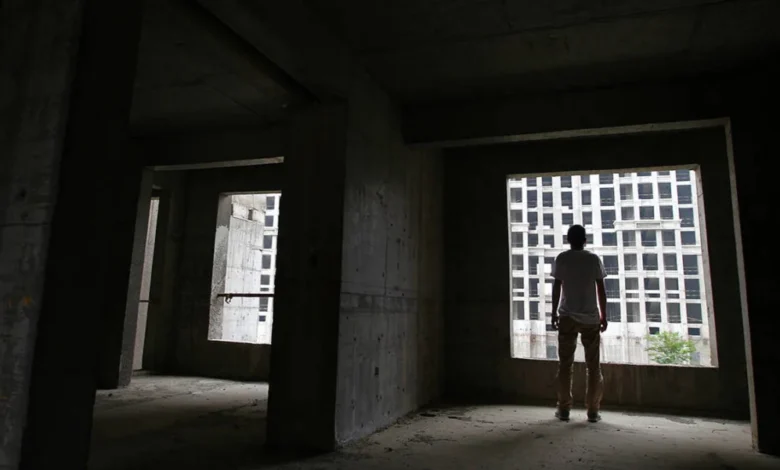
The property sector, which historically accounted for roughly 30 percent of China’s gross domestic product (GDP) when factoring in related industries, has undergone a protracted and painful contraction. Following regulatory interventions designed to curb excessive corporate leverage—epitomized by the liquidity crises surrounding major developers like China Evergrande and Country Garden—the real estate market has suffered from falling property values, stalled construction projects, and severely diminished consumer confidence. Because real estate served as the primary store of household wealth for the Chinese middle class, the downturn has triggered a negative wealth effect, subverting domestic consumption and leaving local governments—which relied heavily on land sales for revenue—grappling with crippling debt burdens.
Simultaneously, China is confronting an irreversible demographic transition. Decades of the one-child policy, combined with modern socio-economic pressures that have lowered fertility rates, have resulted in a rapidly aging population and a shrinking workforce. Projections indicate that China’s working-age population is declining at an accelerating rate, while the proportion of citizens aged 60 and older continues to expand. This demographic inversion threatens to strain public pension funds, overwhelm healthcare systems, and diminish the labor productivity that once drove the nation’s competitive advantage in global manufacturing.
Chronology of Compounding Pressures
The trajectory leading to China’s current economic and political predicament can be traced through a series of key milestones over the past twenty years:
- 2008–2010: In the wake of the global financial crisis, Beijing launches a massive 4 trillion yuan ($586 billion) stimulus package. While this policy successfully insulates China from the immediate global downturn, it unleashes a wave of non-performing loans and initializes a long-term reliance on debt-fueled infrastructure and real estate expansion.
- 2015–2016: The Chinese stock market experiences a dramatic rout, wiping out trillions of dollars in value and prompting emergency state interventions, capital controls, and heightened scrutiny over outbound foreign investment.
- 2018: The initiation of trade tensions between the United States and China introduces widespread tariffs, forcing multinational corporations to begin exploring "China Plus One" diversification strategies to secure their supply chains.
- 2020–2022: The implementation of stringent "Zero-COVID" policies prioritizes viral eradication over economic continuity. Extended lockdowns in major financial and manufacturing hubs, including Shanghai, disrupt global supply chains and severely erode consumer and business confidence.
- 2021–2024: The systematic liquidity squeeze on the property development sector reaches a boiling point, culminating in high-profile corporate defaults, widespread mortgage boycotts by frustrated homebuyers, and a significant tightening of municipal financing vehicle (LFV) budgets.
- 2025–2026: Structural deceleration becomes entrenched. Growth rates consistently fall below historical averages, prompting international financial institutions to downgrade medium-term forecasts while domestic policymakers struggle to stimulate consumer demand through monetary easing alone.
Macroeconomic Data and Structural Indicators
A quantitative evaluation of China’s economic indicators highlights the gravity of the structural challenges confronting Beijing. Official statistics, while often viewed with skepticism by independent economists, point to a pronounced cooling of the world’s second-largest economy.
Real GDP growth, which regularly posted double-digit figures throughout the 2000s and early 2010s, has settled into a much lower trajectory, with post-pandemic recovery efforts consistently falling short of expectations. Youth unemployment reached unprecedented highs prior to the government’s suspension of certain demographic data reporting, reflecting a mismatch between the educational credentials of graduating cohorts and the availability of high-value private-sector employment.
Furthermore, total non-financial debt—comprising household, corporate, and government borrowing—has climbed to levels that constrain fiscal flexibility. Local government financing vehicles (LGFVs), which accumulated massive off-balance-sheet liabilities to fund infrastructure projects, now face severe debt-servicing challenges. This limits the central government’s ability to deploy traditional fiscal stimulus without exacerbating systemic financial risk.
On the international trade front, despite continued dominance in green technologies such as electric vehicles (EVs), solar panels, and lithium-ion batteries, China faces an increasingly hostile external environment. Major trading partners in the United States and the European Union have implemented protective tariffs, anti-subsidy investigations, and export controls on advanced semiconductors, constraining Beijing’s efforts to export its way out of its domestic manufacturing glut.
Political Consolidation and the Succession Question
Beyond the economic ledger, political dynamics within the Chinese Communist Party (CCP) introduce a layer of vulnerability that few foreign observers fully price into risk assessments. Over the past decade, the Chinese political system has undergone a profound centralization of authority. The dismantling of term limits for the presidency has solidified political power at the top, ensuring decisive policy execution but simultaneously concentrating systemic risk.
Historically, the post-Mao era relied on institutionalized norms of collective leadership, regularized elite turnover, and structured factions to manage elite conflict and ensure political stability. The consolidation of authority has reduced the institutional space for internal debate and policy course-correction.
This centralization gives rise to the specter of a future political succession crisis. Because the institutional pathways for orderly leadership transition have been largely sidelined, any unexpected disruption at the apex of the political hierarchy could trigger intense factional maneuvering and elite instability. A political transition occurring concurrently with a sluggish economy and constrained state resources would severely test the resilience of the CCP’s governance model.
Official Responses and Strategic Adjustments
Beijing has not remained passive in the face of these compounding pressures. Chinese leadership has consistently articulated a vision of "high-quality development," aiming to pivot the economy away from reliance on speculative real estate and heavy debt toward advanced manufacturing, green energy, automation, and indigenous technological innovation.
State planners have introduced targeted monetary easing, lowered reserve requirement ratios for commercial banks, and issued special sovereign bonds designed to support local government debt restructuring and recapitalize major financial institutions. Additionally, Beijing has attempted to court foreign direct investment by easing restrictions in certain service sectors and offering assurances to multinational executives regarding market access.
However, these policy responses have faced implementation hurdles. Critics and market analysts argue that Beijing’s ideological preference for state-directed industrial policy over consumer-centric stimulus has limited the effectiveness of recovery measures. By favoring supply-side investments in manufacturing over direct income support for households, the state has exacerbated industrial overcapacity while failing to ignite the domestic consumption needed to absorb surplus goods.
Broader Global Implications
The convergence of economic deceleration, demographic decline, and political risk in China carries profound ramifications for the international community. A structurally weaker China would alter the calculus of global geopolitics and economics in several distinct ways:
- Global Growth and Commodity Markets: For decades, China served as the primary engine of global economic growth and the marginal consumer of industrial commodities, ranging from iron ore and copper to petroleum. A protracted slowdown in Chinese demand would exert downward pressure on commodity exporters across Latin America, Africa, and Southeast Asia, altering trade balances worldwide.
- Geopolitical Ambitions and Regional Security: A state constrained by domestic financial pressures and resource scarcity may recalibrate its foreign policy. Some analysts suggest that internal distraction could lead to a more cautious external posture, while others warn that nationalist rhetoric could be amplified to divert public attention away from domestic economic hardships, heightening friction in maritime flashpoints such as the South China Sea and the Taiwan Strait.
- Supply Chain Realignment: The structural risks inherent in the Chinese market will likely accelerate the decoupling and de-risking strategies already underway among Western economies. Corporations will continue to diversify manufacturing operations toward alternative hubs such as India, Vietnam, and Mexico, fundamentally reshaping global commerce.
As the international community navigates an era defined by geopolitical volatility and economic uncertainty, the unfolding situation in China demands close, rigorous observation. The emergence of an economic and political perfect storm within the world’s second-largest economy would not remain a localized phenomenon; its shockwaves would reverberate across every continent, testing the resilience of the global financial and security architecture.