Income Limit for Roth IRA — 2026 Thresholds, Phase-Outs, and the Backdoor Strategy Every FI Seeker Needs

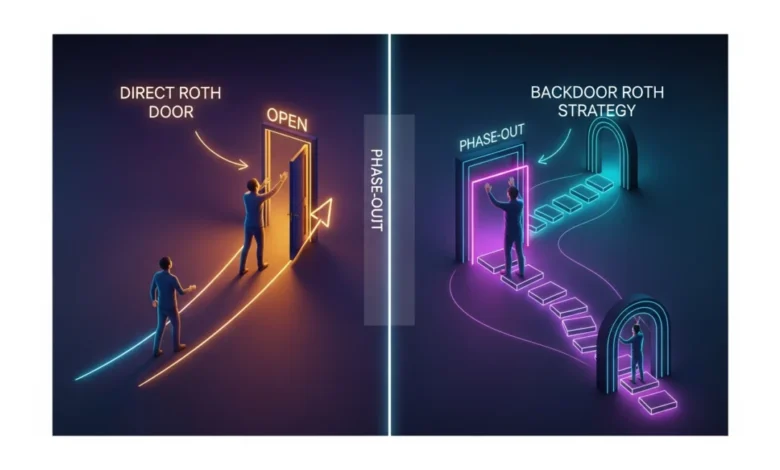
The Internal Revenue Service (IRS) has finalized the cost-of-living adjustments for the 2026 tax year, establishing new thresholds for Roth Individual Retirement Account (IRA) eligibility that reflect the persistent inflationary environment. For millions of Americans pursuing Financial Independence (FI), these numbers represent more than just tax code updates; they are the boundary lines for one of the most powerful wealth-building tools in the United States. As the Roth IRA continues to serve as a cornerstone for tax-free retirement growth, the 2026 figures highlight a significant upward shift in income limits, allowing more middle-to-high-income earners to contribute directly to these accounts while simultaneously reinforcing the necessity of "backdoor" strategies for those at the top of the earnings spectrum.
The 2026 Regulatory Landscape and Core Thresholds
The IRS adjusts Roth IRA income limits annually based on the Consumer Price Index (CPI), a practice intended to prevent "bracket creep" where inflation-driven raises push taxpayers out of eligibility despite no real increase in purchasing power. For 2026, the Modified Adjusted Gross Income (MAGI) thresholds have seen a notable increase compared to previous years.
For individuals filing as Single or Head of Household, the ability to make a full contribution remains intact for those with a MAGI below $150,000. The phase-out range, where the maximum contribution limit begins to decrease proportionally, spans from $150,000 to $165,000. Once a single filer’s MAGI exceeds $165,000, they are barred from making direct contributions to a Roth IRA.
Married couples filing jointly see a similarly generous adjustment. Full contributions are permitted for couples with a combined MAGI under $236,000. The phase-out range for joint filers sits between $236,000 and $246,000. Any joint MAGI exceeding $246,000 eliminates the possibility of a direct contribution. Notably, the "Married Filing Separately" status remains the most restrictive category; for those who lived with their spouse at any time during the year, the phase-out range is fixed at a narrow $0 to $10,000, a figure that has historically remained unadjusted for inflation.
The standard contribution limit for 2026 is set at $7,000, with an additional $1,000 "catch-up" contribution permitted for individuals aged 50 and older, bringing their total potential annual contribution to $8,000. These limits apply across all of an individual’s IRAs, meaning one cannot contribute $7,000 to a Traditional IRA and another $7,000 to a Roth IRA in the same tax year.
Deciphering MAGI: The IRS’s Invisible Metric
A common pitfall for taxpayers is the confusion between gross salary and Modified Adjusted Gross Income (MAGI). The IRS does not use W-2 wages alone to determine Roth eligibility; instead, it utilizes a specific calculation that adds certain deductions back into the Adjusted Gross Income (AGI) found on Form 1040.
To calculate MAGI for Roth purposes, a taxpayer starts with their AGI and adds back specific items such as:
- Traditional IRA contribution deductions.
- Student loan interest deductions.
- Foreign earned income exclusions.
- Exclusions for adoption expenses.
- Passive activity losses or income.
For many employees, especially those without significant outside investments or foreign income, MAGI and AGI are often identical. However, for high earners with complex portfolios or those utilizing specific tax breaks, the "add-back" process can unexpectedly push them into the phase-out range or above the eligibility ceiling. Tax professionals emphasize the use of Worksheet 2-1 in IRS Publication 590-A as the definitive tool for this calculation to avoid over-contributing.
The Financial Impact of the Phase-Out Range
Falling within the phase-out range does not result in a total loss of Roth access, but it does require a specific mathematical reduction of the contribution limit. The IRS utilizes a formula to determine the partial limit: the maximum contribution ($7,000 or $8,000) is multiplied by a fraction representing how far the taxpayer has progressed through the phase-out window.
For example, a single filer with a MAGI of $157,500 is exactly halfway through the $15,000 phase-out range ($150,000 to $165,000). Consequently, their maximum contribution would be reduced by 50%, leaving them with a $3,500 limit. The IRS requires that these results be rounded down to the nearest $10. A "safety valve" exists for those at the very top of the range: if the calculated limit is between $1 and $199, the IRS allows a minimum contribution of $200.
Strategic Workarounds: The Backdoor Roth IRA
As income levels rise within the FI community, the "Backdoor Roth IRA" has transitioned from an obscure tax loophole to a standard financial maneuver. This strategy is essential for those whose MAGI exceeds the 2026 limits. It involves a two-step process: first, making a non-deductible contribution to a Traditional IRA (which has no income limit for contributions), and second, converting those funds into a Roth IRA.
While the strategy was once viewed with caution by tax purists, the 2017 Tax Cuts and Jobs Act and subsequent IRS commentary have largely validated the practice. However, the strategy is not without risks, primarily the "Pro-Rata Rule." The IRS views all of an individual’s Traditional IRA assets as a single pool. If a taxpayer has $93,000 in pre-tax funds in an existing Traditional IRA and adds $7,000 in after-tax funds to perform a backdoor conversion, the IRS considers only 7% of the conversion to be tax-free. The remaining 93% would be subject to income tax. To avoid this, many FI seekers "roll in" their pre-tax IRA balances into an employer-sponsored 401(k) before attempting a backdoor conversion.
Advanced Wealth Building: The Mega Backdoor Roth
For high-income earners looking to move even larger sums into tax-free environments, the "Mega Backdoor Roth" represents the ultimate strategy. This maneuver relies on specific provisions within an employer’s 401(k) plan rather than the individual IRA limits.
The total annual additions limit for 401(k) plans—which includes employee deferrals, employer matches, and after-tax contributions—is significantly higher than the standard $23,500 employee limit. In 2026, if a plan allows for "after-tax" contributions (distinct from Roth 401(k) contributions) and "in-plan Roth conversions," an employee could potentially contribute upwards of $40,000 additional dollars into a Roth environment.
This strategy is particularly popular in the technology and financial services sectors, where HR departments have increasingly added these features to attract talent. For a couple both utilizing this strategy, it is possible to shield over $100,000 per year from future taxation, creating a massive "tax-free bucket" that can be accessed in early retirement.
Consequences of Non-Compliance: The 6% Penalty
The IRS enforces Roth income limits with a rigorous penalty system. If a taxpayer contributes to a Roth IRA while ineligible due to high MAGI, the amount is deemed an "excess contribution." This triggers a 6% excise tax on the excess amount for every year it remains in the account.
Corrective actions must be taken before the tax filing deadline (typically April 15, or October 15 with extensions). Taxpayers have three primary options for correction:
- Withdrawal: Removing the excess contribution plus any earnings. The earnings are taxable in the year the contribution was made.
- Recharacterization: Moving the contribution and earnings into a Traditional IRA. This treats the money as if it were originally placed in the Traditional account.
- Carry-forward: Applying the excess to the following year’s contribution limit, provided the taxpayer is eligible in that subsequent year.
Failure to address an excess contribution can lead to a compounding tax debt that significantly erodes the benefit of the investment.
The FI Perspective: Why the Roth IRA is Essential
For those pursuing Financial Independence and Early Retirement (FIRE), the Roth IRA is more than a retirement fund; it is a liquidity tool. Unlike Traditional 401(k)s, where withdrawals before age 59.5 usually trigger a 10% penalty, Roth IRA contributions can be withdrawn at any time, for any reason, tax-and-penalty-free. This provides a critical "bridge" for early retirees to cover living expenses before they reach standard retirement age.
Furthermore, the Roth IRA is the primary vehicle for the "Roth Conversion Ladder." In this strategy, early retirees convert Traditional IRA funds to Roth IRAs during years when their earned income is low. By paying taxes at a lower marginal rate during retirement and then waiting five years for the converted funds to become accessible, retirees can effectively bypass the early withdrawal penalty while minimizing their total lifetime tax burden.
The 2026 income limits also play a role in broader tax planning, such as qualifying for Affordable Care Act (ACA) subsidies. Because Roth withdrawals do not count as taxable income, retirees can use them to fund their lifestyle while keeping their "on-paper" income low enough to qualify for significant health insurance credits.
Broader Impact and Future Outlook
The continued upward adjustment of Roth IRA limits reflects a broader legislative trend toward encouraging individual retirement savings. With the implementation of the SECURE 2.0 Act, which eliminated Required Minimum Distributions (RMDs) for Roth 401(k)s and further delayed RMDs for Traditional accounts, the value of "permanently tax-free" assets has never been higher.
Economists note that as the U.S. faces long-term fiscal challenges, future tax rates are more likely to rise than fall. This makes the "tax-now, never-tax-again" nature of the Roth IRA particularly attractive for younger investors and those in the FI community who anticipate being in a higher or equal tax bracket in the future.
As 2026 approaches, financial advisors urge taxpayers to review their projected MAGI early in the year. The complexity of the phase-out math and the nuances of the backdoor strategies require proactive planning. By understanding these thresholds, investors can ensure they are maximizing their tax-advantaged space, avoiding costly IRS penalties, and building a flexible, tax-efficient path toward financial independence. In an era of economic volatility, the Roth IRA remains a rare constant—a legally sanctioned haven for long-term wealth preservation.