Reflections on the American Semiquincentennial and the Global Paradox of the United States

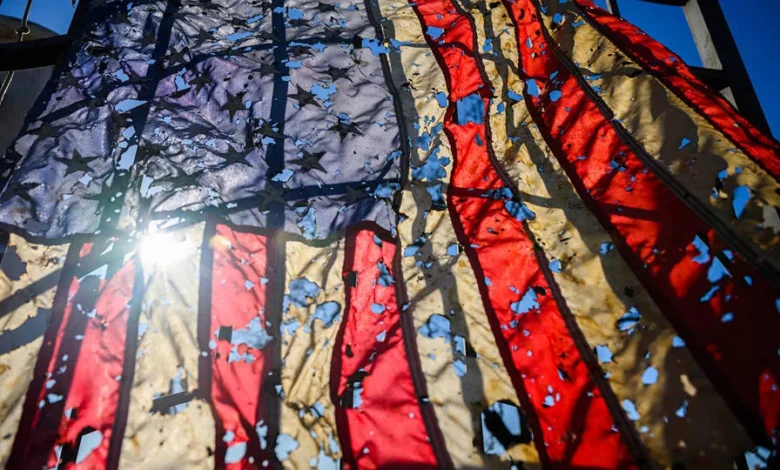
As the United States reaches the milestone of its 250th anniversary on July 4, 2026, the global community finds itself at a crossroads of celebration and critical introspection. This semiquincentennial year serves as more than a national holiday; it is a moment of profound historical reckoning for a nation that transitioned from a fledgling collection of colonies to the world’s preeminent superpower. While the anniversary is marked by grand ceremonies in Philadelphia, Washington D.C., and across the fifty states, the international discourse—particularly within the Global South—is characterized by a complex blend of admiration for American ingenuity and deep-seated cynicism regarding its imperialist legacy.
The dual nature of the American experiment has never been more visible. On one hand, the United States is the primary architect of the modern international order, having established the frameworks for global governance and economic stability following the devastation of World War II. On the other hand, the 250-year journey has been inextricably linked to systemic contradictions, including the persistence of racial inequality at home and a history of interventionism abroad. For observers in Johannesburg, Nairobi, New Delhi, and Brasilia, the American anniversary is an invitation to assess whether the "shining city on a hill" has lived up to the egalitarian promises found in its founding documents.
The Evolution of American Primacy: From Colonies to Global Hegemon
The trajectory of the United States over the last two and a half centuries is an unprecedented case study in rapid industrial and geopolitical expansion. At its founding in 1776, the U.S. was an agrarian society seeking to break free from the mercantilist constraints of the British Empire. However, by the turn of the 20th century, the nation had already surpassed the United Kingdom as the world’s leading industrial power. This shift was fueled by a combination of vast natural resources, a massive influx of immigrant labor, and an aggressive policy of westward expansion that, while economically transformative, came at a devastating cost to indigenous populations.
The mid-20th century marked the definitive "American Century." Following the conclusion of World War II in 1945, the United States emerged as the only major industrial power whose domestic infrastructure remained intact. This unique position allowed Washington to lead the creation of the post-war global governance system. The establishment of the United Nations (UN) in 1945, the World Bank and the International Monetary Fund (IMF) following the Bretton Woods Conference in 1944, and the General Agreement on Tariffs and Trade (GATT) in 1947—which eventually became the World Trade Organization (WTO)—formed the bedrock of a "rules-based order."
These institutions were designed to prevent the recurrence of global conflict and to foster economic interdependence. To its credit, this system facilitated the Marshall Plan for the reconstruction of Europe and provided a diplomatic platform that arguably prevented a direct nuclear exchange during the Cold War. Furthermore, the U.S. often utilized its diplomatic weight to pressure European colonial powers to grant independence to their territories in Africa and Asia, viewing decolonization as both a moral imperative and a strategic necessity to prevent the spread of Soviet influence.
A Chronology of the American Journey (1776–2026)
To understand the weight of the semiquincentennial, one must examine the pivotal moments that shaped the nation’s current standing:
- 1776: The Declaration of Independence is signed, asserting that "all men are created equal," despite the legal existence of chattel slavery.
- 1861–1865: The American Civil War tests the endurance of the Union and results in the formal abolition of slavery, though systemic racial segregation (Jim Crow) soon followed.
- 1898: The Spanish-American War signals the emergence of the U.S. as a global imperial power, with the acquisition of territories such as Puerto Rico, Guam, and the Philippines.
- 1917–1918: U.S. entry into World War I marks its first major intervention in European affairs, followed by President Woodrow Wilson’s "Fourteen Points."
- 1944–1945: The Bretton Woods Conference and the founding of the UN establish the U.S. as the manager of the global financial and political system.
- 1964–1965: The Civil Rights Act and Voting Rights Act represent a major domestic effort to align national practice with founding ideals.
- 1991: The collapse of the Soviet Union leaves the U.S. as the world’s "sole superpower," initiating a period of unipolarity.
- 2001–2021: The "War on Terror" and the invasions of Afghanistan and Iraq significantly strain U.S. credibility and resources.
- 2026: The Semiquincentennial is observed amidst a shifting multipolar world and domestic political polarization.
Supporting Data: The Scale of American Influence
The extent of the U.S. legacy can be quantified through its economic and military footprint. As of 2026, despite the rise of China and the expansion of the BRICS+ bloc, the United States remains a central pillar of the global economy:
- Economic Dominance: In 1945, the U.S. accounted for nearly 50% of global GDP. While that share has normalized to approximately 15-24% (depending on Purchasing Power Parity metrics) by 2026, the U.S. dollar remains the world’s primary reserve currency, involved in nearly 88% of all foreign exchange trades.
- Military Presence: The U.S. maintains an estimated 750 to 800 military bases in more than 80 countries. This "empire of bases" is a primary source of both security for allies and resentment for critics who view it as a tool of neo-imperialism.
- Developmental Aid: Since the end of WWII, the U.S. has been the largest single donor of official development assistance (ODA). In the last decade alone, Washington has contributed hundreds of billions of dollars toward global health initiatives, such as PEPFAR, which has saved millions of lives in sub-Saharan Africa.
- Institutional Voting Power: Within the IMF and World Bank, the U.S. retains a unique veto power over major decisions, a point of significant contention for emerging economies seeking a more democratic distribution of institutional influence.
The Global South Perspective: Cynicism and Contradiction
The central tension of the 250th anniversary lies in the gap between American rhetoric and American action. While the U.S. promotes democracy and human rights, its historical support for autocratic regimes during the Cold War—in the name of "stability" or "anti-communism"—remains a vivid memory in many parts of the world.
In Johannesburg, political analysts point to the irony of a nation celebrating "liberty" while its foreign policy has occasionally undermined the sovereignty of others through covert interventions or economic sanctions that disproportionately affect civilian populations. The 2003 invasion of Iraq, conducted without UN Security Council authorization, is frequently cited by leaders in the Global South as the moment the "rules-based order" was exposed as a tool for American interests rather than a universal standard.
Furthermore, the domestic struggles of the United States—ranging from racialized police violence to extreme political polarization—are broadcast globally in real-time. For many, these internal fractures suggest that the U.S. has yet to fully resolve the "racist legacy" mentioned by scholars like Adekeye Adebajo. The cynicism of the Global South is not necessarily a rejection of American values, but rather a reaction to perceived American hypocrisy.
Official Responses and Expert Analysis
As the anniversary festivities commence, world leaders have offered a variety of perspectives. European allies have largely focused on the shared values of the transatlantic alliance. A spokesperson for the European Union stated, "The 250-year journey of the United States is inseparable from the history of modern democracy. Our partnership remains the bedrock of global security."
Conversely, reactions from the African Union and various Latin American blocs have been more measured. Diplomatic sources suggest a preference for a "multipolar reality" where the U.S. is a partner rather than a hegemon. "We acknowledge the contributions of the United States to global development," said one senior diplomat from the Global South, "but we also look forward to a century where the rules are not written by a single capital, and where the dignity of all nations is respected equally."
Fact-based analysis suggests that the U.S. is currently navigating a "reputational deficit." While its cultural exports (Hollywood, Silicon Valley, higher education) continue to exert immense soft power, its moral authority has been challenged by its inability to maintain a consistent standard in its foreign policy applications.
Broader Impact and Implications for the Future
The 250th anniversary is not merely a look backward; it is a harbinger of the nation’s future role in an evolving world. The "American Century" is transitioning into a more contested era. The rise of digital currencies, the shift of economic gravity toward Asia, and the urgent global demand for climate justice are all testing the resilience of the institutions the U.S. built 80 years ago.
For the United States to remain a relevant and respected leader, analysts argue it must engage in a "clear-eyed assessment" of its past. This involves acknowledging the imperialist tendencies that have characterized its expansion and addressing the systemic inequalities that persist within its borders. The semiquincentennial provides a platform for this dialogue.
Ultimately, the legacy of the United States at 250 is one of profound achievement coupled with significant moral failure. Its ability to reinvent itself has been its greatest strength. Whether the U.S. can bridge the gap between its founding principles and its global practice will determine if the next 250 years are marked by cooperation or by the continued cynicism of a world that has grown weary of exceptionalism. As the fireworks fade over the Potomac, the hard work of living up to the promise of 1776 remains the nation’s most critical unfinished business.