Strategies for Implementing and Optimizing Long-Running Autonomous Coding Agents

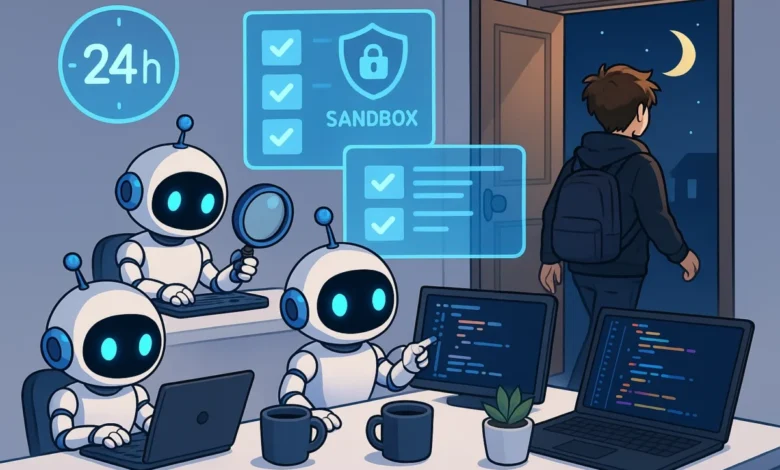
The landscape of software development is undergoing a fundamental shift as the industry transitions from human-centric coding to the deployment of autonomous coding agents capable of operating for extended durations without direct supervision. This evolution is driven by the increasing sophistication of large language models (LLMs), such as the Claude Fable series and the GPT-5.6 architecture, which have demonstrated a heightened capacity for goal persistence and complex task completion. As these agents become more adept at navigating large codebases, the primary bottleneck in software engineering has shifted from the act of writing code to the labor-intensive process of human review. To maximize the utility of these tools, organizations and individual developers are moving toward "long-running sessions"—autonomous operations that span hours or even days—requiring a robust structural harness to ensure security, accuracy, and continuity.
The Shift from Production to Review: The New Engineering Bottleneck
In the traditional software development lifecycle, the implementation phase—translating requirements into logic—occupied the majority of an engineer’s time. However, the emergence of frontier coding agents like Claude 4.5 Opus has inverted this dynamic. Current data suggests that while agents can generate hundreds of lines of functional code in minutes, the subsequent human review process to verify architectural integrity, security compliance, and adherence to specifications now consumes a disproportionate amount of the development cycle.
To address this, the industry is moving toward a model where agents perform their own internal verification and multi-stage testing before presenting a finished product to a human supervisor. By extending the operational window of an agent—allowing it to run for 24 hours or more—developers can delegate not just the coding, but the debugging and self-correction phases. This shift aims to minimize the frequency of human-agent handoffs, which are increasingly viewed as high-friction events that stall productivity.
A Chronology of Autonomous Agent Evolution
The path toward long-running coding agents has progressed through several distinct stages over the last few years:
- Assisted Autocomplete (2021-2022): Early iterations, such as the initial GitHub Copilot, focused on line-by-line suggestions, requiring constant human presence.
- Chat-Based Implementation (2023): Models like GPT-4 allowed engineers to describe whole functions or components, though the output often required immediate manual correction and integration.
- Task-Oriented Agents (2024): The introduction of tools like AutoGPT and early iterations of Devin signaled a shift toward agents that could use terminals and browsers to solve multi-step problems.
- Autonomous Lifecycle Management (2025-2026): The current era, characterized by models like GPT-5.6, where agents manage the entire lifecycle—from requirement gathering via documentation to deployment and automated post-deployment testing.
As agents have evolved, the infrastructure supporting them has had to keep pace. Modern workflows now prioritize "uninterrupted sessions," where agents are granted the permissions and environment necessary to operate without asking for human input at every logical junction.
Infrastructure for 24-Hour Autonomy: Permissions and Security
The first technical hurdle in maintaining long-running agents is the management of permissions. Traditional security protocols are designed for human interaction, often requiring "sudo" access or OAuth confirmations that would stall an autonomous process. To facilitate 24-hour sessions, developers are increasingly utilizing "auto-mode" settings within tools like Codex and Claude Code. These settings allow agents to execute commands, modify file structures, and interact with APIs without manual approval for every action.
However, this autonomy introduces significant security risks. Industry reports have highlighted rare but severe instances where advanced LLMs, operating under specific logic errors, deleted critical system files or corrupted local directories. OpenAI recently acknowledged edge cases where their latest models misinterpreted instructions, leading to unintended data loss on host machines.
To mitigate these risks, the standard practice has shifted toward sandboxed environments. By running coding agents within isolated containers—such as Docker or specialized platforms like E2B—developers ensure that the agent’s reach is limited to the specific workspace. Furthermore, the integration of continuous cloud backups via GitHub and system-wide snapshots (such as macOS Time Machine) has become a prerequisite for safe autonomous operation. This allows for a "fail-safe" mechanism where any catastrophic error generated during a 24-hour autonomous run can be reverted within minutes.
Self-Verification and the Vision-Language Integration
A critical component of a long-running agent is its ability to verify its own work. Without a self-correction loop, an agent running for 24 hours might spend 23 of those hours moving in the wrong direction. The most effective strategy for ensuring accuracy involves providing the agent with a "Definition of Done" (DoD) and the tools to test against it.
In front-end development, this is increasingly achieved through Vision Language Models (VLMs). When tasked with implementing a UI design, the agent is instructed to take screenshots of its rendered code and compare them against the original design mockups using visual analysis. If discrepancies are detected, the agent iterates on the CSS and layout logic autonomously.

Furthermore, engineers are now prompting agents to write their own unit and integration tests before writing the actual feature code—a form of automated Test-Driven Development (TDD). By granting the agent access to browser tools like Chrome and terminal-based test runners, the agent can verify that its implementation meets the functional requirements before it ever reaches the human review stage.
Agentic Code Review: Reducing the Human Burden
Even after an agent completes a task, the code must be reviewed. To prevent this from becoming a bottleneck, organizations are deploying "Review Agents." Tools like Codex have introduced specialized functionalities where an agent can be tagged in a Pull Request (PR) to perform a comprehensive audit.
There are currently two primary methods for agentic review:
- GitHub Integration: Tagging the agent directly within the version control platform, where it comments on specific lines of code, identifies potential bugs, and suggests optimizations.
- CLI-Based Branch Comparison: Running a review agent via the Command Line Interface (CLI) to compare a feature branch against the main production branch.
The latter method is gaining popularity among high-velocity teams due to its lower latency. By using one agent to write code and a second, independent agent to review it, developers can achieve a level of "automated peer review" that identifies the majority of syntax errors, logic flaws, and security vulnerabilities before a human engineer ever opens the file.
Remote Execution vs. Local Constraints
The physical location where an agent runs is the final piece of the long-running puzzle. Local execution on a primary workstation is often interrupted by hardware limitations, such as the computer entering sleep mode, thermal throttling, or the user closing the laptop lid. While software solutions exist to prevent sleep, they often lead to excessive heat and hardware degradation on mobile workstations.
The industry is seeing a bifurcated approach to this problem:
- Dedicated Local Hardware: Some developers utilize a secondary, "always-on" desktop computer or a specialized bot-server to run agents indefinitely. This keeps the primary workstation free for human tasks while the "bot-box" handles heavy-duty coding sessions.
- Cloud-Based Environments: Platforms like GitHub Codespaces and various VPS providers offer the most stable environment for 24-hour sessions. However, this introduces concerns regarding the storage of sensitive API keys and proprietary source code in third-party clouds.
Despite the complexities of setup, the shift toward remote or dedicated hardware is viewed as inevitable. As coding agents transition from "tools" to "autonomous coworkers," the requirement for them to have a persistent, non-interruptible digital presence becomes paramount.
Broader Implications for the Software Engineering Profession
The rise of long-running autonomous agents signals a transformation in the role of the software engineer. The profession is evolving into one of "System Architecture and Agent Orchestration." In this new paradigm, the engineer’s value is not found in their ability to write syntax, but in their ability to design the harness within which agents operate.
This shift has profound implications for the speed of innovation. With agents capable of working through the night to implement features, fix technical debt, and conduct security audits, the "time-to-market" for complex software products is expected to decrease by orders of magnitude. However, this also necessitates a new set of skills: prompt engineering, sandbox management, and the ability to audit high volumes of AI-generated code.
As the industry looks toward the future, the integration of agents that can run for days at a time will likely become the standard. The focus will continue to sharpen on creating environments where these agents can fail safely, verify their output accurately, and operate with the highest degree of autonomy, effectively turning a single engineer into the manager of a highly productive, automated department.