Major Fintechs, Cloud Giants Unite Under Linux Foundation to Standardize AI-Driven Online Payments with x402 Protocol


In a landmark development poised to reshape the landscape of digital transactions, a formidable coalition of leading fintech companies, global cloud providers, and e-commerce giants has officially launched the x402 Foundation under the auspices of the Linux Foundation. This ambitious non-profit initiative aims to establish a universal, open-source protocol for how artificial intelligence (AI) agents conduct and process online payments, fostering an era of unprecedented interoperability, security, and efficiency in the rapidly evolving digital economy. The announcement, made on July 17, 2026, marks a pivotal moment in the convergence of AI and financial technology, promising to unlock new dimensions of automated commerce.
The newly formalized x402 Foundation brings together an impressive roster of industry titans, including payment processing powerhouses Stripe, PayPal, and Block (formerly Square), alongside cryptocurrency innovator Coinbase. These fintech stalwarts are joined by traditional financial services giant Fiserv, stablecoin developer Circle Internet Group, and the technological might of Google and Amazon Web Services (AWS). Further underscoring the global reach and diverse applications envisioned for the protocol, international payments processor Adyen and Canadian e-commerce leader Shopify are also integral members of this collaborative effort. This diverse assembly reflects a shared recognition of the urgent need for a standardized approach to manage the increasingly complex and autonomous financial interactions facilitated by AI.
The Genesis and Imperative of the x402 Protocol
The concept for x402 originated within Coinbase, driven by a practical necessity. Lincoln Murr, head of AI product at Coinbase, articulated the core problem the protocol seeks to address: "x402 was started at Coinbase to solve a real problem – AI agents had no native, interoperable way to pay for the things they needed to do." As AI systems become more sophisticated and capable of independent action, their ability to execute financial transactions autonomously has become a critical bottleneck. Without a common language and secure framework, these "AI agents"—software entities designed to perform tasks without human intervention—face significant hurdles in seamlessly interacting with diverse payment systems.
The existing digital payment ecosystem, while robust for human-initiated transactions, is often fragmented and proprietary. Each payment gateway, banking system, and financial service provider typically operates within its own set of rules and APIs. This fragmentation creates significant friction for AI agents, which require clear, standardized interfaces to initiate, verify, and complete payments across various platforms. The x402 protocol is designed to bridge these disparate systems, providing a universal standard that allows AI agents to "speak" a common financial language, thereby enabling secure, efficient, and reliable payments for services, data, or goods they procure or provide.
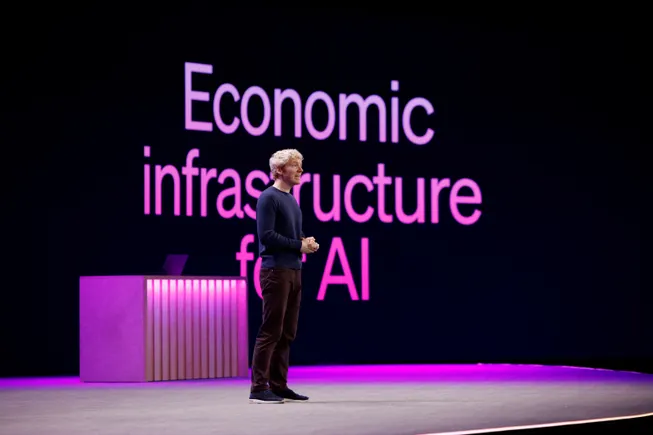
The term "agentic commerce," a concept highlighted by Stripe co-founder and CEO Patrick Collison, perfectly encapsulates the future vision that x402 aims to enable. Agentic commerce refers to an economic system where autonomous AI agents can independently participate in buying and selling, making decisions, and executing transactions on behalf of users or other AI systems. For this vision to materialize beyond niche applications, a robust, secure, and universally accepted payment standard is indispensable. The x402 Foundation, by developing an open-source protocol, champions transparency and collaboration, crucial elements for building trust and ensuring widespread adoption across an industry as sensitive as payments.
A Collaborative Framework Under the Linux Foundation
The decision to host the x402 Foundation under the Linux Foundation is strategically significant. The Linux Foundation is a non-profit technology consortium renowned for fostering open-source innovation across various critical sectors. Its track record of successfully stewarding foundational technologies, from the Linux operating system itself to cloud-native computing and blockchain initiatives, lends immense credibility and organizational infrastructure to the x402 effort. By operating under the Linux Foundation’s umbrella, the x402 Foundation gains access to established governance models, legal frameworks, and a global community of developers dedicated to collaborative software development.
The Foundation’s mandate is clear: to convene developers, financial institutions, cloud providers, and other stakeholders to guide the protocol’s development. This multi-stakeholder approach is vital to ensure that the x402 protocol is not only technically sound but also addresses the diverse needs and concerns of the entire payments ecosystem. The open-source nature of the protocol means its code will be publicly accessible, allowing for continuous scrutiny, improvement, and adaptation by a broad community. This transparency is a powerful antidote to vendor lock-in, ensuring that no single entity controls the future direction of AI-driven payments and that the standard remains adaptable over time to accommodate new technologies and evolving market demands.
The x402 protocol is engineered to support multiple forms of payment, from traditional fiat currencies transacted via bank transfers and card networks to digital assets and stablecoins. This flexibility is crucial given the diverse and evolving nature of payment instruments in the digital age. Furthermore, its design emphasizes security as a foundational principle, employing best practices in cryptography and distributed ledger technologies (where applicable) to protect transactions from fraud and cyber threats.
Chronology and Momentum
The journey towards the x402 Foundation officially began in April 2026, when the Linux Foundation first announced its intent to launch the initiative. This initial declaration signaled the growing industry consensus on the necessity of such a standard. The subsequent months saw intense collaboration and recruitment, culminating in the July 17, 2026, announcement of the newly named x402 Foundation and its expanded, high-profile membership.
This rapid progression underscores the urgency felt across the industry to address the burgeoning demands of AI in commerce. The timing also aligns with a broader trend of increased collaboration among financial and tech entities to tackle systemic challenges. As AI capabilities advance exponentially, the ability for these systems to conduct reliable and secure financial operations becomes not just an advantage but a necessity for economic growth and innovation.
Broader Implications and Market Impact
The establishment of the x402 Foundation and the development of its open-source protocol carry profound implications for the future of finance and technology:

-
Accelerated AI Adoption in Finance: By simplifying payment integration for AI agents, x402 will lower the barrier to entry for developers and businesses looking to deploy AI in financial applications. This could lead to a surge in automated financial services, intelligent budgeting tools, autonomous trading algorithms, and personalized financial advice systems capable of executing transactions. The global AI in financial services market, valued at approximately $40 billion in 2025, is projected to exceed $150 billion by 2030, a growth trajectory that a standardized payment protocol could significantly accelerate.
-
Enhanced Security and Trust: Open-source development inherently promotes security through collective scrutiny. With thousands of eyes potentially reviewing the x402 codebase, vulnerabilities are more likely to be identified and patched quickly. This transparency builds trust, a critical factor for any financial protocol, especially one designed for autonomous agents. A common standard also allows for uniform security audits and certifications, further bolstering confidence in AI-driven transactions.
-
Fostering Interoperability and Reducing Friction: The primary goal of x402 is interoperability. By enabling seamless communication between various payment systems and AI agents, it will drastically reduce transaction friction, lower operational costs, and create a more fluid global payment landscape. This could significantly benefit cross-border payments, making them faster and cheaper, especially for automated micro-transactions.
-
Leveling the Playing Field: An open standard democratizes access to advanced payment capabilities. Smaller fintechs and startups, often constrained by resources, can leverage the x402 protocol without having to build proprietary integrations for every payment provider. This fosters innovation and competition, preventing a few dominant players from monopolizing the AI payment infrastructure.
-
New Business Models and Economic Opportunities: The ability for AI agents to reliably pay for services opens up entirely new categories of business models. Imagine AI systems that automatically pay for cloud compute, API calls, data access, or even fractional ownership of assets, all without human intervention. This could unlock unprecedented efficiencies and create new digital economies.
-
Regulatory Engagement: As AI becomes more embedded in financial transactions, regulators worldwide are grappling with how to oversee these developments. A standardized, transparent protocol like x402 could serve as a valuable framework for engagement with regulatory bodies, providing a clearer and more auditable mechanism for compliance and risk management in AI-driven finance. This proactive approach could help shape future regulations rather than merely reacting to them.
Synergies with Other Collaborative Initiatives
The x402 Foundation is not an isolated effort but rather part of a broader trend of collaborative standardization initiatives in the digital finance space, many of which involve the same leading players.

Notably, Coinbase, a key instigator of x402, is also a prominent participant in another significant collaboration: the Open USD stablecoin initiative. Announced on June 30, a group of over 140 companies, including giants like Visa, Stripe, American Express, and Klarna Group, are teaming up to create Open USD. This initiative aims to establish a common, open standard for stablecoins, much like x402 seeks to standardize AI payments. The earnings from Open USD’s reserve assets are intended to be divided among participating organizations, highlighting a model of shared economic benefit from collective infrastructure development. Both x402 and Open USD underscore a growing industry consensus that complex, interconnected financial systems require open, collaborative standards to thrive.
Furthermore, the Linux Foundation’s role extends beyond payments into critical cybersecurity infrastructure. Just last month, the organization launched Akrites, a consortium dedicated to defending critical open-source software against AI-enabled cyber threats. Akrites brings together major financial institutions like JPMorgan Chase and Citigroup, alongside tech giants such as Amazon Web Services and Google – many of whom are also members of the x402 Foundation. This initiative focuses on sharing information about cybersecurity vulnerabilities and pooling resources to combat sophisticated threats. The parallel between Akrites and x402 is striking: both represent concerted efforts by industry leaders, facilitated by the Linux Foundation, to build secure, resilient, and open foundations for the future of digital infrastructure, whether it’s protecting against cyberattacks or enabling AI-driven payments.
These interconnected initiatives illustrate a powerful shift towards collaborative, open-source solutions for foundational challenges in digital finance. The scale of the companies involved, from global payment networks to leading cloud providers and innovative fintechs, signals a strong commitment to these shared visions.
Looking Ahead
The x402 Foundation represents a forward-thinking response to the inevitable integration of artificial intelligence into the fabric of commerce. By uniting industry leaders to build a secure, open-source, and interoperable protocol, it lays the groundwork for a future where AI agents can seamlessly and reliably conduct financial transactions across the digital realm. As Lincoln Murr aptly stated, moving the protocol to the Linux Foundation, with its "dozens of members spanning every corner of internet payments and infrastructure, is how open technology earns lasting trust across an industry." The collaborative spirit embodied by the x402 Foundation promises to accelerate innovation, enhance security, and ultimately create a more efficient and accessible global digital economy driven by the transformative power of AI. The journey of building out x402 with the community has just begun, and its trajectory will undoubtedly be closely watched by stakeholders across the financial and technological sectors worldwide.
Related posts: