The Anatomy of an Israeli Electoral Deadlock and the Path to Democratic Renewal

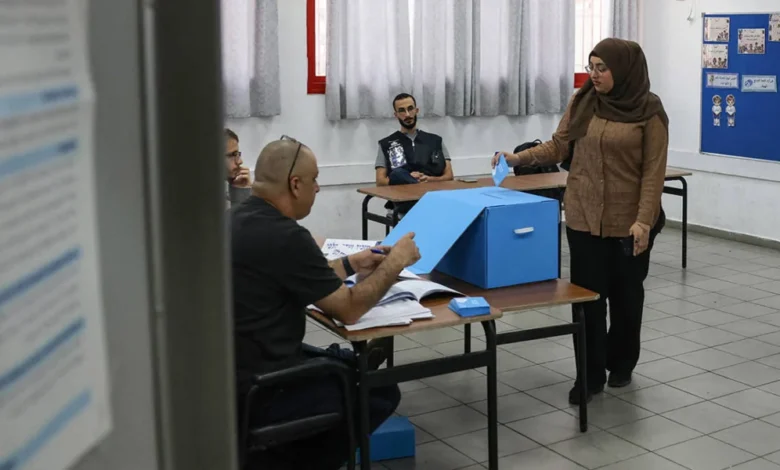
TEL AVIV — The dust has settled on another contentious Israeli electoral cycle, leaving the nation suspended in a familiar yet increasingly perilous political deadlock. As prognosticators and political analysts dissect the latest numbers, the prevailing sentiment is one of profound exhaustion. While the ballot boxes failed to deliver the sweeping, transformative leadership that many civil society organizations and international observers had hoped for, the results have inadvertently carved out a narrow, arduous pathway toward restoring the foundational tenets of Israeli democracy. For an opposition bloc desperate to reverse years of institutional erosion, the key may lie in an unprecedented political maneuver: forging a governing coalition that incorporates Arab-led parliamentary factions. Such a coalition would represent more than a mere tactical defeat of long-serving Prime Minister Benjamin Netanyahu; it could serve as a decisive repudiation of the nationalist, exclusionary ideology that has come to dominate the nation’s political mainstream.
Before the recent election, seasoned political analysts warned that the electorate should temper its expectations regarding radical systemic change. Sadly, that cautionary assessment has been thoroughly vindicated. Decades of demographic shifts, entrenched security paradigms, and deep-seated tribal and cultural polarization have rendered the Israeli electorate profoundly fractured. Despite enduring multiple prolonged military engagements, escalating international isolation, and severe domestic friction over judicial reforms, a critical mass of voters declined to hold Prime Minister Netanyahu accountable at the ballot box. The resulting legislative stalemate underscores a society at war with itself, incapable of generating a decisive mandate for either the incumbent right-wing nationalist bloc or the fragmented center-left opposition.
Background Context and the Evolving Israeli Electorate
To understand the current political paralysis in Tel Aviv and Jerusalem, one must examine the tectonic shifts that have reshaped Israeli politics over the past two decades. The erosion of the traditional Zionist labor movement, which dominated the state’s formative decades, paved the way for the ascendance of Likud and its various right-wing, ultra-Orthodox, and ultranationalist allies. Under Benjamin Netanyahu—Israel’s longest-serving prime minister—the political landscape has grown increasingly tribalized.
Security concerns, real and perceived, have continuously served as the primary axis of political mobilization. However, in recent years, this has been compounded by deep ideological battles over the supremacy of the judiciary, the definition of Jewish identity within a democratic state, and the socio-economic disparities separating secular urban centers from peripheral development towns and religious communities. The accumulation of corruption trials against Netanyahu further galvanized a polarized populace, transforming elections from policy debates into existential referendums on the rule of law and the character of Israeli democracy itself.
Chronology of the Electoral Crisis
The road to the current legislative deadlock was paved by a succession of short-lived coalition governments, legislative rebellions, and unprecedented security crises.
- Late 2022: Benjamin Netanyahu successfully engineered a return to power by assembling the most right-wing coalition in Israel’s history, incorporating radical nationalist and ultra-Orthodox factions that promised sweeping judicial overhauls.
- 2023: The introduction of contentious judicial overhaul legislation triggered mass, months-long civilian protests across Tel Aviv, Haifa, and Jerusalem, drawing hundreds of thousands of reservists, business leaders, and citizens into the streets to warn of democratic backsliding.
- Late 2023 – 2025: The outbreak of unprecedented regional conflict dramatically altered the political calculus, momentarily freezing domestic polarization before intensifying debates over military strategy, hostage negotiations, and Israel’s deteriorating diplomatic standing in international forums such as the International Court of Justice and the United Nations.
- Mid-2026: Persistent coalition fractures over military conscription exemptions for ultra-Orthodox seminary students and mounting international pressure forced the collapse of the governing majority, triggering an early snap election conducted under deep societal duress.
- November 2026: Election day concluded with neither the pro-Netanyahu bloc nor the disparate opposition coalition securing the mandatory 61-seat majority in the 120-seat Knesset, plunging the nation into a protracted period of coalition horse-trading and institutional uncertainty.
Supporting Data and Demographic Realities
The numerical breakdown of the recent Knesset election reveals a parliament paralyzed by fractions. Official data from the Central Bureau of Statistics and the Central Election Committee illustrate a country split almost evenly down ideological lines. The right-wing and religious bloc secured approximately 52 seats, while the center-left opposition parties captured around 50 seats. This leaves the balance of power squarely in the hands of the Arab-led parties and a few remaining swing factions.
Voter turnout remained relatively high at roughly 71%, reflecting intense civic mobilization, yet the subterranean demographic trends tell a compelling story. The fastest-growing segments of the Israeli population—the ultra-Orthodox (Haredi) community and nationalist-religious settlers—tend to vote overwhelmingly for parties on the right. Conversely, secular Israelis, concentrated heavily along the coastal plain surrounding Tel Aviv, have struggled to maintain their numerical weight, making coalition arithmetic an increasingly desperate exercise for center-left architects.
Official Responses and Political Reactions
The immediate aftermath of the election was marked by guarded statements from political leaders across the spectrum, each claiming a mandate to shape the next government.
Senior Likud officials issued statements emphasizing the need for a stable, nationalist government capable of addressing ongoing security threats along Israel’s northern and southern frontiers. They argued that any alternative government relying on non-Zionist or Arab parties would compromise national security and betray the Zionist ethos of the state.
In contrast, leaders of the centrist and center-left opposition factions pointed to the electoral deadlock as an unmistakable sign that the public desires a return to institutional normalcy and civic cohesion. In private briefings, opposition strategists have begun discussing the taboo-breaking strategy of engaging Arab-led political parties not merely as parliamentary partners for blocking legislation, but as legitimate, foundational components of a governing coalition.
Civil society organizations, including prominent democracy watchdogs and legal rights groups in Tel Aviv, welcomed the prospect of breaking the Netanyahu era, urging opposition leaders to exhibit political courage. In a joint statement released shortly after the election results were certified, several prominent Israeli academics and former diplomats argued that "the defense of Israeli democracy supersedes historical political comfort zones, and the inclusion of Arab citizens through their elected representatives is no longer optional, but essential for civic survival."
Broader Impact and Regional Implications
The implications of Israel’s ongoing political crisis extend far beyond the borders of the Knesset chamber, carrying profound consequences for regional stability and international relations.
For Israel’s Western allies, particularly the United States, a perpetually gridlocked or hardline nationalist government complicates diplomatic coordination in the Middle East. The ongoing fallout from multi-front conflicts has left Israel economically strained and diplomatically vulnerable, facing mounting calls for accountability from international judicial bodies and traditional allies alike. A government formed through a broad, cross-demographic alliance—incorporating Jewish center-left factions and Arab-led parties—would signal to the international community a dramatic pivot toward internal reconciliation, democratic rehabilitation, and a renewed commitment to minority rights within the Jewish state.
Conversely, failure to break the deadlock risks pushing Israel further into permanent political instability, potentially culminating in yet another election cycle that deepens tribal animosities. The cost of such paralysis is high, threatening not only the economic vitality of the startup nation but the very social fabric that holds a diverse and traumatized citizenry together.
Ultimately, the 2026 election may be remembered not as the moment Israel solved its deepest existential dilemmas, but as the crucible in which its political class was forced to confront an uncomfortable truth: Israeli democracy cannot survive by excluding a fifth of its citizens. Whether the opposition possesses the strategic vision and rhetorical fortitude to translate this numerical reality into a viable governing majority remains the defining question of contemporary Israeli politics.
Related posts: