The average weekly mortgage rate, at 6.76%, is not high historically. Inflation is high. And home prices are high.


The United States housing market is currently navigating a period of profound stagnation, characterized by a persistent contraction in sales volume and an uneasy equilibrium between inventory levels and buyer demand. According to the latest data released by the National Association of Realtors (NAR), sales of existing single-family homes retreated by 1.9% in August, marking the third consecutive month of declines. This adjustment leaves the seasonally adjusted annual rate of sales at 3.62 million, a figure that underscores the profound chill that has settled over the residential real estate sector.
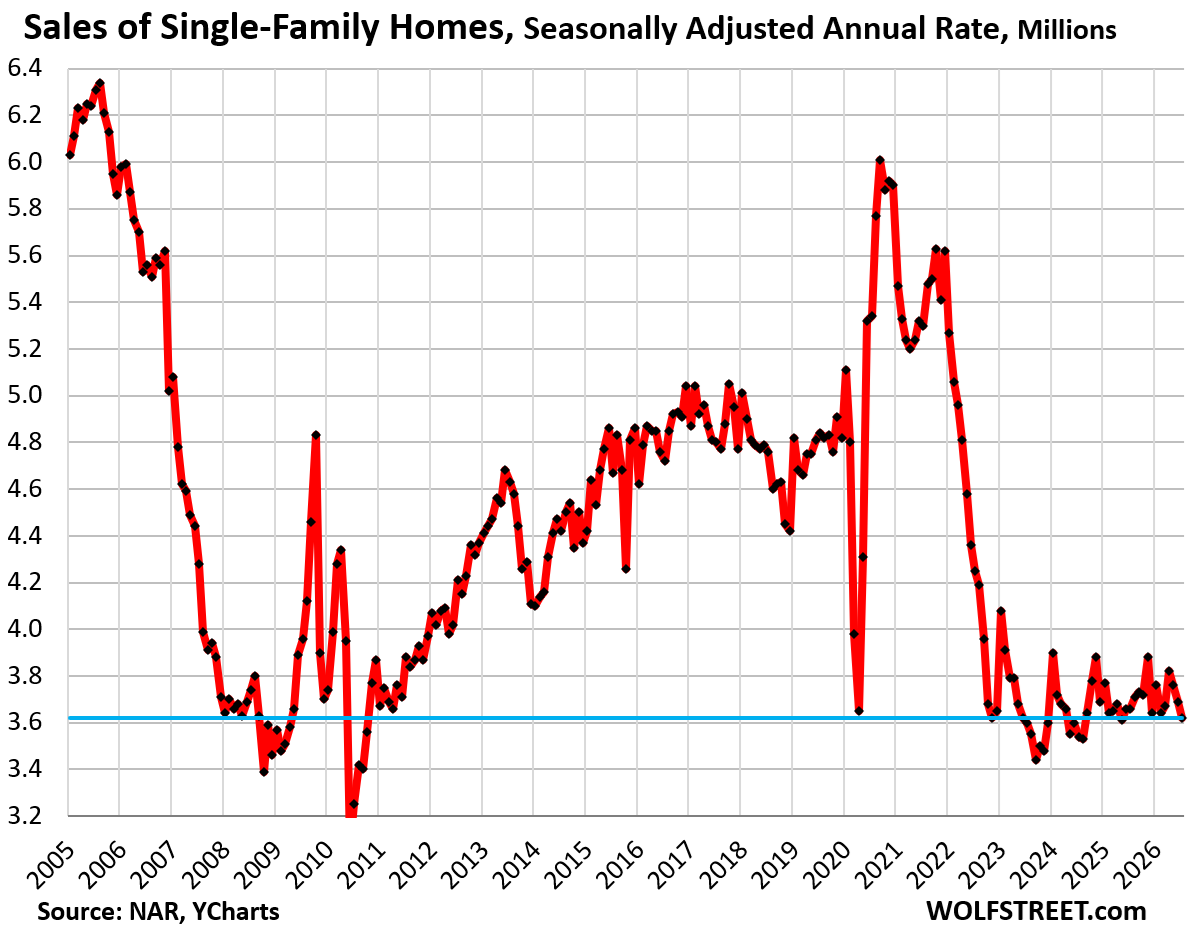
This decline is not merely a short-term anomaly but part of a broader, multi-year trend that reflects a market struggling to reconcile buyer expectations with the prevailing economic reality. When compared to the same period in 2025, sales have slipped by 1.1%. More alarmingly, the market remains significantly depressed compared to pre-pandemic baselines, with sales volume down 25% from August 2019 and trailing the figures recorded during the height of the 2009 Housing Bust by 9%. Even when looking back three decades to 1996, current sales levels are roughly 5% lower, indicating that the market is essentially scraping along the bottom of a four-year slump.
The Dynamics of Supply and Inventory
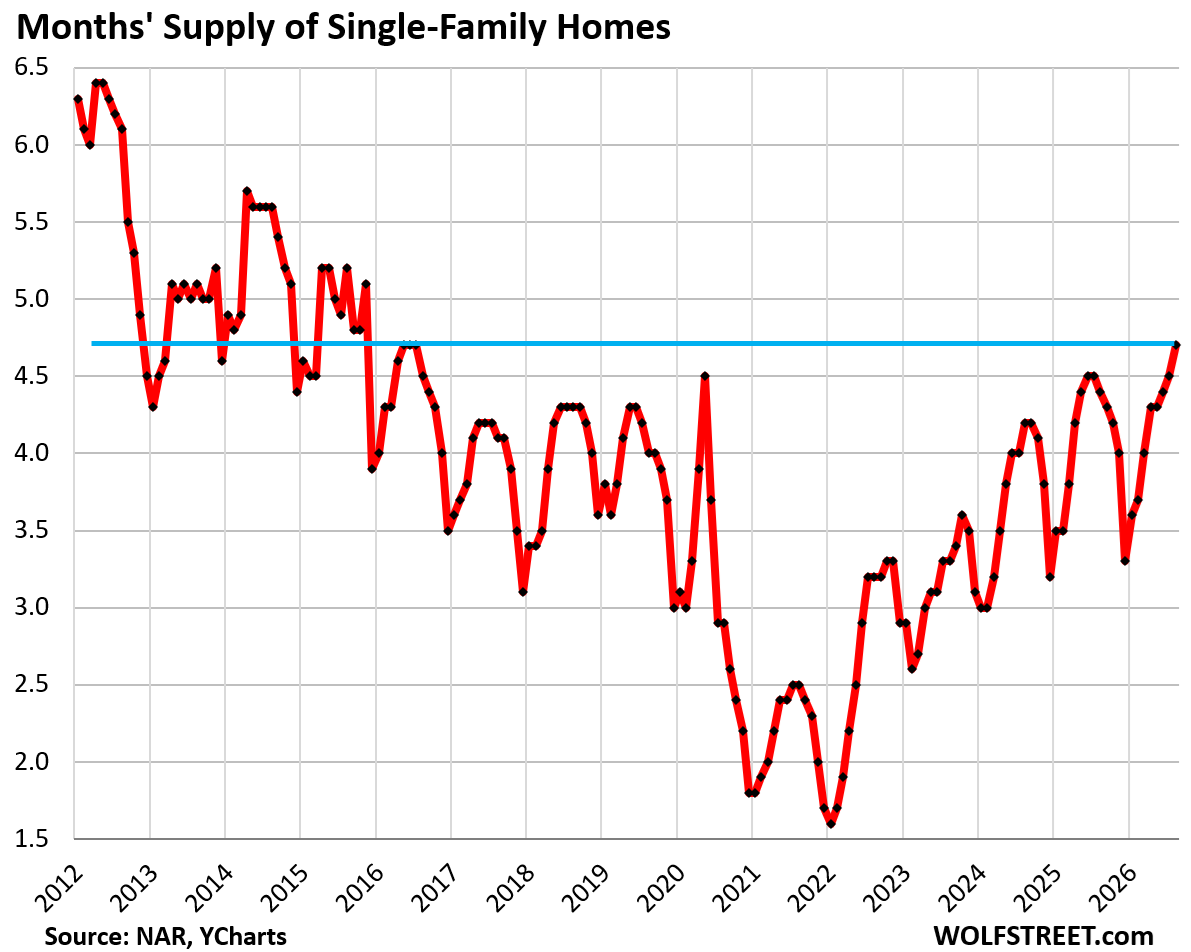
While transaction volumes continue to wither, the supply side of the equation tells a different story. The supply of single-family homes has climbed to 4.7 months, a level not seen since the summer of 2016. This metric, which measures the number of months it would take to exhaust current inventory at the current sales pace, is a critical indicator of market health. The increase is a function of two simultaneous forces: a consistent decline in sales and a gradual buildup in active listings, which reached 1.42 million single-family homes by the end of August.
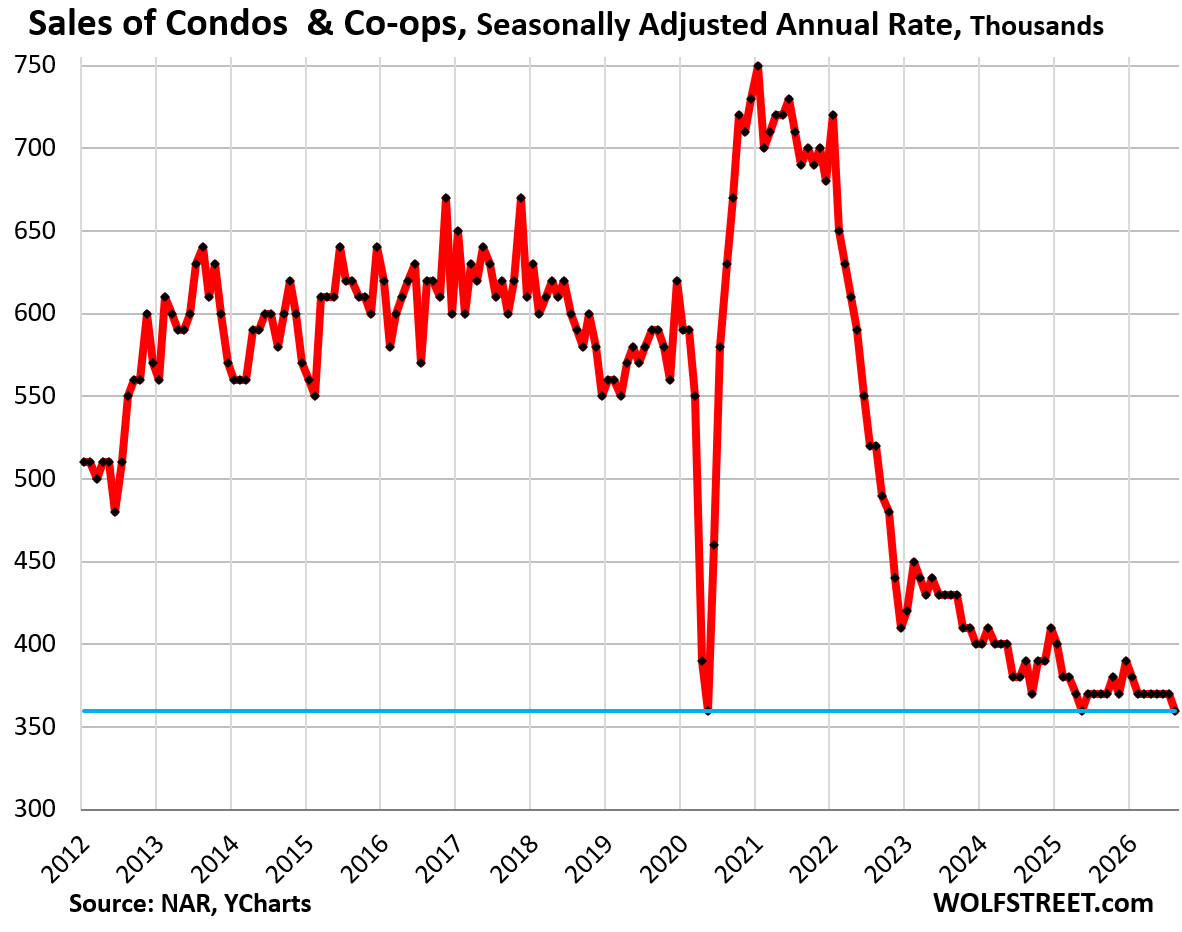
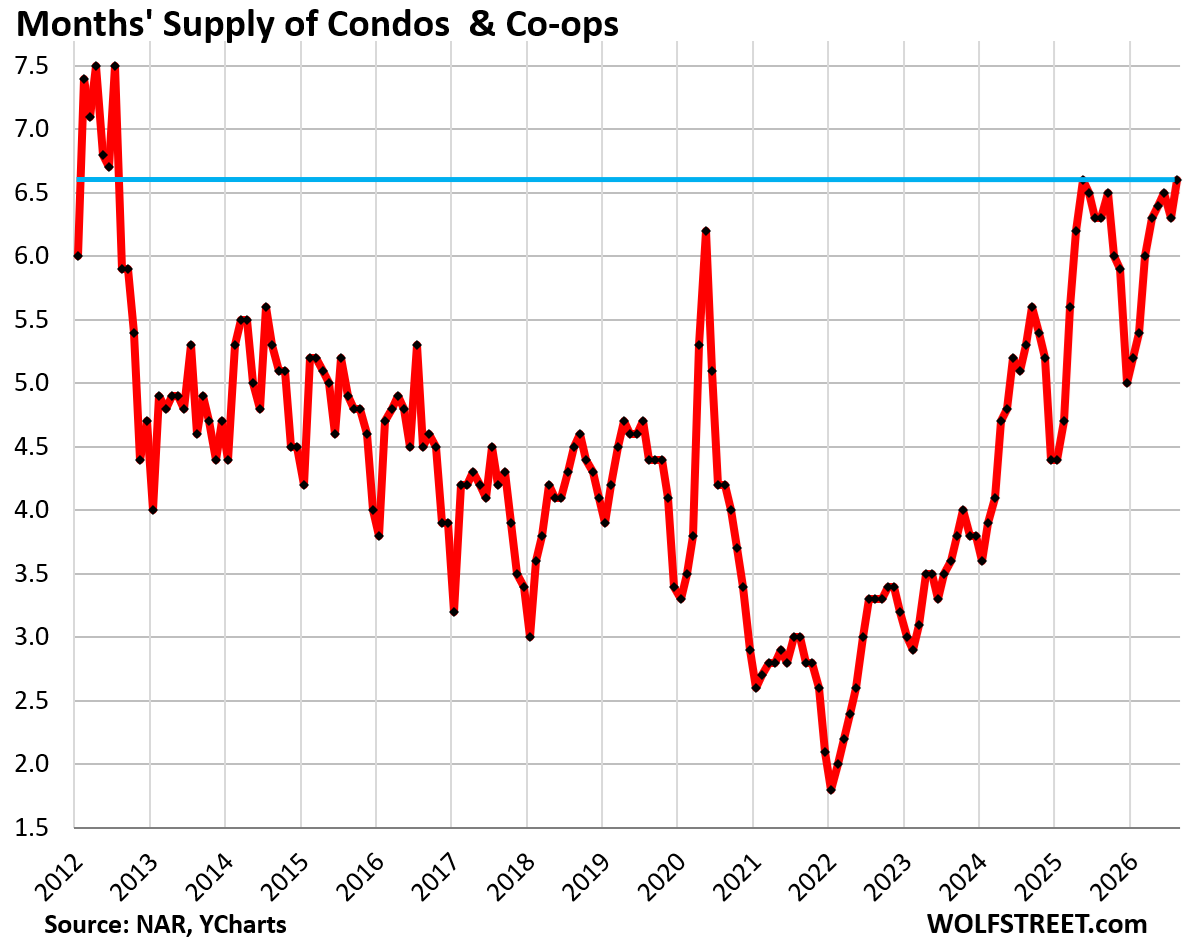
The condo and co-op segment of the market is faring even worse. Sales in this category dropped 2.7% month-over-month to an annual rate of 360,000, effectively matching the lowest level recorded since the data series began in late 2011. The decline is stark when viewed through a historical lens; sales are down 39% from August 2019 and 35% from August 2012. Furthermore, the supply of condos has reached 6.6 months, the highest level since 2012, suggesting that sellers in this niche are facing significant headwinds as buyer interest evaporates.
Regional Performance and Market Contraction
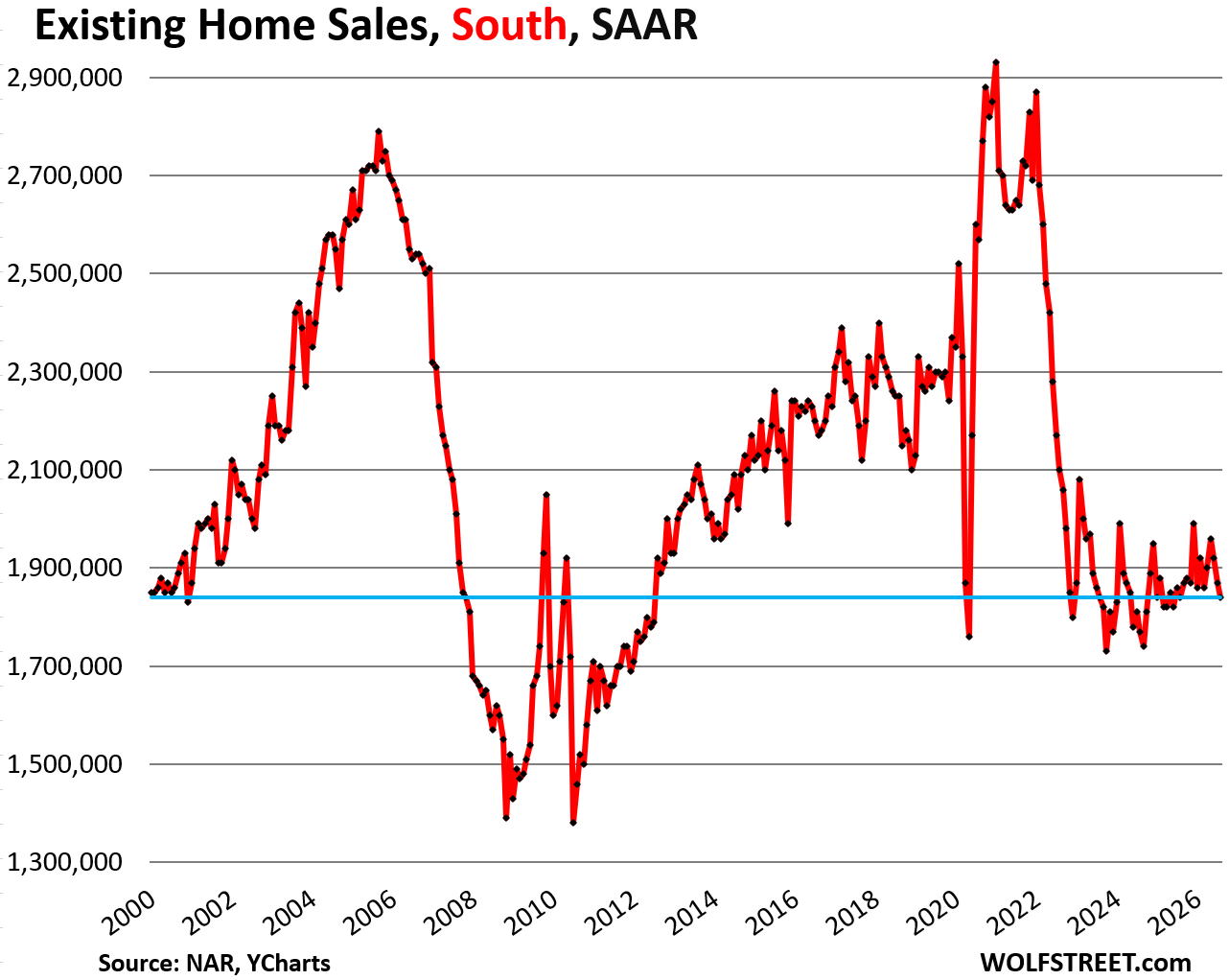
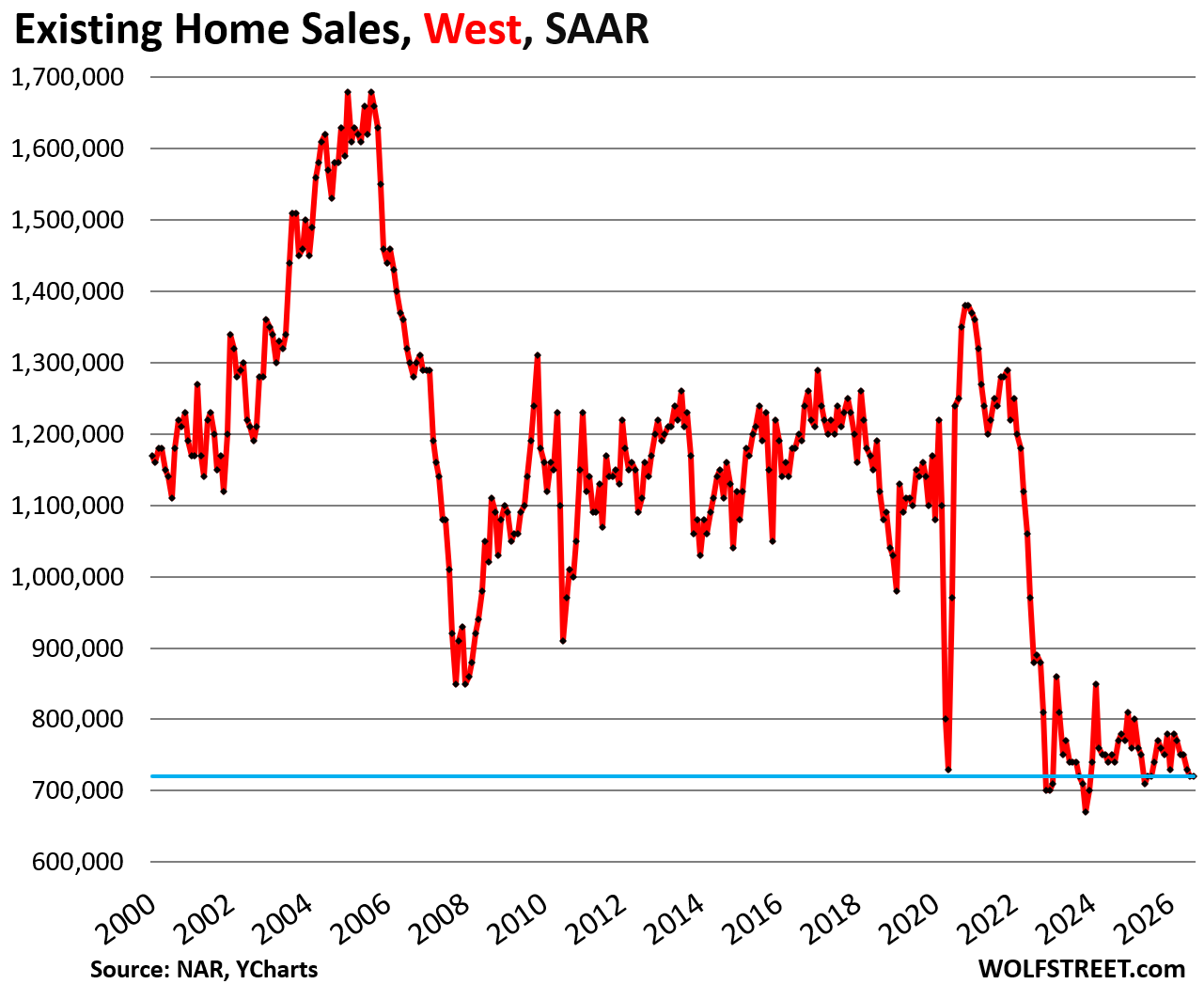
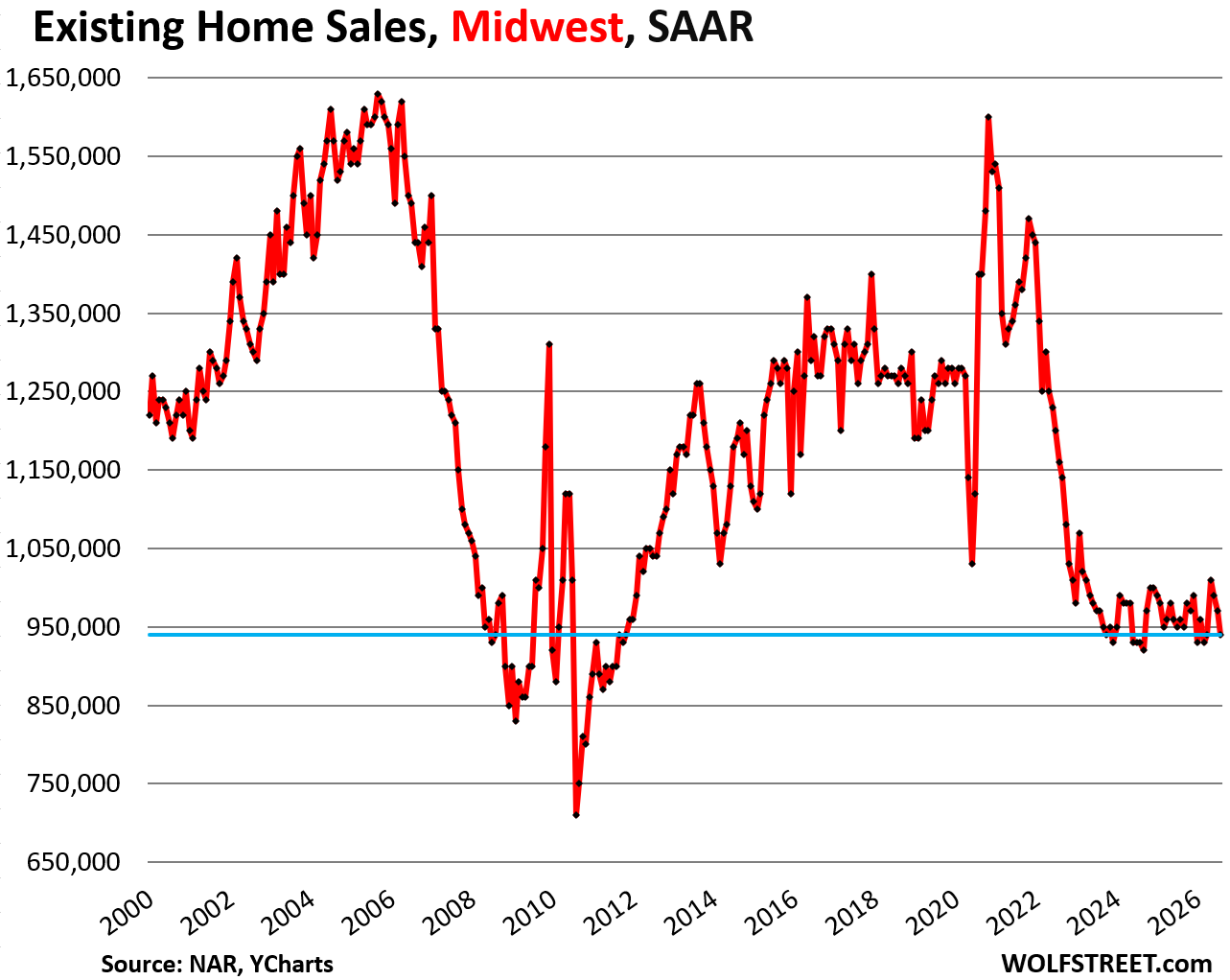
The malaise currently affecting the U.S. housing market is national in scope, though regional variations exist. Sales fell across three of the four major geographical regions in August. In the South, which had historically served as a growth engine for residential real estate, the seasonally adjusted annual rate of sales fell by 1.6%, marking three straight months of decline. The Midwest mirrored this trend, recording a 3.1% drop, its fourth consecutive month of contraction. The Northeast saw the steepest decline, with sales falling by 4.0%. Only the West remained relatively stable, with sales holding steady at an annual rate of 720,000—a figure that, while not declining further, remains suppressed at the bottom of the current cycle.
The Misconception of Mortgage Rates
There is a common narrative in the public discourse that high mortgage rates are the primary culprit behind the housing market’s woes. However, a dispassionate analysis of long-term data suggests this view is incomplete. The average 30-year fixed mortgage rate, currently hovering at 6.76% per Freddie Mac’s weekly survey, is not historically high when viewed against the backdrop of the past five decades.
The perception of "high" rates is largely a psychological residue of the era of financial repression that began in 2008 and extended through 2022. During this period, the Federal Reserve engaged in aggressive monetary intervention, purchasing trillions of dollars in Treasury securities and mortgage-backed securities (MBS). This policy artificially suppressed interest rates, which in turn fueled a historic, decade-long inflation of asset prices, particularly in the residential real estate market.
When the Federal Reserve reversed course in 2022 to combat the highest consumer price inflation in 40 years, the withdrawal of this support caused mortgage rates to return to levels that were common in the decades preceding the 2008 financial crisis. The current "affordability crisis" is, therefore, not simply a product of current interest rates, but the result of home prices that were bid up to unsustainable levels during the period of easy money.
The Affordability Paradox and Price Divergence
The national median price for a single-family home stood at $434,800 in August, representing a modest 1.7% year-over-year increase. While national statistics suggest a plateau, these numbers often mask the volatility occurring at the local level. The national affordability crisis was precipitated by a 40% surge in median prices between 2020 and mid-2022.
Since the price peak in June 2022, the market has undergone a significant correction in specific segments. In 15 major metropolitan areas, for instance, the prices of single-family homes have plummeted by 11% to 26%. These markets are experiencing a necessary, if painful, recalibration as buyers simply refuse to pay inflated prices in an environment where borrowing costs remain elevated.
Conversely, some urban centers continue to see home prices reach new nominal highs, creating a stark divergence. In these cities, supply constraints and localized demand have kept prices elevated, further straining the ability of median-income households to enter the market. This bifurcation is even more pronounced in the condo market, where prices in 33 larger markets have fallen by 15% to 33% from their peaks. In several instances, condo prices have retreated to levels below those recorded in 2006, as the speculative bubbles that formed during the pandemic era continue to deflate.
Broader Economic Implications
The current state of the housing market acts as a drag on broader economic activity. Real estate transactions are a vital component of the U.S. economy, driving employment in construction, financing, and retail sectors. As sales volumes hover at cyclical lows, the ripple effects are felt throughout the economy.
Economists point out that the "lock-in effect"—where homeowners with low-interest mortgages from the 2020-2021 period are unwilling to sell and trade into a 6.76% rate—is effectively paralyzing the inventory of existing homes. This shortage of supply, coupled with declining affordability, has created a stalemate. Buyers are waiting for a significant decline in prices that, in many areas, is being offset by a lack of inventory, while sellers are waiting for a return to lower mortgage rates that current monetary policy suggests may not be imminent.
Looking forward, the housing market remains at a critical juncture. The sustainability of current home prices in the face of rising inventory levels will be the primary determinant of the next phase of the housing cycle. If inventory continues to rise—as suggested by the growth in months-of-supply—downward pressure on prices may intensify, potentially helping to alleviate the affordability crisis. However, until the gap between the seller’s price expectations and the buyer’s purchasing power is bridged, the market is likely to remain in this period of low transaction volume and limited liquidity.
The era of artificially cheap credit has ended, and the market is undergoing the difficult process of price discovery. Whether this results in a soft landing or a more prolonged period of adjustment will depend on the interplay between wage growth, regional economic health, and the future trajectory of federal monetary policy. For now, the housing sector remains a cautionary tale of what happens when asset prices are allowed to decouple from the fundamental purchasing power of the average household.