The Limits of Bilateral Diplomacy and the Necessity of a Regional Framework for US-Iran De-escalation

The recent collapse of the first round of negotiations between the United States and the Islamic Republic of Iran, facilitated by Pakistani mediators in Islamabad, has underscored the profound limitations of traditional bilateral diplomacy in resolving one of the world’s most volatile geopolitical standoffs. Despite high-level expectations and the involvement of Islamabad as a neutral bridge, the talks reached an impasse almost immediately, stalled by entrenched ideological positions and a refusal by both sides to decouple individual grievances from a broader regional agenda. As a second round of discussions is reportedly scheduled for late April 2026, diplomatic analysts and regional leaders, including former Turkish Prime Minister Ahmet Davutoğlu, argue that continued bilateralism is a recipe for further failure. The consensus emerging from Istanbul and other regional hubs is that only a comprehensive, multilateral framework—one that addresses the Strait of Hormuz, nuclear proliferation, Palestinian statehood, and the complexities of proxy warfare—can provide a sustainable path toward peace.
The Breakdown of the Islamabad Round
The first round of talks, which took place in early April 2026, was intended to establish a "road map for de-escalation." However, sources close to the Pakistani Foreign Ministry indicate that the discussions were doomed from the start. The United States, represented by a high-level delegation from the Trump-Vance administration, demanded immediate and verifiable halts to Iran’s 90% uranium enrichment activities and a cessation of support for Houthi rebels in the Red Sea. In exchange, Washington offered only marginal sanctions relief, primarily focused on humanitarian goods and medicine.
Tehran’s negotiators, led by veterans of the 2015 JCPOA era, countered by demanding the total removal of oil and banking sanctions before any technical concessions were made. The "all-or-nothing" approach adopted by both capitals left Pakistani mediators with little room to maneuver. This failure highlights a systemic issue: the US-Iran relationship is no longer a localized dispute that can be solved through "quiet rooms" and back-channel messages. It has become the nexus of a series of overlapping conflicts that involve every major power in the Middle East and beyond.
A Chronology of Escalation (2024–2026)
To understand the current deadlock, one must look at the sequence of events leading up to the April 2026 summit. The regional landscape has shifted significantly since the middle of the decade:
- October 2024 – May 2025: Following a period of relative calm, tensions spiked in the Levant. The expansion of conflict beyond the borders of Gaza into Southern Lebanon and the subsequent involvement of regional militias created a "permanent state of mobilization" across the "Axis of Resistance."
- August 2025: The International Atomic Energy Agency (IAEA) issued a report confirming that Iran had reached a technical threshold for weapons-grade enrichment. This prompted the US to increase its naval presence in the Persian Gulf, leading to several "unsafe and unprofessional" encounters between the US Navy and the Islamic Revolutionary Guard Corps (IRGC).
- January 2026: A series of drone strikes on energy infrastructure in the Gulf, though not officially claimed, were attributed by Western intelligence to Iranian-backed proxies. Global oil prices spiked to $115 per barrel, triggering economic concerns in Washington and Beijing.
- March 2026: Pakistan, seeking to prevent a full-scale regional war that would destabilize its own borders, offered to host the "Islamabad Dialogue." The failure of this first session led to the current diplomatic vacuum.
The Nuclear Threshold and Maritime Security
The technical data regarding Iran’s nuclear program remains the most significant hurdle. As of early 2026, Iran is estimated to possess enough highly enriched uranium (HEU) for several nuclear devices, should it choose to weaponize. This "breakout time" has effectively shrunk to near zero, making the 2015 JCPOA frameworks obsolete in the eyes of the current US administration.
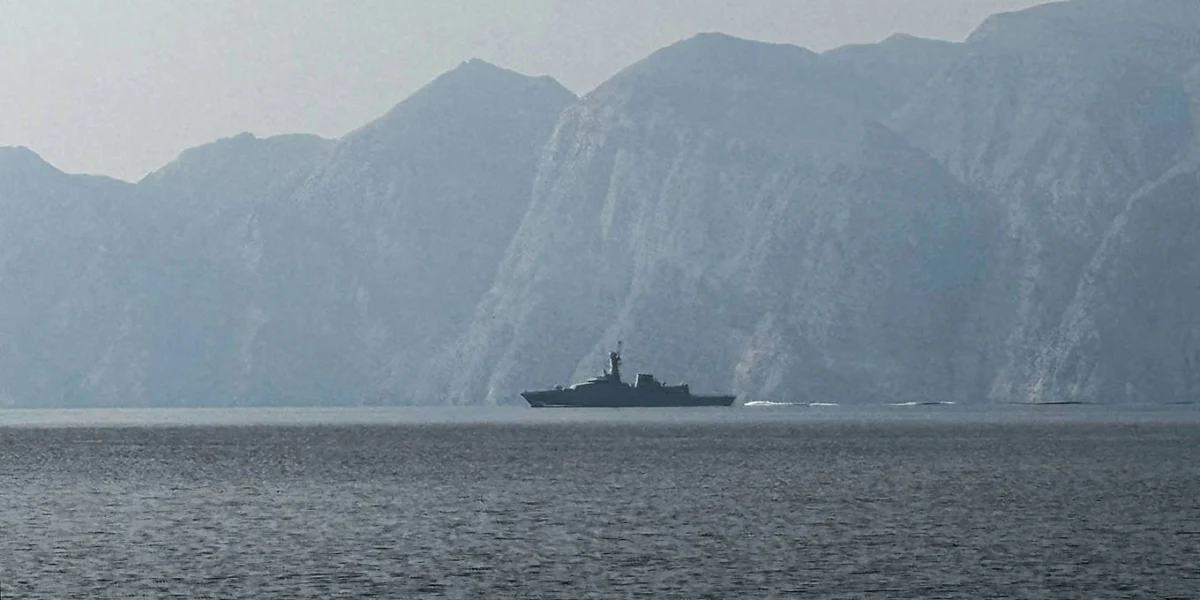
Simultaneously, the security of the Strait of Hormuz has become a global economic liability. Approximately 20% of the world’s total oil consumption passes through this narrow waterway daily. Recent Iranian naval exercises and the deployment of "smart mines" in the vicinity have sent insurance premiums for commercial shipping soaring. Data from the International Chamber of Shipping suggests that a total closure of the Strait, even for a duration of 72 hours, could result in a 3% contraction of global GDP within a single quarter. For the United States, maritime security is a non-negotiable priority, yet for Iran, the Strait remains its most potent "asymmetric lever" against economic sanctions.
The Necessity of a Multilateral Regional Framework
The core of the argument presented by regional figures like Ahmet Davutoğlu is that the US and Iran are currently trapped in a zero-sum game. When two parties view every concession as a loss and every gain by the opponent as an existential threat, bilateralism becomes a tool for posturing rather than problem-solving. A broader regional framework would shift the focus from a "tug-of-war" to a "security architecture."
1. Incorporating Regional Powerhouses
A sustainable deal cannot be struck without the involvement of Turkey, Saudi Arabia, and Qatar. Turkey, as a NATO member with significant economic ties to Iran, and Saudi Arabia, as the leader of the Sunni Arab world currently pursuing its "Vision 2030" economic diversification, have a shared interest in a stable Iran. By bringing these actors to the table, the burden of "policing" a deal shifts from Washington to a collective of regional stakeholders.
2. Addressing the Palestinian Question
The ongoing instability in the Palestinian territories remains the primary driver of Iran’s "proxy warfare" strategy. As long as the Palestinian issue remains unresolved, Iran can claim ideological legitimacy for its support of groups like Hezbollah and Hamas. A regional framework would need to link Iranian de-escalation with a credible, international commitment to a two-state solution or a significant improvement in Palestinian autonomy, thereby stripping the "Axis of Resistance" of its primary recruitment and propaganda tool.
3. Economic Integration vs. Sanctions
The current "maximum pressure" strategy has reached a point of diminishing returns. Iranian trade data for 2025 suggests that Tehran has successfully pivoted much of its economy toward non-Western markets, specifically through increased energy exports to China and expanded trade routes via the International North-South Transport Corridor (INSTC). A regional framework would replace the "stick" of sanctions with the "carrot" of regional economic integration, making Iran’s prosperity dependent on regional peace rather than its ability to circumvent Western restrictions.
Official Responses and Global Reactions
The international community has reacted to the collapse of the Islamabad talks with a mixture of alarm and resignation. A spokesperson for the US State Department stated that while the administration remains "open to diplomacy," it will not "sit idly by while Tehran uses negotiations as a screen for further enrichment."
In Tehran, the Foreign Ministry released a statement blaming "American hegemony" for the failure of the talks, asserting that Iran would not negotiate "under the shadow of threats." However, more moderate voices within the Iranian parliament have suggested that a "regional solution for regional problems" might be the only way to alleviate the crushing weight of inflation, which reached 55% in early 2026.
Beijing and Moscow have both called for "restraint" and have signaled their support for a multilateral approach. The Chinese Foreign Ministry indicated that any future talks must respect the "sovereignty and security concerns of all Middle Eastern nations," a subtle nod toward the inclusion of regional powers in the negotiation process.
Analysis: The High Stakes of the Second Round
As the world looks toward the reported second round of talks, the stakes could not be higher. If these discussions also end in a stalemate, the likelihood of a kinetic military confrontation increases exponentially. The "shadow war" that has characterized the last decade—consisting of cyberattacks, maritime sabotage, and proxy skirmishes—is reaching a breaking point.
The failure of bilateralism in April 2026 is a clear indicator that the old methods of diplomacy are no longer sufficient for the complexities of the mid-2020s. The interconnected nature of modern conflict means that a "nuclear deal" cannot exist in a vacuum; it must be tied to maritime security, regional trade, and political stability in the Levant.
The proposed transition to a regional framework is not merely a diplomatic preference but a strategic necessity. By expanding the table, the international community can move away from the binary logic of US-Iran hostility and toward a collective security arrangement that recognizes the realities of the 21st-century Middle East. Without such a shift, the upcoming second round of talks is likely to be nothing more than a prelude to a much larger, and far more dangerous, regional conflagration.