The Reality of Market Volatility and the Necessity of Long-Term Resilience in Investing

The promise of long-term wealth accumulation through the U.S. stock market has long been a foundational principle of modern finance, yet the journey toward those returns is rarely a linear trajectory. While historical data indicates that patient investors are generally rewarded, the path is punctuated by periods of prolonged stagnation, significant drawdowns, and extreme volatility that can test the resolve of even the most seasoned market participants. Understanding these "bearish" intervals is essential for institutional and retail investors alike, as these periods are not merely statistical anomalies but structural realities of the market cycle.
A Chronology of Stagnation: When Markets Go Nowhere
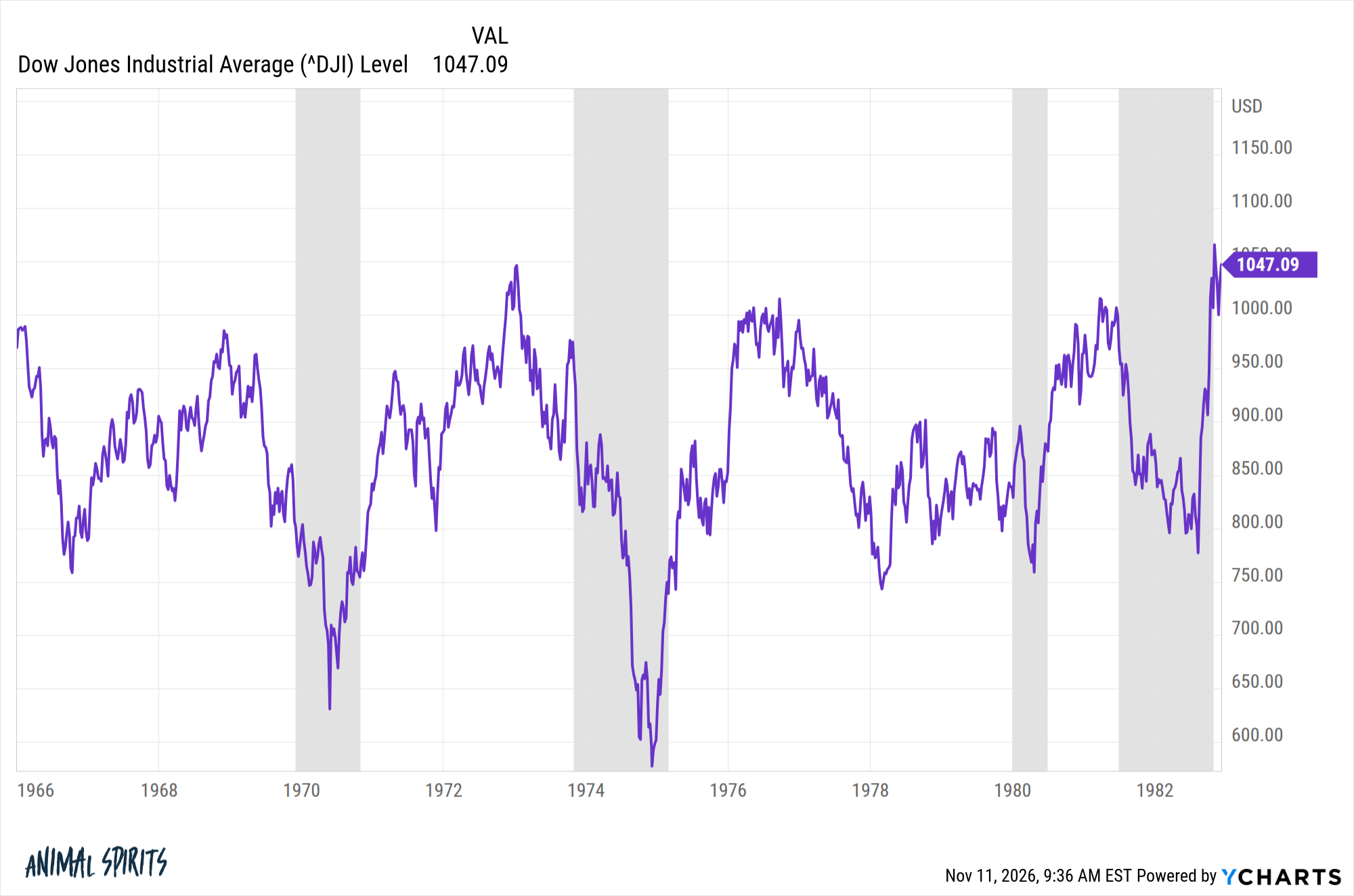
The history of the Dow Jones Industrial Average (DJIA) provides a sobering look at how long-term cycles can erode investor capital. Between 1966 and the autumn of 1982, the Dow experienced a period of effective stagnation. Investors who entered the market at the peak of 1966 would have seen the index struggle to breach the 1,000-point threshold for sixteen consecutive years. This era, characterized by high inflation and economic uncertainty, serves as a primary example of "dead money," where price appreciation remained elusive despite the passage of over a decade.
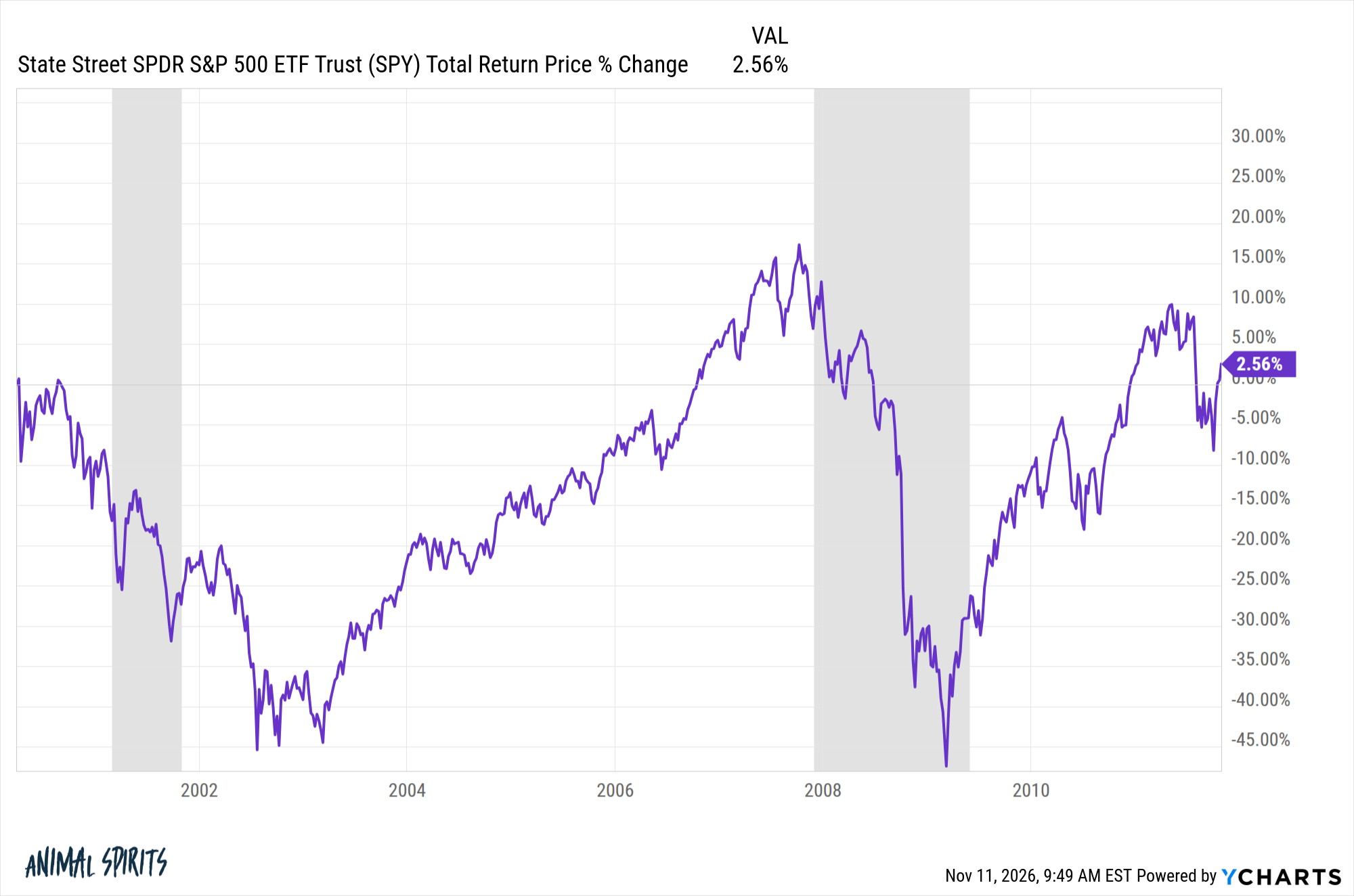
This phenomenon was mirrored, and arguably intensified, at the turn of the 21st century. The S&P 500 endured a period from March 2000 through October 2011 that resulted in net-zero returns for investors, even when accounting for the reinvestment of dividends. This twelve-year span was marked by two major cyclical bear markets—the bursting of the dot-com bubble and the 2008 Great Financial Crisis—which systematically dismantled the gains of the late 1990s.
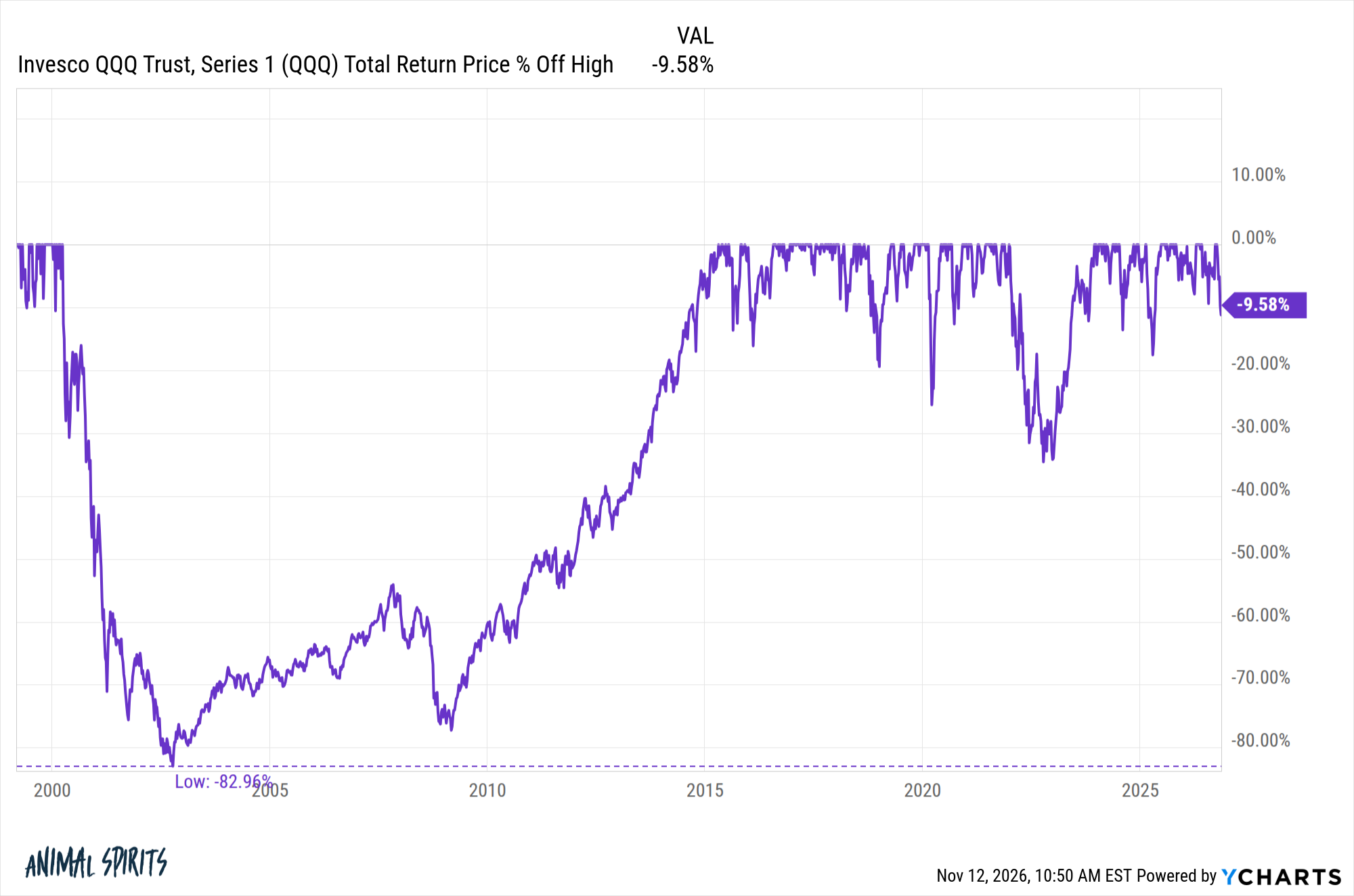
The technology-heavy Nasdaq 100 fared even worse during the same timeframe. Following the collapse of the tech bubble in early 2000, the index suffered a decline of more than 80%. Investors who held positions through this crash did not reach a breakeven point until 2015, effectively enduring fifteen years of negative or flat performance. These historical markers illustrate that "the long run" is not a static timeframe, but rather a variable that can be extended by systemic market failures.
Analyzing the Mechanics of Downward Cycles
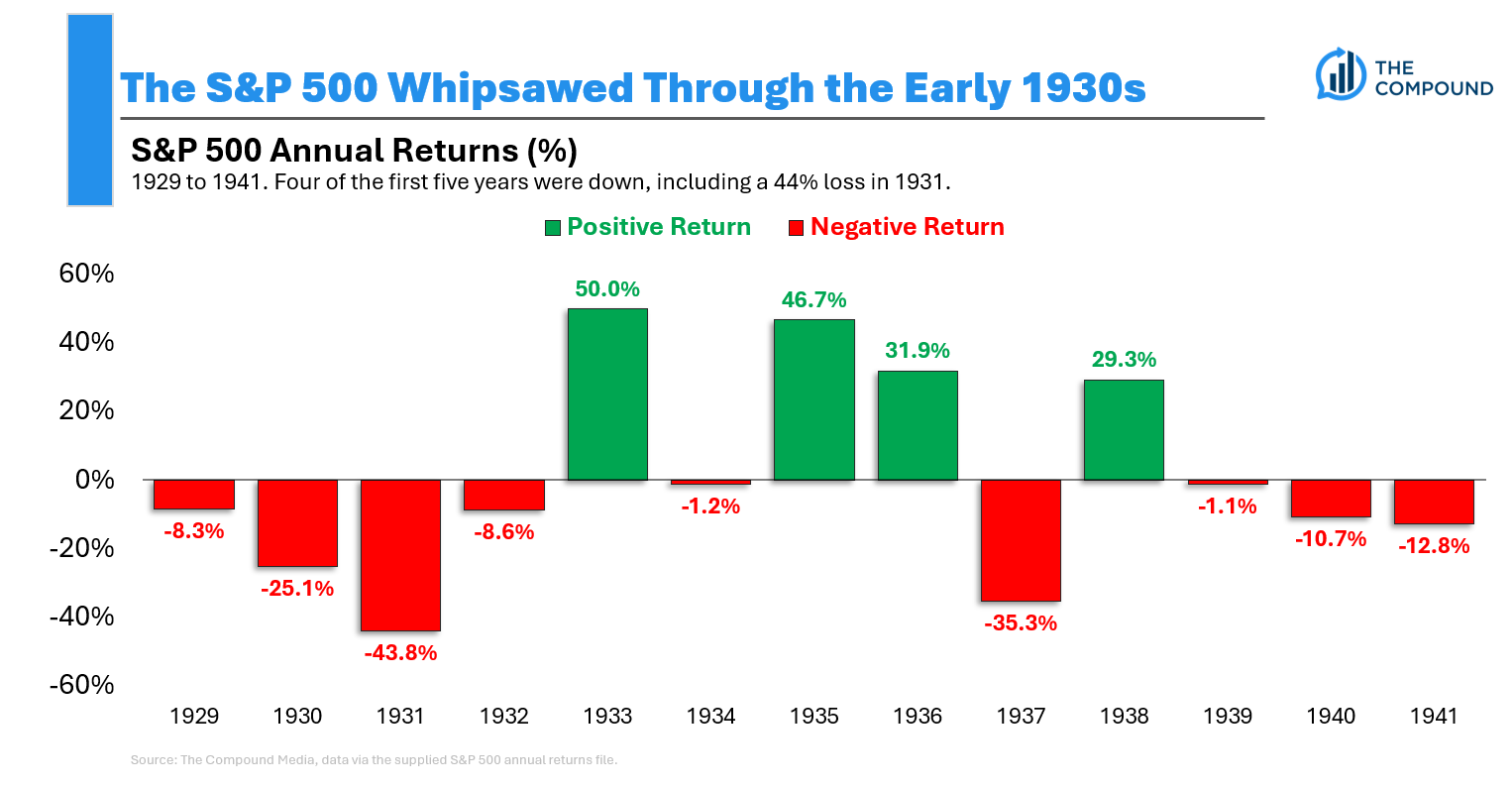
To comprehend the full scope of market risk, one must examine the volatility of the 1930s. Between 1929 and 1941, the U.S. stock market recorded a negative return in nine out of thirteen years. The cumulative loss over this period reached 35%, a figure that underscores the deceptive nature of annual volatility. Despite several years of robust double-digit gains—some exceeding 40%—the intermittent losses were of such magnitude that the market remained trapped in a long-term downward trend.
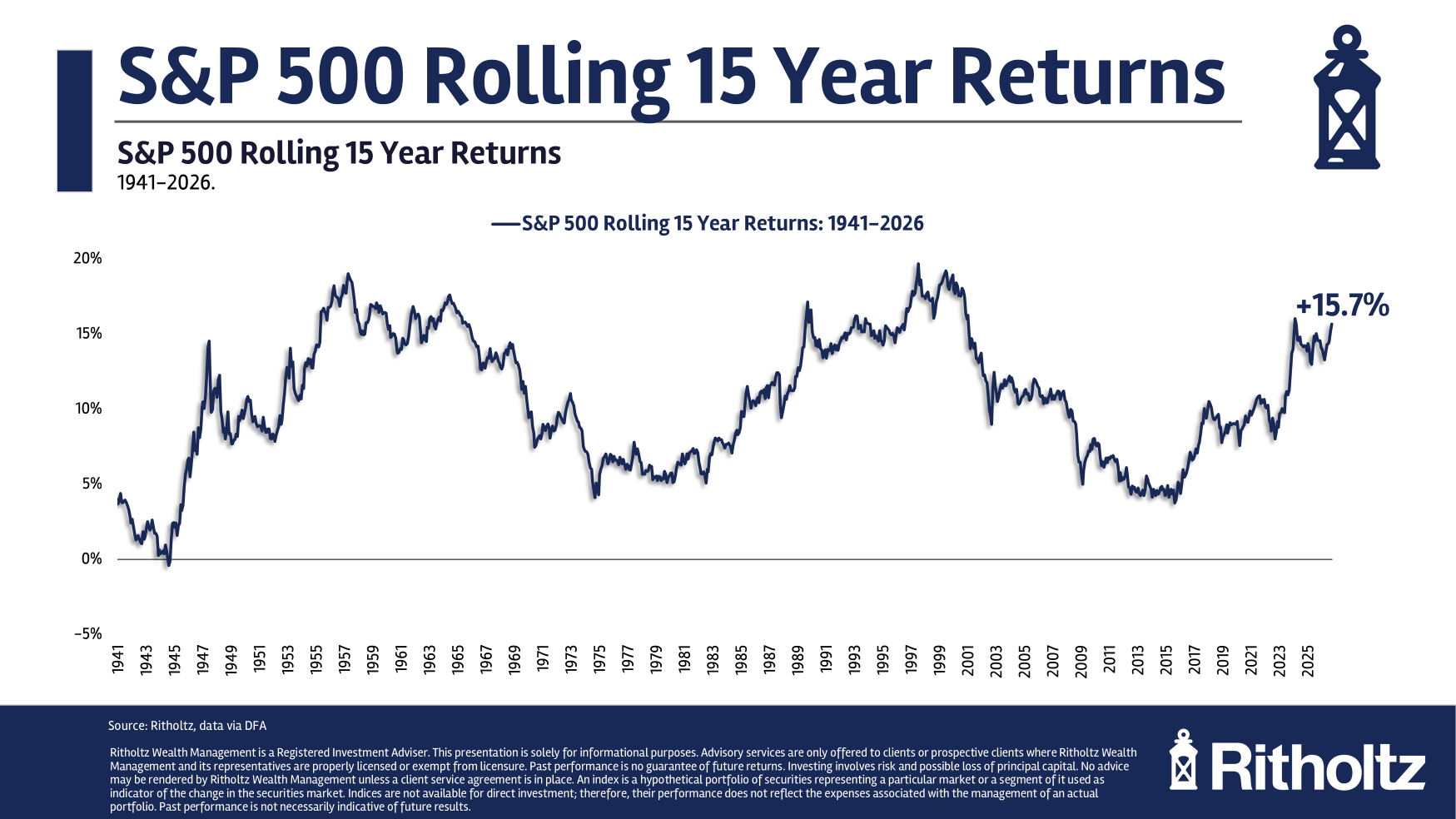
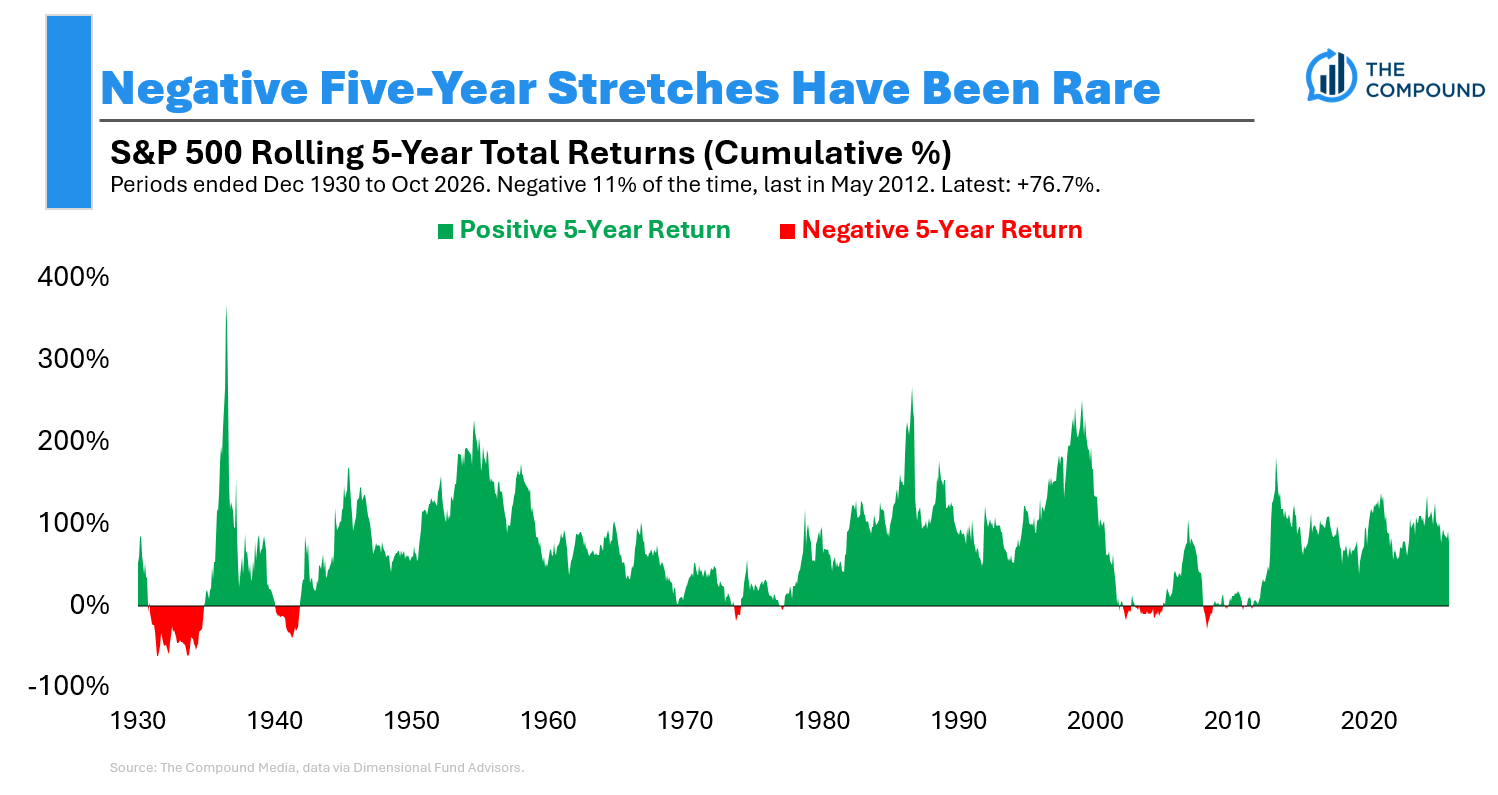
When analyzing rolling five-year returns, the data reveals that while the historical win rate is roughly 89%, the remaining 11% represents significant periods of financial hardship. There have been at least ten distinct instances in history where a five-year holding period resulted in a net loss. While five years may seem like a manageable horizon for an institutional investor, the psychological and liquidity pressures faced by individual investors during these windows can lead to forced exits at the worst possible times.
Frequency and Depth of Bear Markets
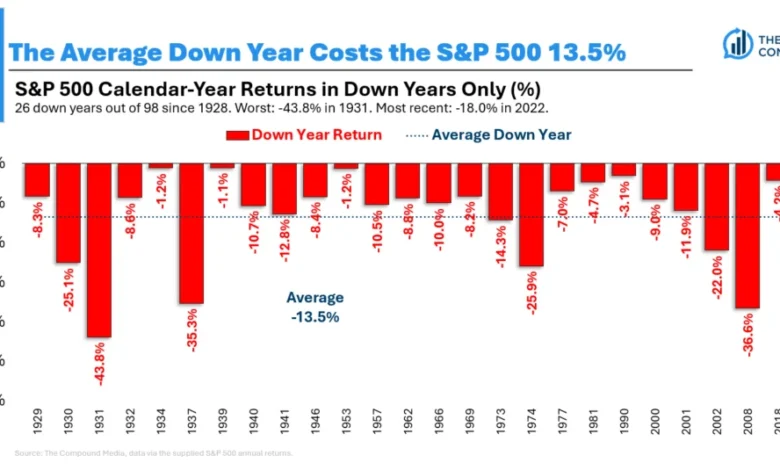
Since the late 1920s, the stock market has exhibited a clear pattern of frequent, though temporary, declines. A critical observation for risk management is that approximately 50% of all down years in the U.S. equity market are characterized by double-digit percentage drops. This suggests that when the market does turn negative, it rarely does so in a mild fashion.
The post-World War II era provides further evidence regarding the duration of recovery. During the 1973-1974 bear market, investors faced a 46-month period of being "underwater." Similarly, the recovery phase following the 2008 Great Financial Crisis required 17 months to reach a market bottom and an additional 20 months to reclaim previous all-time highs. These recovery windows demonstrate that the cost of a bear market is not just the initial loss of equity, but the significant opportunity cost of time spent waiting for a return to parity.
Implications for Portfolio Construction
The reality of these historical cycles carries profound implications for modern financial planning. Advisors often emphasize the importance of liquidity and asset allocation to mitigate the impact of prolonged drawdowns. By maintaining a diversified portfolio, investors can potentially dampen the volatility of a pure equity play.
Financial experts suggest that the primary risk to long-term success is not necessarily the volatility itself, but the behavioral reaction to that volatility. The tendency to panic during a multi-year stagnation period is the greatest threat to compounding. Consequently, the development of a robust financial plan—one that incorporates emergency liquidity, realistic expectations for long-term growth, and the inclusion of non-correlated assets—is the only proven mechanism for surviving bear cycles.
Contextualizing Risk and Reward
Recent discussions among financial professionals, including analysts at Ritholtz Wealth Management, have highlighted that while the "good" in the market—characterized by consistent long-term growth—often receives the most attention, the "bad" is a mathematically inevitable component of the investment process. Managing expectations regarding market cycles is not a pessimistic exercise; rather, it is a risk-mitigation strategy.
The consensus among market observers remains that while long-term returns have historically been favorable, the path to those returns is fraught with periods of intense pressure. Investors are advised to view bear markets not as permanent failures of the system, but as necessary, albeit painful, recalibrations of market value. The ability to endure these cycles, rather than the ability to time them, remains the defining characteristic of successful wealth preservation.
Summary of Historical Lessons
As evidenced by the data from the 1930s, the 1970s, and the 2000s, the U.S. stock market does not move in a straight line. Investors who rely on a simplistic view of average annual returns often fail to account for the "sequence of returns risk"—the danger that a poorly timed market entry will coincide with a multi-year downturn.
For those currently navigating the markets, the historical evidence serves as both a warning and a guide. It suggests that portfolios must be built with the assumption that future "lost decades" are possible. By preparing for these periods of stagnation through disciplined asset allocation and long-term liquidity management, investors can ensure they remain in the market long enough to benefit from the subsequent recovery phases. Ultimately, the survival of a portfolio during a bear market is determined by the preparation made during the bull market.