Trading Signal Pool: Unlocking Alpha Through Aggregation and Ensemble Methods

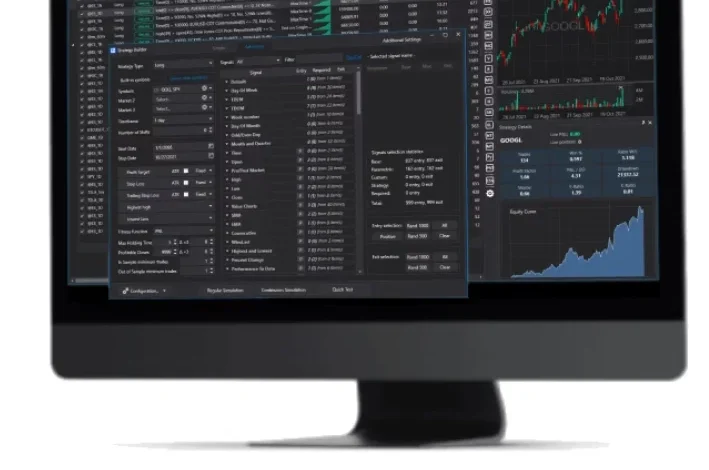
The quest for a sustainable edge in financial markets has long driven traders and quantitative analysts to explore innovative approaches to signal generation. Traditional technical indicators, while foundational, often possess only a marginal predictive power individually, making them susceptible to market regime shifts and data decay. Build Alpha, a quantitative strategy development platform, introduces the "Trading Signal Pool" as a novel solution to this challenge, aiming to transform a multitude of weak, disparate signals into a robust, unified meta-signal. This article delves into the mechanics, rationale, and practical applications of the Trading Signal Pool, exploring how it leverages ensemble methods and statistical aggregation to potentially enhance trading strategy performance across diverse asset classes.
What Exactly Is a Trading Signal Pool?
At its core, a Trading Signal Pool is a sophisticated aggregation mechanism that consolidates dozens, or even hundreds, of individual trading signals into a single, percentage-based output. Instead of scrutinizing each indicator in isolation, the Signal Pool assesses the collective agreement among its constituent signals on any given trading bar. The resulting figure represents the percentage of underlying signals that are currently active or "true." This percentage then becomes the basis for a trading rule. For instance, a trader might decide to initiate a trade only when the Signal Pool exceeds a certain threshold, such as 67% or 80%, with the optimal threshold determined through rigorous data analysis and backtesting.
The underlying principle echoes concepts found in evolutionary biology, specifically the idea of a "1-mutant neighborhood" in scientific research. A single data point, or in this analogy, a single mutation, can be fragile and prone to error. However, a convergence of evidence from a "neighborhood" of related points, all pointing in the same direction, offers a significantly higher degree of structural reliability. Similarly, when dozens of independent signals align, the resulting confluence provides a distinct and more dependable form of market information than any single signal could offer alone.
A Practical Illustration of Signal Pooling
To grasp the concept, consider a simplified example. Imagine a trading system that incorporates three variations of the Relative Strength Index (RSI), each with a different lookback period. On any given trading bar, the percentage of these three signals that are "true" could result in four possible states: 0%, 33%, 67%, or 100%. A trader could then define a rule to only enter a trade when the Signal Pool reaches 67% or higher, or perhaps only when it hits the maximum of 100%. The specific threshold becomes a tunable parameter, amenable to statistical testing and optimization.
However, the true power of the Signal Pool emerges not from pooling multiple variations of the same indicator, but from aggregating genuinely diverse signals. This includes signals derived from various market dynamics such as mean reversion, trend following, volatility assessment, market breadth analysis, intermarket relationships, and sentiment indicators. By encompassing such a broad spectrum of market perspectives, the Signal Pool can provide a more comprehensive snapshot of the prevailing market regime, moving beyond the limitations of analyzing a single market variable.
The Rationale Behind Signal Pooling
The efficacy of traditional technical analysis indicators has, over time, seen a diminishing edge. The original Relative Strength Index (RSI), for example, demonstrated remarkable performance on the historical data it was initially tested against. However, its predictive power has demonstrably waned across different markets and timeframes since its inception. This pattern of a small, decaying edge is characteristic of many classical indicators.
Signal Pools offer a multi-faceted approach to combat this decay and potentially uncover or sustain an edge through three primary mechanisms: uniqueness, ensembling, and a willingness to embrace non-intuitive signals.
The Significance of Uniqueness in Trading Edges
As noted by influential traders such as Jaffray Woodriff of Quantitative Investment Management, a substantial trading edge typically stems from at least one of three key factors: unique data, unique methodologies, or unique execution. Build Alpha directly addresses unique execution through its advanced genetic algorithm and LLM orchestrator, capable of generating novel strategies. The platform also supports unique data by incorporating a wide array of non-price-based information, including Commitment of Traders (COT) data, market breadth, sentiment indicators, options flow, and user-imported custom data. The Signal Pool itself represents a clean and effective method for achieving a unique methodology. By aggregating numerous signals into a percentage-based composite, the Signal Pool introduces a novel feature, even when the underlying individual signals are commonly known. This distinct aggregation technique can itself be a source of competitive advantage.
The Diminishing Importance of Explainability
A prevalent mindset among many traders is the necessity of understanding the precise "why" behind a trading strategy’s success before committing capital. While this desire for interpretability is understandable, it can also act as a significant bottleneck, limiting the scope and diversity of strategies that traders are willing to explore. In contrast, the efficacy of a strategy, when backed by substantial sample sizes and statistical significance, often transcends the need for a simple narrative explanation.
This perspective is famously championed by Jim Simons, widely regarded as the most successful systematic trader in history. As documented in Gregory Zuckerman’s book, The Man Who Solved the Market, Simons and his researchers prioritized data-driven discovery over intuitive hypothesis generation. They found that a significant portion of their most profitable signals were non-intuitive, meaning they could not easily articulate the underlying cause. However, if these signals met rigorous statistical criteria for strength and stability, the team was comfortable deploying them. Simons’ approach highlights a fundamental truth: the predictive power of a signal, validated through robust statistical testing and out-of-sample performance, holds more weight than our ability to fully comprehend its mechanics. The success of a Signal Pool, therefore, should be judged not by its intuitive appeal, but by its demonstrated statistical validity.
The Ensemble Argument: Strength in Numbers
The concept of ensembling, a cornerstone of modern machine learning and statistical prediction, is directly applicable to trading signal aggregation. Ensembling involves combining multiple weak predictors to create a single, more powerful predictor. This principle underpins the success of various advanced algorithms, including Random Forests and Gradient Boosting, and was central to the winning strategies in renowned competitions like the Netflix Prize.
Jaffray Woodriff echoes this sentiment, emphasizing the power of creating "one super-model from a large and diverse group of base predictive models." Signal Pools embody this ensemble philosophy at the signal level, rather than at the strategy level. By pooling individual signals, rather than combining complete trading strategies, traders gain an additional layer of control and analytical leverage. This approach revitalizes the utility of "outdated" technical indicators. While an individual indicator like RSI might have lost much of its standalone edge, its inclusion in a diverse pool of twenty or more signals from different categories can restore its value as a contributing component to a more robust prediction.
Building "OR" Signals with Ease
A particularly valuable feature of Signal Pools is their inherent ability to facilitate the creation of "OR" logic in trading strategies. Most traders traditionally construct strategies using "AND" conditions, requiring multiple criteria to be met simultaneously. However, the ability to trigger a trade when "signal A OR signal B" is true can unlock new trading opportunities. By incorporating two signals into a Signal Pool and setting the threshold just above 0%, the pool will return true whenever at least one of the selected signals is active. This elegantly replicates the functionality of an OR gate. Conversely, an "AND" condition can be achieved by setting the pool’s threshold to 100%, ensuring all constituent signals are true. The spectrum of thresholds between these extremes offers a rich landscape for exploration and strategy refinement.
Creating Custom News Filters
Signal Pools also provide a streamlined method for constructing custom news event filters without the need for complex additional programming. This is achieved by leveraging the same aggregation mechanic but with opposite threshold interpretations. For instance, one could create a pool of three significant macroeconomic events, such as Federal Reserve meetings. A "trade-on-news" strategy could be triggered when the pool’s percentage is above 0% (meaning at least one event is occurring), while an "avoidance" strategy might be triggered when the pool’s percentage is at 0% (indicating no such events are scheduled). This allows for the creation of two distinct, yet related, trading strategies from the same set of signals, with the threshold being the sole differentiator. This approach also simplifies the integration of news avoidance rules with other regime or signal filters, consolidating multiple conditions into a single, coherent rule.
The Four-Step Process for Building a Signal Pool
Build Alpha’s Custom Signal Editor is designed for rapid creation of Signal Pools, eliminating the need for coding or scripting. The process is streamlined into four straightforward steps:
- Open the Editor: Access the Custom Signal Editor via the File menu or by pressing the F4 key. Select "Pool" as the signal type and assign a descriptive name.
- Add Signals: Choose from an extensive library of over 7,000 built-in signals spanning numerous categories, including price action, technical indicators, chart patterns, seasonality, COT data, market breadth, sentiment, volatility, volume, intermarket relationships, multi-timeframe analysis, yields and spreads, options flow, economic data, news, and custom Python scripts. To maximize the benefit of pooling, it is recommended to select signals from diverse categories rather than multiple variations of the same indicator. For example, pooling RSI, MACD, Bollinger Bands, ADX, and a sentiment indicator would be more effective than pooling five different RSI parameters.
- Set the Rule: Define the threshold for the Signal Pool. This threshold dictates when the pooled signal will become active. For instance, setting the rule to "trade only when the pool is at or above 80%" converts the percentage output into a tradable signal. The threshold can be fine-tuned using the provided interface.
- Generate Strategies: Once defined, the Signal Pool acts as a first-class entry or exit signal within the main Strategy Builder, treated identically to any built-in indicator. Build Alpha automatically embeds the Signal Pool’s definition within the exported strategy code, ensuring seamless integration regardless of the target platform.
Within the signal addition step, Build Alpha further enhances flexibility by allowing parameter variations within individual signals. For example, an RSI signal can be defined with a range of lookback periods (e.g., 2 to 14) and thresholds (e.g., 70 to 90), effectively transforming a single signal definition into dozens of individual members of the pool. Visualizing the pool’s behavior on different markets is also facilitated through a "Plot" function, enabling users to inspect its performance across various symbols without reconfiguring the pool.
Asset Class Agnosticism
A significant advantage of the Signal Pool methodology is its applicability across a wide array of asset classes. Whether trading forex pairs, stocks, ETFs, futures, commodities, interest rates, or cryptocurrencies, the underlying logic and mechanics of the Signal Pool remain consistent. The same engine, thresholding rules, and export functionalities are available across all markets. This broad applicability encourages traders to diversify their trading activities and avoid the potential pitfalls of over-reliance on a single market, such as the prevalence of signal vendors and short-volatility strategies often found in the forex market. Building proprietary strategies with Signal Pools offers a cleaner path to independent trading success.
Automating Signal-Pool-Driven Strategies
Build Alpha provides fully automatable strategy code generation for all major retail and professional trading platforms, including TradeStation, NinjaTrader 8, MultiCharts, MetaTrader 4/5, TradingView Pine Script, ProRealTime, and Python (for Interactive Brokers). This ensures that strategies developed using Signal Pools can be seamlessly deployed for live automated trading. Furthermore, Build Alpha’s integration with live data brokers allows for real-time monitoring of positions, profit and loss, and trade alerts for any pool-driven strategy. As with any newly developed strategy, rigorous robustness testing, including noise, walk-forward, Monte Carlo simulations, and comparisons against random benchmarks, is strongly recommended before deploying capital.
The Honest Caveat: No Magic Bullet
It is crucial to acknowledge that pooling weak signals does not magically create predictive edge where none exists. If the underlying signals lack informational content for the specific market and timeframe being analyzed, the Signal Pool will likely reflect this deficiency. The true benefit of pooling arises from aggregating signals that each possess at least a small, consistent edge. In essence, the principle of "garbage in, garbage out" still applies. The robustness testing pipeline is the critical tool for discerning which signals contribute meaningful information and which do not.
Key Takeaways from Signal Pools
The Trading Signal Pool methodology offers several distinct advantages for quantitative traders:
- Unified Output: A Signal Pool consolidates the state of dozens of individual signals into a single percentage, providing a composite output from numerous inputs.
- Threshold-Based Trading Rules: Trading decisions are driven by predefined thresholds applied to the pool’s percentage, enabling flexible rule creation (e.g., >67%, =100% for AND, >0% for OR).
- Breadth Over Depth: The strategy emphasizes pooling signals across diverse categories (mean reversion, trend, volatility, breadth, intermarket, etc.) rather than focusing on multiple variations of a single indicator.
- Ensemble Power: Signal Pools leverage the statistical benefits of ensembling, transforming weak predictors into a stronger composite signal, akin to advanced machine learning models.
- Statistics Over Narrative: The emphasis is on statistically validated performance and out-of-sample stability rather than subjective explanations for why a signal works.
- Effortless Implementation: Build Alpha enables the creation, validation, and export of Signal Pools in a simple four-step process, with automatic embedding of the logic into generated strategy code.
Summary: A Powerful Tool for Enhanced Signal Generation
In a market environment where common data and widely used indicators often yield only a small, decaying edge, the Trading Signal Pool presents a compelling methodology for enhancing signal generation. By aggregating numerous "weak" predictors into a single, composite signal, it extracts more information than any individual indicator could provide. This approach offers a unique feature, as defined by quantitative trading pioneers, without demanding proprietary data or complex machine learning expertise. Signal Pools simplify the implementation of "OR" logic and allow traders to extract greater value from familiar indicators. Build Alpha’s platform further democratizes this powerful technique, enabling traders to build, validate, and export custom Signal Pools with remarkable ease and efficiency, thereby integrating a sophisticated tool into the modern quantitative trading arsenal.