Trump Doubles Down on Hardline Politics by Appointing Stephen Miller White House Chief of Staff Following Midterm Defeats

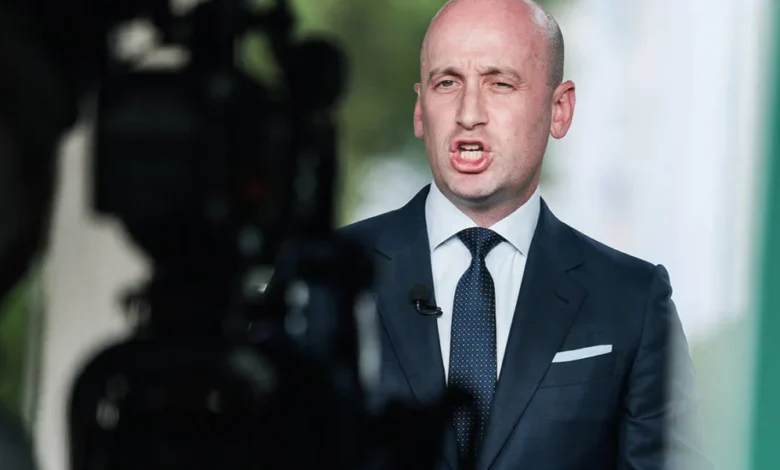
NEW YORK — Following a bruising cycle of midterm elections that handed the ruling administration decisive congressional losses, United States President Donald Trump has chosen confrontation over compromise. In a move that has sent shockwaves through Washington and galvanized political analysts across the globe, President Trump has appointed Stephen Miller—one of the most polarizing and aggressive architects of his domestic agenda—as the White House Chief of Staff.
Rather than signaling a pivot toward political moderation or legislative pragmatism, which is customary for a beleaguered executive facing a hostile legislature, this high-stakes appointment serves as a definitive statement of intent. By elevating Miller to the pinnacle of West Wing operations, Trump has indicated that he intends to double down on the hardline ideological framework that defined his tenure’s most controversial moments.
Main Facts of the Appointment
The announcement came on a Monday following a tumultuous election week that saw the administration lose critical majorities in key legislative chambers. The defeat was widely interpreted by pollsters and political commentators as a public referendum on executive overreach, economic friction, and aggressive social policies.
Instead of moderating his administration’s trajectory to bridge the newfound legislative divide, Trump opted to reinforce his inner circle with his most steadfast and uncompromising loyalist. Stephen Miller, long known for his hardline stances on national security, civil service restructuring, and border enforcement, assumes the role of Chief of Staff with immediate effect.
The Chief of Staff position is traditionally viewed as the operational engine of the presidency, requiring a master of legislative negotiation, administrative management, and coalition-building. However, the selection of Miller—a figure whose career has been defined by ideological rigidity and aggressive rhetoric—signals a departure from traditional governance. Analysts note that this appointment transforms the Chief of Staff role from a bridge-builder into a defensive fortress, protecting the administration’s core principles from impending congressional investigations and legislative gridlock.
Background Context and Political Climate
To understand the weight of this appointment, one must examine the broader political landscape leading up to the 2026 midterms. The administration had spent the preceding two years navigating compounding domestic challenges, including persistent inflation concerns, intense partisan polarization, and judicial pushback against executive actions.
Midterm elections historically serve as a referendum on the sitting president, and the 2026 cycle proved to be no exception. Exit polls and voting patterns indicated widespread voter fatigue with polarizing rhetoric and a desire for institutional stabilization. The resulting electoral losses stripped the administration of critical legislative leverage, setting the stage for a contentious final two years of the presidential term.
Faced with a choice between political flexibility and uncompromising defiance, Trump’s decision to appoint Miller reflects a long-standing pattern: when cornered politically, the president historically leans into his base, relying on conflict rather than conciliation to maintain political momentum.
Chronology of the Transition
The sequence of events leading to the elevation of Stephen Miller underscores the reactive nature of the administration’s post-election strategy:
- Election Night (November): Early returns project significant legislative losses for the ruling party, immediately sparking speculation regarding potential Cabinet shakeups and strategic pivots.
- Post-Election Analysis (Days 1–3): Internal debates within the West Wing reportedly fracture between advisors urging a centrist legislative strategy and hardliners advocating for an unyielding defense of the administration’s core platform.
- The Decision (November 9): President Trump officially announces the appointment of Stephen Miller as White House Chief of Staff, dismissing calls for moderation and cementing the hardline faction’s control over executive operations.
- Immediate Aftermath: Capitol Hill reacts with sharp polarization, as opposition leaders condemn the choice as a declaration of political warfare, while loyalist lawmakers praise the decision as a sign of unwavering leadership.
Supporting Data and Historical Precedent
Stephen Miller’s rise to Chief of Staff is unprecedented in modern American political history regarding the explicit ideological polarization it represents. Historically, presidents who suffer significant midterm setbacks—such as Ronald Reagan after the 1982 midterms or Barack Obama after the 2010 "shellacking"—frequently appoint seasoned political operators with deep ties to Capitol Hill to facilitate bipartisan compromise.
Data compiled by congressional research groups indicates that administrations facing divided government pass an average of 35% fewer major legislative initiatives when choosing confrontation over negotiation. By placing an ideologue at the helm of White House operations, the administration appears willing to trade legislative productivity for ideological purity, setting the stage for government shutdowns, protracted budgetary standoffs, and aggressive use of executive orders.
Furthermore, public opinion polling surrounding Miller’s past policy positions shows deep national division. While the administration’s core base views his hardline stances as vital defenses of national sovereignty, mainstream and independent voters consistently register high disapproval ratings regarding his approach to governance and civil rights.
Official Responses and Stakeholder Reactions
The announcement elicited immediate, sharply divergent reactions from political stakeholders across the United States.
On Capitol Hill, opposition leaders expressed profound alarm. A senior congressional leader from the opposing party released a statement declaring: "By appointing Stephen Miller, the president is signaling that he has learned nothing from the verdict of the American people. This is not a strategy for governance; it is a blueprint for perpetual conflict and institutional erosion."
Conversely, staunch defenders of the administration rallied around the decision. Several prominent lawmakers voiced strong support, emphasizing Miller’s loyalty and administrative competence. A prominent administration-aligned senator noted, "At a time when the establishment wants to water down our platform, Stephen Miller provides the clarity, strength, and backbone needed to ensure our promises to the American people are kept without compromise."
Civil rights organizations and advocacy groups also weighed in heavily, expressing grave concerns regarding the administration’s future policy direction, particularly concerning immigration, civil liberties, and federal agency oversight. Legal defense funds announced plans to immediately scale up monitoring operations to challenge anticipated executive actions.
Broader Impact and Implications
The long-term implications of Stephen Miller’s tenure as Chief of Staff will likely reverberate across all branches of the federal government.
- Legislative Gridlock: With an uncompromising figure managing the West Wing, prospects for bipartisan legislation on critical issues—such as infrastructure funding, tax reform, and healthcare—dim significantly. The focus is expected to shift away from congressional compromise entirely, relying instead on unilateral executive actions.
- Judicial Battles: Expect a dramatic increase in litigation between the executive branch and federal courts. Hardline policies drafted and executed under Miller’s supervision will undoubtedly face immediate legal challenges from state attorneys general and civil rights organizations, pushing the judiciary to the center of national policy battles.
- Bureaucratic Restructuring: Miller has long advocated for sweeping overhauls of the federal civil service. His new position grants him unprecedented operational authority to reshape federal agencies, potentially replacing career civil servants with ideologically aligned appointees. This strategy risks lowering institutional memory and efficiency within government departments.
- The 2028 Electoral Horizon: Politically, this appointment casts a long shadow over the upcoming presidential election cycle. By cementing the hardline faction’s grip on the current administration, the party’s future nomination contest will likely be heavily influenced by the populist, nationalist playbook that Miller has championed for years.
Ultimately, Donald Trump’s decision to name Stephen Miller as Chief of Staff is a high-risk political gamble. In the wake of undeniable voter repudiation, the president has chosen not to bend to the political winds, but to fortify his administration against them. Whether this fortress strategy will successfully rally his base or deepen the administration’s political isolation remains one of the defining questions of contemporary American politics.
Related posts: