WEEX and HaasOnline Launch Strategic Collaboration Campaign Offering Automated Trading Incentives and Position Airdrops


The digital asset landscape is witnessing a renewed focus on algorithmic trading integration as WEEX, a global cryptocurrency derivatives exchange, and HaasOnline, a prominent provider of automated trading software, have officially launched their second joint campaign. Running from September 14 to October 12, 2026, the initiative is designed to incentivize the adoption of high-frequency and automated trading strategies among new and existing users. By leveraging the technical infrastructure of HaasOnline’s TradeServer, participants are invited to engage with WEEX’s extensive liquidity pools while competing for a share of a 30,000 USDT BTC-denominated airdrop pool.
The Strategic Context of the Collaboration
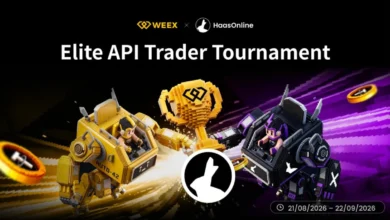
This campaign marks a significant escalation in the partnership between WEEX and HaasOnline, following the success of the "Elite API Trader Tournament" held in August 2026. The collaboration serves as a tactical response to the increasing demand for sophisticated trading tools in the retail derivatives market. As market volatility remains a persistent feature of the cryptocurrency ecosystem, traders are increasingly shifting away from manual execution toward automated, rule-based systems that mitigate human error and emotional decision-making.
By integrating HaasOnline’s bot architecture with WEEX’s exchange infrastructure, the partners aim to provide a seamless bridge between complex trading strategies and high-volume execution. The current event is structured to lower the barrier to entry for users unfamiliar with automated systems, offering a "try-before-you-buy" model that provides five complimentary trading bots to new registrants.
Event Chronology and Operational Timeline
The event is segmented into two distinct phases, with a total operational window of 28 days. The timeline is as follows:
- September 14, 2026: Official commencement of the campaign. Users gain access to the registration portal via the WEEX Elite Bot on Telegram.
- September 14 – October 12, 2026: The primary trading window. During this period, participants must execute trades on WEEX USDT-margined futures to satisfy volume requirements.
- October 12, 2026: The conclusion of the event, at which point registration for the campaign closes and final volume tallies are conducted for airdrop distribution.
Understanding the Technical Integration
At the core of this partnership is the integration of HaasOnline’s API-based trading servers with the WEEX order matching engine. This integration is designed to support high-throughput environments, allowing traders to manage positions across more than 1,500 spot markets and 950 perpetual futures pairs using a single API key.
The technical specifications allow users to employ various strategies, including Grid trading and Dollar-Cost Averaging (DCA), directly on WEEX’s futures platform. These tools are particularly relevant for users attempting to maintain "active status" during the campaign. Because the event rewards are tied to cumulative trading volume, the ability of a bot to execute orders 24/7 provides a significant advantage over manual trading, which is inherently limited by the physical constraints of the operator.
Analysis of the Incentive Structure
The incentive model for this event is tiered, placing a heavy emphasis on trading volume as the primary metric for success. Participants are competing for a portion of a 30,000 USDT BTC airdrop pool, with individual potential earnings capped at 3,000 USDT in position airdrops.
From an analytical standpoint, this structure serves two purposes: it encourages the utilization of the platform’s liquidity and validates the performance of the HaasOnline API integration under high-load conditions. However, market analysts emphasize that the efficacy of such incentives depends heavily on the cost-to-reward ratio. In high-volume campaigns, participants must carefully weigh the transaction fees incurred against the projected value of the airdrop. Because the rewards are paid as position airdrops—effectively serving as collateral for further leveraged trading—the incentive is inherently designed to sustain market activity rather than provide an immediate cash exit.
Risk Assessment and Market Implications
The intersection of automated trading and leveraged derivatives presents a unique set of risks that both WEEX and HaasOnline have sought to address in their public communications. Automated strategies, while efficient, can exacerbate losses during periods of flash crashes or extreme market liquidity crunches if parameters are set incorrectly.
Industry experts observe that the proliferation of such automated campaigns often leads to a spike in "bot-generated volume," which can artificially inflate the perceived liquidity of an exchange. For the average retail user, the critical takeaway is the necessity of risk management. The organizers have explicitly recommended that participants utilize WEEX’s simulated trading environment—a "paper trading" feature—to test the viability of their bot configurations before committing actual capital.
The emphasis on low-leverage strategies is a recurring theme in the documentation provided by the organizers. By encouraging users to rehearse on simulated accounts, the partnership is attempting to foster a more sustainable user base, prioritizing long-term platform engagement over the high-churn behavior often associated with short-term airdrop hunting.
Industry Reactions and Market Sentiment
While official statements from the firms remain focused on the technical benefits of the integration, the market response suggests a broader trend of institutionalization within the retail crypto sector. As exchanges look for ways to differentiate their offerings in a crowded market, providing access to professional-grade tools like those found in the HaasOnline ecosystem has become a standard competitive requirement.
Market observers note that the collaboration is also a test of the scalability of the WEEX infrastructure. By funneling a large influx of automated traffic through their API, the exchange is effectively stress-testing its capacity to handle high-frequency order flows. This is an essential step for any exchange looking to attract institutional-grade market makers, who require high uptime and low latency for their own proprietary algorithms.
Participation Guidelines and Eligibility
To participate in the campaign, interested parties are required to follow a specific protocol:
- Registration: New users must initiate their participation via the designated WEEX Elite Bot on Telegram. This process creates the necessary link between the user’s identity and the campaign tracking system.
- Bot Provisioning: Upon successful registration, the five complimentary HaasOnline trading bots are activated for the user’s account.
- Volume Generation: Users must engage in trading activities within the WEEX USDT-margined futures markets. The specific tiering of rewards is determined by the total volume traded throughout the 28-day window.
- Verification: All participants are encouraged to review the official campaign page for detailed terms and conditions, as the distribution of rewards is subject to final interpretation by WEEX.
The Broader Landscape of Automated Trading
The collaboration between WEEX and HaasOnline reflects a maturing market where the sophistication of the end-user is growing. Five years ago, retail traders relied primarily on manual order entry; today, the expectation for advanced order types, algorithmic execution, and automated portfolio management is the baseline.
This shift has profound implications for market efficiency. Automated bots contribute to tighter bid-ask spreads and more consistent liquidity, benefiting the broader ecosystem. However, it also introduces systemic risks, such as the potential for cascading liquidations if a large number of bots are programmed with similar stop-loss parameters. As these tools become more accessible, the responsibility for safe and effective deployment increasingly rests with the user.
Disclaimer and Final Guidance
As with all financial activities involving leveraged digital assets, participants should maintain a disciplined approach. The incentives provided during this campaign should be viewed as an auxiliary benefit rather than a core financial strategy.
The software provided by HaasOnline is a tool for execution; it does not guarantee profit. Users are solely responsible for their trading decisions, including the selection of strategies, risk management, and the protection of their account credentials. The volatility of the cryptocurrency market means that capital can be lost rapidly, and the use of leverage can amplify both gains and losses significantly. Participants are advised to only deploy funds that they are prepared to lose and to maintain a thorough understanding of the mechanics of the specific futures products they are trading.
For those looking to explore the capabilities of the HaasOnline integration beyond the scope of the campaign, both firms continue to offer support documentation and educational resources. This ongoing educational effort is a critical component of the collaboration, aimed at ensuring that as the platform scales, the user base remains informed and capable of navigating the complexities of modern digital asset derivatives.