The landscape of the United States residential real estate market is undergoing a profound structural shift as the era of aggressive institutional accumulation of scatter-site housing draws to a close. According to data released by Realtor.com for the first half of 2026, the "smart money"—defined as mega-investors who once dominated the acquisition of single-family homes, townhouses, and condos—has pivoted from a buying strategy to a divestment model. While these entities are retreating from the open market, smaller, individual corporate-backed investors are rushing to fill the void, creating a divergent trend in ownership patterns across the nation.
The Retreat of the Institutional Giants
Following the 2008 housing bust, large-scale investment firms entered the residential market with significant capital, purchasing distressed assets in bulk to convert them into rental inventory. This strategy transformed the rental market, as institutional landlords created massive portfolios of single-family homes. However, the market dynamics have shifted drastically in recent years.
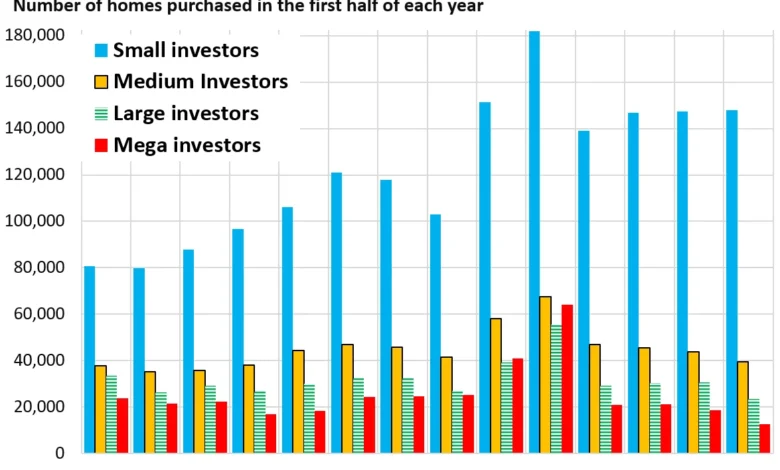
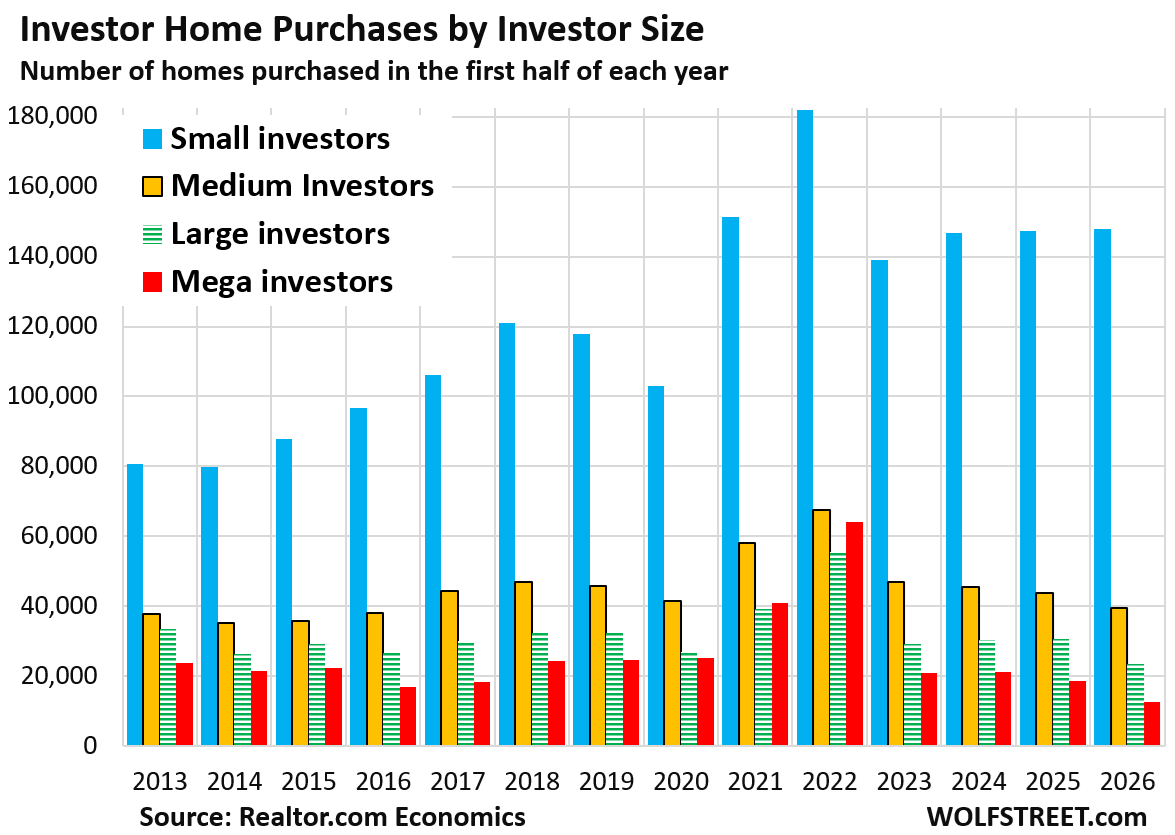
As of the first half of 2026, the data indicates that mega-investors—those with over 350 all-time property purchases—have seen their acquisition volume collapse by 80% from their peak in the first half of 2022. Similarly, large investors (those with 51 to 350 historical purchases) have reduced their acquisition volume by 58% over the same period. These firms are now actively liquidating their scatter-site portfolios, capitalizing on the significant appreciation in home values that occurred between 2020 and 2022. By selling these assets, they are effectively locking in multi-year gains while exiting a market segment that has become increasingly difficult to scale profitably.
A Pivot to Build-to-Rent Strategies
The retreat from existing housing stock does not signify a total departure from the rental sector by institutional players. Instead, these corporations have redirected their capital toward "build-to-rent" (BTR) developments. By partnering with homebuilders or establishing internal construction divisions—exemplified by firms like American Homes 4 Rent—mega-investors are now focused on developing entire neighborhoods specifically designed for the rental market.
This strategic shift addresses two critical needs for institutional landlords: operational efficiency and inventory control. Managing scattered individual homes is logistically complex and costly compared to managing centralized, purpose-built rental communities. Furthermore, by commissioning new builds, these firms contribute to the total housing supply, a move that provides a more favorable optics profile in an era where the "corporate landlord" model has faced significant public and political scrutiny.
The Surge of the Small Investor
While mega and large investors are withdrawing from the resale market, small investors—defined as entities with 1 to 10 all-time property purchases—have remained remarkably resilient. In the first half of 2026, these small investors purchased approximately 148,000 homes. While this figure represents a 19% decline from the peak in 2022, it stands in stark contrast to the significantly steeper drops seen among larger corporate entities.
The result of this divergence is a record-high market share for small investors. They now account for 66.2% of all investor-led purchases, a significant increase from their 45.9% share in 2013. It is important to note that this data tracks only corporate-entity purchases; if individual mom-and-pop investors who purchase property outside of a corporate structure were included, the dominance of this group would be even more pronounced. This demographic continues to view real estate as a primary vehicle for wealth accumulation, despite the historically high entry costs established during the post-2020 price surge.

Chronology of the Shift: 2022–2026
- H1 2022: Investor activity reaches its zenith. Institutional investors aggressively acquire single-family homes, contributing to a rapid escalation in national median home prices.
- 2023–2024: As mortgage rates rise and the cost of debt increases, large-scale investors begin to signal a strategic pivot. Earnings calls from major REITs highlight a transition from acquisition to portfolio optimization.
- H1 2025: Mega-investors solidify their position as net sellers, focusing on shedding scattered assets to streamline operations.
- H1 2026: The divergence becomes stark. Data confirms that small-scale investors are now the primary drivers of investment volume, while institutional giants focus almost exclusively on new construction and BTR projects.
Broader Economic Implications
The withdrawal of large-scale investors from the existing home market carries significant implications for the average American homebuyer. During the early 2020s, many potential homeowners complained that institutional buyers were pricing them out of the market by offering all-cash, over-ask bids. The current trend suggests that this specific competitive pressure is easing, as large institutional buying power is removed from the resale sector.
However, the housing market remains constrained by low inventory. While institutional firms are selling their existing portfolios, these sales are not necessarily hitting the market at a rate that offsets the decline in new construction and the broader "lock-in effect," where current homeowners with low mortgage rates are reluctant to sell.
Furthermore, the rise of small-scale investors presents a different set of challenges. Because these investors often rely on different financing models than the massive private equity funds that dominated the 2010s, they are more sensitive to local economic conditions. If the rental market softens or if property taxes continue to climb, this decentralized group of investors may face liquidity challenges, potentially leading to a new wave of localized property sell-offs.
Analysis of the "Smart Money" Thesis
The term "smart money" is often used to describe institutional investors who possess better information and the ability to move markets. If these institutions are selling, does it mean that individual investors currently buying are making a mistake?
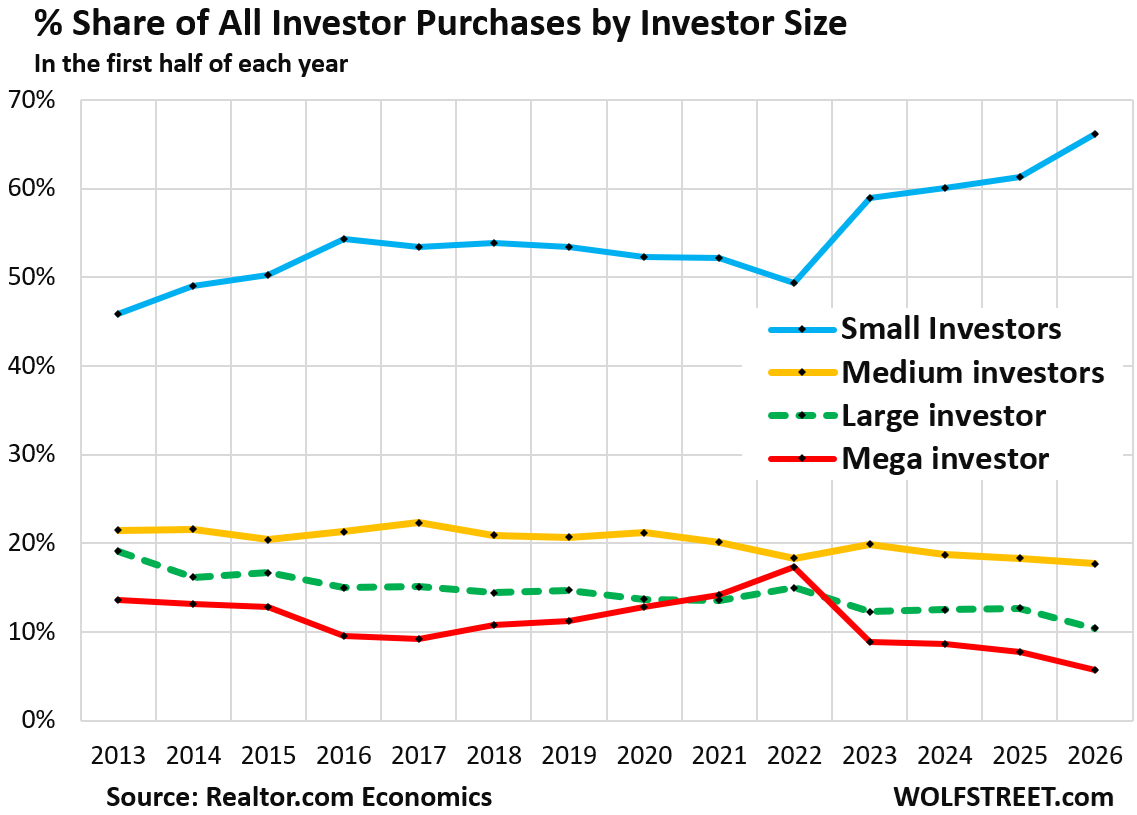
Economists point out that the institutional retreat is driven by specific corporate imperatives—such as the need for higher yields, lower operational costs, and the desire to move toward purpose-built assets—that do not necessarily apply to the individual investor. A small-scale investor buying a single property to rent out for long-term cash flow and appreciation is playing a fundamentally different game than a billion-dollar firm that requires economies of scale to justify its overhead.
Nevertheless, the data indicates that the "easy money" phase of the housing boom has passed. Investors entering the market today are doing so at price points that have already been adjusted for the inflation of the early 2020s. For these investors, the margin for error is significantly narrower than it was for those who entered the market a decade ago.
Conclusion: A Segmented Future
The current state of the U.S. housing market is characterized by a "passing of the torch." The institutional giants that defined the post-2008 recovery have exited the secondary market in favor of becoming institutional developers. In their place, a fragmented army of smaller investors continues to view residential real estate as a critical asset class.
As the market enters the second half of 2026, the focus will likely shift to how these new, smaller owners manage their portfolios in an environment of higher interest rates and cooling price appreciation. While the headline numbers show a decline in overall investor activity, the underlying data reveals a fundamental transformation in who controls the nation’s rental inventory. Whether this shift will lead to greater market stability or create new vulnerabilities remains the central question for the residential sector moving forward.
Related posts: