
The Evolution of the Nomadic FIRE Lifestyle
The journey of Shen and Leung began nearly a decade ago. In 2016, the couple, then in their early thirties, retired from their careers as computer engineers to travel the world as permanent nomads. Their story gained international attention when they collaborated with financial author JL Collins, known for "The Simple Path to Wealth," to advocate for a philosophy they titled "Buy Your Freedom and Rent the Rest." At the time, critics argued that their lifestyle was a luxury of the childless and that the arrival of a family would inevitably force them back into the traditional workforce and the housing market.
Recent developments have debunked these predictions. After the conclusion of the "Chautauqua" financial retreats in 2022—an event where Shen and Leung were regular speakers—the couple transitioned into parenthood. Despite the logistical complexities of traveling with a young child, they have maintained their status as "jobless" retirees, recently relocating across Canada while continuing to prioritize renting over buying. This decision is rooted in a rigorous mathematical approach to wealth management, where capital is kept in liquid investments rather than being locked into a primary residence.
The Economic Argument: Stocks vs. Real Estate
The decision to rent is often viewed through a lens of instability, but for proponents of the FIRE movement, it is a calculated risk-mitigation strategy. According to data from the U.S. Census Bureau, approximately 65.3% of Americans own their homes, a figure that reflects a deep-seated cultural preference for ownership. However, financial analysts often point to the "hidden costs" of homeownership—property taxes, maintenance, insurance, and interest—which can consume 1% to 4% of a home’s value annually.
In contrast, the FIRE philosophy emphasizes the power of compounding returns in the stock market. By avoiding a down payment and the ongoing overhead of a house, families can keep their net worth in diversified index funds. As Shen and Leung argue, while one cannot live inside a stock, one can live inside a home paid for by the dividends and capital gains generated by a robust portfolio. This approach provides a "dividend-funded" lifestyle that offers a different kind of security: the ability to move if a neighborhood declines or if better educational opportunities arise elsewhere.
A Strategic Framework for Long-Term Renting with Families
For families looking to replicate this model, the transition requires a shift from "accidental" renting to "strategic" renting. Shen and Leung have codified a set of ten rules designed to ensure stability and quality of life for families in the rental market.
1. Prioritizing Ownership Structure
The most critical factor in rental stability is not the view or the amenities, but the owner of the property. Small-scale landlords (individuals renting out a single condo or basement suite) are more likely to sell the property or reclaim it for personal use, leading to "renovictions." Professional FIRE renters seek out "purpose-built" rental apartments—entire buildings owned by corporations or REITs (Real Estate Investment Trusts). Because these buildings are intended solely for rental income, the risk of an individual unit being sold out from under a tenant is virtually zero.
2. Rigorous Landlord Vetting
In the digital age, tenants have more power to research their prospective housing providers. Utilizing platforms like "Rate My Landlord" and researching management companies for past litigation or city citations is essential. A well-maintained common area, such as the laundry room or lawn, often serves as a proxy for how the landlord handles more urgent repairs.
3. Professionalism in Tenant Presentation
The rental market, particularly in high-demand urban centers, is highly competitive. Successful renters treat viewings like job interviews, arriving early and prepared with a "tenant resume." This includes credit reports, references, and proof of assets. By presenting themselves as low-risk, high-reliability professionals, families can secure better units even in tight markets.
4. Demonstrating Financial Superiority
Landlords seek "A++ tenants" who offer zero risk of default. Providing a bank statement that shows a year’s worth of rent in liquid assets can often bypass the need for traditional employment verification, which is crucial for early retirees or those in the "gig economy."
5. Utilizing Market Competition
Once a tenant is approved for one rental, they gain "social proof." Leveraging an existing approval can make a tenant more desirable to other landlords, as it signals that they have already passed a rigorous vetting process.
6. The "Two out of Three" Rule
In real estate, tenants must often choose between convenience, size, and neighborhood quality. For families, the FIRE approach often involves compromising on square footage in exchange for a walkable neighborhood with high-quality public amenities. Modular furniture and a minimalist lifestyle allow families to live comfortably in 800 square feet rather than 1,200, saving thousands in monthly costs.
7. Targeting Adjacent Neighborhoods
To maximize value, families are encouraged to look at "up-and-coming" areas adjacent to established, high-cost neighborhoods. This provides access to the same schools and parks at a significantly lower price point.
8. Accessing Magnet and Charter Schools
One of the primary drivers of homeownership is the desire to be in a specific school district. However, many urban areas offer "magnet schools" or specialized programs (STEM, arts) that draw students from across traditional boundaries. By focusing on these educational options, parents can decouple their housing choice from their child’s school assignment.

9. Navigating Digital Scams
While platforms like Zillow and Apartments.com are standard, older sites like Craigslist often host "undermarket" deals from independent landlords who are less tech-savvy. However, this requires a high level of due diligence to avoid wire fraud and scams.
10. Mastery of Local Tenancy Laws
Stability in renting is often guaranteed by law, provided the tenant knows their rights. Understanding rent control caps, eviction protections, and the specific definitions of "renoviction" in one’s jurisdiction is the ultimate safeguard for a renting family.
Broader Implications and Societal Shifts
The shift toward long-term renting among the wealthy and the financially independent suggests a broader change in the global economy. As housing prices in major metropolitan areas continue to outpace wage growth, the "opportunity cost" of a down payment has become a central theme in financial planning. When a down payment of $200,000 is invested in a total stock market index fund with an average 7% return, it generates $14,000 a year in growth—money that can be applied directly to rent.
Furthermore, the "lock-in effect" of high-interest-rate mortgages has made homeownership less flexible than in previous decades. Families who rent are unburdened by the need to sell a home before moving for a better career opportunity or to be closer to aging relatives. This "mobility premium" is increasingly valuable in a volatile job market.
Critics of the "rent forever" model point to the lack of a "forced savings" mechanism that a mortgage provides. Without the discipline to invest the difference between renting and owning, many families may find themselves at a disadvantage in old age. However, for the FIRE community, where high savings rates are already a lifestyle staple, this concern is largely mitigated.
Conclusion: The Future of Parenting and Wealth
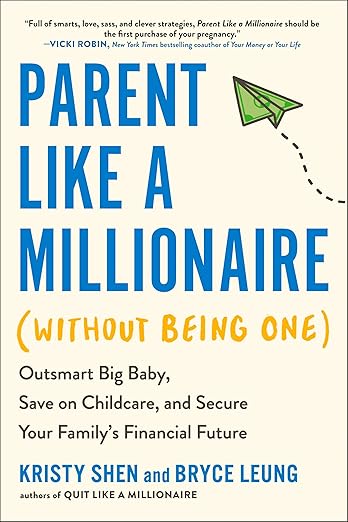
The experience of Kristy Shen and Bryce Leung, as detailed in their upcoming book "Parent Like a Millionaire," serves as a case study for a new era of family life. By prioritizing time and experiences over the "forced stability" of a deed, they are advocating for a version of parenthood that is not tethered to a single location or a thirty-year debt obligation.
As the data suggests, the financial viability of renting with kids depends heavily on the tenant’s ability to invest the surplus capital. For those who can master the "10 Smart Renting Rules," the result is a life of increased options. Whether it is living for three months in Spain or moving across the country to follow a new passion, the "renter with kids" is no longer a symbol of financial struggle, but potentially one of strategic financial mastery. The ultimate goal, as echoed by the FIRE movement, is to stop thinking about what money can buy and start thinking about what money can earn—and for this family, it has earned them the world.