3Commas v1 platform shutdown and migration guide for automated traders


The automated cryptocurrency trading landscape is facing a significant shift as 3Commas, one of the industry’s most prominent platforms, prepares to decommission its v1 infrastructure on September 11, 2026. This mandatory transition requires all active users of the legacy platform to manually reconstruct their trading strategies within the new v2 environment, which operates on a fundamentally different technical architecture developed in partnership with WunderTrading. Because the v1 and v2 systems are not interoperable, bot configurations, historical data, and established API connections will not automatically migrate, creating an urgent operational challenge for retail and institutional traders alike.
Chronology and Context of the Platform Transition
The announcement follows a multi-year period of rapid evolution in the crypto-asset space, where platform reliability and security have become paramount. 3Commas’ decision to sunset the v1 platform marks the end of a specific era of "plug-and-play" automated trading. According to official documentation released by the company, all v1 API connections will be permanently terminated on the September 11, 2026, deadline.
The move toward v2 is described by the developers as a strategic pivot toward a modernized infrastructure. However, for the end-user, this transition represents a significant labor-intensive process. Unlike software updates that preserve user state, this migration requires a complete audit of existing trading logic. Users are advised to document every parameter—including base order sizes, safety order configurations, and take-profit triggers—before manually re-inputting these settings into the new environment. Furthermore, security protocols necessitate that exchange keys be reconnected from scratch to ensure compatibility with the new v2 security architecture.
Comparative Analysis: Infrastructure and Hosting Models
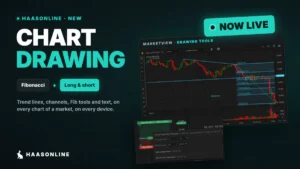
For traders evaluating their options during this migration, the divergence between cloud-hosted services and self-hosted solutions has become a focal point of discussion. HaasOnline, which has maintained operations since 2013, provides a distinct alternative to the fully hosted model adopted by 3Commas v2.
The primary architectural distinction lies in the concept of self-hosting. Users opting for the HaasOnline TradeServer plan can deploy the bot engine on their own local hardware or a private Virtual Private Server (VPS). This offers a level of operational sovereignty where exchange API keys remain localized on the user’s infrastructure. This setup mitigates the risk of platform-wide service interruptions or forced migrations mandated by third-party providers. Conversely, the HaasOnline TradeServer Cloud offers a managed experience that mirrors the self-hosted version, allowing users to transition from a hosted environment to a private server without needing to rebuild their underlying strategies.
Exchange Coverage and Venue Compatibility
The viability of a migration plan often hinges on whether a user’s preferred exchange is supported. The following table illustrates the current landscape of exchange support between 3Commas v2 and HaasOnline, providing a roadmap for users currently assessing their venue connectivity:
| Exchange | 3Commas v2 | HaasOnline Status |
|---|---|---|
| Binance | Supported | Spot, USDT/COIN Futures, Binance US |
| Bybit | Supported | Spot, USDT Perpetuals, Inverse |
| OKX | Supported | Spot and Swaps |
| Bitget | Supported | Spot, USDT/COIN Futures |
| Kraken | Supported | Spot and Kraken Futures |
| KuCoin | Supported | Spot and Futures |
| Coinbase | Supported | Spot supported (Futures pending) |
| Gate.io | Futures only | Spot supported (Futures pending) |
| Hyperliquid | Supported | Not supported |
HaasOnline further distinguishes its service by providing connectivity to a broader array of exchanges—including WEEX, WOO X, Phemex, BloFin, Poloniex, and Gemini—which are not currently represented on the 3Commas v2 roadmap. Traders should also note that BitMEX is slated for closure on September 23, 2026; therefore, any migration efforts involving that specific exchange should be halted immediately to avoid capital locking.
Technical Discrepancies: Mapping DCA Strategies
Transitioning from one bot engine to another requires a precise understanding of terminology and mathematical implementation. In the context of Dollar Cost Average (DCA) bots, minor discrepancies in unit measurement can lead to substantial financial deviations.
A critical difference involves the base order size. While 3Commas v1 typically calculates size based on the quote currency (e.g., USDT), HaasOnline’s engine calculates size based on the base asset (e.g., BTC). Traders must divide their intended quote-currency investment by the current market price to achieve an equivalent position size in the new system. Similarly, the "cooldown" duration—the mandatory pause between trade cycles—is measured in seconds on 3Commas but in minutes within the HaasOnline interface.
Furthermore, the handling of limit orders differs. HaasOnline defaults to committing the entire ladder of DCA orders to the exchange order book at the start of the round, whereas 3Commas v1 allows for more granular control over how many safety orders are placed simultaneously. Users must adjust their logic to account for these architectural nuances to ensure their risk management profiles remain consistent.
The Role of Algorithmic Flexibility
For users who rely on signal-based trading—such as those utilizing TradingView webhooks or custom API calls—the transition to a new platform often requires a re-evaluation of how indicators interact with execution logic. On 3Commas, a "Signal Bot" is a specialized category. In contrast, platforms like HaasOnline integrate indicator-based triggers directly into the bot’s core script engine.
This approach allows for "HaasScript" integration, where technical indicators such as Relative Strength Index (RSI), Bollinger Bands, or Moving Average Convergence Divergence (MACD) can be utilized natively without requiring external middleware. This integration enables comprehensive backtesting of signal logic—a process that provides a significant advantage when attempting to validate the efficacy of a strategy before committing real-world capital to a live market.
Implications for Institutional and Power Users
The forced migration of 3Commas users is likely to trigger a broader trend of "platform hopping," as traders weigh the convenience of hosted services against the benefits of proprietary control. For those who drive their trading through custom code, the presence of a robust REST API is non-negotiable. HaasOnline’s implementation of a public REST API and MCP server support for AI agents suggests a focus on serving the developer-centric segment of the market that seeks to build bespoke trading systems.
However, the transition is not without friction. Users accustomed to the specific interface and preset library of 3Commas will face a learning curve. Features such as "Trailing Take Profit" or specific stop-loss timeout functions may not have direct, one-to-one counterparts in alternative platforms, requiring users to adapt their risk management philosophy to the tools available.
Strategic Migration Plan: A Recommended Path
To minimize downtime and ensure continuity, a disciplined migration process is essential:
- Inventory Audit: Export and document all active v1 settings, specifically focusing on DCA step sizes, multipliers, and indicator triggers.
- Environment Selection: Determine whether the complexity of your strategy necessitates a self-hosted TradeServer instance or if the cloud-based solution provides sufficient flexibility.
- Backtesting: Before activating any live bots, utilize the historical data features to test your rebuilt strategies. The transition is an opportune moment to refine parameters that may have been underperforming in the previous cycle.
- Phased Deployment: Rather than migrating all capital at once, implement a "canary" approach—deploying a small portion of the portfolio to the new system to observe performance under real market conditions.
- Decommissioning: Once the new strategies are verified, manually disable the corresponding bots on the 3Commas v1 platform to prevent redundant trades or unexpected margin usage.
Conclusion
The shutdown of 3Commas v1 is a stark reminder of the risks inherent in third-party automated trading solutions. As the industry moves toward the September 11, 2026, deadline, users are presented with a choice: remain within the 3Commas ecosystem by migrating to the new v2 infrastructure, or leverage this forced transition as a catalyst to adopt more robust, self-custodied, or professional-grade trading software. Regardless of the chosen path, the primary responsibility for strategy integrity and capital security remains with the trader. Careful preparation and a rigorous adherence to the technical requirements of the new environment are the only ways to ensure that automated trading remains a viable component of a portfolio in the coming years.
Disclaimer: This report is provided for informational purposes only and does not constitute financial, investment, or legal advice. Automated trading involves significant risk of loss, and users should conduct their own due diligence. 3Commas, WunderTrading, and HaasOnline are independent entities, and this guide is based on information publicly available as of September 2026.