Goldman Sachs Drops Diversity Metrics for New Partner Class Amid Heightened Regulatory Scrutiny Under the White House

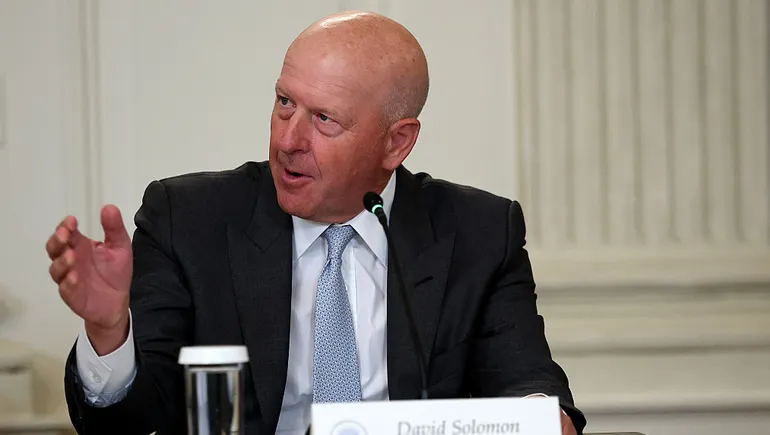
Goldman Sachs has released its biannual partner announcement, naming 109 new individuals to its elite partnership ranks in what marks the largest promotional class since 2010. However, a glaring omission has captured the attention of financial observers, corporate governance experts, and legal analysts alike: the Wall Street banking giant completely omitted any statistical breakdown regarding the gender, racial, or ethnic diversity of the newly elevated class.
For an institution that has spent the better of the last decade aggressively publicizing its corporate diversity metrics, the silence surrounding the demographic composition of the 2026 partner class signals a profound shift in corporate strategy. This reticence highlights how financial institutions are navigating an increasingly hostile regulatory and legal environment regarding Diversity, Equity, and Inclusion (DEI) initiatives under the current presidential administration.
The Omission and Industry Reactions
In previous years, even during politically sensitive windows, Goldman Sachs routinely trumpeted the makeup of its incoming partner classes. When the bank announced its 95-member partner class in November 2024—strikingly, just two days after the reelection of President Donald Trump—it proudly detailed that the cohort included 26 women, 17 Asian executives, six individuals with Hispanic or Latinx backgrounds, four Black professionals, and three military veterans.
By contrast, the 2026 announcement provided no such granular data. Instead, external analysis was left to fill the information void. According to estimates published by Bloomberg on the day of the release, women account for less than 20% of the new 2026 partner class, representing the lowest proportion of female promotions since 2014. For comparison, the 26 women named partner in the 2024 cycle constituted roughly 27% of that group.
This retreat from public reporting has sparked intense debate. When pressed by media outlets regarding the absence of demographic data, an anonymous Goldman Sachs executive pointed directly to a fundamental transformation in the country’s legal and regulatory landscape. Specifically, the executive noted that Trump-era regulators possess the authority, motivation, and time remaining in the current administration’s term to aggressively scrutinize or penalize financial institutions deemed to be operating in conflict with federal policies targeting DEI programs.
The Regulatory Climate and the Shadow of Executive Orders
The root of Goldman’s sudden corporate quietness traces back to foundational changes enacted at the federal level. In January 2025, the White House issued a sweeping executive order explicitly targeting institutional DEI programs, categorizing them as illegal and immoral preferential practices that run counter to federal anti-discrimination statutes.
The repercussions of this directive were swift. As early as February 2025, Goldman Sachs spokesperson Tony Fratto confirmed that the bank had begun scrubbing explicit DEI references from its annual filings and public-facing corporate literature, citing emerging legal developments. Yet, the bank’s pivot has been nuanced rather than absolute.
Throughout 2025, CEO David Solomon and other senior executives continued to articulate a commitment to balancing meritocracy with diverse talent acquisition. In November 2025, when Goldman announced its class of managing directors—the critical leadership tier directly beneath the partnership—the institution transparently published a full demographic breakdown. That managing director class featured 27% women, alongside a breakdown of 31% Asian, 3% Black, 4% Hispanic, 3% LGBTQ+, and 51% White professionals.
The question then arises: what shifted so dramatically between the end of 2025 and the release of the partner class in November 2026?
The answer lies in the aggressive enforcement posture adopted by federal financial regulators over the past year. Regulatory bodies, such as the Office of the Comptroller of the Currency (OCC), have demonstrated an unprecedented willingness to spotlight and penalize banking practices that run counter to the administration’s stated agenda. Last month, for instance, the OCC released a sprawling 47-page report focusing heavily on banking accessibility and so-called "debanking" practices, citing specific operational examples across nine major financial institutions.
While promoting workplace diversity is fundamentally distinct from the operational mechanics of debanking, the current administration has frequently grouped various progressive corporate practices under the broad umbrella of systemic discrimination. Consequently, major Wall Street institutions perceive a tangible regulatory hazard. Although no major commercial or investment bank has yet faced direct regulatory penalties explicitly grounded in DEI compliance failures, private litigation backed by administration-aligned attorneys has targeted institutions like JPMorgan Chase and Capital One. Furthermore, Bank of America—the primary target of executive criticism regarding debanking early in the current presidential term—recently absorbed $1.2 billion in financial penalties tied to anti-money laundering compliance infractions.
For Goldman Sachs, a firm historically sensitive to systemic reputational and regulatory friction, the strategic calculation is clear: maintaining total silence on partner demographics is a minor public relations compromise compared to inviting federal investigations or enforcement actions.
Evolution of the Goldman Sachs Partnership
Despite the absence of demographic transparency regarding the new partner class, Goldman Sachs was forthcoming with other operational, geographical, and professional metrics concerning the 109 newly minted partners.
According to the bank’s disclosures, roughly 39% of the new partners joined Goldman directly out of undergraduate education, while approximately 28% initially entered the firm as summer interns, illustrating the enduring value of the bank’s internal talent pipeline. Geographically, the promotions reflect the firm’s global footprint: 62 of the new partners are based in the Americas, 20 are stationed in Asia, and 27 operate out of Europe, the Middle East, and Africa.
An analysis of the professional backgrounds of the new class reveals shifting institutional priorities within the firm. Approximately 30% of the incoming partners hail directly from Goldman Sachs’ powerhouse asset and wealth management division. More notably, a record 13 new partners are engineers. This surge in technical leadership underscores the accelerating integration of advanced technology—specifically artificial intelligence and automated trading infrastructure—into the future of global investment banking. By comparison, the 2024 partner class featured only eight engineers.
The promotions, which officially take effect on January 1, were lauded by CEO David Solomon and President John Waldron in a joint statement. The executives emphasized that the elevated leaders have distinguished themselves through exceptional global impact, rigorous risk management, adherence to core corporate values, and a dedication to cultivating internal talent.
The Economics and Prestige of the Partnership
The title of partner at Goldman Sachs remains one of the most coveted and lucrative designations in global finance. While the firm transitioned from a private partnership to a publicly traded corporation via its 1999 initial public offering, the partner echelon retains immense symbolic and financial weight.
Partners at Goldman Sachs typically command a base salary of around $1 million, with the vast majority of their compensation delivered through variable performance bonuses. These bonuses frequently include grants of company stock and exclusive access to profit-sharing opportunities within Goldman’s proprietary private investment funds.
Furthermore, despite the lack of demographic data for the 2026 class, the cumulative demographic profile of the partnership as a whole is structurally evolving. Financial analysts at Bloomberg estimate that the addition of the 109 new members brings Goldman’s total active partner count to approximately 500. Due to historical retirement and attrition rates among male partners outstripping those of their female counterparts, women are projected to make up roughly 21% of the total overall partnership—the highest proportion in the firm’s history.
Looking Forward: Corporate Strategy Under Political Pressure
The trajectory of Goldman Sachs highlights a broader corporate dilemma facing Wall Street and Fortune 500 boardrooms across the United States. Chief Executive David Solomon, who marked his seventh year leading the institution, stated back in 2019 that a core pillar of his executive tenure would be defined by measurable progress on diversity.
Goldman’s leadership continues to assert internally that merit and diversity are not mutually exclusive constructs. However, external communication strategies have undergone a radical decontamination process. Whether Goldman Sachs will resume public reporting of demographic metrics in future promotional cycles may depend entirely on the shifting political winds of Washington and the longevity of federal regulatory pressures. For now, the bank has chosen to let its work speak for itself—while keeping the specifics strictly within closed corporate doors.
Related posts: