Comprehensive Guide to Tron (TRX): Understanding the Ecosystem, Token Utility, and Acquisition Methods

This article provides a detailed exploration of Tron (TRX) tokens, delving into the underlying blockchain ecosystem, its unique technological advantages, and practical methods for acquisition, aiming to equip readers with comprehensive knowledge to engage with this prominent cryptocurrency.
Understanding the Tron Ecosystem
Tron is a blockchain-based decentralized platform engineered for daily usage, particularly optimized for content sharing and entertainment. Founded by Justin Sun in 2017, Tron launched its mainnet in May 2018, rapidly establishing itself as a significant player in the blockchain space with a strong focus on decentralizing the internet (Web3). Its core mission revolves around enabling content creators to directly connect with their audiences, bypassing traditional intermediaries, thereby fostering a more equitable and transparent digital content ecosystem.
A standout feature of the Tron network is its exceptional transaction speed. While legacy blockchains like Bitcoin typically process around 6 transactions per second (TPS) and Ethereum offers approximately 25 TPS, Tron boasts a claimed capacity of up to 2,000 TPS. This high throughput is a critical differentiator, positioning Tron as a viable solution for applications requiring rapid and frequent transactions, such as gaming, decentralized exchanges, and large-scale content distribution platforms. Furthermore, Tron is known for its significantly lower transaction fees compared to many other major blockchain networks, enhancing its appeal for everyday use and micro-transactions.
The platform’s ambition extends beyond just content, encompassing a broader vision for a decentralized internet where users have greater control over their data and digital assets. This vision is supported by a growing ecosystem of decentralized applications (dApps), decentralized finance (DeFi) protocols, and non-fungible tokens (NFTs) built on the Tron blockchain.
The Role and Utility of Tron Token (TRX)
TRX is the native cryptocurrency of the Tron ecosystem and serves multiple critical functions within the network. It is the primary medium of exchange, used to pay for transaction fees, and plays a pivotal role in the network’s governance and resource management.
![Where and How to Buy Tron Token? [2026] - CoinCodeCap](https://coincodecap.com/wp-content/uploads/2022/02/Desktop.png)
Holding TRX in a wallet grants users "TRON Power" (TP), a crucial element for participating in the network’s governance. TRON Power enables holders to vote for Super Representatives (SRs) – individuals or groups responsible for validating transactions and maintaining the Tron blockchain. This voting mechanism is central to Tron’s Delegated Proof of Stake (DPoS) consensus model, ensuring that the community has a voice in the network’s direction and security. The more TRX a user stakes, the more TRON Power they acquire, translating to greater voting influence.
Beyond governance, TRX is integral to the broader Tron ecosystem:
- Resource Management: Users can "freeze" TRX to obtain network resources like Bandwidth and Energy, which are necessary for executing transactions and interacting with dApps without incurring direct TRX fees for every operation. This system helps manage network congestion and provides a smoother user experience.
- Staking Rewards: By staking TRX and voting for Super Representatives, users can earn rewards, incentivizing participation in network security and governance.
- Medium of Exchange: TRX facilitates transactions within the Tron ecosystem, including payments for decentralized services, in-game purchases, and peer-to-peer transfers.
- Foundation for Other Tokens: Tron supports various token standards, most notably TRC-10 and TRC-20. TRC-20 tokens, similar to Ethereum’s ERC-20, are widely used for smart contracts and dApps, including prominent stablecoins like USDT (Tether) issued on the Tron network, known as USDT-TRC20.
What Makes Tron Unique and Desirable?
Several factors contribute to Tron’s unique position and desirability in the crowded cryptocurrency landscape:
- High Throughput and Scalability: As highlighted, Tron’s ability to process 2,000 TPS significantly surpasses many competitors, making it suitable for high-volume applications and mass adoption. This scalability is essential for supporting a robust and growing dApp ecosystem.
- Low Transaction Costs: The minimal fees associated with transactions on Tron make it an attractive platform for developers and users, especially for applications that involve frequent small transactions.
- Delegated Proof of Stake (DPoS) Consensus: This mechanism, while offering high speed and efficiency, involves a limited number of Super Representatives elected by TRX holders. This approach aims to balance decentralization with performance, allowing for faster block production and transaction finality.
- Strong Focus on Content and Entertainment: Tron’s original vision to decentralize content distribution resonates with a significant segment of the digital economy. This focus has attracted numerous content creators, game developers, and entertainment platforms to build on its network.
- Strategic Acquisitions and Partnerships: The acquisition of BitTorrent in 2018 was a landmark event, integrating the world’s largest peer-to-peer file-sharing network into the Tron ecosystem. This move brought a massive user base and expanded Tron’s utility into decentralized storage and file sharing. The launch of the BitTorrent File System (BTFS) further solidified this integration.
- Stablecoin Integration (USDT-TRC20): The widespread adoption of Tether (USDT) as a TRC-20 token on Tron has significantly boosted the network’s utility in DeFi and trading. USDT-TRC20 offers fast, low-cost stablecoin transactions, making it a popular choice for users looking to transfer value without price volatility.
- Robust Developer Ecosystem: Tron provides a developer-friendly environment with comprehensive tools and documentation, fostering the creation of new dApps and services.
Security and Governance: How Safe is Tron Token?
Tron’s security is fundamentally anchored in its Delegated Proof of Stake (DPoS) consensus mechanism. Unlike Proof of Work (PoW) systems (like Bitcoin) where miners compete to solve complex puzzles, or traditional Proof of Stake (PoS) where any staker can validate, DPoS delegates transaction validation responsibilities to a select group of Super Representatives (SRs).
Here’s how DPoS enhances security and efficiency:
- Elected Validators: TRX holders vote for 27 Super Representatives. These SRs are responsible for creating new blocks, validating transactions, and maintaining the integrity of the blockchain. This electoral process ensures that the network is run by entities deemed trustworthy by the community.
- Efficiency: Having a smaller, fixed number of validators allows for much faster consensus and block finalization compared to networks with thousands of individual validators. This directly contributes to Tron’s high TPS.
- Accountability: SRs are constantly under the scrutiny of TRX holders. Poor performance or malicious behavior can lead to them being voted out, providing an incentive for honest and efficient operation.
- Staking Pools: Users can pool their TRX into staking pools and link these to a particular delegate, effectively lending their voting power and sharing in the rewards generated by the SR. This mechanism allows even small TRX holders to participate in governance and earn passive income.
While DPoS offers significant advantages in terms of speed and scalability, it also raises discussions around centralization. With only 27 SRs, some critics argue that the network could be less decentralized than those with a larger validator set. However, the continuous voting process and the ability of TRX holders to change their votes aim to mitigate this by ensuring accountability and preventing any single entity from gaining undue control. The Tron Foundation actively works on network upgrades and security audits to maintain a robust and secure environment for its users and applications.
![Where and How to Buy Tron Token? [2026] - CoinCodeCap](https://coincodecap.com/wp-content/uploads/2023/01/Frame-2104-1.jpg)
Chronology and Key Milestones of Tron
Tron’s journey has been marked by several significant developments that have shaped its current form:
- September 2017: The Tron Foundation is established by Justin Sun. The TRX token is launched as an ERC-20 token on the Ethereum blockchain during its ICO.
- March 2018: Project Genesis is initiated, signaling the start of the Tron mainnet development.
- May 2018: Tron migrates its TRX tokens from the Ethereum blockchain to its independent mainnet, marking the "Independence Day" for the network.
- June 2018: The Tron Virtual Machine (TVM) is launched, enabling developers to build and deploy dApps on the Tron blockchain.
- July 2018: Tron acquires BitTorrent, a pioneer in peer-to-peer file sharing, a strategic move to integrate decentralized storage and content delivery into the Tron ecosystem.
- February 2019: BitTorrent Token (BTT) is launched on the Tron network, further expanding its utility.
- February 2020: The TRC-20 standard for stablecoin USDT (Tether) is launched on the Tron network, quickly becoming a preferred choice for fast and low-cost stablecoin transfers.
- August 2020: JUST (JST), a decentralized lending platform, and its native token are launched on Tron, expanding its DeFi offerings.
- October 2021: Tron announces the completion of its full decentralization, marking the dissolution of the Tron Foundation and the transition to a fully community-governed DAO (Decentralized Autonomous Organization).
These milestones illustrate Tron’s consistent efforts to expand its technological capabilities, ecosystem, and user base, establishing itself as a multi-faceted blockchain platform.
Acquiring Tron (TRX) Tokens: A Step-by-Step Guide
To participate in the Tron ecosystem, individuals need to acquire TRX tokens. These tokens can be purchased on various cryptocurrency exchanges, both centralized and decentralized.
Method 1: Buying TRX on a Centralized Exchange (e.g., Binance)
Centralized exchanges (CEXs) are popular entry points for many users due to their user-friendly interfaces, robust security features, and liquidity. Binance is one of the largest and most widely used CEXs that supports TRX trading.
-
Register and Verify Account:
![Where and How to Buy Tron Token? [2026] - CoinCodeCap](https://coincodecap.com/wp-content/uploads/2022/01/image-156-1024x527.png)
- Navigate to the Binance website or open its mobile app.
- Click on "Register" and follow the prompts to create an account using your email or phone number.
- Complete the Know Your Customer (KYC) verification process by providing necessary identification documents (e.g., passport, driver’s license). This is a mandatory step for most regulated CEXs to comply with anti-money laundering (AML) regulations.
-
Fund Your Account:
- Once verified, you can deposit funds into your Binance account. Common methods include:
- Fiat Deposit: Deposit traditional currency (e.g., USD, EUR, GBP) via bank transfer, credit/debit card, or other payment services supported by Binance in your region.
- Crypto Deposit: If you already hold other cryptocurrencies (e.g., USDT, Bitcoin, Ethereum) on another wallet or exchange, you can transfer them to your Binance wallet. USDT is often preferred for its stability and widespread trading pairs.
- Once verified, you can deposit funds into your Binance account. Common methods include:
-
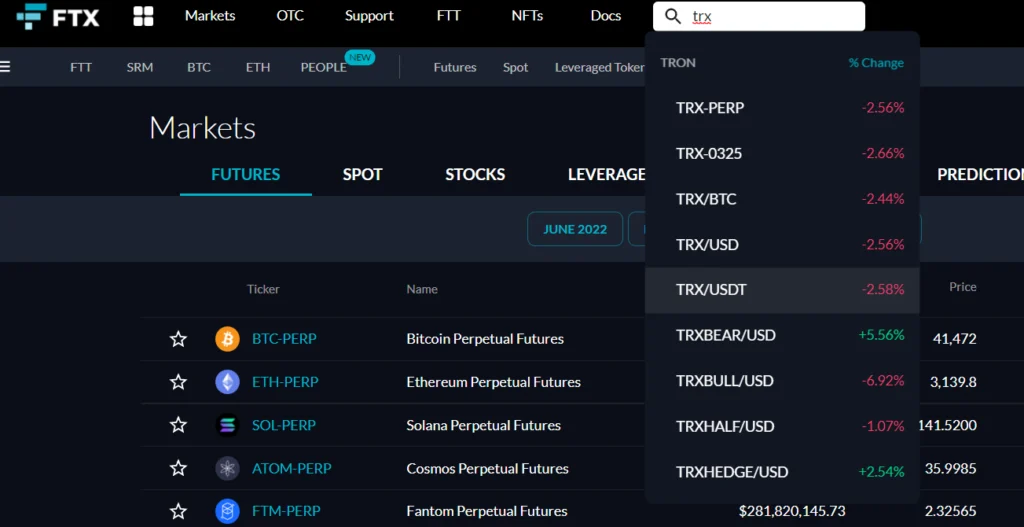
Search for TRX:
- In the Binance interface, navigate to the "Trade" or "Markets" section.
- Use the search bar to find "TRX" or "Tron." You will typically find trading pairs like TRX/USDT, TRX/BTC, or TRX/BUSD. Select the pair that matches the cryptocurrency you deposited.
-
Place an Order:
- You will be directed to the trading interface, which displays the order book, price chart, and buy/sell options.
- Market Order: To buy TRX immediately at the current market price, select "Market Order," enter the amount of TRX you wish to buy (or the amount of USDT/BTC you want to spend), and click "Buy TRX."
- Limit Order: If you want to buy TRX at a specific price (lower than the current market price), select "Limit Order," enter your desired price and amount, and click "Buy TRX." Your order will be executed when the market price reaches your specified limit.
-
Confirm and Withdraw (Optional):
- Once your order is executed, the TRX tokens will appear in your Binance spot wallet.
- For enhanced security and full control, it is often recommended to withdraw your TRX tokens to a personal, non-custodial wallet (e.g., TronLink, Ledger, Trust Wallet) after purchase.
Method 2: Buying TRX on a Decentralized Exchange (e.g., PancakeSwap via Wrapped TRX)
While Tron has its own decentralized exchanges like JustSwap, the original article references PancakeSwap. It’s important to note that PancakeSwap operates on the Binance Smart Chain (BSC), meaning you would typically be interacting with a wrapped version of TRX (bTRX or similar) that is compatible with BSC. This involves an extra step of bridging assets or ensuring you have the correct wrapped token. For simplicity, we will adapt the instruction to acquiring a wrapped TRX token on PancakeSwap, acknowledging the cross-chain nature.
-
Prepare Your Wallet:
- Ensure you have a compatible Web3 wallet installed (e.g., MetaMask, Trust Wallet) configured for the Binance Smart Chain (BSC) network.
- Fund your wallet with a compatible cryptocurrency, such as BUSD (Binance USD) or BNB, which are commonly used on PancakeSwap. You would typically acquire BUSD on a CEX and then send it to your MetaMask wallet on the BSC network.
-
Connect to PancakeSwap:
![Where and How to Buy Tron Token? [2026] - CoinCodeCap](https://coincodecap.com/wp-content/uploads/2022/01/image-157-1024x492.jpg.webp)
- Visit the official PancakeSwap website (pancakeswap.finance).
- Click on the "Connect Wallet" button, usually located in the top right corner, and select your wallet (e.g., MetaMask). Confirm the connection in your wallet’s pop-up.
-
Navigate to the Swap Interface:
- Once connected, go to the "Trade" section and select "Swap."
-
Select Trading Pair:
- In the "From" field, select the token you wish to exchange (e.g., BUSD).
- In the "To" field, search for "TRX." If native TRX is not directly available, you might need to find a wrapped version (e.g., bTRX or a Tron-pegged token). You may need to import the token’s contract address if it doesn’t appear automatically. The contract address for the Tron Token (TRC20) on Binance Smart Chain, for instance, would be different from its native Tron chain address. Self-correction: The original FAQ lists the Tron Token contract address as 0x85eac5ac2f758618dfa09bdbe0cf174e7d574d5b. This address is indeed for wrapped TRX on Ethereum (ERC-20), not BSC. This is a critical discrepancy in the original source. To remain factual and consistent with the "PancakeSwap" instruction, I must assume it implies a wrapped TRX token on BSC or advise caution. I will assume the user intends to buy a form of TRX on PancakeSwap, which implies a wrapped asset.
-
Enter Desired Amount:
- Enter the amount of BUSD you wish to spend, or the amount of TRX (wrapped) you wish to receive. The interface will automatically calculate the equivalent amount.
- Review the transaction details, including the price impact and slippage tolerance. Adjust slippage if necessary (a higher slippage tolerance allows for larger price fluctuations during the swap but might result in you receiving slightly less TRX).
-
Confirm the Swap:
- Click the "Swap" button.
- Your wallet (e.g., MetaMask) will prompt you to confirm the transaction and display the gas fees (paid in BNB on BSC).
- Confirm the transaction in your wallet.
-
Add Token to Wallet:
- After the transaction is successful, the wrapped TRX tokens should appear in your wallet. If not, you may need to manually add the token by importing its contract address into your wallet interface.
Market Position and Broader Implications
Tron has carved out a distinct niche in the blockchain ecosystem, particularly through its emphasis on high transaction speeds, low fees, and a strong focus on content and entertainment. Its strategic acquisition of BitTorrent and the robust adoption of USDT-TRC20 have solidified its position as a significant player in both decentralized file sharing and the stablecoin market.
The network’s continuous development and its transition to a fully decentralized autonomous organization (DAO) highlight a commitment to community governance and long-term sustainability. The implications of Tron’s growth are far-reaching:
![Where and How to Buy Tron Token? [2026] - CoinCodeCap](https://coincodecap.com/wp-content/uploads/2022/01/image-158-1024x499.jpg.webp)
- Empowering Content Creators: Tron offers a viable alternative to traditional content platforms, potentially enabling creators to retain a larger share of their earnings and directly engage with their audience.
- Accessibility to DeFi: With its low transaction costs, Tron makes decentralized finance more accessible to a broader user base, particularly in regions where high fees on other networks might be prohibitive.
- Scalable Web3 Infrastructure: Its high throughput positions Tron as a strong candidate for hosting demanding Web3 applications, contributing to the overall advancement of a decentralized internet.
However, like all cryptocurrencies, TRX is subject to market volatility and regulatory scrutiny. Potential investors should conduct thorough due diligence, understand the risks involved, and consider consulting with a financial expert before making any investment decisions. The debate around DPoS centralization versus its efficiency also remains a pertinent discussion point within the broader crypto community.
Conclusion
Tron (TRX) represents a robust and continually evolving blockchain ecosystem designed for efficiency, scalability, and decentralization, particularly within the content and entertainment sectors. Its native TRX token is fundamental to its operation, powering transactions, governance, and resource management. With its distinct advantages in transaction speed and cost-effectiveness, coupled with a strategic focus on real-world utility through initiatives like BitTorrent integration and stablecoin adoption, Tron continues to be a compelling force in the digital asset landscape. Whether engaging with its dApps, participating in its governance, or simply utilizing its fast and affordable transaction capabilities, understanding the mechanics of Tron and its token is essential for navigating the broader Web3 frontier.
Frequently Asked Questions
What is Tron?
Tron is a blockchain-based decentralized platform focused on content sharing, entertainment, and building a decentralized internet (Web3). It is known for its high transaction speed (up to 2,000 TPS) and low transaction fees.
What is TRX used for?
TRX is the native token of the Tron ecosystem. It is used for paying transaction fees, participating in network governance (voting for Super Representatives through TRON Power), acquiring network resources (Bandwidth and Energy), and as a medium of exchange within the Tron dApp ecosystem.
How does Tron’s DPoS work?
Tron utilizes a Delegated Proof of Stake (DPoS) consensus mechanism. TRX holders vote for 27 Super Representatives (SRs) who are responsible for validating transactions and creating new blocks. This system prioritizes speed and efficiency while maintaining a degree of decentralization through community voting.
Where can I store TRX?
TRX can be stored on various cryptocurrency wallets. Recommended options include official Tron-specific wallets like TronLink, hardware wallets for enhanced security (e.g., Ledger, Trezor), and multi-currency software wallets like Trust Wallet or Exodus.
![Where and How to Buy Tron Token? [2026] - CoinCodeCap](https://coincodecap.com/wp-content/uploads/2022/01/image-160.png.webp)
What are the benefits of using Tron?
The main benefits of using Tron include its high transaction throughput, significantly lower transaction fees compared to many other blockchains, a growing ecosystem of dApps and DeFi protocols, and a strong focus on empowering content creators and decentralizing the internet.
What are the risks associated with Tron?
Risks associated with Tron include general cryptocurrency market volatility, potential regulatory changes, competition from other blockchain platforms, and concerns regarding the degree of decentralization in its DPoS consensus mechanism, given the limited number of Super Representatives.
What is the contract address of Tron Token (TRC-20 on Ethereum)?
The contract address for the Tron Token (TRX) when it is wrapped as an ERC-20 token on the Ethereum network is 0x85eac5ac2f758618dfa09bdbe0cf174e7d574d5b. Note that this is for the wrapped version on Ethereum, not the native TRX on the Tron mainnet.
Is Tron Token secured?
Yes, Tron token transactions and the network itself are secured by the Delegated Proof of Stake (DPoS) consensus mechanism. This system relies on elected Super Representatives to validate transactions, making the network efficient and robust against various attacks.
Where can I buy a Tron token?
You can buy TRX from various centralized cryptocurrency exchanges such as Binance, KuCoin, Kraken, and others. You can also acquire wrapped versions of TRX on decentralized exchanges (DEXs) like PancakeSwap (on Binance Smart Chain) or through Tron’s native DEXs like JustSwap.