Warsh scuttled forward guidance, markets are on their own. However this comes out, it promises to be a rougher ride, but in a fresh breeze.

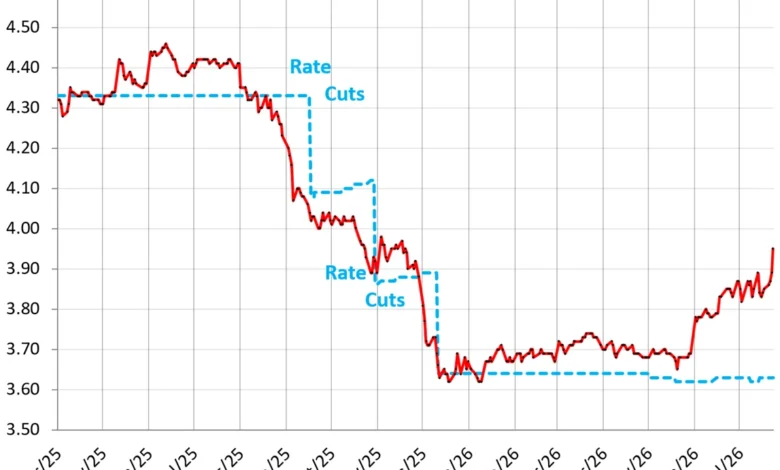
The landscape of American monetary policy underwent a fundamental transformation this week as the Federal Reserve, under the leadership of Chairman Kevin Warsh, effectively dismantled the era of "forward guidance." This long-standing practice, which involved the central bank providing explicit clues about the future path of interest rates to minimize market volatility, has been replaced by a more stoic and data-dependent approach. The immediate result has been a sharp re-pricing in the U.S. Treasury market, where investors are now forced to interpret economic signals without a roadmap from policymakers. This shift became acutely visible on July 23, 2026, as Treasury yields surged across the board, signaling that the bond market is now bracing for what would have previously been described as a "surprise" rate hike at the upcoming Federal Open Market Committee (FOMC) meeting on July 28-29.
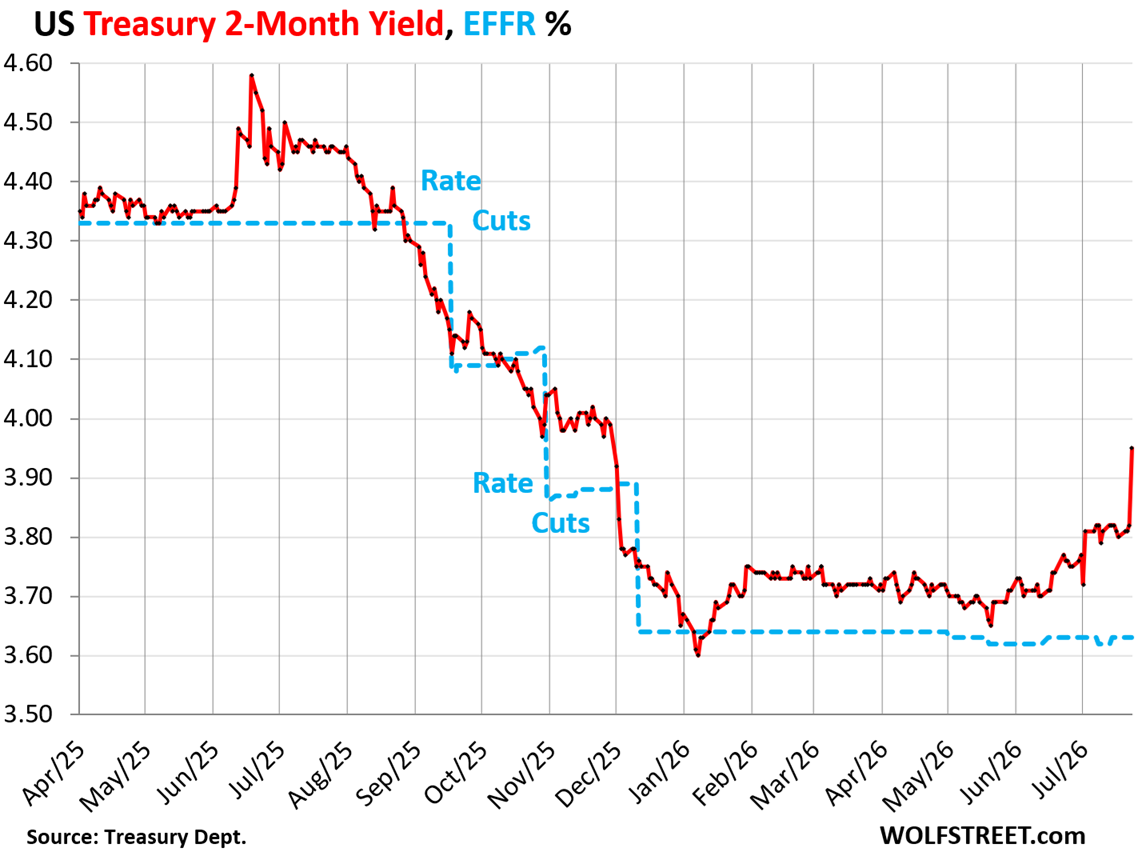
The most striking activity occurred at the short end of the yield curve. The 2-month Treasury yield, a critical barometer for immediate Fed policy expectations, spiked by 13 basis points in a single day, ending the week with a cumulative 15-basis point gain to close at 3.95%. This level sits at the upper bound of the anticipated new target range, assuming a 25-basis point hike from the current levels. When compared to the Effective Federal Funds Rate (EFFR), which the Fed uses as its primary policy tool, the 2-month yield now stands 32 basis points higher. In the logic of fixed-income markets, this move serves as a definitive statement: buyers of short-term debt are demanding higher compensation today because they are certain the Fed will raise rates in less than a week.
The End of the "Nanny State" for Markets
For nearly two decades, the Federal Reserve operated under a philosophy of extreme transparency. Starting with the latter years of the Bernanke era and intensifying under Janet Yellen and Jerome Powell, the Fed utilized "forward guidance" to lead markets by the hand. The goal was to prevent "taper tantrums" or sudden spikes in borrowing costs by ensuring that every rate hike or pause was signaled months in advance.
Chairman Warsh has moved to terminate this relationship. Taking a page from the playbook of Alan Greenspan—specifically the Greenspan of the early 1990s—Warsh has prioritized the Fed’s price stability mandate over the desire to keep financial markets calm. While Warsh has remained largely silent regarding specific moves for the July meeting, his public rhetoric has been unwavering regarding the persistence of inflation. By stating that the Fed still has "work to do" and that inflation remains unacceptably high, he has signaled a hawkish bias without providing a specific timeline.
This silence has forced a return to traditional market analysis. Treasury participants can no longer rely on a "Fed Put" or a scripted policy path. Instead, they must independently digest labor reports, Consumer Price Index (CPI) data, and manufacturing indices. As Warsh noted in recent remarks, the bond market is an efficient mechanism for processing information, and he intends to use the market’s own signals as an input for policy, rather than the other way around.
Detailed Yield Curve Analysis and Debt Pressure
While the 2-month yield captured the most attention due to its proximity to the FOMC meeting, the entire Treasury complex showed signs of significant stress. The 10-year Treasury yield rose to 4.71%, while the 20-year and 30-year yields climbed to 5.20% and 5.17%, respectively. These figures represent multi-year highs and reflect a dual-threat environment for investors: persistent inflationary fears and a massive supply of new government debt.
The rise in long-dated yields suggests that the market is concerned not just with the next rate hike, but with the long-term fiscal trajectory of the United States. Following the resolution of the 2025 Debt Ceiling standoff, the Treasury Department has been on an aggressive borrowing tear to replenish the Treasury General Account (TGA) and fund ongoing federal deficits. This "onslaught of new debt," as analysts have termed it, requires a higher yield to attract enough buyers, particularly as the Fed continues its quantitative tightening (QT) program, reducing its own holdings of Treasuries.
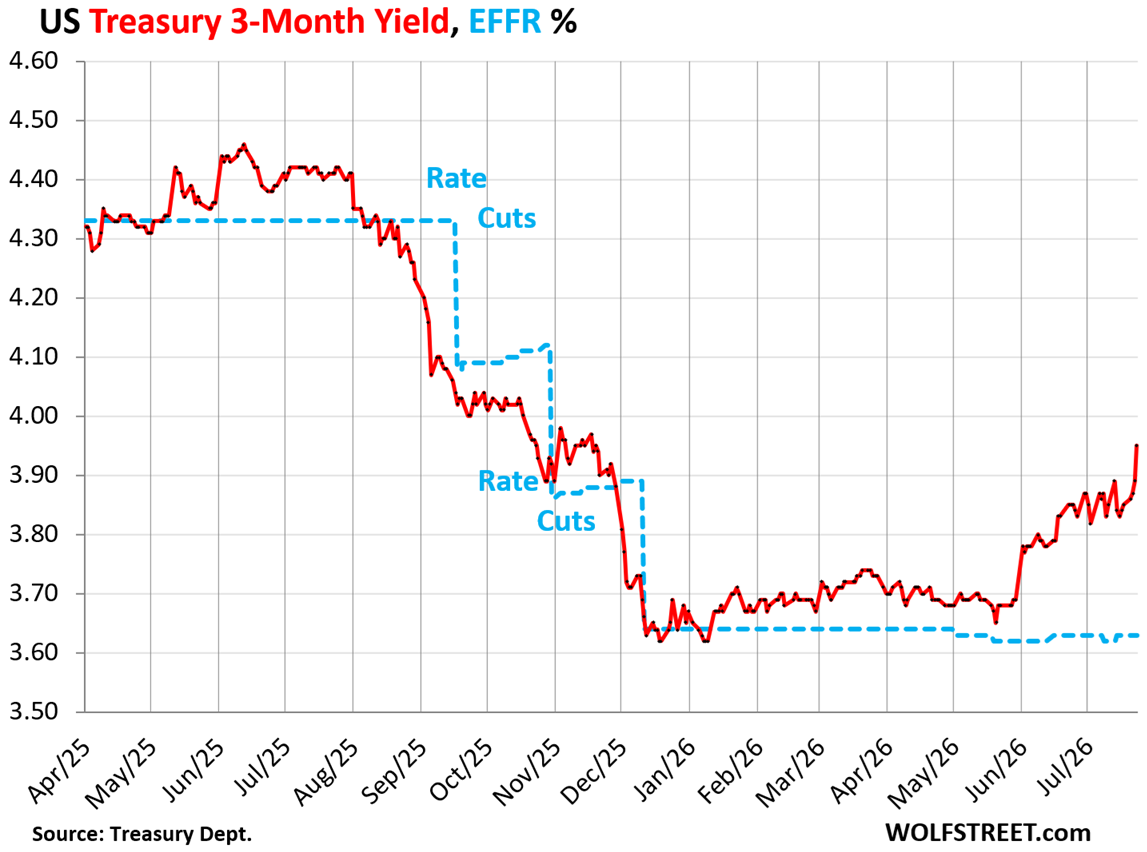
The 3-month Treasury yield also mirrored this hawkish sentiment, rising 6 basis points on the day to reach 3.95%. Because the 3-month window encompasses both the July and September FOMC meetings, the current pricing suggests the market is fully committed to a hike in July, though it remains undecided on whether a second hike will follow in September. This "wait-and-see" approach in the 3-month sector highlights the renewed importance of every upcoming data release.
Historical Context: From 1994 to the 2025 Debt Crisis
To understand the magnitude of the current shift, one must look back at the precedents Warsh is following. In 1994, under Alan Greenspan, the Fed surprised markets with an inter-meeting rate hike that kicked off a significant tightening cycle. At the time, the move was criticized for causing market turbulence, but it was later credited with preventing the economy from overheating. Warsh appears to view that era as a model for "honest" central banking, where the Fed reacts to the economy rather than managing market expectations.
The current volatility also finds a more recent parallel in the summer of 2025. During the Debt Ceiling standoff that concluded on July 4, 2025, the 2-month yield spiked as investors feared a technical default. At that time, the spike was driven by "risk premia"—the demand for extra pay to hold debt that might not be redeemed on time. Once the ceiling was lifted and the Treasury began its "train-load" of bill auctions, yields stabilized.
The current spike, however, is fundamentally different. It is not driven by the fear of default, but by the anticipation of policy. The market is not asking if it will be paid, but at what rate it will be paid. This distinction marks a transition from "crisis volatility" to "policy volatility," a hallmark of the new Warsh era.
Reactions from the Financial Sector
Institutional investors and economists have expressed a mixture of trepidation and respect for the new regime. In recent notes to clients, several major investment banks noted that the "training wheels are off."
"For years, we traded the Fed’s words," said one senior bond strategist at a Tier-1 bank. "Now, we have to trade the economy again. It’s harder, it’s more volatile, but it’s arguably a healthier way for a capital market to function."
Other FOMC members have bolstered this sentiment in recent speeches. While they have avoided confirming a July hike, their focus on "the work remaining" to reach the 2% inflation target has provided the intellectual framework for the market’s current pricing. The consensus among regional Fed presidents appears to be shifting toward the Warsh view: that forward guidance had become a crutch that led to misallocated capital and asset bubbles.
Broader Economic Implications
The immediate implications of this "rougher ride" are significant for the broader economy. As Treasury yields rise, so too do the costs of consumer and business credit. Mortgage rates, which are closely tied to the 10-year Treasury, are expected to see upward pressure, potentially cooling a housing market that has remained surprisingly resilient.
Furthermore, the "fresh breeze" Warsh refers to implies a clearing out of the "noise" created by central bank signaling. By allowing the bond market to provide the signals, the Fed is essentially crowd-sourcing its policy inputs from thousands of independent analysts and traders. This could lead to a more responsive monetary policy, though one that is inherently less predictable for the average investor.
The risk, of course, is that the bond market gets it wrong. If the Fed does not hike in July, the sudden collapse in yields could cause a different kind of instability. Conversely, if the Fed hikes more aggressively than the 25 basis points currently priced in, the "rough ride" could turn into a full-scale market correction.
Conclusion: A New Paradigm of Accountability
As the July 28-29 FOMC meeting approaches, the financial world is witnessing the birth of a new paradigm. The "Warsh Doctrine" rejects the idea that the central bank’s primary job is to soothe Wall Street. Instead, it posits that a central bank is most effective when it is focused on its mandates—inflation and employment—and leaves the pricing of risk to the markets.
Whether this approach will successfully tame inflation without triggering a deep recession remains the defining question of 2026. For now, the bond market has accepted the challenge. By pricing in a "surprise" hike a week in advance, the market is proving it can function without forward guidance. The ride is indeed getting rougher, but for those who value market-driven discovery over central-bank management, the "fresh breeze" is a welcome change from the stifling predictability of the past decade. The era of the Fed as the market’s navigator is over; the Fed is now merely a passenger on the same data-driven ship as everyone else.