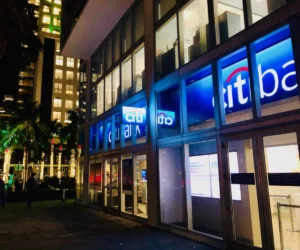
Providence, Rhode Island – Citizens Bank announced on Friday its decision to terminate banking relationships with two prominent private prison companies, CoreCivic and The GEO Group, both significant operators of detention centers for U.S. Immigration and Customs Enforcement (ICE). The bank cited "changed commercial circumstances" as the primary rationale for its move, a development that follows months of intense activist pressure and significant financial boycotts. While Citizens Bank framed the decision strictly as a business matter, the announcement marks a notable moment in the ongoing debate over corporate involvement in the private correctional industry and the increasing influence of social advocacy campaigns on financial institutions.
Background on Private Prison Operations and ICE Detention
Private prison companies have played a controversial yet integral role in the American correctional system for decades, extending their services from state and federal prisons to immigration detention centers. CoreCivic and The GEO Group are the two largest entities in this sector, operating numerous facilities across the United States. Their business model relies heavily on contracts with government agencies, including the Bureau of Prisons, state correctional departments, and particularly ICE. For ICE, these companies provide facilities for housing non-citizens awaiting immigration proceedings, deportation, or asylum claims.
The involvement of private entities in detention and incarceration has consistently drawn criticism from human rights organizations, civil liberties advocates, and immigrant rights groups. Concerns frequently revolve around the conditions within these privately managed facilities, including allegations of inadequate medical care, overcrowding, lack of transparency, and the potential for profit motives to compromise humanitarian standards. Activists highlight that the contractual arrangements often include "bed mandates" or "occupancy guarantees," which critics argue create an incentive for higher incarceration rates and longer detention periods. The "De-ICE Citizens Bank Coalition," a leading group in the campaign against Citizens Bank, has explicitly stated that more than 20 individuals have reportedly died while in the care of ICE facilities owned or operated by CoreCivic and The GEO Group, underscoring the grave human cost associated with these operations. These incidents and broader concerns have fueled a sustained public outcry, casting a shadow over the financial institutions that support these companies.
The Escalating Activist Campaign Against Citizens Bank
The decision by Citizens Bank did not emerge in a vacuum but rather as the culmination of an aggressive and meticulously organized campaign led by the De-ICE Citizens Bank Coalition. For several months, the Providence, Rhode Island-based lender found itself at the epicenter of a nationwide activist movement targeting its financial ties to CoreCivic and The GEO Group. Organizers alleged that Citizens Bank had provided an estimated $2.5 billion in financing to these two private prison operators, making it a significant financial enabler of the controversial ICE detention system.
The coalition’s tactics were multi-pronged, designed to exert both reputational and financial pressure on the bank. They engaged in public protests, educational campaigns, and direct lobbying efforts. Crucially, they orchestrated a significant customer boycott, urging individuals, businesses, and municipal entities to withdraw their funds from Citizens Bank accounts. This strategy proved effective, with reports indicating that hundreds of millions of dollars were pulled from the bank since May.
One of the most impactful actions came in June when Jersey City, New Jersey, announced its intention to withdraw $265 million in city funds from Citizens Bank in protest. According to the Jersey City Times, approximately $150 million was moved in a single day, demonstrating the immediate and substantial financial ramifications of the boycott. This was followed by a similar move in July when the township council of Montclair, New Jersey, voted on July 14 to divest $91 million from the bank, as reported by NJ.com. These municipal actions signaled a significant escalation, transforming the activist campaign from a grassroots movement into a broader civic and financial challenge for Citizens Bank. The coalition’s public statements consistently framed the bank’s relationships with private prison companies as a moral failing, urging customers to align their personal and institutional values with their banking choices.
Citizens Bank’s Official Stance and Justification
Despite the clear pressure from activists and the public, Citizens Bank, in its official statement regarding the decision, explicitly distanced itself from acknowledging the activist campaign as a direct driver. The bank characterized the termination of its relationships with CoreCivic and The GEO Group as purely "a business decision," emphatically stating that it "does not reflect any change in our view regarding these companies’ business models or operations."
The bank’s stated rationale centered on "changed commercial circumstances." Citizens Bank explained that the federal government had either purchased or expressed its intention to purchase several facilities previously owned by the private prison operators. This shift, according to the bank, would reduce the capital needs of CoreCivic and The GEO Group, thereby diminishing their "need for a bank with Citizens’ full range of capabilities." Essentially, the bank argued that the commercial demand for their specific financial services from these companies had decreased, making the relationships less commercially viable for Citizens.
Citizens Bank also expressed "disappointment" at being "dragged into what is largely a political matter," asserting that the public characterization of the bank resulting from the activism "does not reflect who we are or the record we have built." To underscore its commitment to communities, the bank highlighted its funding of 140 nonprofits serving immigrant communities and its provision of $2 billion in funding last year towards affordable housing and local economic growth.
Furthermore, Citizens Bank addressed the broader ethical dilemma by arguing that activists had failed to acknowledge the bank’s "regulatory obligation not to de-bank lawful businesses based on politics or religion." The statement emphasized, "All banks, including ourselves, must consider these regulatory and contractual frameworks in making decisions on who to bank or not bank. Given the important role that banks play in providing financing in this country, providing fair access to bank funding should be something all should agree with. Political concerns should be addressed through political channels." This position reflects a common stance among financial institutions that seek to maintain a neutral commercial role, arguing that their primary function is to provide services within legal frameworks, irrespective of political or social controversies surrounding their clients’ industries.
Chronology of Escalation and Decision
The timeline leading to Citizens Bank’s announcement reveals a sustained period of increasing pressure:
- Early 2024: The De-ICE Citizens Bank Coalition begins to actively organize, publicly identifying Citizens Bank as a key financier of private prison companies operating ICE detention centers. The campaign focuses on the alleged $2.5 billion in financing and reports of deaths within these facilities.
- May 2024: The coalition’s efforts intensify, leading to initial reports of individuals, non-profits, and businesses withdrawing funds from their Citizens Bank accounts as part of a growing boycott. This marks the beginning of tangible financial pressure.
- June 2024: Jersey City, New Jersey, a significant municipality, announces its decision to withdraw $265 million in city funds from Citizens Bank due to its ties with private prison operators. This public commitment and subsequent action (moving approximately $150 million in a single day) elevate the campaign significantly, bringing it into mainstream news and validating the activists’ strategy.
- July 14, 2024: Montclair, New Jersey, another municipality, follows suit, with its township council voting to withdraw $91 million from Citizens Bank, further demonstrating the expanding reach and impact of the boycott.
- July 17, 2024 (Friday): Citizens Bank issues its public statement announcing the termination of relationships with CoreCivic and The GEO Group, citing "changed commercial circumstances." The bank simultaneously downplays the role of activist pressure and reiterates its commitment to ethical banking within regulatory limits.
- Post-Announcement: The De-ICE Citizens Bank Coalition issues an immediate response, welcoming the decision but vowing to continue its campaign until it receives explicit assurance that the bank is "terminating any and all banking relationships — as well as future relationships" with the private prison companies. They also anticipate continued customer withdrawals until these assurances are provided.
Broader Industry Context and ESG Trends
Citizens Bank’s decision, regardless of its stated motivations, aligns with a growing trend within the financial services industry to divest from controversial sectors, particularly those facing significant environmental, social, and governance (ESG) scrutiny. Over the past several years, numerous major financial institutions have publicly committed to ending or scaling back their financing of private prison and detention companies.
This trend gained significant momentum following increased public awareness and pressure from human rights and social justice groups. For instance, giants like JPMorgan Chase, Bank of America, Wells Fargo, PNC, and BNP Paribas have all, at various times since 2019, announced similar decisions to cease lending to or underwriting bonds for companies like CoreCivic and The GEO Group. These banks often cited evolving internal ESG policies, reputational risk, and a desire to align their business practices with societal values as key drivers. The cumulative effect of these divestments has been to significantly narrow the pool of major financial backers available to private prison operators, increasing their cost of capital and potentially impacting their long-term growth strategies.
The increasing focus on ESG factors by investors and stakeholders has compelled banks to re-evaluate their portfolios and client relationships. Beyond private prisons, this shift has also been observed in sectors such as fossil fuels, firearms manufacturing, and tobacco, where financial institutions are increasingly weighing ethical considerations alongside traditional financial metrics. This broader industry movement suggests that while Citizens Bank emphasized "commercial circumstances," the underlying pressure from the changing financial landscape, heavily influenced by ESG concerns and public opinion, likely played a substantive, if unacknowledged, role in their strategic re-evaluation.
Implications for CoreCivic, The GEO Group, and Future Activism
The departure of Citizens Bank from the list of financiers for CoreCivic and The GEO Group will undoubtedly have implications for these companies. While the bank’s stated reason of federal purchases reducing capital needs suggests some mitigation, a shrinking pool of willing lenders generally increases borrowing costs and can complicate future expansion or refinancing efforts. Private prison companies rely on access to capital markets for maintaining existing facilities, bidding on new contracts, and managing their liquidity. Each major bank that withdraws its services represents a reduction in financial flexibility and potentially a higher cost for obtaining necessary funds from alternative, possibly smaller or less prominent, lenders.
However, it is crucial to note that the primary source of revenue for CoreCivic and The GEO Group remains their government contracts. As long as federal, state, and local governments continue to utilize private detention and correctional services, these companies will have a fundamental business model. The shift by the federal government to purchase facilities, as cited by Citizens Bank, could also be seen as a mixed blessing for the private operators – while reducing their asset base, it could also provide immediate capital and simplify their operational footprint, depending on the specifics of the sales.
For activist movements like the De-ICE Citizens Bank Coalition, this announcement represents a significant victory, demonstrating the power of organized public pressure and financial boycotts. The coalition’s immediate follow-up demand for absolute assurance regarding the termination of all current and future relationships highlights their strategic focus on systemic change rather than just symbolic gestures. This success could embolden other advocacy groups to target financial institutions supporting controversial industries, further solidifying the role of consumer and municipal boycotts as potent tools in corporate accountability campaigns.
Future Outlook and Remaining Questions
Citizens Bank’s decision, while welcomed by activists, leaves several critical questions unresolved. The coalition’s demand for comprehensive assurances about the complete cessation of all current and future banking ties with CoreCivic and The GEO Group underscores a degree of distrust and a desire for absolute clarity. Without such explicit commitments, activists suggest that pressure on Citizens Bank will continue.
Moreover, the broader debate surrounding the ethics and efficacy of private detention and incarceration remains fiercely contested. As long as ICE continues to contract with private companies for detention services, the underlying issues that fuel activist campaigns will persist. The focus may now shift to other financial institutions that still maintain relationships with these companies, or towards direct lobbying of government entities to end the use of private detention altogether.
The Citizens Bank case serves as a powerful illustration of the complex interplay between commercial interests, regulatory obligations, public opinion, and ethical considerations in the modern financial landscape. It highlights the growing influence of ESG factors and activist campaigns in shaping corporate policy, challenging the notion that banks can operate purely as neutral conduits of capital without regard for the social implications of their clients’ businesses. As society continues to grapple with issues of human rights and corporate responsibility, such decisions by major financial players are likely to become more frequent, signaling a fundamental shift in how businesses are expected to align their operations with evolving societal values.