The 2026 Colombian Presidential Election and the Crisis of the Welfare State: A Comprehensive Analysis of the Victory of Abelardo de la Espriella

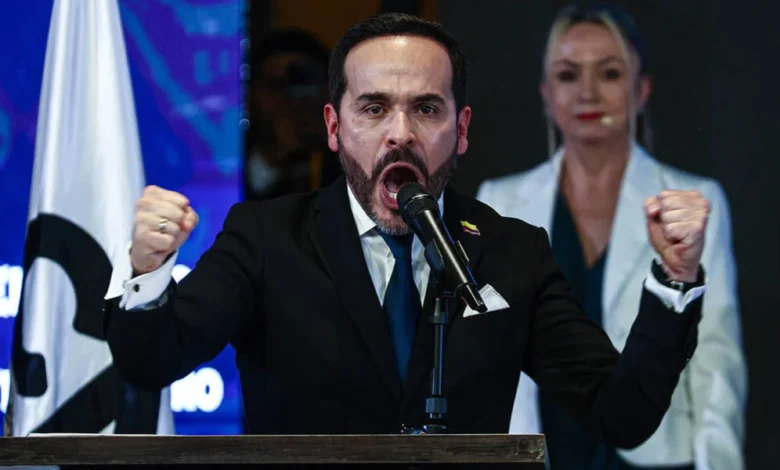
The election of Abelardo de la Espriella as the President of Colombia in July 2026 marks a significant turning point in the Andean nation’s political history, signaling a sharp departure from the social-democratic aspirations of the previous years and highlighting a deep-seated tension between the public desire for a robust welfare state and the entrenched influence of powerful private interests. De la Espriella, a high-profile criminal defense lawyer known for his representation of controversial figures, defeated Senator Iván Cepeda, a prominent human rights advocate, in a runoff that exposed the ideological fractures within the Colombian electorate. The result has sent shockwaves through Latin America, as observers weigh the implications of a presidency led by a figure whose career has been defined by his defense of paramilitary leaders, corrupt officials, and international money launderers.
The central conflict of this election cycle was not merely a choice between two men, but a referendum on the feasibility of the Colombian welfare state. For decades, the Colombian populace has demanded expanded access to healthcare, education, and social security. However, as noted by economic analysts and political commentators alike, the Colombian political system remains structurally inhibited by "malign influences"—a network of patronage, corruption, and the lingering shadow of the country’s internal conflict—that prevents the state from delivering on its social promises. With the incoming De la Espriella administration closely aligned with these very interests, many experts predict that the cycle of public disappointment and social unrest is likely to continue.
The Candidates: A Study in Contrasts
The 2026 presidential race was defined by the starkly different backgrounds and worldviews of the two main contenders. Iván Cepeda, representing the progressive coalition, campaigned on a platform of historical memory, land reform, and the deepening of the 2016 Peace Accords. Cepeda’s political identity is inextricably linked to the victims of Colombia’s long-standing conflict. His father, Manuel Cepeda Vargas, a senator for the Patriotic Union (UP), was assassinated in 1994 by paramilitary groups acting in collusion with state security forces. Throughout his career, Cepeda has been a vocal critic of the nexus between politics and paramilitarism, making his loss to De la Espriella particularly symbolic for many human rights organizations.
In contrast, Abelardo de la Espriella built a career and a massive personal fortune by operating at the highest levels of the Colombian legal and social elite. He is best known for his flamboyant lifestyle and his client list, which includes some of the most polarizing figures in recent history. Among his former clients are paramilitary commanders who sought legal protection during the demobilization processes of the early 2000s, and Alex Saab, the businessman closely linked to the Nicolás Maduro administration in Venezuela who faced money laundering charges in the United States. De la Espriella’s campaign focused on "law and order," fiscal conservatism, and the protection of private enterprise, messaging that resonated with a middle class weary of economic volatility and perceived state overreach.
Chronology of the 2026 Election Cycle
The path to the July 20 election was marked by several pivotal moments that shifted the momentum in favor of De la Espriella:
- August 2025: Formal launch of the presidential campaigns. Iván Cepeda emerges as the frontrunner for the left, while the right-wing and centrist parties struggle to find a unified candidate.
- November 2025: De la Espriella enters the race as an independent, utilizing a sophisticated social media campaign and his established "strongman" persona to quickly gain traction among voters frustrated with traditional political parties.
- February 2026: Economic data reveals a stagnation in GDP growth and a rising fiscal deficit, putting the incumbent administration’s social spending plans under intense scrutiny. De la Espriella uses this to frame the welfare state as an "unaffordable fantasy."
- April 2026: During the first-round elections, Cepeda and De la Espriella emerge as the top two candidates, eliminating the centrist options. The campaign turns increasingly personal, with Cepeda highlighting De la Espriella’s ties to corrupt actors and De la Espriella accusing Cepeda of being a "radical" who would lead Colombia toward a Venezuelan-style crisis.
- June 2026: A series of televised debates focuses on the "informal economy" and tax reform. De la Espriella’s promise to cut corporate taxes and deregulate the labor market appeals to the business sector, while Cepeda’s calls for higher taxes on the wealthy fail to gain broad support beyond his base.
- July 2026: Abelardo de la Espriella wins the runoff election with approximately 52% of the vote, compared to Cepeda’s 46%.
Economic Context and Supporting Data
The backdrop of the 2026 election was an economy struggling to balance social demands with fiscal reality. According to data from the Colombian National Administrative Department of Statistics (DANE), the poverty rate remained stubbornly high at 36% leading into the election year. Furthermore, Colombia’s Gini coefficient—a measure of income inequality—remained among the highest in the OECD, reflecting a deep divide between the urban elite and the rural poor.
The fiscal constraints facing the country are significant. Colombia’s debt-to-GDP ratio hovered around 60% in early 2026, limiting the government’s ability to borrow for social programs. The "shadow economy," which includes illegal mining, drug trafficking, and informal labor, is estimated to account for nearly 30% of the country’s economic activity. This informal sector not only evades taxation but also provides a power base for the "malign influences" that critics argue have captured the political system.
Economists have pointed out that while the demand for a welfare state is "popular," the tax base is remarkably narrow. In Colombia, a disproportionate share of tax revenue comes from corporate taxes rather than individual income taxes, a structure that De la Espriella has vowed to maintain or further tip in favor of corporations. This fiscal structure makes the delivery of universal healthcare and education nearly impossible without significant structural reform, which the incoming administration appears unlikely to pursue.
Official Responses and International Reactions
The reaction to De la Espriella’s victory has been polarized both domestically and internationally. Following the announcement of the results, Iván Cepeda issued a statement emphasizing the need for continued vigilance in protecting human rights. "The results are sobering," Cepeda stated. "We respect the democratic process, but we remain concerned that the progress made in the peace process and in the recognition of victims’ rights will be dismantled by an administration that has historically aligned itself with the perpetrators of violence and the beneficiaries of corruption."
International markets reacted with cautious optimism to De la Espriella’s victory, with the Colombian peso strengthening slightly against the US dollar in the days following the election. Investors cited his pro-market stance and his promise to protect the extractive industries (oil and mining) as positive signs for short-term stability.
However, diplomatic reactions have been more tempered. The United States State Department issued a formal congratulation to the president-elect but underscored the importance of maintaining the rule of law and continuing the fight against narcotics trafficking. In contrast, regional leaders in Latin America expressed a range of views. Left-leaning governments in Brazil and Chile expressed concern over the potential "re-paramilitarization" of Colombian politics, while more conservative administrations in the region welcomed De la Espriella as a bulwark against the "Pink Tide" of socialism.
Broader Implications and Analysis
The election of Abelardo de la Espriella carries profound implications for the future of Colombia’s democracy and its internal stability. Analysts suggest that his presidency will likely be characterized by a "securitization" of policy, where social issues are framed through the lens of national security rather than human rights or economic equity.
- The Peace Process: There is significant concern that the 2016 Peace Accords with the FARC, which were already under strain, could be further marginalized. De la Espriella’s historical ties to paramilitary legal defense suggest a potential shift toward a more punitive approach to rural insurgency and a de-prioritization of land restitution for victims.
- Judicial Independence: Given De la Espriella’s background as a defense lawyer for high-profile individuals accused of corruption, there are fears regarding the independence of the judiciary. The executive branch’s influence over the appointment of the Attorney General and other key legal positions will be closely watched by international monitors.
- Social Unrest: The disconnect between the popular demand for social services and the government’s likely pivot toward austerity and deregulation could spark a new wave of social protests. Colombia has a recent history of mass demonstrations, such as those in 2019 and 2021, and the failure of the 2026 election to address the root causes of inequality may lead to renewed volatility.
- Foreign Relations: The relationship with Venezuela will be particularly complex. Given De la Espriella’s previous legal representation of Alex Saab—a figure at the heart of the Maduro government’s international financial network—his administration’s stance toward Caracas will be a focal point of regional geopolitics.
In conclusion, the 2026 election has placed Colombia at a crossroads. The victory of Abelardo de la Espriella represents a triumph for those who prioritize economic stability and traditional power structures over the transformative social reforms advocated by Iván Cepeda. However, the fundamental tensions that have plagued Colombia for decades—inequality, corruption, and the influence of illegal actors—remain unresolved. Whether a presidency led by a "lawyer to the elite" can bridge these divides or will instead deepen them remains the most critical question for the nation’s future. For the millions of Colombians who continue to hope for a functional welfare state, the election result is a reminder of the immense obstacles that stand in the way of that goal.