The Weaponization of Wildfire: How the US-Canada Smoke Dispute Redefines Global Climate Security

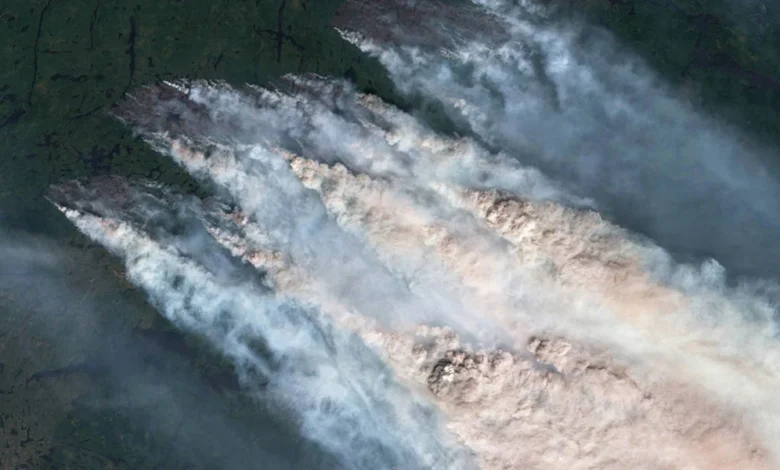
The geopolitical landscape of the 21st century has shifted from traditional territorial disputes to a new, atmospheric frontier, as the United States moves to price transboundary climate-driven harms and extract unilateral compensation from its closest neighbor. What was once categorized as a matter for international development agencies, insurance actuaries, or emissions-accounting frameworks has been transformed into a high-stakes security and trade dispute between two G7 economies. By demanding accountability for the massive wildfires that have blanketed American cities in hazardous haze, the United States has set a precedent that threatens to redefine international relations, trade policy, and the very definition of sovereign negligence in an era of accelerating environmental collapse.
A Paradigm Shift in Climate Accountability
For decades, climate-driven disasters followed a predictable, if tragic, script. In mid-December 2025, southern Africa was hit by a period of relentless rainfall that lasted for months. Floodwaters inundated roads, bridges, clinics, and schools across Mozambique’s Gaza province, affecting more than 700,000 people and displacing 200,000. The death toll reached an estimated 300, followed by outbreaks of waterborne diseases. World Weather Attribution (WWA) eventually concluded that climate change had made the rainfall approximately 40% more intense.
In that instance, the global community responded with its traditional framework: the disaster was framed as a collective, abstract failure of humanity. While the victims were identifiable, the perpetrators were not. No bills were sent; no tariffs were levied. This "era of anonymity" in climate damage appears to have ended not in the floodplains of Mozambique, but in the smoke-filled corridors of power between Washington and Ottawa.
As smoke from hundreds of Canadian wildfires drifted south, turning the skies of New Jersey and New York a dystopian orange, the political response took a radical turn. Facing the potential disruption of the world’s most-watched sporting event—the World Cup—President Donald Trump characterized the environmental disaster as an "unnecessary invasion" of Canadian pollution. In a move that stunned diplomatic circles, the U.S. administration argued that the Canadian government was "willfully negligent" in its forest management practices. Consequently, the U.S. moved to impose higher tariffs on Canadian goods as a form of unilateral compensation for the economic and public health costs incurred by American citizens.
Chronology of an Escalating Crisis
The current dispute is the culmination of several years of worsening environmental conditions and hardening political stances.
June 2023: Record-breaking wildfires in Canada first brought the issue of transboundary smoke to the forefront of U.S. public consciousness. Millions of Americans were placed under air quality alerts, but the response remained focused on mutual aid and firefighting cooperation.
September 2024: Following a summer of renewed fire activity, U.S. think tanks began publishing reports quantifying the "hidden costs" of Canadian smoke, citing billions of dollars in healthcare expenses, lost labor productivity, and decreased tourism revenue.
December 2025 – February 2026: While southern Africa struggled with devastating floods, North America experienced an unseasonably warm winter, setting the stage for an early and aggressive wildfire season in the Canadian boreal forests.
May 2026: As the "orange haze" returned to the U.S. Northeast, the Trump administration officially linked forest management to trade policy. The White House issued a memorandum declaring that "environmental negligence" by trading partners would be met with "reciprocal economic adjustments."
June 2026: During the World Cup festivities, the U.S. officially announced a "Smoke Tariff" on Canadian softwood lumber and energy exports, arguing that these funds would be used to offset the medical costs of American respiratory illnesses caused by the fires.
The Irony of the Carney Premiership
The conflict is heightened by the personal and professional history of the Canadian Prime Minister, Mark Carney. Before entering politics, Carney was the world’s most influential financial voice on climate change. As the Governor of the Bank of England, he famously warned of the "Tragedy of the Horizon," a concept describing how the catastrophic impacts of climate change will be felt beyond the traditional horizons of most actors—imposing a cost on future generations that the current generation has no direct incentive to fix.
Carney was the first major central banker to provide the financial industry with the mandate to treat climate change as a systemic financial risk. Now, as Prime Minister, he finds himself trapped between two opposing forces. Domestically, he faces a coalition demanding the expansion of oil and gas production to bolster the Canadian economy. Externally, he faces a U.S. administration that is using the very concept of "climate risk" as a blunt instrument of protectionism.
The U.S. position is characterized by a profound irony: while the administration uses tariffs to punish Canada for wildfire smoke, it simultaneously demands that Canada increase its fossil fuel extraction and pipeline capacity. This suggests that the "science" of climate attribution is not being used as a neutral tool for adjudication, but as a weapon of coercive power.
Supporting Data: The Economic and Physical Toll
The data underlying this shift in policy highlights why climate change is no longer seen as a peripheral issue. The January 2025 Los Angeles fires were already among the costliest disasters ever recorded, but because they were domestic, the costs were absorbed within the U.S. federal and state budgets. Transboundary events, however, create a different economic friction.
- Health Costs: Peer-reviewed studies have estimated that during peak wildfire years, the health-related costs of smoke exposure in the U.S. can exceed $100 billion annually. This includes emergency room visits for asthma, cardiovascular issues, and long-term respiratory degradation.
- Productivity Losses: The "orange sky" events in major economic hubs like New York and Philadelphia lead to a measurable dip in outdoor labor productivity and consumer spending, particularly in the hospitality and sports sectors.
- Economic Fragmentation: Economists warn that if major powers adopt a "fortress" mentality regarding climate impacts, the global economy could suffer. A report from Ardabelle suggests that if Europe were to adopt similar restrictive positions to "protect" itself from climate-driven migration and pollution, it could forgo roughly 14% of its potential economic output by 2050.
- Insurance Retreat: Risk pools are becoming increasingly localized. As insurers retreat from areas with concentrated climate risk, capital is becoming trapped behind national borders, preventing the global diversification of risk that is essential for a stable financial system.
Global Implications and the "Smoke Tariff" Precedent
The U.S.-Canada dispute marks the beginning of an era where physics and geopolitics collide. Smoke, floodwaters, and drought-driven migration do not respect national sovereignty. The precedent set by the "Smoke Tariff" has immediate implications for other global flashpoints:
- The Himalayas: India, Pakistan, and China share rivers fed by Himalayan glaciers. As these glaciers melt or the flow is diverted due to climate-driven infrastructure needs, the potential for "water tariffs" or security conflicts increases.
- The Mekong River: Six countries are currently contesting control over the Mekong’s flows, where upstream damming and climate-induced droughts are causing downstream agricultural failure.
- The Sahel: Senegal is increasingly affected by Saharan dust storms originating in Mauritania, a phenomenon exacerbated by desertification. Under the new U.S. logic, Senegal could theoretically demand compensation for the agricultural and health impacts of this dust.
- Small Island States: Countries like Vanuatu and the Marshall Islands have already sought advisory opinions from the International Court of Justice (ICJ). They can now point to the U.S. actions as proof that climate harm is an actionable, quantifiable interstate injury.
Toward a New Framework for Adjudication
The current trajectory—one of improvised, crisis-by-crisis retaliation—threatens to destabilize the global trade order. To prevent this "everyone-for-themselves" scenario, policy experts suggest three urgent priorities.
First, climate resilience must be reframed as a form of shared security rather than a basis for blame. Instead of unilateral tariffs, revenue could be directed into joint "Resilience Funds" for transboundary fire management and watershed protection. This would move the focus from punishment to mitigation.
Second, the world requires a formal machinery for adjudication. The emergence of Artificial Intelligence and advanced climate modeling now allows for more precise "event attribution." However, this data must be interpreted by a neutral international body rather than weaponized by whichever nation holds the most trade leverage. Trade rules under the WTO need to be updated to distinguish between legitimate carbon adjustments and coercive climate protectionism.
Third, there must be a global effort to decouple sovereignty claims from the reality of accumulated emissions. The U.S.-Canada dispute assumes that climate costs reflect immediate negligence. In reality, these costs are the result of over a century of global emissions. A more sustainable alternative to border tariffs would be the development of a global compliance market for carbon, linking market access to climate-adaptation finance in a predictable manner.
Conclusion
The smoke over New York and New Jersey eventually cleared, allowing the World Cup to proceed and Spain to claim victory. Both President Trump and Prime Minister Carney were seen in the stands, a moment of normalcy in a shifting world. However, the political atmosphere remains heavy.
The precedent has been established: climate harm is now a billable offense. The question for the coming decade is whether governments will continue to use the border as a ledger for grievances or whether they will develop a multilateral system capable of managing the inescapable costs of a warming planet. The first climate-security fight between the U.S. and Canada suggests a future of friction, but it also provides a clear warning of the ruinous economic costs of fragmentation. The world has been put on notice: when the smoke rolls in, the invoices are not far behind.