Reflecting on the Architecture of Fear: How the Events of September 11, 2001, Redefined Global Politics and American Society

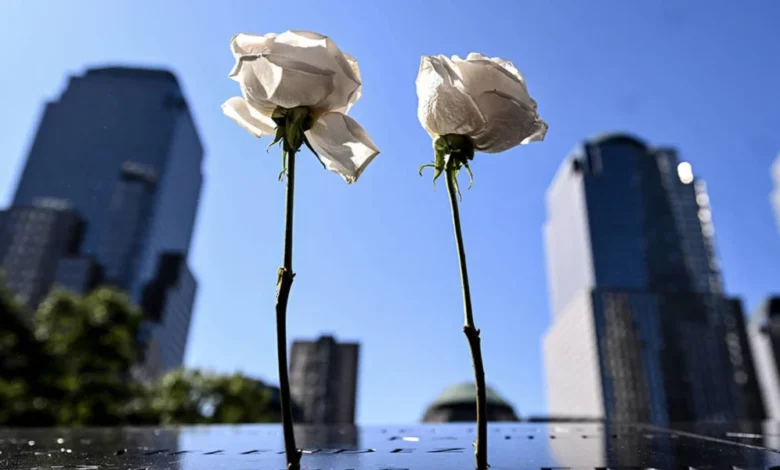
September 11, 2001, began as a Tuesday defined by sparkling clear blue skies, offering no preliminary warning of the paradigm shift that would unfold within a matter of hours. For millions of Americans old enough to remember that morning, the terrorist attacks raised fundamental, agonizing questions that demanded immediate answers: Who could have orchestrated such an atrocity, and above all, why? As history would ultimately demonstrate, the answers and the subsequent reactions would fundamentally reshape the United States and its standing in the global order, in many ways altering the trajectory of the twenty-first century for the worse.
The Morning That Stopped the World
In Cambridge, Massachusetts, Anne-Marie Slaughter was at home when her husband phoned to deliver the initial, harrowing news that a commercial airliner had collided with one of the Twin Towers of the World Trade Center in New York City. Like countless others across the nation in those initial, disorienting moments, the immediate presumption was that a tragic aviation accident involving a small aircraft had occurred. However, as subsequent events rapidly unfolded on live television—capturing the second plane striking the South Tower—it became chillingly apparent that something far graver, coordinated, and catastrophic was underway.
The coordinated strikes by al-Qaeda terrorists hijacked four commercial airliners, turning ordinary domestic flights into guided missiles. Two aircraft targeted the World Trade Center towers in Manhattan, a third struck the Pentagon outside Washington, D.C., and a fourth, United Flight 93, crashed in a field in Shanksville, Pennsylvania, after passengers heroically revolted against their captors to prevent the plane from hitting its intended target in the nation’s capital. The resulting loss of life totaled nearly 3,000 innocent victims, making it the deadliest act of terrorism in modern history and an unprecedented breach of the American mainland.
Chronology of a Crisis: September 11, 2001
Understanding the precise sequence of events on that Tuesday remains crucial for grasping the chaos and urgency that gripped the United States government and civilian leadership:
- 7:59 AM: American Airlines Flight 11 departs Boston’s Logan International Airport bound for Los Angeles, carrying 92 people.
- 8:14 AM: United Airlines Flight 175 departs Logan International Airport also bound for Los Angeles, carrying 65 people.
- 8:15 AM: American Airlines Flight 11 is hijacked by a team of al-Qaeda operatives led by Mohamed Atta.
- 8:20 AM: American Airlines Flight 77 departs Dulles International Airport near Washington, D.C., bound for Los Angeles, carrying 64 people.
- 8:42 AM: United Airlines Flight 93 departs Newark International Airport bound for San Francisco, carrying 44 people.
- 8:46 AM: American Airlines Flight 11 crashes into the North Tower (1 WTC) of the World Trade Center between the 93rd and 99th floors.
- 9:03 AM: United Airlines Flight 175 strikes the South Tower (2 WTC) of the World Trade Center between the 77th and 85th floors, broadcast live to a horrified global audience.
- 9:37 AM: American Airlines Flight 77 crashes into the western facade of the Pentagon, killing 125 people on the ground in addition to the 64 aboard the aircraft.
- 9:59 AM: The South Tower of the World Trade Center collapses entirely in roughly 10 seconds, sending a massive plume of toxic dust and debris over lower Manhattan.
- 10:03 AM: United Airlines Flight 93 crashes in Shanksville, Pennsylvania, after passengers storm the cockpit, thwarting the hijackers’ plans to strike the U.S. Capitol or the White House.
- 10:28 AM: The North Tower of the World Trade Center collapses, leaving the financial district in profound devastation.
- 5:20 PM: World Trade Center Building 7, a 47-story skyscraper, collapses after suffering severe structural damage from falling debris and uncontrolled fires.
Immediate Official Responses and Domestic Overhaul
The shock waves of the attacks prompted immediate, sweeping actions from the federal government. President George W. Bush, who was visiting an elementary school in Sarasota, Florida, when informed of the second strike, was flown to secure locations before returning to Washington to address a traumatized nation that evening. In his address, Bush declared that the United States would make no distinction between the terrorists who committed the acts and those who harbored them, signaling the onset of a global campaign against terrorism.
In the weeks and months following the attacks, the legislative and bureaucratic landscape of the United States underwent a profound transformation. Congress overwhelmingly passed the USA PATRIOT Act in October 2001, significantly expanding the surveillance powers of law enforcement and intelligence agencies in the name of national security. Furthermore, the federal government consolidated various security agencies by establishing the Department of Homeland Security in 2002 and creating the Transportation Security Administration (TSA) to overhaul aviation security nationwide, permanently altering the everyday travel experience for millions of citizens.
International Repercussions and the Global "War on Terror"
Beyond domestic policy, the events of September 11 catalyzed a radical realignment of American foreign policy. The North Atlantic Treaty Organization (NATO) invoked Article 5 for the first time in its history, declaring that an armed attack against one member nation was an attack against them all. This collective defense commitment served as the legal and moral foundation for the United States-led invasion of Afghanistan in October 2001, aimed at dismantling the Taliban regime that provided safe haven to Osama bin Laden and al-Qaeda.
The subsequent launch of the broader "War on Terror" extended well beyond South Asia. In March 2003, the U.S. and an international coalition invaded Iraq, driven by assertions regarding weapons of mass destruction that later proved erroneous. This intervention plunged the region into prolonged sectarian conflict, destabilized the Middle East for decades, and strained traditional alliances between Washington and its European partners. The financial cost of these military engagements soared into the trillions of dollars, while hundreds of thousands of military personnel and civilians lost their lives across multiple theaters of conflict.
Fact-Based Analysis of Long-Term Implications
Decades after the towers fell, historians, political scientists, and economists continue to evaluate the enduring legacy of September 11. From an analytical perspective, the primary failure exposed on that Tuesday was not merely a tactical intelligence lapse, but a profound failure of imagination—the inability of Western security apparatuses to foresee asymmetric warfare waged by non-state actors using commercial infrastructure as weapons.
While the immediate goal of preventing subsequent large-scale attacks on the American homeland was largely achieved through enhanced intelligence sharing and counterterrorism measures, the secondary and tertiary consequences have been deeply problematic. The expansion of executive power, the erosion of certain civil liberties, the normalization of endless military engagements abroad, and the polarization of political discourse around issues of national security and immigration all trace their lineage directly to the trauma of 2001.
Ultimately, the architectural vulnerability exposed on September 11 mirrored a vulnerability in the global order itself. The nation’s response demonstrated both the formidable resilience and unity of the American public in times of crisis, alongside the severe perils of reacting to fear with overreach. As future generations look back on that fateful Tuesday and its cascading consequences, the enduring lesson remains the delicate, perpetual balance required between preserving national security and protecting the democratic values that define a free society.