Oh Dear, Condo Prices Fell by 15% to 33% in 30 Bigger Cities Already. Some Dropped Back to 2006 Levels

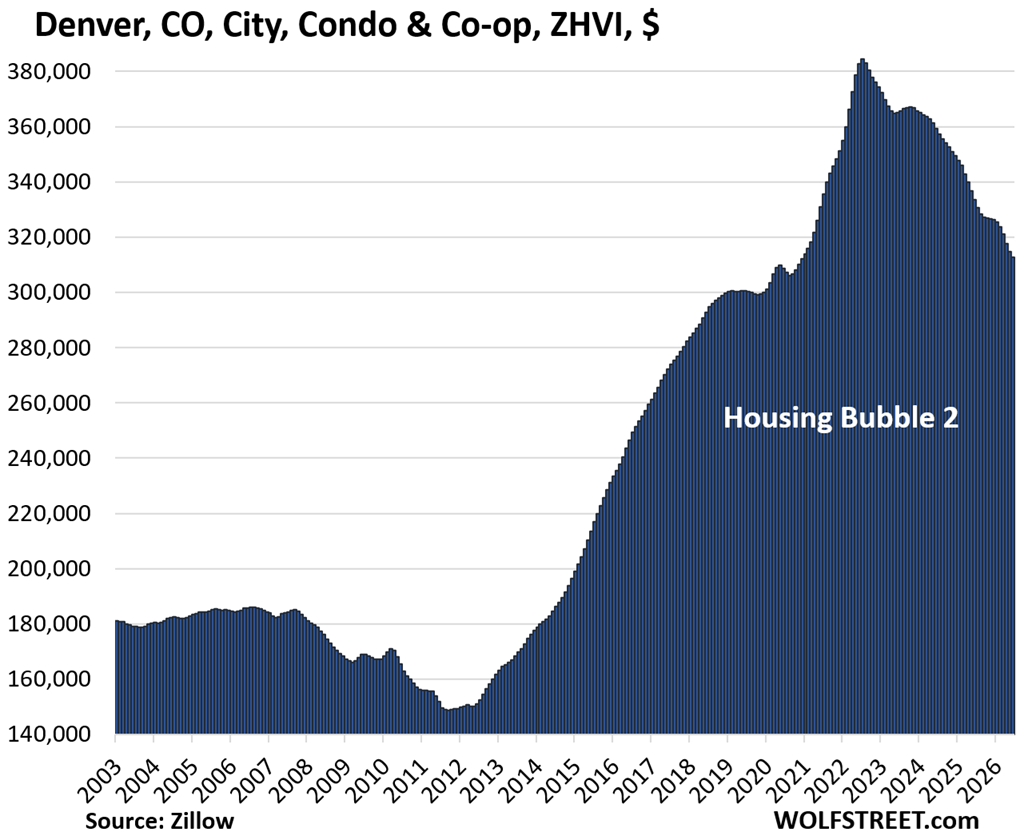
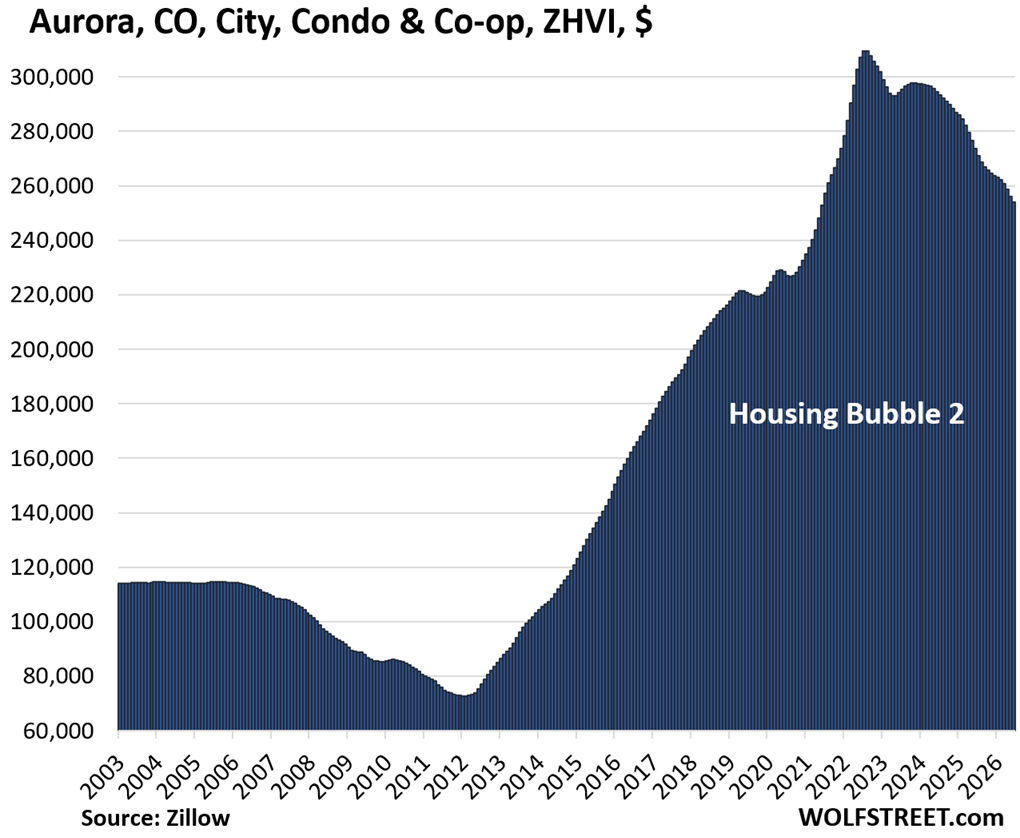
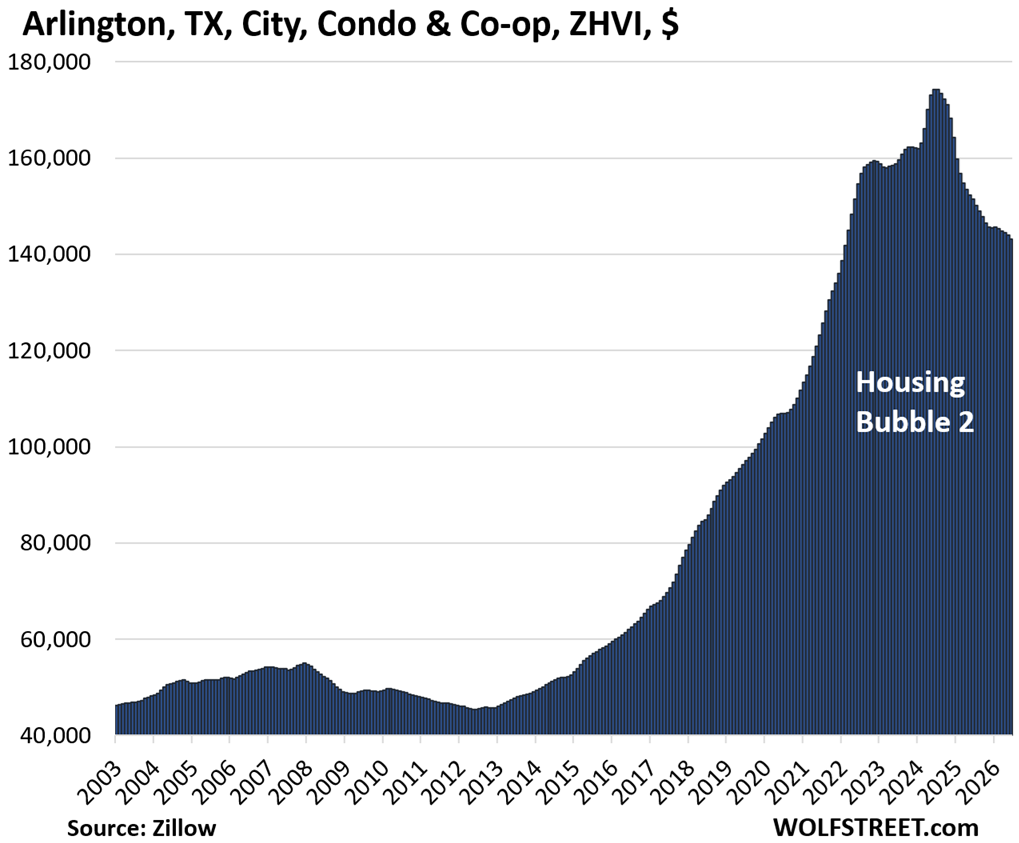
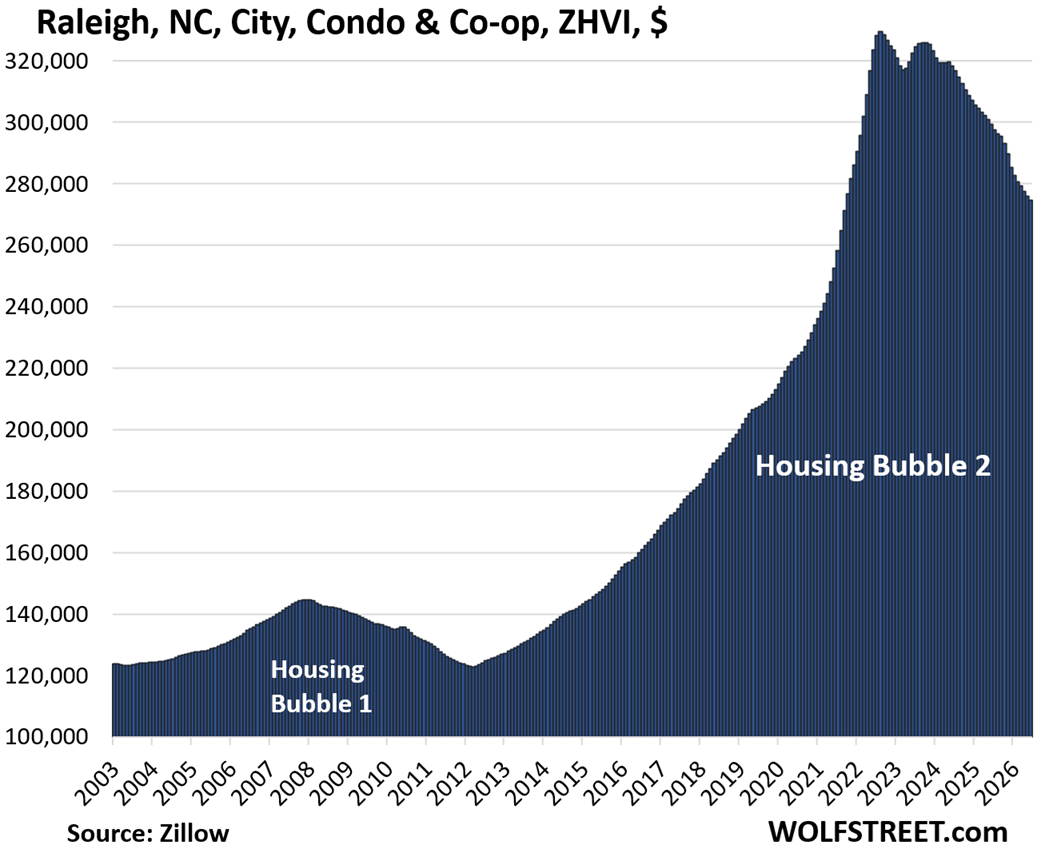
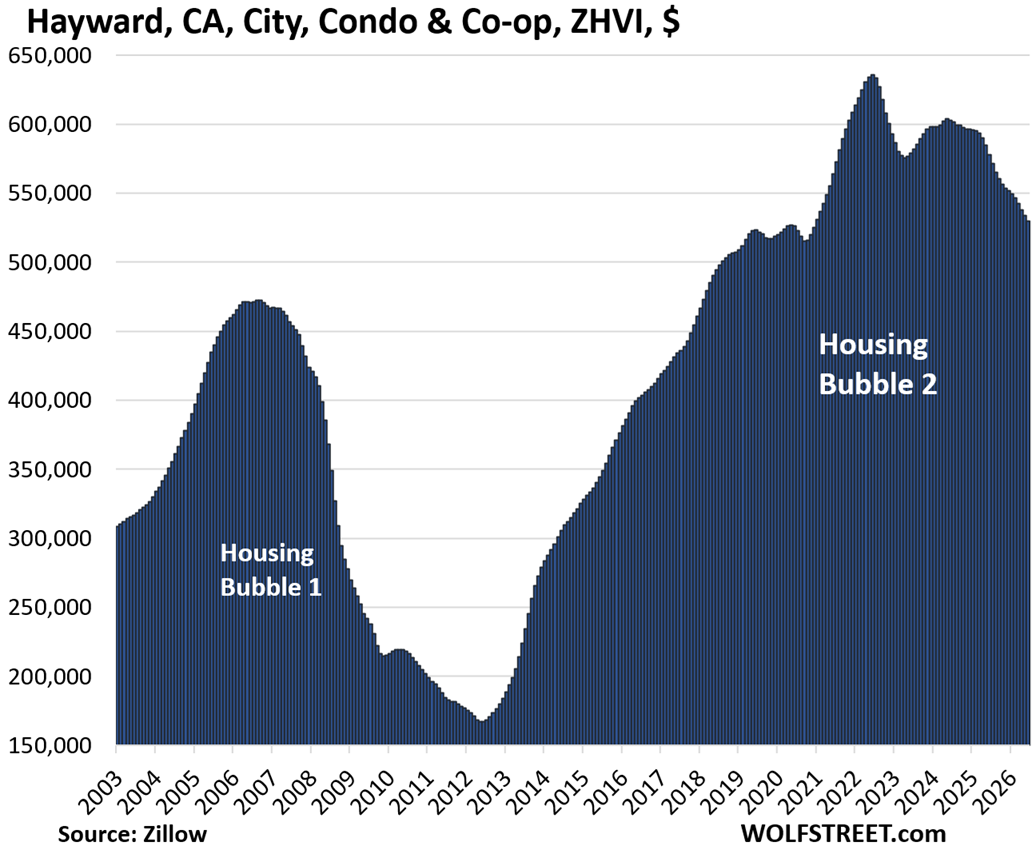
In the decade leading up to the market’s peak, condo prices in many high-demand markets had soared by 180% to 350%. This astronomical growth created a speculative environment that has now begun to unravel. According to data derived from the Zillow Home Value Index (ZHVI), which tracks mid-tier condo and co-op prices using millions of data points from public records and real estate associations, the price drops are getting steeper and more pervasive. As of June, 30 major markets have seen prices fall by 15% to 33% from their respective peaks, which mostly occurred between 2022 and early 2024.
The Severity of the Condo Bust: A Market Breakdown
The most severe declines have been concentrated in markets that were previously the darlings of the pandemic-era migration. In nine of the 30 largest declining markets, prices have plummeted by 21% to 33%. These are no longer minor fluctuations but represent substantial multiyear declines that have wiped out years of equity for recent buyers.
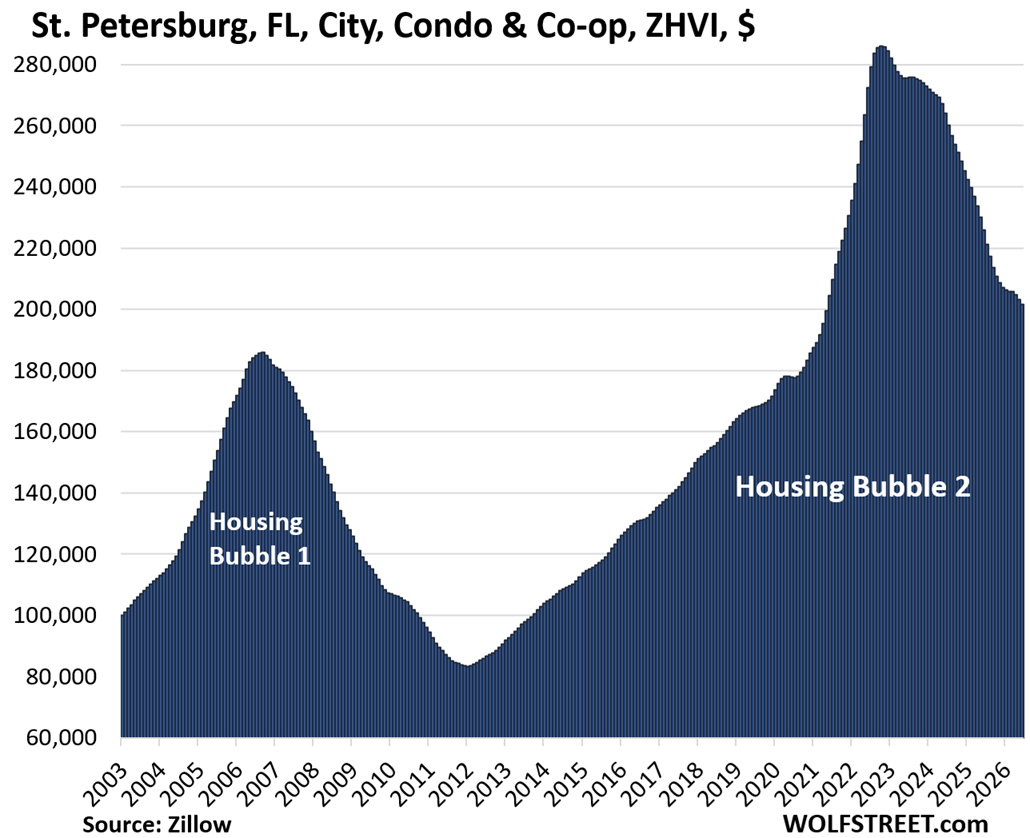
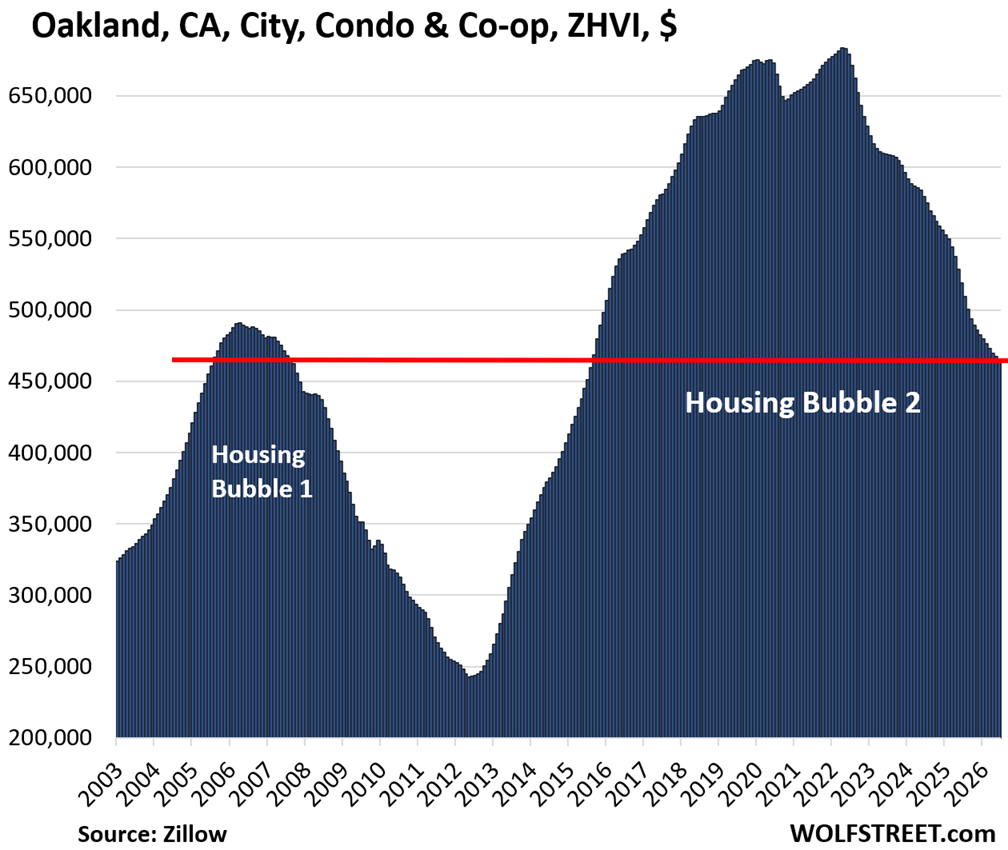
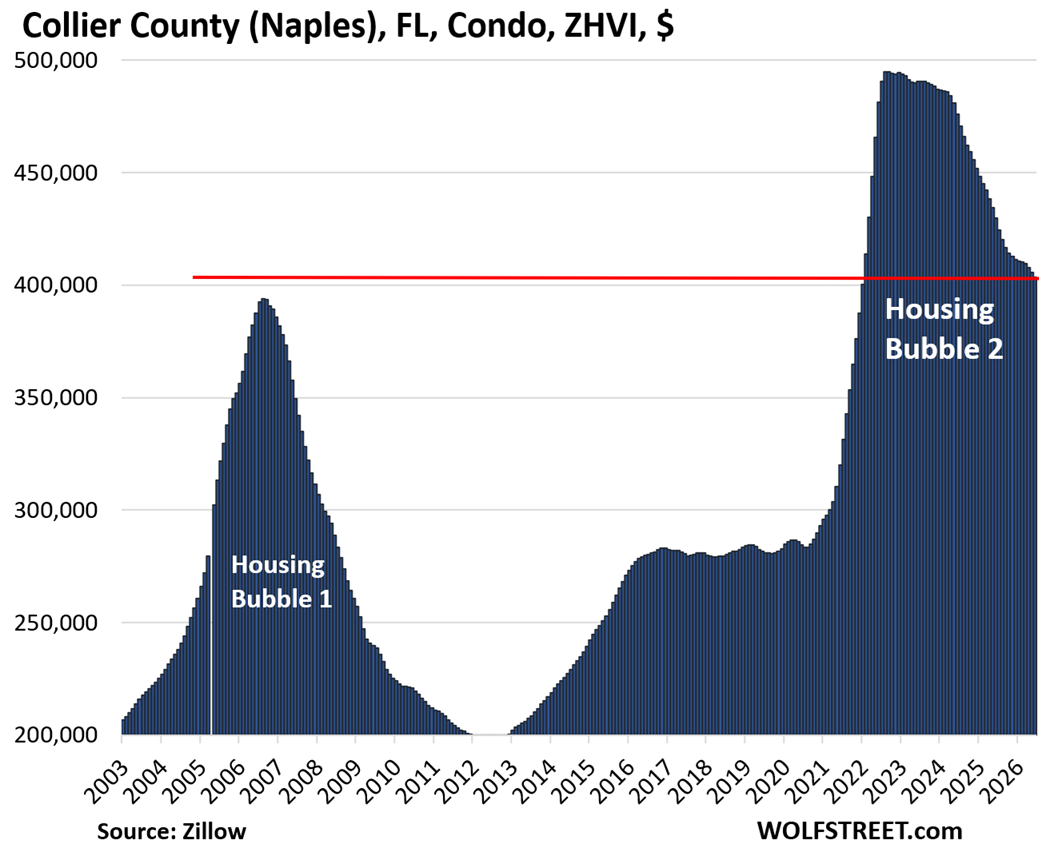
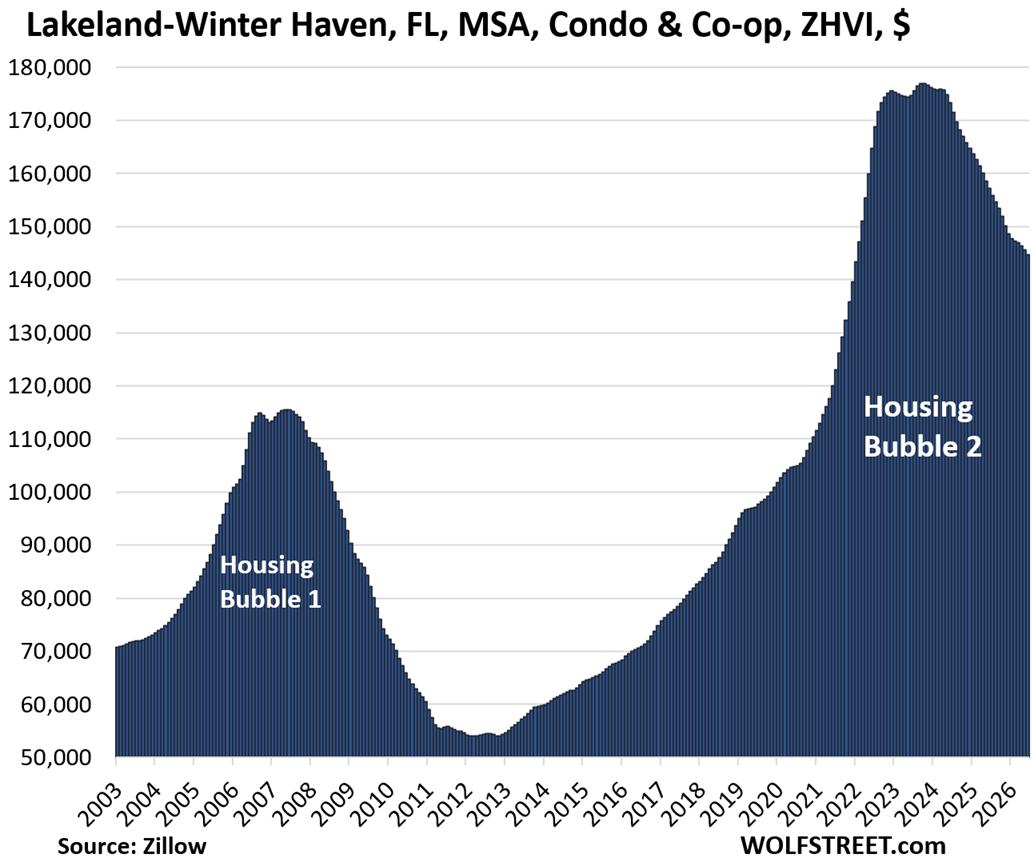
Leading the decline is the Cape Coral-Fort Myers metropolitan area in Florida. Prices there have dropped 33% from their July 2022 peak. For this region, the current downturn is a haunting echo of the 2008 housing crisis; prices have now retreated to levels first seen in November 2005. Similarly, Oakland, California, has seen a 32% drop from its May 2022 peak, bringing values back to where they were in mid-2005.
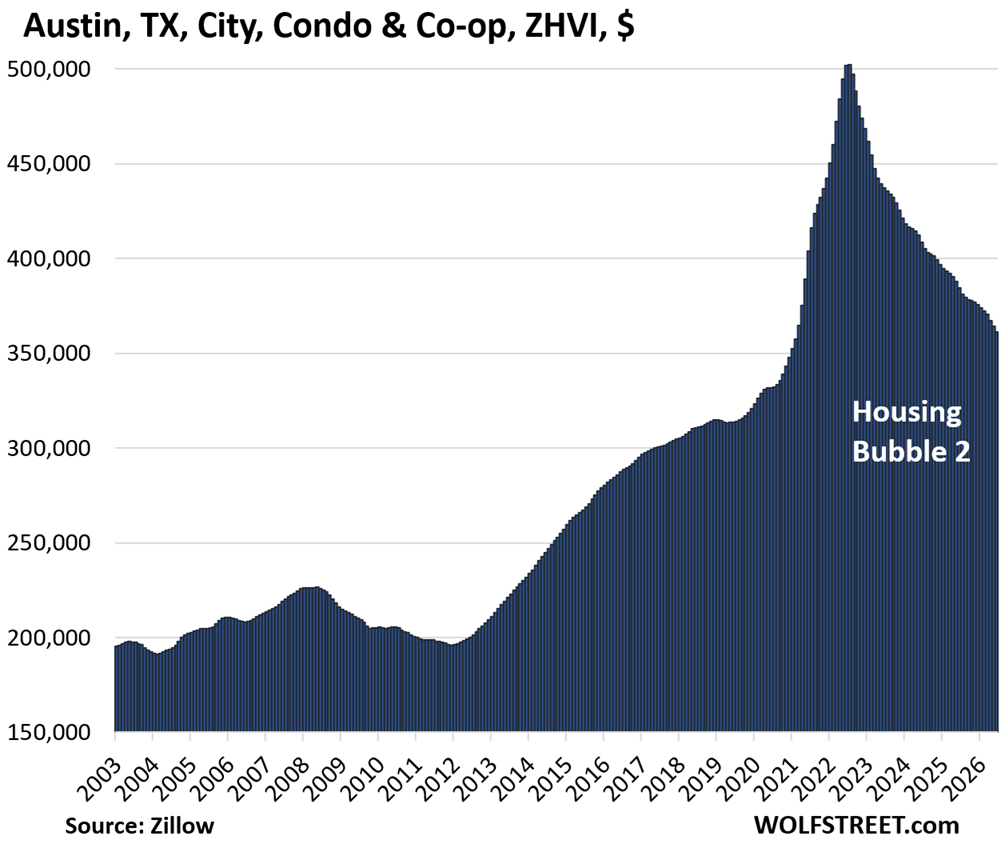
Other notable declines include:
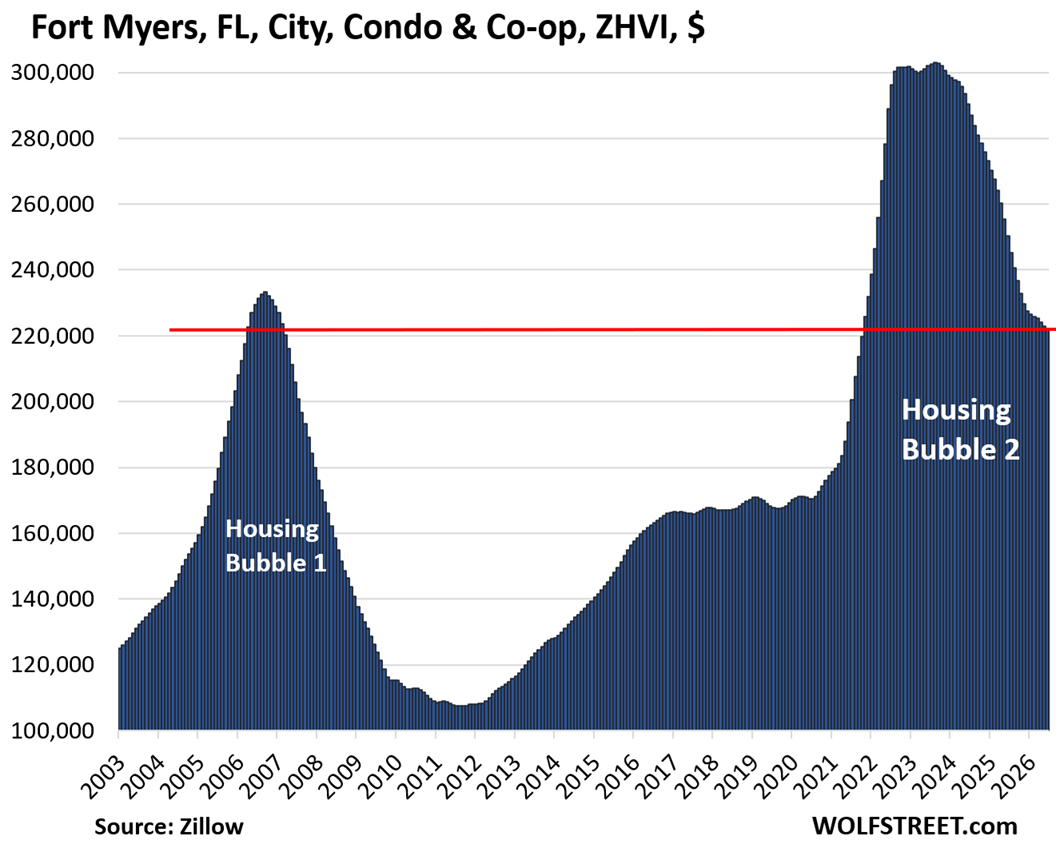
- St. Petersburg, FL: Down 29% from its October 2022 peak.
- Austin, TX: Down 28% from its July 2022 peak.
- Fort Myers, FL (City): Down 27% from its July 2022 peak.
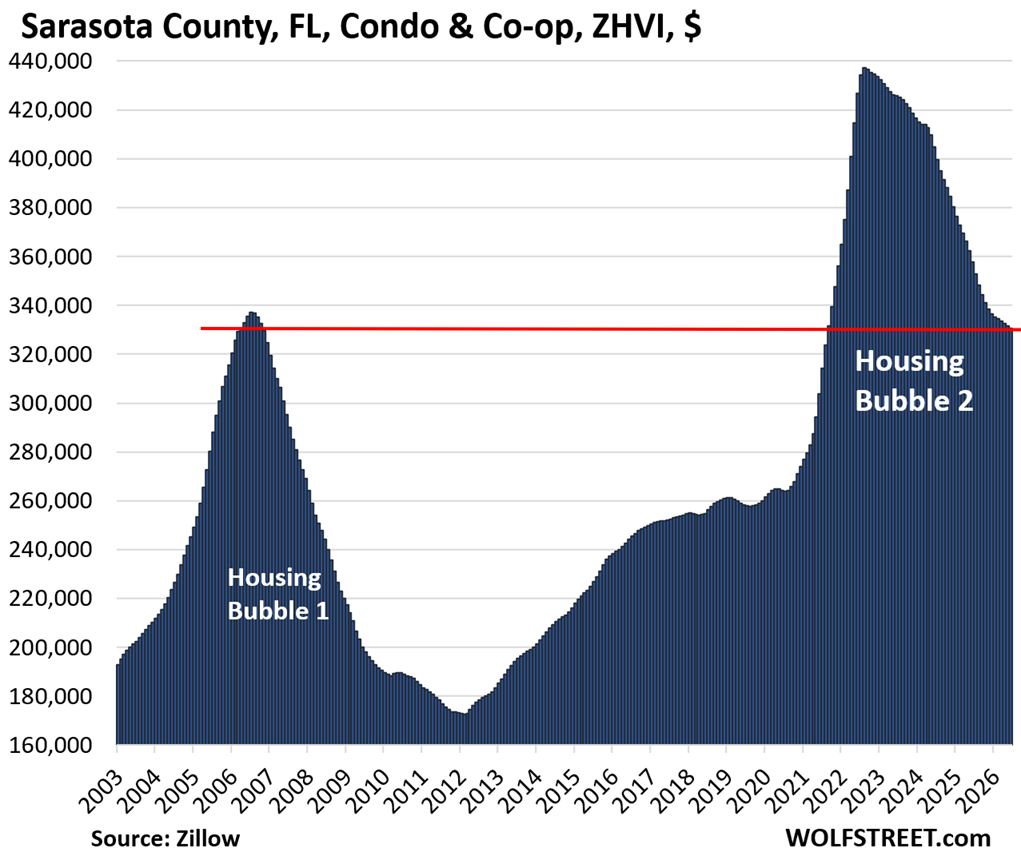
- Sarasota County, FL: Down 24% from its June 2022 peak.
- Tampa and Jacksonville, FL: Both down 21% from their late 2022 peaks.
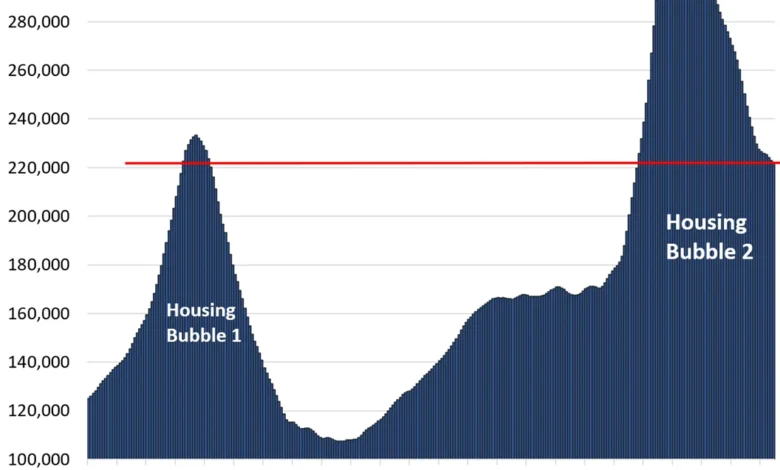
In several of these Florida and California markets, the red line of the 2006 Housing Bubble 1 peak has been breached. This means that after nearly 20 years, the nominal value of these properties has effectively returned to zero growth when compared to the height of the previous speculative cycle.
Chronology of a Bubble: From Surge to Stagnation
The timeline of this "Condo Bubble" can be divided into three distinct phases: the pre-pandemic steady climb, the pandemic-era explosion, and the current high-interest-rate hangover.
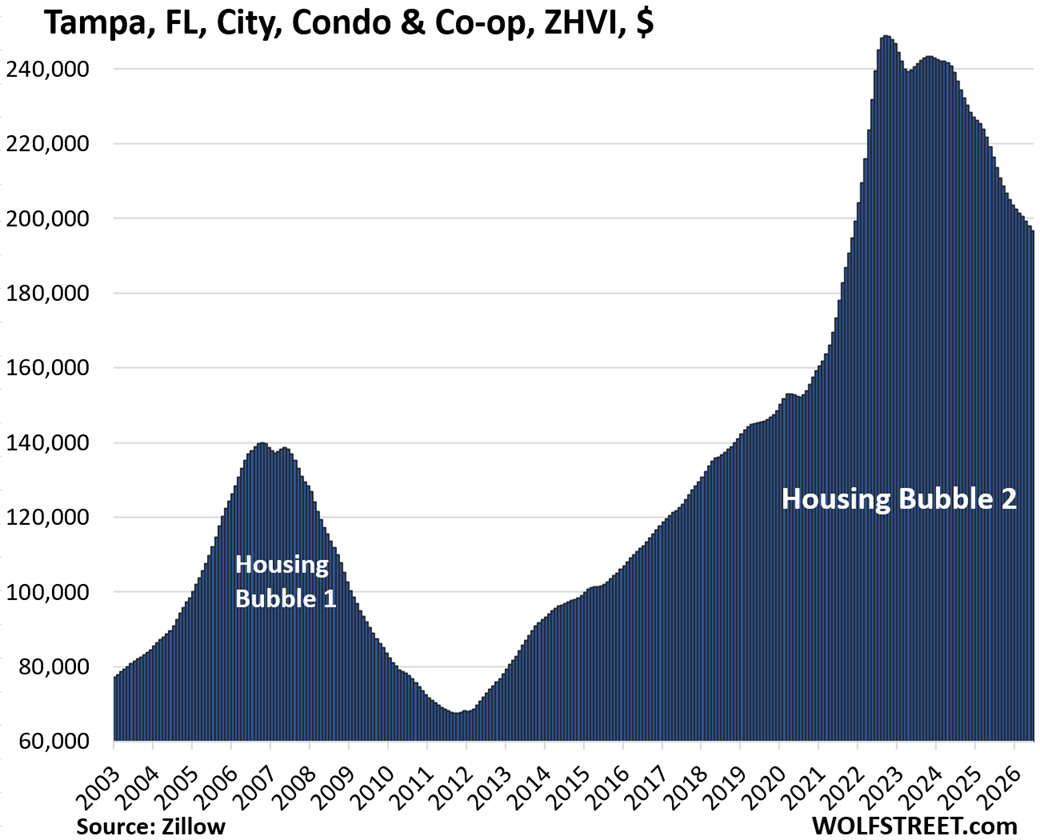
From 2012 to early 2020, condo prices grew at a steady, albeit fast, pace as urban living regained popularity. However, the onset of the COVID-19 pandemic in 2020 triggered an unprecedented shift. Initially, there was a brief dip in urban interest, but this was quickly replaced by a speculative frenzy fueled by record-low mortgage rates and a surge in remote work flexibility. Investors and second-home buyers flooded the market, particularly in Florida, Texas, and mountain states like Idaho and Colorado.
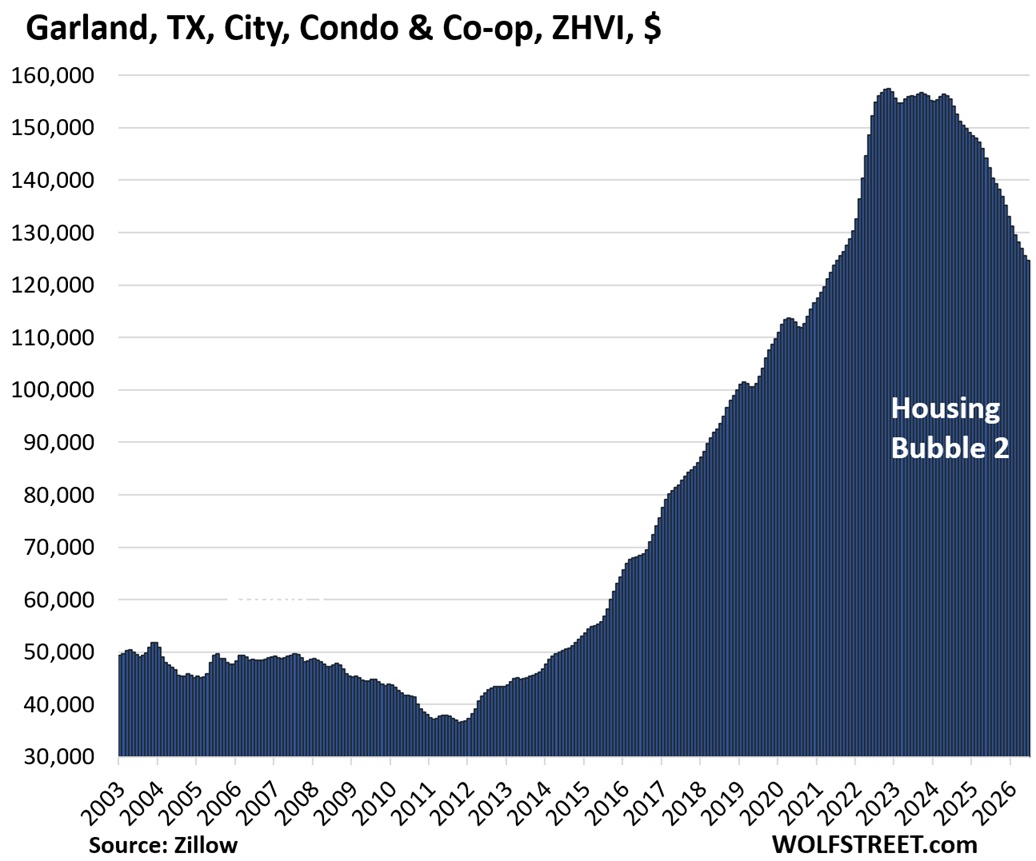
By mid-2022, the Federal Reserve began aggressively raising interest rates to combat inflation. This served as the primary catalyst for the bubble’s deflation. As mortgage rates climbed from 3% to over 7%, the "math" for both primary residents and investors stopped working. The monthly cost of ownership doubled in many cases, leading to a sharp drop in demand. By late 2023 and early 2024, the "waiting game" played by sellers ended, and prices began their current downward trajectory.
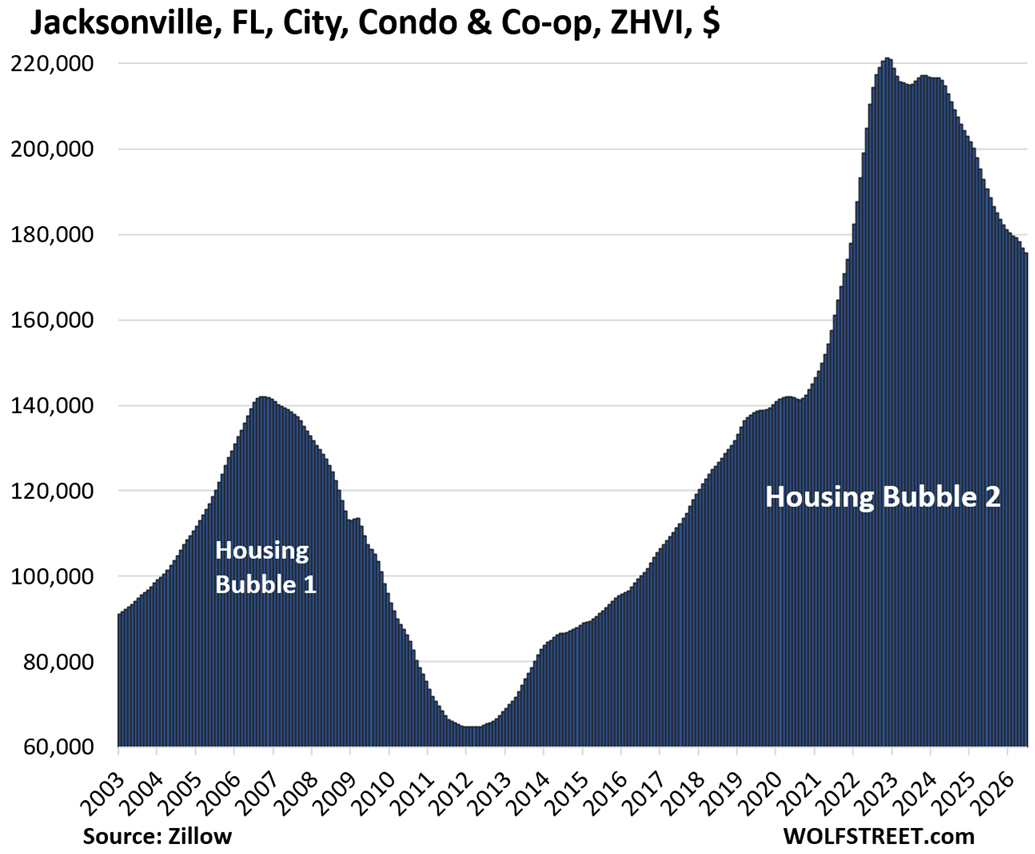
The Secondary Wave: 39 Cities Facing 8% to 14% Declines
While the 30 markets mentioned above represent the "hardest hit," a secondary wave of 39 major cities is currently experiencing declines between 8% and 14%. These markets are often only one or two poor reporting months away from joining the 15%+ decline category.
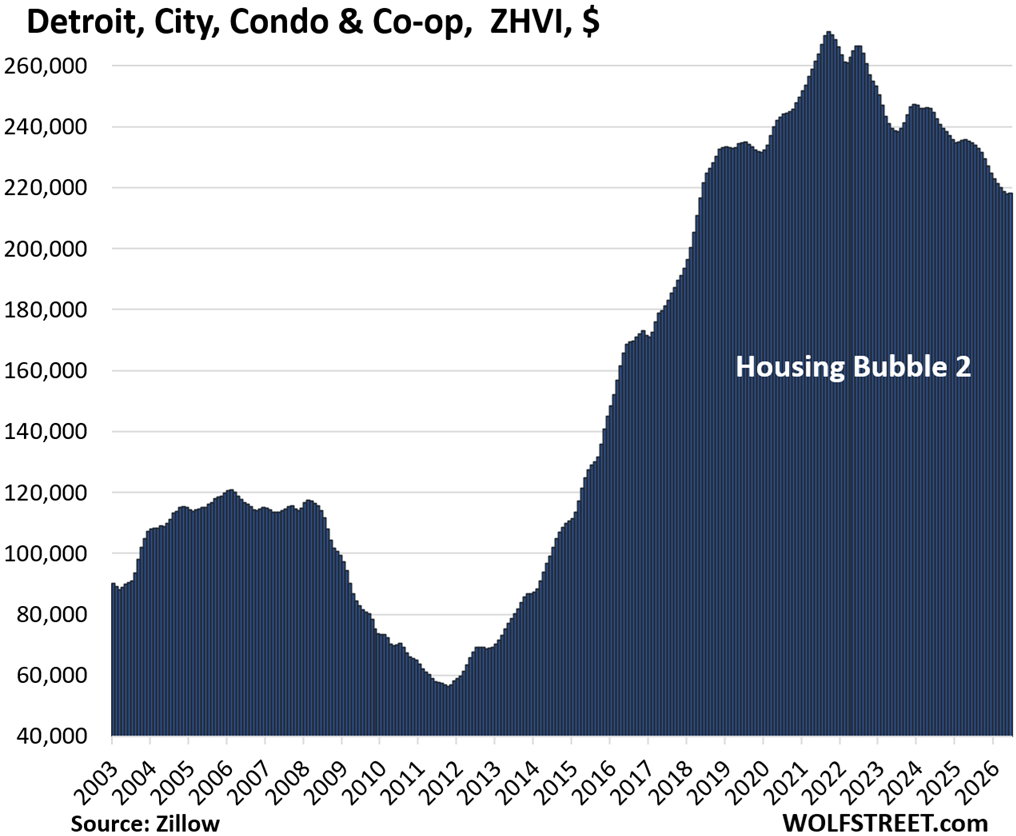
Houston, Texas, and Queens, New York, have both seen 14% drops from their peaks. Houston, one of the largest cities in the country, reached its peak as late as 2024, suggesting that its correction is only just beginning. Other cities in this bracket include San Antonio (-14%), Dallas (-14%), Scottsdale (-14%), and Sacramento (-13%). Even legendary "resilient" markets like San Francisco and San Diego have not been immune, posting declines of 9% from their peaks.
The breadth of these declines suggests a fundamental repricing of the condo asset class. Unlike single-family homes, which have seen more constrained inventory due to the "lock-in effect" of low mortgage rates, condos often face different market pressures that make them more susceptible to price volatility.
Supporting Data and Structural Issues Facing Condos
The volatility of the condo market is driven by its unique ownership structure and the diverse motivations of its buyers. Condos serve several roles: primary residences for urban professionals, rental properties for small-scale investors, and "wealth parking" vehicles for foreign and institutional investors.
Several structural issues are currently weighing on condo valuations:
- Surging HOA Fees and Insurance Costs: Particularly in Florida, insurance premiums have skyrocketed due to climate risks. Furthermore, new legislation following the Surfside condo collapse has mandated stricter reserve requirements and safety inspections, leading to massive special assessments that many owners cannot afford.
- The Short-Term Rental Crackdown: Many condos were purchased with the intent of using them as Airbnbs. As cities across the U.S. implement stricter regulations on short-term rentals, these "investments" are being dumped back onto the market, increasing supply and depressing prices.
- The "Work from Home" Shift: While some workers have returned to offices, the permanent shift toward hybrid work has reduced the premium people are willing to pay for tiny units in dense urban cores.
- Investor Exit: Nonresident foreign investors, who helped fuel the 180% to 350% gains over the last decade, are now seeing declining returns and a strengthening dollar, prompting many to liquidate their holdings.
Official Responses and Market Analysis
Real estate analysts note that the current correction is a necessary "reversion to the mean." Statements from market watchdogs suggest that the price-to-income ratios in many of these cities had reached levels that were socially and economically unsustainable.
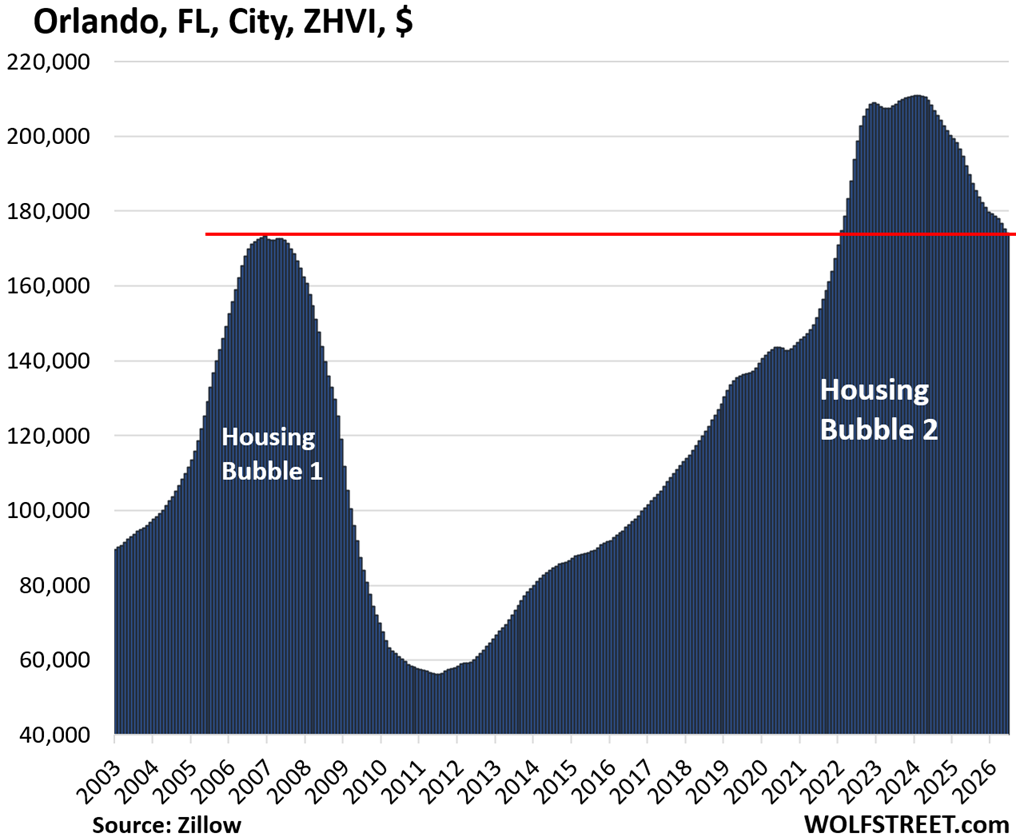
In Florida, local Realtor associations have noted that "inventory is building at a pace we haven’t seen in years." Sellers who were holding out for 2022 prices are finding that buyers are no longer willing to engage without significant discounts. In Texas, particularly in Austin, the decline is viewed as a cooling of an overheated tech hub that grew too fast during the "Zoom-town" era.
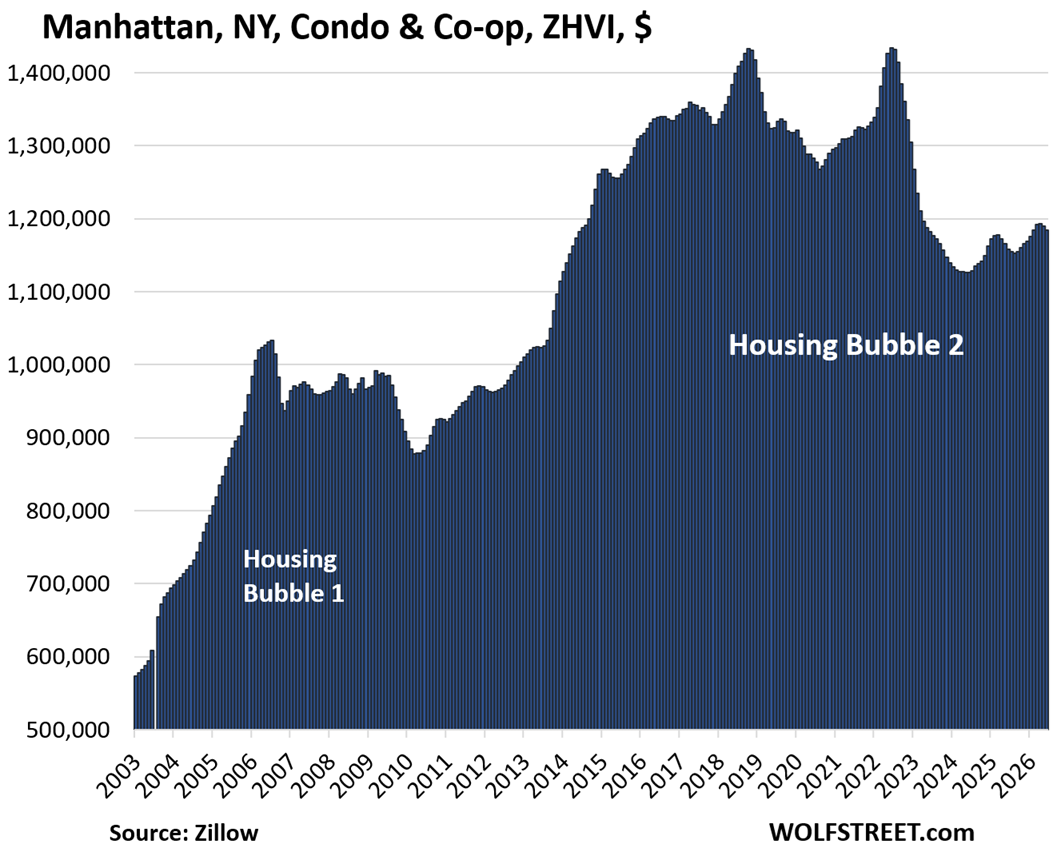
Economists at Zillow and other major data providers highlight that their indices are "backward-looking," meaning the data reflected in current reports often represents deals that were struck months ago. This suggests that the real-time decline in some markets may be even deeper than the 15% to 33% currently reported.
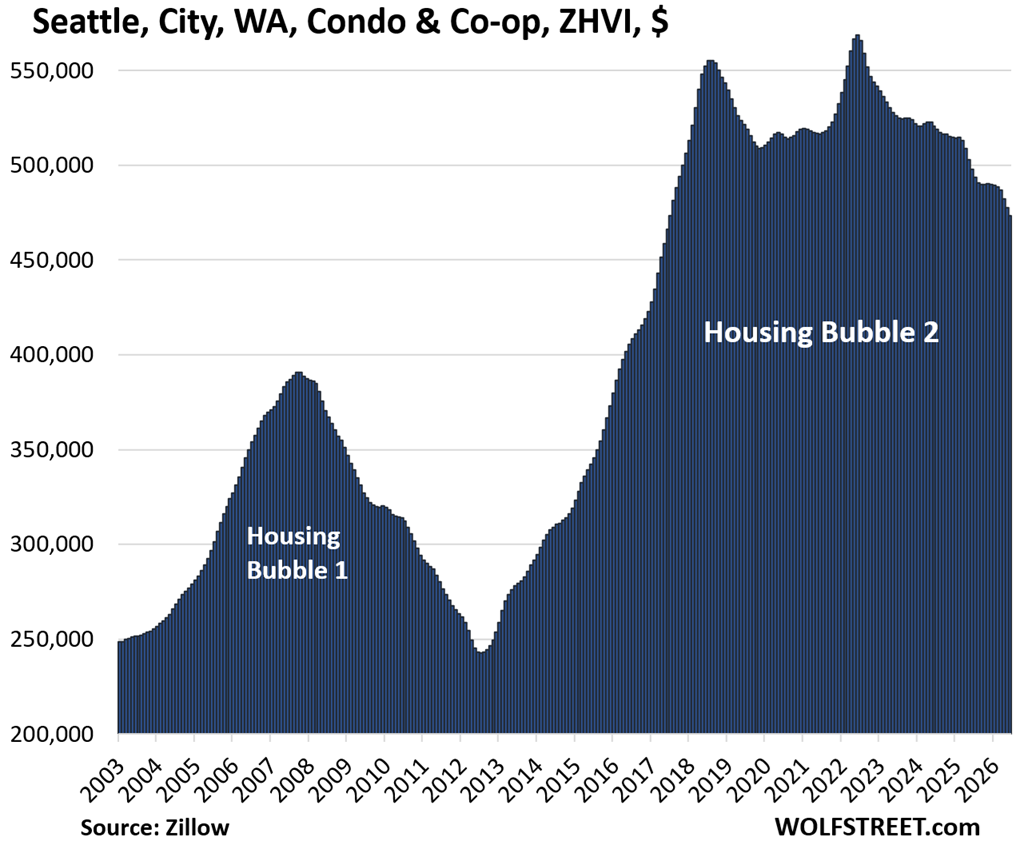
Broader Impact and Future Implications
The "Condo Bust" has significant implications for the broader U.S. economy. First, there is the "wealth effect." As home equity—often the largest component of household wealth—evaporates, consumer spending typically slows down. This could have a cooling effect on the wider economy.
Second, the rental market is likely to feel the ripple effects. As condo prices fall, some owners may choose to rent out their units rather than sell at a loss, increasing the supply of rental housing and potentially putting downward pressure on rents in major cities.
Finally, the crisis in the condo sector may lead to a long-term shift in urban development. Developers who were focused on luxury high-rise condos may pivot toward more affordable housing or "build-to-rent" communities as the speculative appetite for condos wanes.
The current "massive hangover" is a stark reminder that real estate markets are cyclical. The historic bubble of 2020-2022 was an anomaly driven by extraordinary monetary policy and social shifts. As the market returns to reality, the "breath-taking price explosions" of the past are being replaced by a sober, and for some, painful, market correction. For prospective buyers, the coming months may offer the best entry points in years, but for those who bought at the peak, the road to recovery will likely be measured in decades, not years.