It would make sense for the bond market to take a breather here and digest a little. But the dynamics are in place for yields to rise further.


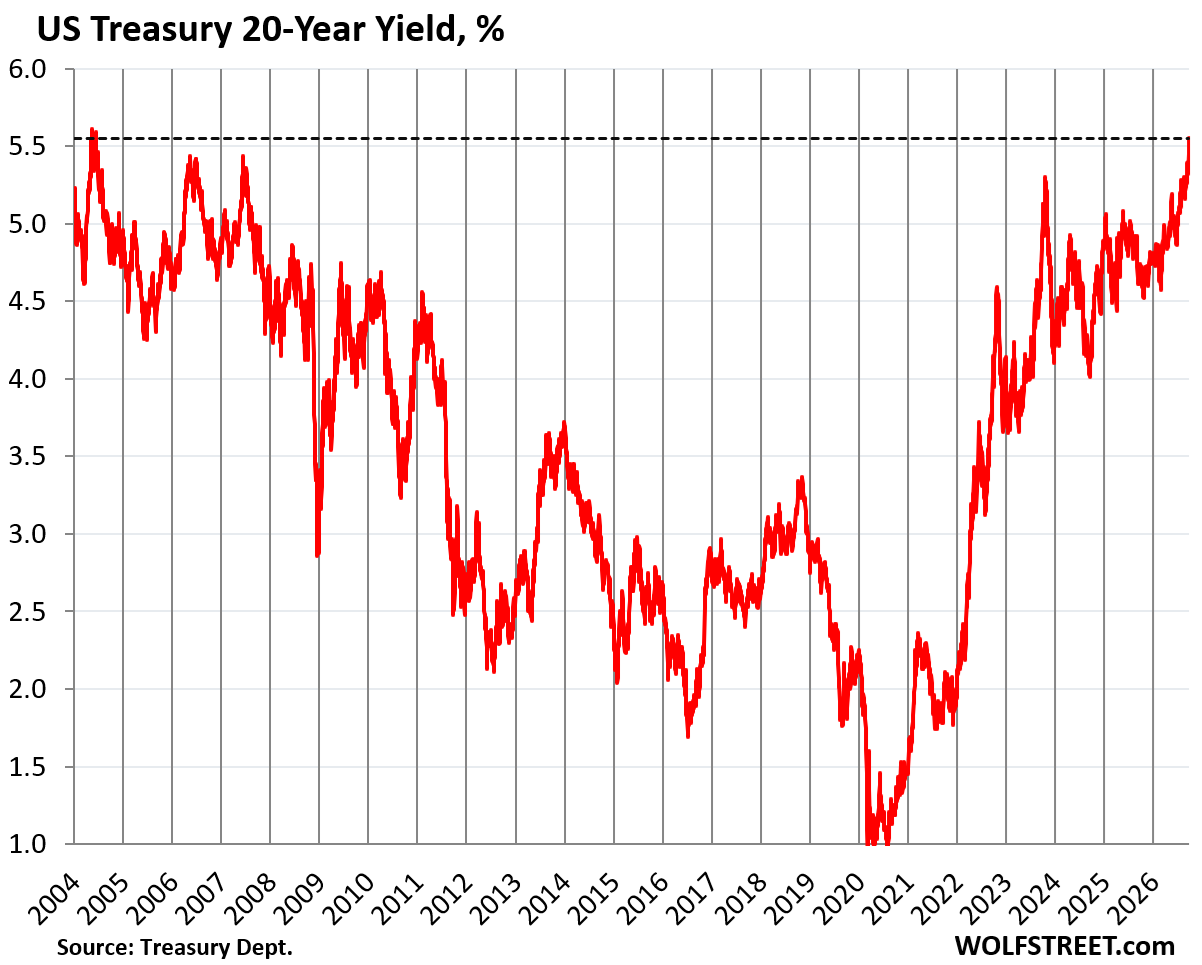
The United States Treasury market is currently navigating a period of profound volatility and structural adjustment, characterized by a steady climb in long-term yields that has reached levels not seen in over two decades. As of late September 2026, the 20-year Treasury yield has ascended to 5.55%, marking a significant departure from the era of interest-rate repression that defined the post-2020 economic landscape. This surge, while partially expected by market participants adjusting to a "higher-for-longer" environment, underscores a fundamental shift in the macro-economic reality of the American financial system.
A Chronology of the Yield Surge
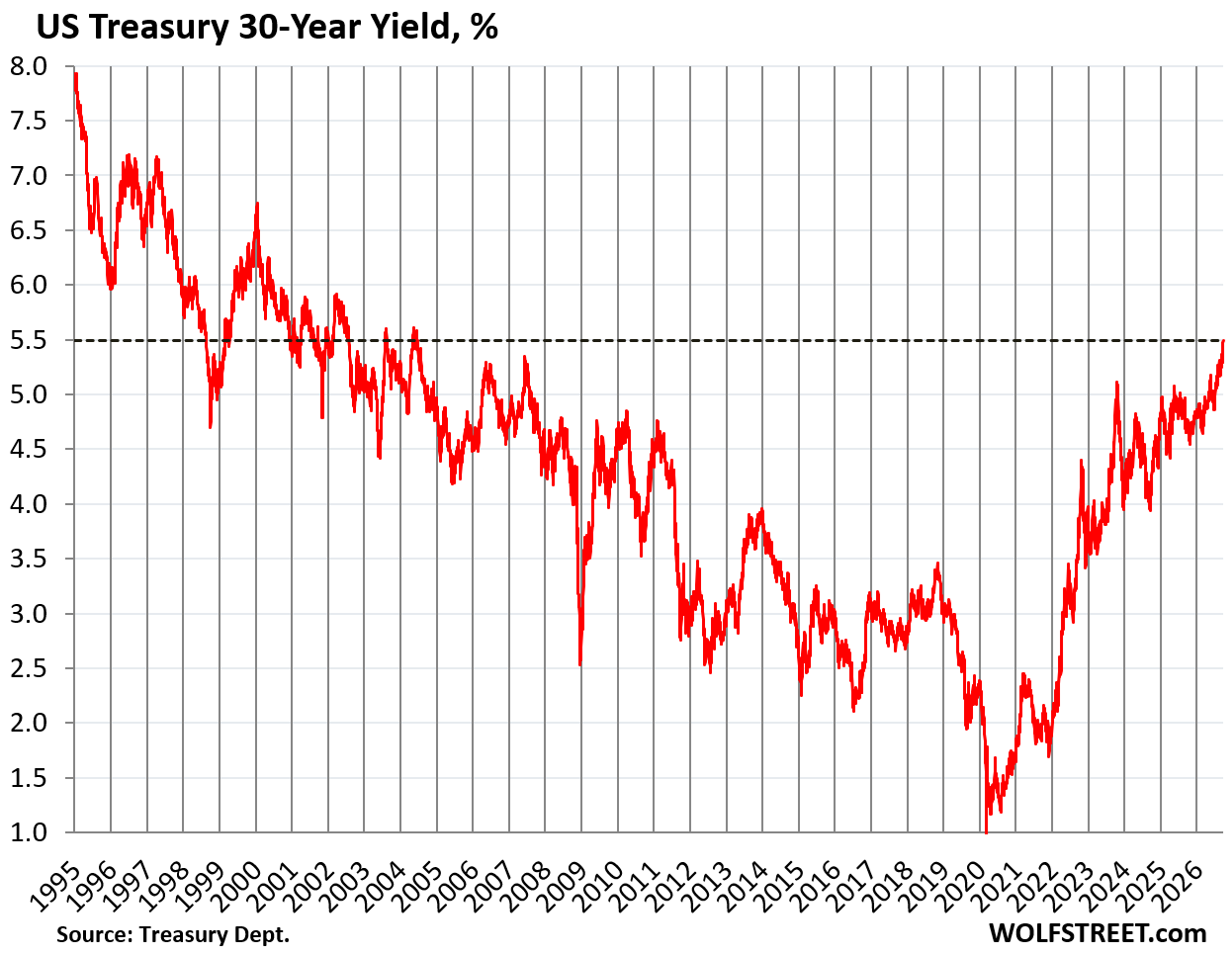
The current upward trajectory in yields gained significant momentum following the Jackson Hole symposium held on August 28, 2026. During this event, high-profile commentary—most notably from Kevin Warsh—recalibrated market expectations regarding the future path of interest rates and inflation. Since that speech, the 20-year Treasury yield has spiked by 37 basis points, while the 30-year Treasury yield has followed a similar path, rising by 30 basis points to reach 5.50%.
The pressure on the bond market was further highlighted during the September 15, 2026, Treasury auction. The government, tasked with offloading $13 billion in 20-year securities, was forced to offer a yield of 5.42% to ensure full subscription. This auction yield represented the highest level since the 20-year bond was reintroduced in 2020. Market observers noted that the "lumpiness"—or volatility in price discovery—that occurred during the auction was exacerbated in the secondary market, where investors who had previously attempted to lock in yields have seen their portfolios suffer as prices declined.
The Macroeconomic Drivers of Rising Yields
The rise in yields is not occurring in a vacuum; it is the byproduct of a robust, albeit inflationary, economic environment. Unlike previous periods where high borrowing costs successfully tempered economic activity, the current cycle is defined by persistent growth. Several key factors are driving this phenomenon:
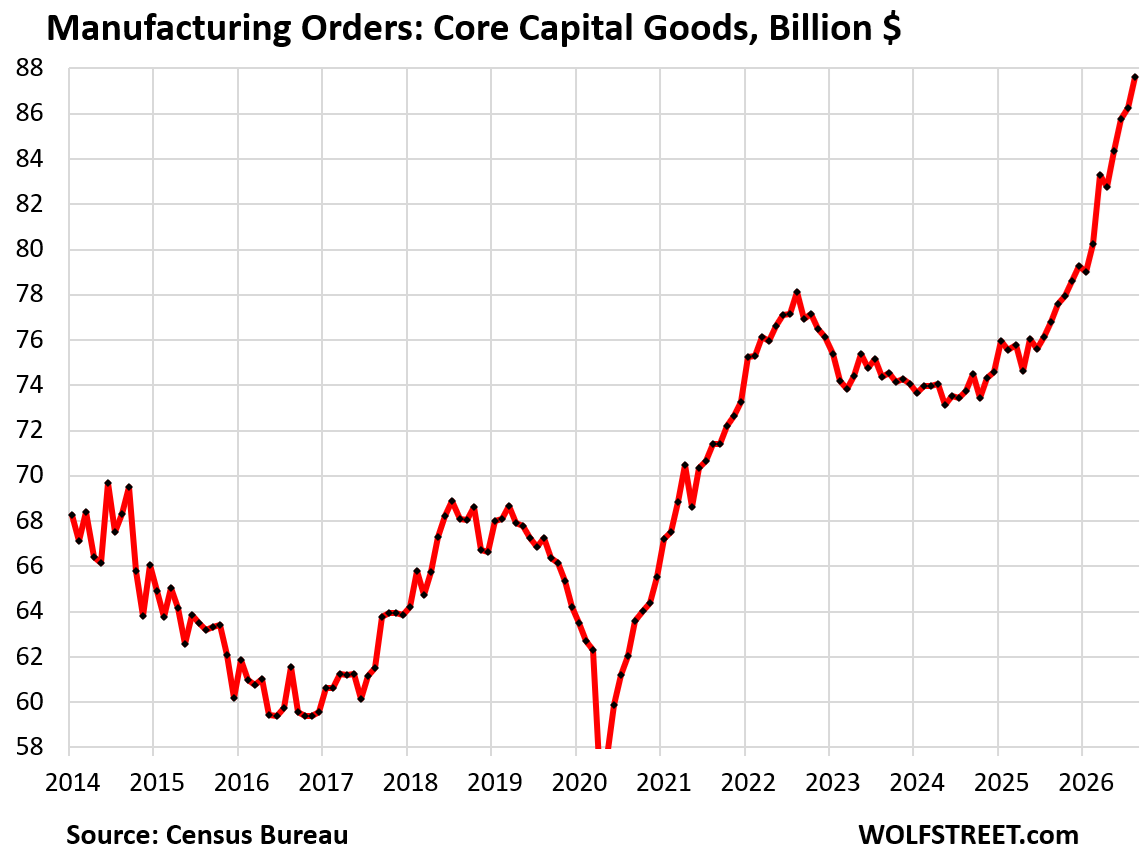
- The AI Infrastructure Boom: Capital expenditure remains elevated as corporations prioritize massive investments in artificial intelligence infrastructure. This surge in spending has driven a 14% year-over-year increase in core capital goods orders as of August 2026. Because these massive investments are largely funded through debt issuance, corporate bond offerings are effectively competing with Treasury debt for limited investor capital.
- Fiscal Deficits: The federal government continues to run significant budget deficits, estimated at 6% of GDP. To finance this, the Treasury has been issuing debt at a staggering pace, adding approximately $1 trillion to the national debt every three to five months. The sheer volume of new supply necessitates higher yields to attract sufficient demand from global and domestic investors.
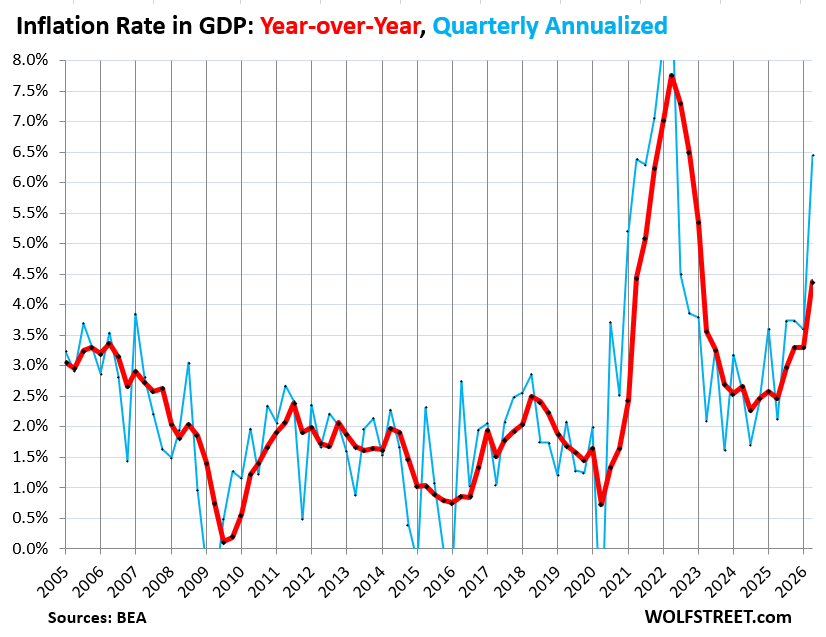
- The Second Wave of Inflation: While the bond market initially viewed inflation as a transitory byproduct of pandemic-era supply chain disruptions, current data suggests a more entrenched reality. The GDP deflator—a comprehensive measure of price changes—spiked by 6.4% annualized in the second quarter of 2026. This signals a broad-based inflationary pressure affecting consumers, businesses, and government entities alike.
Comparative Analysis: The End of the Repression Era
To understand the current environment, one must distinguish it from the decade-long period of ZIRP (Zero Interest Rate Policy) and Quantitative Easing (QE) that followed the 2008 Financial Crisis. During the peak of Fed-led interest rate suppression in 2020, the 20-year Treasury yield bottomed out near 1.0%. Investors who purchased bonds at that time have witnessed a catastrophic erosion in market value as yields normalized to their current, more historically consistent levels.
Current levels of 5.5% for the 20-year and 30-year Treasuries, while jarring to market participants accustomed to a low-rate environment, are actually more aligned with the economic conditions of the late 1990s. During the dot-com era, the economy exhibited high growth, low unemployment, and a strong labor market—similar to current conditions—albeit with lower inflation metrics. The current challenge, however, is that the modern economy is experiencing both robust growth and an accelerating price index, creating a dual-pressure system that forces the Federal Reserve and the Treasury to navigate a much narrower path.
Implications for Housing and Consumer Credit
The rise in long-term Treasury yields acts as a primary benchmark for mortgage rates. Consequently, the average 30-year fixed mortgage rate has climbed to 7.5%. While this level is high relative to the 2020-2022 period, it is not historically unprecedented. The real estate market is currently experiencing a "lock-in" effect, not merely due to interest rates, but due to the significant appreciation in home prices that occurred during the 2020-2022 period.
Because mortgage rates are tied to the 10-year Treasury yield, which has climbed 120 basis points since the end of February 2026 to reach 5.17%, prospective homebuyers face a double burden of high financing costs and elevated asset valuations. Analysis suggests that the housing market will remain constrained until either price discovery adjusts to the current rate environment or supply-side dynamics shift to mitigate the cost of entry.
Market Outlook and Expert Sentiment
A survey of 173 macroeconomic and market participants conducted by Bloomberg’s Markets Pulse indicates a growing consensus that the era of "easy money" is firmly in the rearview mirror. Over 50% of the respondents expect the 30-year Treasury yield to surpass 6% by the end of 2026. Should this occur, it would mark the highest yield seen since the peak of the 1999 economic cycle.

The prevailing logic among institutional investors is that the current market is in a period of consolidation. While a short-term "breather" is likely as the market digests recent spikes, the structural requirements of the US economy—namely, the need for massive capital for AI and infrastructure, combined with the necessity of funding a trillion-dollar deficit—suggest that upward pressure on yields will persist.
For the Federal Reserve, the dilemma is clear: the economy is performing with enough strength to justify higher yields, but that same strength is fueling the inflationary fire that the higher yields are intended to fight. As it stands, the bond market is functioning as the primary mechanism for tightening financial conditions in an economy that has proven remarkably resilient to traditional monetary policy. Investors and policymakers alike remain on high alert, watching for signs of whether the current yield curve will continue to steepen or if the sheer cost of borrowing will finally begin to dampen the capital expenditure cycle that has characterized the year.