Mastering Python Descriptors for Advanced Attribute Control in Software Development

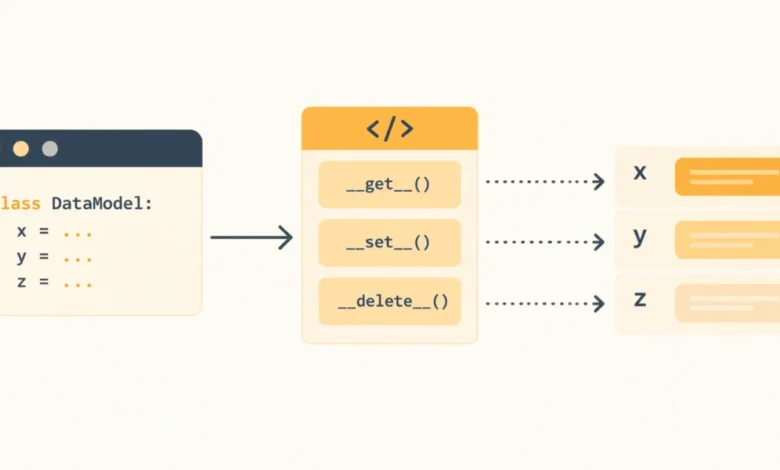
The Python programming language, known for its readability and ease of use, hides a sophisticated machinery under its surface that allows developers to exert fine-grained control over how objects behave. At the heart of this complexity lie descriptors—a powerful, yet often misunderstood, protocol that defines the behavior of attributes. By implementing methods such as __get__, __set__, and __delete__, developers can move beyond simple storage and create dynamic, self-validating, and efficient data structures. As modern software systems grow in scale, the need for robust data management has become paramount, making the mastery of descriptors an essential skill for engineers aiming to build clean, maintainable, and high-performance applications.
The Mechanism of the Descriptor Protocol
In the context of Python’s object-oriented model, a descriptor is essentially any object that defines a specific method from the descriptor protocol. When a class attribute is accessed, Python looks for these methods to determine how to retrieve or modify the value. This stands in contrast to standard attribute access, where Python simply looks up the value in the instance’s __dict__.
The evolution of this protocol, particularly with the introduction of __set_name__ in Python 3.6, has simplified the implementation of these tools. This method allows a descriptor to be aware of the name of the variable it is assigned to, eliminating the need for redundant boilerplate code. By leveraging this, developers can create modular components that encapsulate logic, effectively replacing repetitive property decorators and manual setter methods that often lead to code bloat.
Ensuring Data Integrity with Validated Attributes
One of the most frequent challenges in software architecture is the enforcement of data integrity at the point of assignment. Without controlled attributes, objects can easily enter invalid states, leading to bugs that are difficult to trace. Validated descriptors serve as a gatekeeper, ensuring that any data assigned to an attribute adheres to strict type and range constraints.
Consider a tourism management system where user ratings for travel experiences must remain within a defined scale, such as 1.0 to 5.0. By creating a ValidatedRating class, developers can centralize this validation logic.
class ValidatedRating:
    def __init__(self, min_val=1.0, max_val=5.0):
        self.min_val = min_val
        self.max_val = max_val

    def __set_name__(self, owner, name):
        self.public_name = name
        self.private_name = f"_name"

    def __get__(self, obj, objtype=None):
        if obj is None: return self
        return getattr(obj, self.private_name)

    def __set__(self, obj, value):
        if not isinstance(value, (int, float)):
            raise TypeError(f"self.public_name must be a number.")
        if not (self.min_val <= value <= self.max_val):
            raise ValueError(f"self.public_name must be between self.min_val and self.max_val.")
        setattr(obj, self.private_name, float(value))
This approach provides a declarative way to define rules. Rather than scattering if-else blocks throughout a codebase, the validation is tied to the attribute definition itself. This ensures that any attempt to assign an out-of-bounds value to rating results in an immediate exception, providing a fail-fast mechanism that enhances the overall stability of the application.
Streamlining Logic with Computed Attributes
In complex systems, data often needs to be derived from existing values rather than stored directly. Currency conversion, unit scaling, and status flags are common examples where "computed attributes" are necessary. While one might be tempted to use standard methods, computed descriptors offer a more elegant interface, allowing the developer to interact with the computed value as if it were a standard variable.
For instance, in an international travel application, prices might be stored in a local currency like Japanese Yen (JPY), but the user interface requires a display in US Dollars (USD). A descriptor can handle this conversion dynamically, ensuring that the displayed price is always synchronized with the underlying JPY value. By implementing only the __get__ method and raising an AttributeError on __set__, developers can create read-only computed properties that remain inherently secure and immutable from the perspective of external code.
Optimizing Performance with Lazy Loading
As applications interact with external APIs or databases, performance bottlenecks often emerge from unnecessary data fetching. Loading an entire itinerary for a travel destination might involve complex database queries or external service requests. If that data is only needed sporadically, fetching it upon object initialization is inefficient and consumes unnecessary memory and network resources.
Lazy loading is the practice of deferring the initialization of an attribute until it is explicitly requested for the first time. The descriptor manages this by performing the "expensive" operation only when the __get__ method is called. Once retrieved, the value is cached within the instance’s __dict__, ensuring that subsequent accesses are nearly instantaneous.
class LazyItinerary:
    def __set_name__(self, owner, name):
        self.name = name

    def __get__(self, obj, objtype=None):
        if obj is None: return self
        # Simulation of an expensive data retrieval process
        itinerary = f"Day 1: Arrival in obj.destination, check-in."
        obj.__dict__[self.name] = itinerary
        return itinerary
This pattern is highly effective in microservices and cloud-native applications where minimizing latency and resource consumption is critical. By delaying computation, the system maintains a leaner memory footprint and reduces the load on backend infrastructure.
Integrating Descriptors in Real-World Systems
The true power of descriptors is realized when they are combined within a single class, as seen in a hypothetical JapanTour model. By attaching ValidatedRating, ComputedUSDPrice, and LazyItinerary to the class, the object becomes self-managing. The developer can initialize the object with confidence, knowing that the rating is validated, the price is automatically converted, and the itinerary is only fetched when needed.
The impact of this architectural choice extends beyond simple code cleanliness. In large-scale enterprise environments, maintaining consistency across thousands of lines of code is a monumental task. When business rules are baked into the data model via descriptors, they become "single sources of truth." Changes to the validation logic or conversion rates need only be updated in the descriptor class, propagating the change instantly throughout the entire application without requiring widespread refactoring.
Broader Implications and Best Practices
While descriptors provide a high degree of flexibility, they should be used judiciously. Over-engineering can lead to code that is difficult for new team members to navigate. The primary benefit of using descriptors is to encapsulate repetitive logic that would otherwise clutter business logic. If a specific validation or computation is used in only one place, a standard function or property decorator is likely sufficient.
However, when a pattern repeats across multiple classes or models, the descriptor pattern is an invaluable tool. It enforces a strict separation of concerns, keeping the class definitions clean and focused on their primary data representation, while offloading auxiliary concerns to specialized helper objects.
Conclusion: The Future of Python Data Handling
As Python continues to dominate fields such as data science, artificial intelligence, and web development, the reliance on advanced object-oriented features will only grow. Descriptors represent a bridge between the simplicity of Python’s syntax and the robustness of professional-grade software engineering. By mastering these tools, developers can move away from manual attribute management and toward a more declarative, modular, and scalable programming style.
The transition from basic getters and setters to the descriptor protocol marks a significant milestone in a developer’s career. It signals a move toward a deeper understanding of the language’s core architecture and a commitment to writing code that is not only functional but also resilient, efficient, and built to withstand the complexities of modern, data-driven applications. As the landscape of software development continues to evolve, the ability to control and validate data at the attribute level will remain a cornerstone of effective, high-quality engineering.