The Constitutional Crisis Deepens in Warsaw as Poland Confronts the Legacy of Judicial Capture

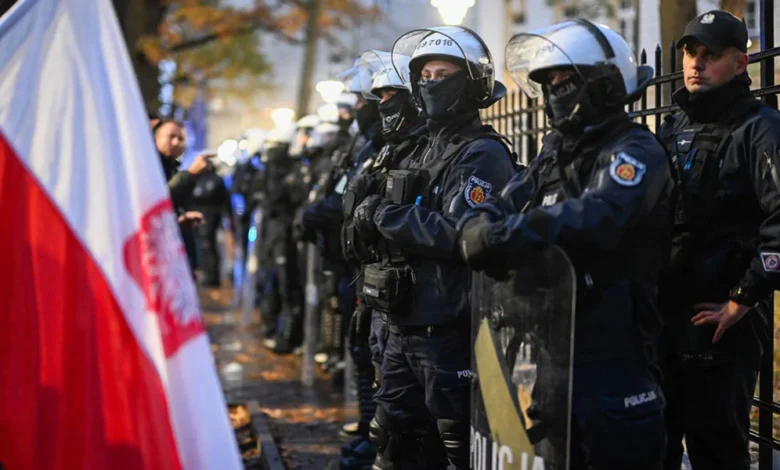
WARSAW — Dramatic scenes have unfolded inside Poland’s Constitutional Tribunal following the effective barring of Bogdan Święczkowski from the court’s presidency, igniting a fresh physical and political confrontation between Prime Minister Donald Tusk’s government and the opposition Law and Justice (PiS) party. The altercation has reignited a fierce national debate concerning the limits of executive power, the restoration of democratic norms, and whether extraordinary legal measures are justified when dismantling institutions previously captured by populist authoritarians.
While critics accuse the current administration of overstepping legal boundaries to achieve its reform goals, constitutional scholars and government defenders argue that Święczkowski never held the presidency lawfully in the first place. This distinction sits at the core of the ongoing dispute, transforming what appears to be an institutional power grab into a complex legal reckoning over the rule of law in Central Europe.
Main Facts of the Confrontation
The immediate flashpoint centers on the status of the Constitutional Tribunal, an institution that became the primary battleground during PiS’s eight years in power from 2015 to 2023. On November 1, 2026, tensions boiled over when security personnel and newly empowered judicial administrators moved to restrict Święczkowski’s access to the tribunal’s presidential chambers.
Święczkowski, a close ally of PiS and a former national prosecutor, resisted the measures, leading to a tense standoff and a physical confrontation outside the tribunal offices. The incident drew immediate police intervention and triggered an emergency exchange of accusations across the Polish political spectrum.
The Tusk administration contends that Święczkowski’s tenure as tribunal president was fundamentally illegitimate due to the irregular appointment procedures that placed him and several other judges—frequently referred to by legal experts as "duplicating" or "pseudo-judges"—onto the bench. The government views the restriction not as a politically motivated removal, but as a necessary administrative restoration of constitutional order. Conversely, PiS leaders have denounced the actions as a direct assault on the independence of the judiciary, branding the government’s approach as authoritarian behavior masked as democratic reform.
Background Context of the Event
To understand the current turmoil at the Constitutional Tribunal, one must examine the systematic overhaul of Poland’s judicial branch initiated by the PiS government shortly after its electoral victory in 2015. Under the leadership of party chief Jarosław Kaczyński, PiS embarked on a legislative campaign designed to gain control over key judicial bodies, most notably the Supreme Court, the National Council of the Judiciary (KRS), and the Constitutional Tribunal.
The crisis began in late 2015 when the outgoing parliament attempted to preemptively appoint five judges to the tribunal. The incoming PiS-dominated Sejm annulled these appointments and rushed through its own slate of judges. This maneuver prompted the European Commission, the European Court of Justice (ECJ), and the European Court of Human Rights (ECHR) to repeatedly rule that the tribunal had lost its independence and was no longer an impartial arbiter of the law.
Despite international condemnation, domestic protests, and the freezing of billions of euros in European Union recovery funds, PiS entrenched its loyalists within the court. When Julia Przyłębska’s term as tribunal president ended, the mechanisms used to elevate Bogdan Święczkowski to a leadership role further bypassed established statutory norms, according to independent legal associations such as Themis and Iustitia. Consequently, when Donald Tusk’s pro-European coalition assumed power in December 2023 following a high-turnout election, undoing the damage to the judicial system became the new administration’s paramount, albeit legally treacherous, objective.
Chronology of the Escalation
- October 2015 – December 2015: The initial constitutional crisis unfolds as the Sejm disputes the appointment of tribunal judges, leading to the first rulings of non-compliance by the European Union.
- December 2016 – December 2023: Under the presidency of Julia Przyłębska, the Constitutional Tribunal issues a series of controversial rulings, including a 2021 judgment declaring parts of the EU Treaty incompatible with the Polish Constitution, deepening Warsaw’s rift with Brussels.
- December 13, 2023: Donald Tusk is sworn in as Prime Minister, leading a broad coalition dedicated to restoring the rule of law and unfreezing EU funds.
- 2024 – 2025: The Sejm passes a series of resolutions declaring the rulings of the Constitutional Tribunal non-binding and calling for the resignation of judges appointed through flawed procedures. Bogdan Święczkowski maintains his position amid mounting administrative non-cooperation.
- November 1, 2026: Security and administrative measures culminate in the physical barring of Święczkowski from the tribunal presidency, triggering immediate political fallout and street-level protests by PiS supporters.
Supporting Data and Institutional Metrics
The depth of the crisis is reflected in the volume of national and international legal challenges generated over the past decade:
- EU Funding Impact: The dispute over the rule of law led the European Commission to withhold approximately €137 billion in grants and loans under the Cohesion Policy and the Recovery and Resilience Facility until judicial independence benchmarks were met.
- ECHR Judgments: The European Court of Human Rights has ruled in multiple cases—such as Xero Flor w Polsce v. Poland—that panels containing irregularly appointed judges violate the right to a tribunal established by law under Article 6 of the European Convention on Human Rights.
- Public Sentiment: According to independent polling conducted by CBOS and Kantar in late 2025, over 58% of Polish citizens believe the judiciary requires deep structural reform, though opinions remain sharply divided along partisan lines regarding whether the current government’s methods are fully constitutional.
Official Responses and Political Reactions
The fallout from the November 1 confrontation drew swift and polarized responses from across the political landscape.
Prime Minister Donald Tusk defended his administration’s trajectory during an emergency press conference in Warsaw. "Democracy cannot be held hostage by the very mechanisms engineered to destroy it," Tusk stated. "We are not violating the constitution; we are clearing away the debris of an illegal occupation of our highest court to allow the true constitution to function once again."
In sharp contrast, PiS Chairman Jarosław Kaczyński accused the government of staging a "constitutional coup" and acting outside the framework of Polish law. Speaking at a hastily organized party briefing, Kaczyński warned that the actions taken against Święczkowski establish a dangerous precedent. "Today they target the Constitutional Tribunal using brute force and administrative fiat; tomorrow they will dismantle any remaining opposition rights," Kaczyński told reporters. "This is not the restoration of the rule of law—this is pure dictatorship."
International observers, including representatives from the Venice Commission of the Council of Europe, have urged both sides to exercise restraint. While international bodies have historically agreed that the composition of the Polish Constitutional Tribunal under PiS was flawed, legal experts continually debate whether corrective measures must strictly adhere to existing statutory text or whether extraordinary "transitional justice" measures are permissible.
Broader Impact and Implications
The standoff at the Constitutional Tribunal carries profound implications not only for Poland’s domestic stability, but also for the broader European project.
Domestically, the incident exposes the immense difficulty of reversing democratic backsliding once authoritarian practices have penetrated core state institutions. When a legal system is captured from within, asking the system to correct itself often creates a paradox where adherence to formal rules protects the usurpers of those very rules. The Tusk government’s willingness to push legal boundaries forces a permanent national conversation on whether a democracy must strictly follow its own procedural laws when those rules have been weaponized to subvert the democratic order.
Regionally, Poland’s struggle serves as a critical case study for other European nations grappling with populist governance and institutional resilience. The resolution of the current crisis will dictate whether Warsaw can fully reintegrate into the European legal mainstream, unlock remaining structural funds, and restore complete faith in its judicial independence. As the political temperature rises in Warsaw, the coming weeks will test the resilience of Poland’s democratic institutions and the commitment of its political actors to finding a sustainable, lawful path forward.