Deconstructing the FIRE Myth: Why Early Retirees Are Actually Among Society’s Biggest Spenders

The prevailing cultural caricature of an individual practicing the Financial Independence, Retire Early (FIRE) methodology is remarkably consistent and austere. Popular imagery depicts dedicated savers consuming a monotonous diet of rice and beans, meticulously clipping discount coupons, and navigating urban thoroughfares in aging automobiles well past their prime. Within this archetype, all discretionary luxuries are systematically eliminated to maximize capital accumulation, accelerating the timeline to corporate liberation. Critics frequently argue that adherents are simply excessively cheap and failing to enjoy the present moment.
While this stereotype contains fractional truths—particularly during the initial accumulation phase—a closer examination of post-retirement economic behavior reveals a starkly different reality. To achieve early retirement, practitioners typically endure a decade or two of aggressive saving, often maintaining savings rates exceeding 50 percent. This rigorous discipline instills deep-seated frugal habits. However, upon transitioning out of the traditional workforce, many individuals discover that their actual expenditure patterns contradict the austere narrative traditionally associated with the movement. Far from living a life of extreme deprivation, long-term FIRE practitioners frequently engage in substantial, targeted spending, demonstrating that the conventional perception of the cheap early retiree is largely inaccurate.
The Magnitude of Opportunity Cost in Early Retirement
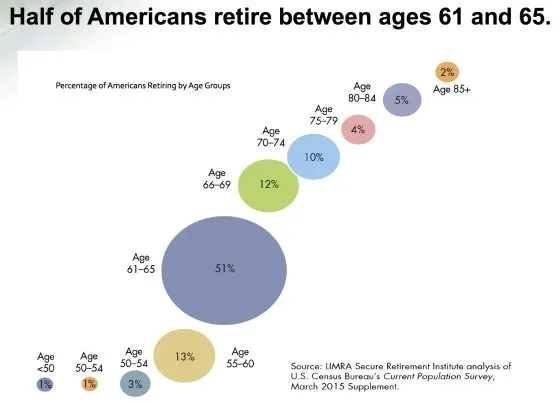
To understand the financial footprint of the FIRE community, analysts must evaluate the enormous opportunity cost inherent in leaving the workforce prematurely. Practitioners systematically forfeit substantial earnings and career progression to reclaim their time, choosing to prioritize autonomy over lifetime peak-earning potential. From an economic perspective, retiring early involves paying a massive, ongoing price to secure personal freedom. Consequently, the volume of foregone compensation scales directly with prior earning power, meaning high-income earners who successfully execute a FIRE strategy are, by definition, deploying significant financial resources to buy back their schedules.
Historical career data illustrates this dynamic clearly. Professionals walking away from lucrative corporate positions routinely surrender hundreds of thousands of dollars in annual base salary, discretionary bonuses, equity grants, and employer-sponsored benefits. Over a standard career trajectory, this cumulative total easily spans millions of dollars in unrealized income. Furthermore, this calculation excludes the immediate financial shock of losing corporate healthcare subsidies. Securing private health insurance coverage for a family of four can cost upwards of $36,000 annually—an expense previously absorbed or heavily subsidized by an employer. Choosing to exit the labor market prematurely is, therefore, one of the most expensive lifestyle choices an individual can make.

Discretionary Spending Patterns Beyond the Basics
Contrary to the popular belief that early retirees minimize all consumption, empirical lifestyle audits of long-term FIRE practitioners highlight significant investments in quality-of-life enhancements. Once individuals cross the threshold of financial independence, spending generally shifts away from basic survival toward high-priority discretionary categories. Rather than hoarding every dollar, successful retirees allocate capital toward assets and experiences that reflect deeply held personal values, challenging the notion of universal frugality.
Housing decisions serve as a primary example. While a minimal living arrangement would theoretically suffice for a retired couple or small family, many FIRE practitioners eventually upgrade their living spaces to accommodate growing households or optimize their domestic environment. Premium real estate purchases—often accompanied by substantially higher property taxes, insurance premiums, and ongoing maintenance costs—frequently represent tens of thousands of dollars in annual discretionary spending. This expenditure is deliberately chosen to maximize comfort during peak family-rearing years, with the understanding that downsizing remains an option later in life.
Similarly, family planning and child-rearing represent substantial financial commitments within the community. Raising a child through college graduation in a major metropolitan area can easily surpass $1 million when factoring in housing, nutrition, healthcare, and higher education. While some members of the personal finance community deliberately opt out of parenthood to accelerate their financial independence, those who choose to have children routinely absorb significant recurring expenses to support their families’ well-being and enrichment.
Investment in Education and Time-Saving Services
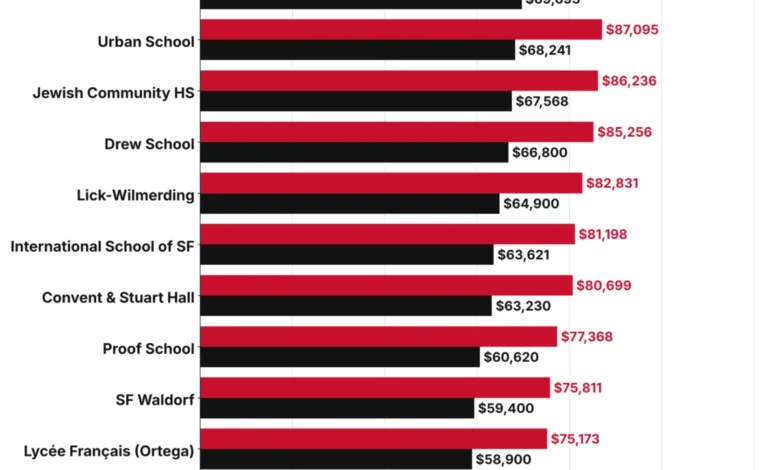
Beyond foundational living expenses, early retirees frequently direct capital toward specialized services designed to enhance human capital or optimize daily time management. Independent grade school tuition represents a prominent example of this trend. Many financially independent parents choose private educational institutions—such as bilingual immersion academies—that command annual tuitions rivaling higher education costs. While public schooling remains a viable and economical alternative, these families consciously redirect capital toward targeted educational outcomes, viewing the expenditure as an investment in their children’s cognitive and linguistic development.
Time optimization constitutes another major category of modern discretionary expenditure. Services that alleviate domestic friction, such as regular meal delivery platforms and outsourced home maintenance, are frequently utilized by retirees seeking to reclaim hours for creative pursuits, physical fitness, or familial engagement. Although these recurring conveniences increase monthly overhead, they align with the core philosophy of the FIRE movement: utilizing accumulated capital to purchase time, autonomy, and convenience rather than accumulating wealth indefinitely for its own sake.
Reevaluating the True Financial Footprint of the Movement
A comprehensive financial audit of a typical established FIRE household frequently reveals a total annual expenditure that far exceeds the baseline cost of living. When aggregating enhanced housing costs, private education, specialized family activities, and convenience services, discretionary spending can easily total $150,000 to $200,000 annually. When combined with the massive opportunity cost of foregone salary and benefits, the financial reality of early retirement is decidedly affluent rather than impoverished.
This spending pattern underscores a fundamental truth about financial independence: frugality is rarely an end in itself; rather, it is a strategic tool used to eliminate spending on low-priority items. Early retirees may continue to drive older automobiles or decline first-class airline tickets not out of strict necessity, but because those specific consumer goods fail to provide utility commensurate with their cost. Conversely, they spend aggressively on housing, education, and time because those categories directly align with their personal values.
Ultimately, the persistent stereotype of the perpetually cheap, deprivation-focused early retiree requires a thorough revision. Individuals who successfully execute a FIRE strategy—particularly within the higher-tier wealth brackets—frequently rank among society’s most deliberate and substantial consumers of lifestyle-enhancing services. By consciously trading lifetime income for absolute autonomy, these practitioners demonstrate that true financial independence is defined not by how little one spends, but by having the freedom to allocate capital exclusively toward what matters most.