Why the New Borrowers Platform Must Raise Its Ambitions in a Fragmented Global Financial Landscape

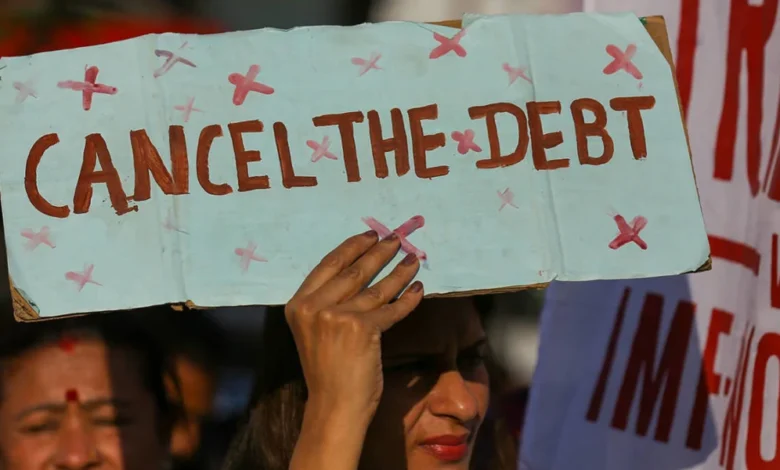
BANGKOK — For seven decades, the architecture of international sovereign debt management has been defined by a stark asymmetry. While major official creditors have long coordinated their positions through elite bodies like the Paris Club, developing nations facing insolvency have historically been forced to negotiate their restructurings on an isolated, case-by-case basis. That dynamic shifted with the launch of the Borrowers Platform, a newly established initiative designed to foster knowledge-sharing, build technical capacity among debtor nations, and amplify their collective voice in global financial circles.
Yet, as this new debtor-led coalition takes its first steps against the backdrop of an evolving global economy, financial experts and policymakers are raising a critical question: in an era when traditional creditor coordination is fracturing, are the platform’s current goals ambitious enough?
The establishment of the platform comes at a pivotal juncture for international finance. For over half a century, the Paris Club has acted as the premier informal forum for official creditors—comprising 22 permanent members—to resolve payment difficulties experienced by debtor countries. By leveraging its collective influence and maintaining a close working relationship with the International Monetary Fund (IMF), the Paris Club has historically shaped the rules governing sovereign bailouts, austerity measures, and structural reform conditionality.
However, the global debt landscape of the 2020s bears little resemblance to the post-war era that birthed the Paris Club. Today’s developing world faces a complex web of creditors, including private bondholders, multilateral development banks, and crucially, non-Paris Club bilateral lenders such as China, which has emerged as the world’s largest official creditor to developing nations. As geopolitical tensions rise and traditional creditor solidarity wanes, the Paris Club’s ability to act cohesively has sharply diminished. Recognizing this power vacuum, debtor nations have recognized the urgent need for a unified counterweight.
Background and Chronology of Sovereign Debt Crises
To understand the necessity of the Borrowers Platform, one must examine the compounding crises that have battered emerging market and developing economies (EMDEs) over the past decade.
The roots of the current sovereign debt wave trace back to the aftermath of the 2008 global financial crisis, which was followed by a prolonged period of low interest rates that encouraged widespread borrowing across the Global South. Between 2010 and 2019, external debt stocks in low- and middle-income countries more than doubled, shifting increasingly toward commercial creditors and non-traditional bilateral lenders.
The fragility of this debt accumulation was brutally exposed by a cascade of macroeconomic shocks starting in 2020:
- 2020–2021: The COVID-19 pandemic triggered the deepest global recession in decades, forcing governments to massively expand public spending to protect public health and support shuttered economies.
- 2022: Russia’s invasion of Ukraine sparked unprecedented spikes in global food and energy prices, driving inflation to multi-decade highs. In response, major central banks—led by the U.S. Federal Reserve—embarked on the most aggressive monetary tightening cycle in a generation.
- 2023–2024: Capital outflows accelerated from emerging markets as domestic currencies depreciated sharply against the U.S. dollar, driving up the local-currency cost of servicing foreign-denominated debt. A wave of sovereign defaults and distress materialized, affecting countries from Sri Lanka and Zambia to Ghana and Pakistan.
- 2025–2026: As debt restructuring processes under frameworks like the G20 Common Framework stalled due to protracted creditor coordination failures, debtor nations increasingly demanded institutional mechanisms to level the playing field.
Supporting Data: The Scale of Modern Sovereign Distress
The quantitative reality facing developing nations underscores the urgency of robust institutional backing for sovereign borrowers. According to recent data from the World Bank and the IMF, public and publicly guaranteed debt in developing economies remains near historic highs, hovering above $11 trillion.
Furthermore, debt-service burdens have reached crippling levels. In many low-income countries eligible for World Bank assistance through the International Development Association (IDA), debt service payments now consume upwards of 30% to 40% of government revenues. This leaves virtually no fiscal space for critical investments in infrastructure, education, health care, or climate change adaptation—the very investments required to secure long-term economic growth and prevent future defaults.
Compounding these fiscal strains is the prolonged nature of modern debt restructurings. Historically, sovereign debt workouts took an average of two to three years. In the post-pandemic era, negotiations under ad-hoc structures have frequently dragged on for four to six years, paralyzing national economies, depressing investment, and plunging millions into deeper poverty while creditors bicker over burden-sharing formulas.
Official Responses and Stakeholder Perspectives
The rollout of the Borrowers Platform has elicited cautious optimism from multilateral institutions, alongside demands from civil society and economic analysts for a more militant agenda.
Proponents within developing country capitals argue that the platform fulfills a long-standing structural deficit in global governance. Unlike creditors, who possess vast legal, financial, and technical resources backed by decades of institutional memory, debtor countries often enter restructuring negotiations at a severe informational disadvantage. By pooling legal expertise, sharing best practices on debt sustainability analyses, and coordinating negotiating strategies, member countries can significantly reduce the transaction costs of restructuring and secure more equitable burden-sharing terms.
However, independent economists emphasize that knowledge-sharing alone will not suffice. Ishac Diwan, a prominent voice on sovereign debt issues, has pointed out that the structural impotence of traditional creditor bodies like the Paris Club creates a unique window of opportunity. Because the Paris Club is increasingly unable to forge a unified front—partly due to the rise of systemic geopolitical fragmentation—debtor nations possess unexpected leverage.
"At a time when the Paris Club of sovereign creditors is increasingly unable to act collectively, the Borrowers Platform should ramp up its ambition," economic policy analysts note. Rather than acting merely as a study circle or a forum for technical workshops, the platform is being urged to evolve into a formal negotiating bloc—a "cartel of debtors" capable of setting baseline standards for debt relief, advocating for automatic debt-service suspension clauses in disaster-prone nations, and pushing for comprehensive reform of the international financial architecture.
Broader Impact and Systemic Implications
The ultimate success or failure of the Borrowers Platform will carry profound implications for the future of global financial stability.
If the platform remains limited in scope, focusing exclusively on capacity-building and peer-to-peer dialogues, its impact on actual debt relief outcomes is likely to be marginal. Debt sustainability will remain hostage to the geopolitical rivalries of large creditor nations and the opaque, protracted mechanics of ad-hoc committees.
Conversely, if the platform successfully scales its ambitions, it could fundamentally rebalance power dynamics within the international financial system. By presenting a unified front, debtor nations could pressure the IMF and multilateral development banks to overhaul lending frameworks, reduce the stigma associated with debt restructuring, and establish a permanent, predictable international bankruptcy mechanism for sovereigns—a long-sought goal of global financial reformers.
As delegates and financial experts meet in regional hubs like Bangkok to map out the platform’s operational roadmap, the message from the global economic trenches is clear. The creation of a debtors’ club is a historic milestone, but in a world marked by compounding polycrises and fractured creditor coordination, survival will require moving beyond mere consultation to active, strategic, and systemic mobilization.