New York Stock Exchange Expands Tokenized Securities Platform With Key Transfer-Agent Additions

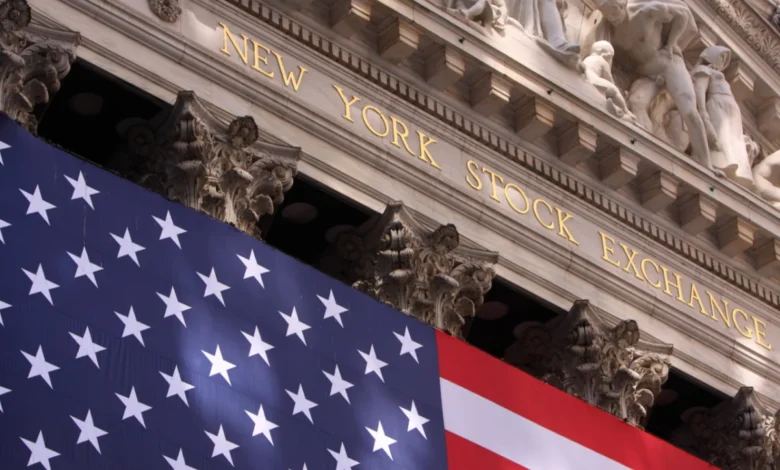
The New York Stock Exchange (NYSE) has taken a decisive step toward modernizing public equity infrastructure, utilizing an official pre-market briefing to highlight the rapid expansion of its proposed tokenized securities platform. Published at 8:55 a.m. Eastern Time, the recent NYSE Content Update confirmed that financial services heavyweights Broadridge Financial Solutions, Computershare, Equiniti, and asset manager Superstate have officially joined the exchange’s transfer-agent network. This strategic maneuver places these entities alongside existing foundational partners Securitize and tZERO, signaling an aggressive push by traditional market operators to integrate blockchain architecture into regulated public stock trading.
The unfolding race to digitize U.S. capital markets reflects a broader industry-wide imperative. For decades, traditional equities have relied on centralized, analog-adjacent clearing and settlement systems that, while highly resilient, struggle to keep pace with the demands of a global, always-on digital economy. By weaving distributed ledger technology (DLT) into the fabric of the world’s premier stock exchange, the NYSE is laying the groundwork for a financial ecosystem where tokenized public equities, corporate governance, and 24/7 continuous liquidity can coexist within a strictly regulated perimeter.
Chronology and Background of the NYSE Tokenization Initiative
The foundation for the exchange’s latest expansion was formally laid on November 2, when the initial agreements with the incoming transfer agents were quietly finalized and announced. The subsequent November 3 pre-market briefing served to amplify this milestone, anchored by a scheduled appearance on NYSE Live by Superstate CEO Robert Leshner. Leshner’s participation was designed to offer market participants a clearer view of how the proposed platform intends to facilitate seamless, blockchain-native trading experiences without compromising investor protections.
This initiative does not emerge in a vacuum; it represents months of quiet engineering and strategic positioning by the exchange operator, Intercontinental Exchange (ICE). As digital assets and tokenized real-world assets (RWAs) continue to transition from experimental fringe use cases to institutional-grade portfolios, major financial infrastructure providers face mounting pressure to adapt. The NYSE’s strategy hinges on a fundamental reality of public markets: tokenizing a security is technically straightforward, but embedding it within a legally compliant framework that respects corporate charters, shareholder rights, and regulatory mandates is an immensely complex undertaking.
By assembling a coalition that bridges cutting-edge blockchain protocols with the administrative heavyweights of corporate America, the NYSE is attempting to solve the foundational plumbing problem of digital securities.
The Strategic Power of the Transfer-Agent Network
To fully grasp the magnitude of the NYSE’s transfer-agent additions, one must examine the sheer scale of the institutions involved. According to disclosures tied to the November 2 announcements, Broadridge, Computershare, and Equiniti collectively provide core administrative services to nearly 5,000 publicly listed companies. Crucially, this roster includes approximately 99% of all constituents in the benchmark S&P 500 index.
These relationships grant the exchange immediate access to service providers that are already deeply embedded in corporate ownership registries, proxy voting channels, and shareholder communications. It is important to clarify a vital operational distinction: these partnership agreements do not automatically mean that the thousands of corporations serviced by these agents have agreed to tokenize their shares. Rather, they establish the operational plumbing required should an issuer choose to issue digital securities or migrate existing share classes onto a blockchain-backed infrastructure.
For any publicly traded corporation considering tokenization, operational continuity is paramount. A blockchain-based security cannot function in a legal vacuum; it still requires legally recognized ownership records, systematic corporate-action processing, and robust mechanisms for exercising shareholder voting rights. The NYSE’s platform is deliberately structured to accommodate both issuer-sponsored tokenized securities and third-party custodial tokens.
In an issuer-sponsored arrangement, tokenized ownership is directly integrated into the corporation’s authorized recordkeeping infrastructure. Conversely, custodial models rely on a licensed intermediary holding the underlying conventional securities, with investors receiving corresponding economic exposure via digital tokens representing that custody structure. While both models may yield identical economic outcomes, they carry vastly different legal dependencies, counterparty risks, and administrative workflows.
Broadridge and the Frontier of Onchain Shareholder Governance
Among the new entrants, Broadridge Financial Solutions brings a uniquely critical capability to the table. Beyond traditional transfer-agent duties, Broadridge’s inclusion focuses heavily on solving one of the most persistent hurdles in digital asset markets: onchain shareholder governance.
In a traditional equity market, ownership is tied to specific record dates, managed through established clearing networks. In a tokenized market operating 24 hours a day, 7 days a week, the individual holding a token at the exact moment of a corporate vote or dividend distribution may shift rapidly. This volatility creates a complex matching problem regarding who holds the legal entitlement to vote at an annual general meeting.
To address this, Broadridge outlined plans to connect tokenized securities directly with governance smart contracts, automated voting rules, and verifiable shareholder entitlements. The proposed architecture aims to support institutional and retail participation via compatible digital wallets, existing brokerage interfaces, and Broadridge’s widely utilized ProxyVote platform.
By integrating these features, Broadridge is leveraging its DLX platform—an enterprise-grade institutional framework that already supports financial institutions across issuance, financing, settlement, and servicing—to ensure that investors do not have to abandon familiar service channels when interacting with blockchain-based assets.
The Infrastructure Rivalry: NYSE Versus DTCC
The NYSE’s aggressive maneuvers do not occur in isolation. They represent one half of a high-stakes race among U.S. market infrastructure providers to define the future of post-trade settlement and tokenization. Just days prior, on October 28, the Depository Trust & Clearing Corporation (DTCC) officially launched its own Tokenization Service.
The DTCC’s solution allows eligible financial institutions to create blockchain representations of securities already held securely within the Depository Trust Company (DTC) framework, initially supporting enterprise networks such as the Canton Network and a private instance of Hyperledger Besu. While the DTCC’s approach focuses inward—tokenizing assets already residing within its massive depository fortress to enhance asset mobility and collateral management—the NYSE’s planned venue focuses outward, targeting the trading execution layer.
| Metric | NYSE Proposed Tokenized Securities Venue | DTCC Tokenization Service |
|---|---|---|
| Primary Function | 24/7 equity trading, order matching, and execution | Depository asset tokenization and custody mobility |
| Core Infrastructure | NYSE Pillar matching engine and multichain settlement | DTC, Canton Network, and private Besu networks |
| Target Participants | Eligible public issuers and approved trading members | Approved institutional financial participants |
| Commercial Focus | Market liquidity, execution speed, and digital issuance | Custody optimization, collateral management, and asset mobility |
| Current Status | Planned, subject to regulatory authorization and review | Officially launched and operational as of October 28 |
This strategic divergence highlights a foundational truth about the securities transaction lifecycle: execution and custody are distinct, highly specialized functions. An exchange facilitates price discovery and liquidity, while a depository maintains the secure vault where ownership records are ultimately safeguarded. While these two systems have the potential to complement each other, formal interoperability between the NYSE platform and the DTCC’s service remains unestablished, leaving market participants watching to see how cross-ecosystem liquidity will eventually flow.
The Complex Economics of 24/7 Equity Trading
One of the most heavily scrutinized aspects of the NYSE’s proposed tokenized venue is its ambition to enable continuous, round-the-clock equity trading, near-instantaneous settlement, and stablecoin-based funding mechanisms. While these attributes promise unprecedented capital efficiency and the near-total elimination of counterparty credit risk tied to extended settlement windows, they also introduce profound structural challenges.
Modern U.S. equities operate primarily on a T+1 (trade date plus one day) settlement cycle. This timeline allows centralized clearinghouses to utilize complex multilateral netting algorithms. Netting reduces the gross volume of cash and securities that brokers and market makers must deliver, dramatically lowering capital requirements.
If a tokenized market moves toward instantaneous, gross-settlement models without equivalent multi-party netting arrangements, the implications for market liquidity could be severe. Brokers, dealers, and liquidity providers might be forced to prefund a significantly larger pool of capital to support continuous trading—particularly outside traditional banking hours when access to traditional fiat liquidity and central bank wire services is restricted.
While stablecoins offer an attractive digital-native funding mechanism, their viability depends entirely on ironclad redemption guarantees, regulatory compliance, issuer creditworthiness, and deep liquidity across diverse blockchain networks. To date, the NYSE has not publicly released sufficient operational mechanics to confirm whether its eventual platform will mandate full prefunding, preserve centralized netting protocols, or implement a hybrid model balancing both approaches.
Implications, Regulatory Horizons, and Market Outlook
The rapid expansion of the NYSE’s transfer-agent network underscores an undeniable momentum behind the institutionalization of blockchain technology in mainstream finance. However, significant milestones remain ahead before investors can trade tokenized S&P 500 stocks on a public exchange floor or its digital equivalent.
The proposed venue remains subject to rigorous regulatory authorization from federal watchdogs, and the exchange has yet to publicly identify its initial wave of corporate pilot issuers or commit to a firm launch calendar. The involvement of digital-native firms like Superstate, alongside traditional titans like Broadridge and Computershare, provides a necessary bridge between Silicon Valley innovation and Wall Street compliance.
The ultimate test for the New York Stock Exchange will not be its ability to mint digital tokens representing equity shares, but its capacity to engineer a marketplace where those assets can trade with maximum efficiency, zero systemic friction, and the unwavering legal protections that have underpinned American capital markets for over two centuries. As the DTCC operationalizes its depository tokenization service and the NYSE builds out its trading and governance layers, the transformation of U.S. market infrastructure moves steadily from theoretical whitepapers into concrete, commercial reality.