Build Alpha Announces Major Software Release Integrating LLM Orchestration, Sequence Workflows, and Advanced Portfolio Tools for Quantitative Traders

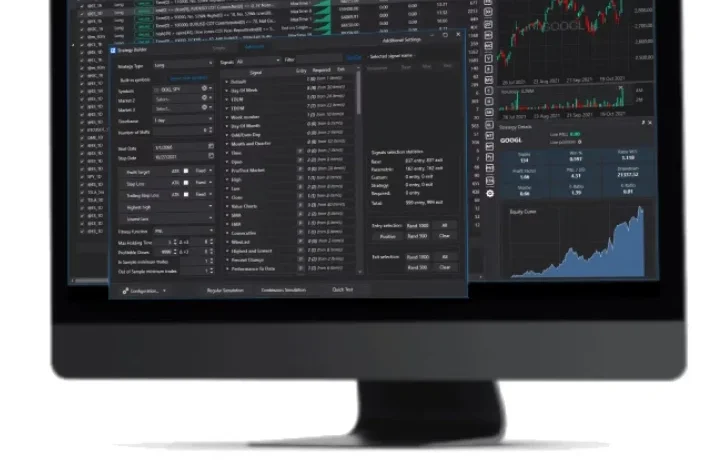
The quantitative finance industry has reached a new milestone in algorithmic trading automation with the official rollout of Build Alpha’s most comprehensive software update to date. Designed to bridge the gap between institutional-grade research pipelines and independent quantitative developers, the new release introduces artificial intelligence orchestration, automated multi-round research, and portfolio-level optimization engines directly into the desktop development environment. Founded by former market maker and quantitative strategist David Bergstrom, Build Alpha has historically catered to professional trading desks, high-frequency operations, and proprietary trading firms. This latest update aims to democratize advanced computational techniques by offering individual traders access to meta-learning models and dynamic optimization tools that were previously restricted to well-funded hedge funds and Commodity Trading Advisors (CTAs).
The core of this software release centers around four primary architectural upgrades: LLM Orchestration, Sequence Workflows, Portfolio Search, and an upgraded Portfolio Suggest v2. Together, these features transform the software from a traditional strategy backtesting tool into a full-scale quantitative research pipeline capable of autonomous operation. As retail and institutional traders alike face increasing market efficiency and narrower profit margins, the demand for sophisticated automation has accelerated. Industry analysts note that integrating large language models not just as chat assistants, but as meta-controllers that adjust genetic algorithm parameters in real-time, represents a paradigm shift in how algorithmic trading strategies are engineered.
At the forefront of the new release is the LLM Orchestrator, an optional feature that connects Build Alpha directly to major commercial large language models, including OpenAI’s ChatGPT, Anthropic’s Claude, Google’s Gemini, xAI’s Grok, DeepSeek, Mistral, and Perplexity. Furthermore, any OpenAI-compatible model, such as those routed through OpenRouter, can be integrated into the workflow. Rather than using the AI merely to write code snippets, the LLM Orchestrator actively governs the quantitative research process. Users define their search constraints—such as acceptable drawdown limits, fitness functions, robustness gates, and prop firm compliance rules—and enable the AutoTune function.
During a simulation run, the LLM periodically reviews the output generated by Build Alpha’s built-in genetic algorithm. If the optimization process reaches a performance plateau, the AI assesses the situation, dynamically adjusts hyperparameters, and triggers a search restart without human intervention. Additionally, the orchestrator is capable of writing brand new custom signal definitions mid-session, feeding them directly into the genetic algorithm to be evaluated alongside standard technical indicators. To ensure transparency and auditability, the system logs every decision, parameter change, and piece of reasoning into an extensive post-run AI report. For security and privacy, Build Alpha communicates directly with the chosen LLM provider via user-supplied API keys, ensuring that proprietary strategy data is handled securely without platform markups. Furthermore, the orchestrator incorporates persistent memory across sessions, allowing the AI to retain knowledge of past research patterns and apply accumulated insights to future simulations days or weeks later.
Complementing the AI orchestration capabilities is the introduction of Sequence Workflows, a feature engineered to eliminate the manual bottlenecks associated with multi-round research. Historically, developing a robust trading strategy required a tedious iterative process: executing a broad search over ten years of historical data, manually filtering the results, applying a tighter search over recent years, and subsequently running walk-through validations and Monte Carlo permutation tests. Sequence Workflows automate this entire hierarchy into a single, configurable pipeline. Traders can establish multi-round research frameworks where each stage features distinct date ranges, performance thresholds, advanced robustness filters, and specific advancement criteria.
These advancement criteria operate on composite logic, allowing developers to program rules such as advancing to the next round when a specific number of strategies are identified or a time limit is reached, while automatically terminating the sequence if minimum viability thresholds are not met. By allowing complex research protocols to run on autopilot overnight, Sequence Workflows significantly reduce the time required to move from raw market data to validated, production-ready strategies.
In parallel with automated research pipelines, Build Alpha has overhauled its portfolio construction capabilities through the introduction of Portfolio Search and Portfolio Suggest v2. Traditional retail trading platforms typically evaluate strategies in isolation, encouraging developers to select individual algorithms with aesthetically pleasing equity curves and hope they perform well when traded simultaneously. However, professional institutional desks have long recognized that single strategies are inherently fragile, whereas portfolios of uncorrelated strategies exhibit antifragile characteristics.
Portfolio Search fundamentally alters the generation engine by evaluating candidate strategies based on their marginal contribution to an existing basket of trades. Instead of rewarding standalone performance, the genetic algorithm optimizes for low correlation, smooth aggregate equity curves, and enhanced risk-adjusted metrics like the Sharpe ratio. In practical terms, Portfolio Search frequently selects candidate strategies that appear mediocre or unglamorous in isolation because they generate returns during market environments where the rest of the portfolio falters. This capability mirrors institutional asset allocation strategies, ensuring that new algorithmic components fill genuine diversification gaps rather than duplicating existing market exposure.
For traders who already possess a pool of pre-built strategies, Portfolio Suggest v2 provides a complementary suite of analytical tools to filter, size, and combine them effectively. The upgraded interface incorporates a comprehensive filter panel allowing users to enforce strict pairwise or overall correlation limits, performance minimums, and specific compliance parameters. Notably, the software includes a one-position-per-symbol toggle designed specifically to satisfy the stringent risk management requirements enforced by modern proprietary trading firms. Additionally, the results window now features a dedicated sizing and allocation column, enabling users to expand basket rows to inspect the exact capital allocation assigned to each underlying strategy.
The software update also expands Build Alpha’s analytical capabilities through the introduction of three event-aware signal types: EventPriceCustom, EventVWAP, and CountSinceEvent. These signals are designed to capture complex intraday market behaviors and event-driven relationships that standard technical indicators fail to articulate. EventPriceCustom allows systems to store numerical values—such as prices or indicators—whenever a specified condition is met, enabling historical comparisons hours or days later. EventVWAP anchors the volume-weighted average price calculation to user-defined systemic events, such as regime shifts or news flags, rather than defaulting to a standard daily session. Meanwhile, CountSinceEvent tracks the frequency of specific occurrences relative to prior anchor events, providing a quantitative vocabulary for mean-reversion and momentum characteristics.
To further lower the barrier to entry for custom signal creation, Build Alpha has debuted a preview version of its Prompt to Signal feature. Integrated directly into the Custom Indicators Editor, the tool allows users to describe desired trading signals in plain English. The integrated AI assistant translates these descriptions into functional code that compiles within Build Alpha’s backend and remains fully compatible with the platform’s extensive code export suite. Traders can seamlessly export validated strategies and custom indicators into native formats for external execution environments, including NinjaTrader, TradeStation, MultiCharts, MetaTrader 4 and 5, TradingView Pine Script, ProRealCode, and Python-based interfaces for Interactive Brokers.
Alongside these major features, the software release includes a series of workflow enhancements designed to improve user efficiency. Key additions comprise the ability to re-simulate all active strategies against current market data with a single click, post-simulation filtering that enables traders to apply retroactive performance constraints without re-running backtests, and expanded custom symbol editor support for Contracts for Difference (CFDs), catering to the international trading community. Furthermore, new strategy generation controls—such as the "Require One From Group" and mandatory exit parameters—provide developers with granular authority over how the genetic algorithm constructs composite rules.
Industry observers have noted that Build Alpha’s aggressive integration of generative artificial intelligence and advanced portfolio mathematics reflects a broader evolution in the fintech sector. As machine learning tools mature, the competitive advantage in algorithmic trading is shifting away from raw computational speed and toward the sophistication of research automation and risk governance frameworks. By making meta-learning orchestration and portfolio-level optimization accessible outside of elite institutional trading rooms, Build Alpha is setting a new standard for independent quantitative research.
Looking ahead, company leadership has confirmed that the development roadmap includes the introduction of a native live execution layer featuring streaming P&L and real-time position tracking in subsequent software updates. This forthcoming addition is intended to bridge the final operational gap between automated strategy generation and live market deployment. Existing license holders can access the current update immediately through automated platform notifications, while prospective users can review licensing options and demonstration materials directly through the official Build Alpha portal.