Apple Patches Critical Hide My Email Vulnerability After Over a Year of Disclosure

July 21, 2026 – Apple has finally addressed a significant security vulnerability within its popular Hide My Email service, a feature designed to protect user privacy by masking their real email addresses. The flaw, which could inadvertently expose users’ personal inboxes, was officially patched by the tech giant on July 3, 2026, more than a year after it was initially disclosed to the company. This protracted resolution period has drawn scrutiny, particularly in light of ongoing legal challenges regarding the service’s privacy claims.
The Nature of the Vulnerability and its Discovery
The Hide My Email service, a premium feature available to iCloud+ subscribers, generates unique, random email addresses for users. These disposable addresses then forward incoming mail to the user’s primary inbox, effectively acting as a shield against spam and unwanted solicitations, and preventing the exposure of personal email addresses to third-party websites and services. This functionality was first introduced by Apple in June 2021 as part of a broader suite of privacy-enhancing features.
However, the core promise of privacy was undermined by a critical flaw that allowed for the unmasking of a user’s real email address. Details of this vulnerability first surfaced publicly in early July 2026, but the issue had been known to Apple since at least June 13, 2025. The vulnerability was brought to Apple’s attention by Tyler Murphy, co-founder of EasyOptOuts, a service that assists individuals in removing their personal information from data broker websites.
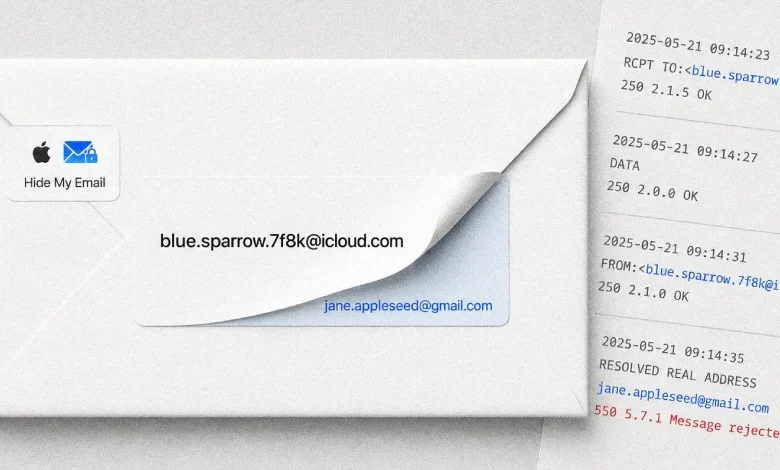
According to reports, the vulnerability was triggered when a targeted Hide My Email address received a message that was automatically rejected as spam. In such instances, the email logs associated with the message would inadvertently contain the user’s actual, unmasked email address. This meant that even legitimate emails, if misclassified by spam filters, could lead to the disclosure of personal contact information.
A Delayed Resolution: Timeline of Events
The timeline of this vulnerability’s resolution highlights a significant delay in Apple’s response:
- June 13, 2025: Tyler Murphy of EasyOptOuts discloses the Hide My Email vulnerability to Apple.
- June 2025 – March 2026: Apple attempts to address the issue, reportedly without success. Specific details of these early attempts are not publicly available.
- March 2026: Apple makes another attempt to patch the vulnerability, which also proves unsuccessful.
- Early July 2026: Details of the unmasking vulnerability emerge publicly.
- July 3, 2026: Apple deploys a fix for the Hide My Email vulnerability.
- July 3, 2026 (Onwards): Reports confirm that the vulnerability has been patched.
The prolonged period between disclosure and resolution is particularly concerning given the sensitive nature of personal email addresses. While Apple attempted to patch the issue earlier in March and again on June 30, 2026, these efforts were evidently insufficient until the July 3rd deployment.

The Mechanics of the Leak
The technical details of the vulnerability, now that it has been addressed, shed light on its insidious nature. The core issue resided in how Hide My Email handled message rejections. When an email sent to a masked address was flagged and rejected by the mail server (even if it was a legitimate message that was incorrectly identified as spam), the rejection process itself would log the original sender’s address and, critically, the recipient’s true email address.
Murphy and Ben Weiner, also a co-founder of EasyOptOuts, explained to 404 Media that the scope of this leak was difficult to quantify. "We don’t know how often hidden email addresses were leaked in email logs," they stated. "For many major email hosts, the leak was triggered simply by an email being automatically rejected as spam, even if it was a legitimate message. Such emails probably didn’t make it to your inbox, so you can’t review your spam folder to learn whether you were affected."
This lack of visibility is a significant concern. Users would have no direct way of knowing if their real email address had been exposed through this mechanism, as the offending emails likely never reached their primary inbox or even their spam folder. The only way to potentially discover such a leak would have been to actively inspect email server logs, a task beyond the reach of most end-users.
Broader Implications and Ongoing Legal Battles
The patching of this vulnerability comes at a critical juncture for Apple, as the company is currently facing a class-action lawsuit that directly challenges the privacy assurances of its Hide My Email service. Filed in the U.S. District Court for the Northern District of California, the lawsuit, captioned Alvarez v. Apple Inc., accuses Apple of misleading consumers about the privacy protections offered by Hide My Email, particularly since the service is a paid component of iCloud+.
The plaintiffs argue that Apple advertised Hide My Email as a robust privacy feature but failed to deliver on this promise, especially given the known vulnerability. The lawsuit alleges that Apple was aware of the flaw for over a year but did not take adequate steps to rectify it, nor did it inform its customer base or pause the service. The complaint states, "Apple promised Hide My Email as a privacy feature customers paid for, whether directly through iCloud+ or indirectly through Apple’s product-wide privacy representations, and failed to deliver it. Worse, Apple has been fully aware of this problem for over a year and has not fixed it."
The lawsuit further contends that during the period the vulnerability was known, Apple "at no point… disable[d] or pause[d] Hide My Email, warn[ed] its customers of the flaw, or correct[ed] its privacy representations." This inaction, if proven, could have significant legal and financial ramifications for Apple, particularly if it demonstrates a pattern of prioritizing product features over user data protection.
The Importance of Email Privacy in the Digital Age
The Hide My Email service taps into a growing user demand for enhanced digital privacy. In an era where personal data is a valuable commodity, services that offer a layer of anonymity and control over online identity are increasingly sought after. Hide My Email’s core proposition—to create a buffer between a user’s personal inbox and the vast landscape of online interactions—is compelling.

However, the effectiveness of such services hinges on their technical robustness and transparency. A vulnerability that allows for the unmasking of private information directly contradicts the fundamental purpose of the service, eroding user trust. The fact that this particular flaw could be triggered by routine email rejections, rather than requiring sophisticated hacking techniques, makes it especially problematic. It suggests a systemic issue in how the service processed and logged email traffic.
The incident also underscores the broader challenges in ensuring robust privacy in cloud-based services. As more of our digital lives are managed through cloud platforms, the security and privacy of these services become paramount. The reliance on third-party email providers and the complexities of message routing can introduce unforeseen vulnerabilities.
Expert Analysis and Future Considerations
Cybersecurity experts have noted that while Apple’s fix is a welcome development, the incident raises important questions about the due diligence and testing processes for privacy-focused features. The delay in patching, coupled with the ongoing lawsuit, suggests potential shortcomings in Apple’s internal security audit procedures or its responsiveness to disclosed vulnerabilities.
"The prolonged period between disclosure and resolution for such a critical privacy feature is concerning," commented a cybersecurity analyst who wished to remain anonymous due to ongoing work with tech companies. "While every company faces challenges in patching complex systems, the potential for widespread exposure of personal email addresses warrants a swift and decisive response. This incident could embolden other privacy advocates and legal entities to scrutinize similar services more closely."
The implications of this vulnerability extend beyond just Apple’s Hide My Email service. It serves as a stark reminder to all users of digital services about the importance of understanding the privacy policies and potential limitations of the tools they use. For service providers, it highlights the continuous need for rigorous security testing, rapid patching, and transparent communication with users when issues arise.
Furthermore, the class-action lawsuit highlights the increasing legal accountability that companies face regarding their privacy promises. As regulations around data privacy evolve and become more stringent, businesses must ensure that their product offerings align with their public statements and that any potential risks are proactively addressed and communicated.
While the immediate threat of the Hide My Email unmasking vulnerability has been neutralized with the July 3rd patch, the repercussions of this incident—both in terms of user trust and legal challenges—may continue to unfold for some time. The case underscores the delicate balance between offering innovative privacy features and ensuring their absolute reliability in a constantly evolving digital threat landscape. Users who created Hide My Email addresses before July 7, 2026, should remain aware that their real email address may have been logged in mail transfer logs when non-malicious emails were bounced, though the extent of this exposure remains difficult to ascertain.