Build Alpha Unveils Monumental Software Release Featuring LLM Orchestration, Sequence Workflows, and Advanced Portfolio Optimization

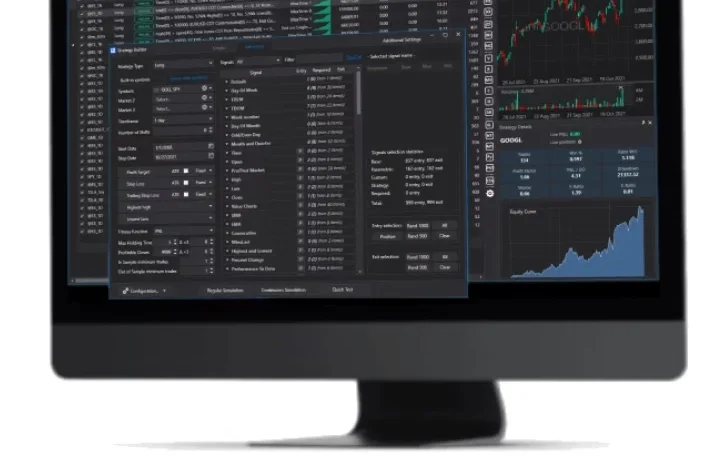
Quantitative research and algorithmic trading development platform Build Alpha has officially launched one of its most comprehensive software updates to date. The latest release introduces four cornerstone capabilities that fundamentally transform automated strategy generation: LLM Orchestration, Sequence Workflows, Portfolio Search, and an upgraded Portfolio Suggest v2. Together, these enhancements bridge the gap between traditional single-strategy development and full quantitative research pipeline automation, allowing individual traders to deploy institutional-grade analytical frameworks directly from their desktop environments.
For over a decade, retail quantitative traders have faced structural disadvantages when competing against institutional desks. While hedge funds and proprietary trading firms utilize dedicated engineering teams to build automated research pipelines, independent traders have traditionally relied on manual hyperparameter tuning, isolated backtesting, and fragmented portfolio construction methods. The new Build Alpha release aims to democratize this architecture by integrating cutting-edge artificial intelligence, multi-round automated workflows, and holistic portfolio evaluation tools into a single, cohesive session.
The Core Innovations Transforming Systematic Trading
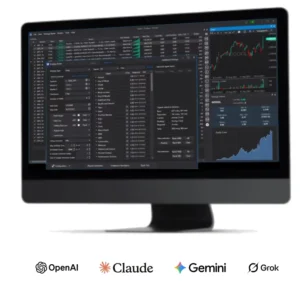
At the heart of the new software release is LLM Orchestration, a feature designed to let artificial intelligence actively drive strategy development from conception to validation. The system natively connects to major language model providers, including OpenAI’s ChatGPT, Anthropic’s Claude, Google’s Gemini, xAI’s Grok, DeepSeek, Mistral, and Perplexity. Additionally, any OpenAI-compatible LLM—including models routed through OpenRouter—can be integrated directly using standard API credentials.
Rather than acting merely as a static chatbot, the connected LLM serves as a meta-level machine learning engine. Users configure search constraints such as desired signals, fitness functions, robustness gates, and proprietary firm rules before toggling the AutoTune feature on. As the genetic algorithm runs, the LLM reads output reports, detects performance plateaus, dynamically adjusts search settings, and restarts simulations between rounds without human intervention. Furthermore, the system possesses persistent memory across sessions, allowing the AI to learn from historical research patterns and become more efficient over time. To ensure complete auditability, every decision, hyperparameter adjustment, and piece of reasoning made by the model is logged in a post-run report. For users preferring traditional oversight, the AutoTune feature remains entirely optional and can be disabled within settings.
Complementing the AI integration are Sequence Workflows, which automate multi-round research pipelines. Historically, rigorous quantitative research required a cumbersome manual process: running a broad search across a ten-year historical dataset, filtering results, executing a tighter search on recent market data, applying walk-forward validation, and finally filtering strategies through strict performance thresholds. Sequence Workflows allow traders to design this entire multi-stage pipeline in a single configuration. Each round within a sequence features independent date ranges, simple performance metrics (such as profit and loss or drawdown limits), and advanced robustness filters like Monte Carlo Permutation. Advancement criteria dictate how the pipeline proceeds, enabling configurations such as advancing to the next round once a specific number of strategies are discovered or a time cap is reached.
Revolutionizing Portfolio Construction and Analysis
Moving beyond individual strategy evaluation, the release introduces Portfolio Search, a feature that shifts the primary objective of the genetic algorithm from standalone backtests to marginal portfolio contribution. Traditional systematic development often leads traders to evaluate strategies in isolation, selecting assets with visually appealing equity curves and hoping they combine effectively. In practice, standalone performance can be misleading.
Portfolio Search evaluates candidate strategies based on how they interact with an existing basket of assets, explicitly optimizing for low correlation, smooth aggregate equity curves, and intelligent capital allocation. During testing, the engine frequently surfaces unorthodox or visually unglamorous strategies—such as Orange Juice futures or volatility index products—because they generate returns during periods when the rest of the portfolio underperforms. By prioritizing portfolio fit over isolated metrics, the platform mirrors the risk-management methodologies long utilized by institutional asset managers.
This portfolio-centric approach is further reinforced by Portfolio Suggest v2. While Portfolio Search grows an existing basket by discovering complementary assets, Portfolio Suggest analyzes a pre-existing pool of candidate strategies to determine optimal combinations. The upgraded v2 interface incorporates rigorous correlation filters, portfolio-level performance thresholds, and a crucial compliance toggle enforcing a one-position-per-symbol rule. The latter is particularly valuable for traders navigating the strict drawdown and position limits imposed by modern proprietary trading firms. Furthermore, a new weights and allocation column in the results window allows users to expand basket rows and inspect individual strategy sizing instantly.
Expanding the Signal Library and Prompt-to-Signal Preview
To support more sophisticated intraday and event-driven hypothesis testing, Build Alpha has integrated three new event-aware signal types: EventPriceCustom, EventVWAP, and CountSinceEvent. EventPriceCustom records any specified market value or indicator condition when triggered, allowing traders to reference that historical anchor hours or days later. EventVWAP anchors the volume-weighted average price to custom-defined events—such as regime shifts or news flags—rather than relying solely on traditional session boundaries. CountSinceEvent quantifies the frequency of one market event relative to another, unlocking complex mean-reversion logic that standard technical indicator libraries cannot easily capture.
In addition to these native signals, the platform introduces a preview of Prompt to Signal. This tool allows users to describe desired indicators in plain English within the Custom Indicators Editor. An integrated AI assistant parses the prompt, constructs the signal logic, and registers it as a first-class entry within the platform. Crucially, all AI-generated signals maintain complete compatibility with Build Alpha’s existing code export infrastructure, translating cleanly into native code for NinjaTrader, TradeStation, MultiCharts, MetaTrader (MQL4/MQL5), TradingView Pine Script, ProRealCode, and Python.
Workflow Enhancements, Code Export, and Future Outlook
To maximize user efficiency, the release includes several highly requested workflow refinements. Post-simulation filtering enables traders to apply retroactive performance thresholds and robustness gates without restarting completed runs. The custom symbol editor now fully supports Contract for Difference (CFD) instruments, broadening accessibility for international market participants. Additionally, new strategy generation controls—such as "Require One From Group" and mandatory exit specifications—grant developers precise authority over how algorithms compose technical rules.
Performance improvements have also been implemented across data processing modules, significantly accelerating multi-threaded backtesting speeds for large datasets. Looking ahead, Build Alpha leadership has announced that the next major development phase will introduce a native live execution layer, complete with streaming profit-and-loss tracking and real-time position management. This upcoming feature aims to seamlessly connect the platform’s advanced research pipeline directly to live brokerage environments, further shortening the lifecycle from algorithmic concept to live market deployment.