Middle East Conflict Triggers Energy Price Surge, Jolts European Markets and Threatens Economic Stability


The escalating conflict in the Middle East has propelled energy markets to the forefront of global financial concerns, with recent developments significantly impacting crude oil and natural gas prices. The United States’ expansion of airstrikes and the maritime blockade imposed by Iran-allied Houthis in the critical Bab-el-Mandeb Strait have sent shockwaves through international trade routes, leading to a notable uptick in energy commodities and prompting renewed vigilance from central banks. This intensified geopolitical tension arrives at a precarious moment for the global economy, threatening to derail nascent recovery efforts and exacerbate inflationary pressures.
Energy Markets Under Intense Scrutiny Amidst Geopolitical Escalation
The price of Brent crude oil experienced a significant intraday surge, reaching a high of $95.50 per barrel before settling slightly lower at $94.50. This upward trajectory reflects deep-seated market anxieties regarding potential supply disruptions emanating from the Strait of Hormuz, a vital chokepoint for global oil shipments. The forward curve for Brent crude is now less than $4 below the levels the European Central Bank (ECB) used in its June projections, indicating a tangible and immediate impact on future price expectations.
While crude oil garners significant attention, the situation in natural gas markets, particularly in Europe, warrants equally critical observation. The Dutch reference contract, a key benchmark for European gas prices, is currently trading at levels not seen since the height of the war in Ukraine in March, exceeding €60 per megawatt-hour. The forward curve for natural gas is now between €12 and €14 per megawatt-hour higher than it was in June. This substantial increase directly aligns with the ECB’s adverse scenario, which had prudently assumed a €60 price for natural gas in the third quarter.
The implications of these surging energy prices are profound. For the ECB, the renewed inflationary pressures stemming from higher energy costs pose a significant dilemma. The central bank has been cautiously navigating the path towards price stability, with recent economic data indicating a slowdown in inflation. However, the current energy market volatility threatens to reignite broader inflationary trends, potentially complicating the ECB’s monetary policy decisions. Investors and analysts are keenly awaiting ECB President Christine Lagarde’s remarks at the upcoming press conference for any indication of how the central bank intends to address this evolving economic landscape.
Bond Markets React to Renewed Inflationary Fears
The resurgence of energy price inflation has also triggered a notable upward movement in core bond yields. This trend has been observed across major European markets, with yields increasing by up to 4 basis points at the front of the curve. In the United Kingdom, gilt yields have also seen increases ranging between 1.8 and 3.3 basis points. Recent UK inflation data, while narrowly missing expectations on the headline figure (2.6% versus a forecast of 2.7%), was partially offset by higher-than-anticipated core and services CPI readings. However, analysts largely dismiss these figures as being significantly distorted by the volatile energy price swings, making them less indicative of underlying inflationary pressures.
The bear flattening of the European yield curve suggests that investors are anticipating a scenario where short-term interest rates may remain higher for longer, or that long-term growth prospects are being tempered by the immediate inflationary concerns. The yield on benchmark German Bunds, for instance, has shown a consistent upward trend, reflecting a broader reassessment of the economic outlook.
Stock Markets Exhibit Fragility Amidst Earnings Season Opener
Stock markets in Europe are currently trading with minor gains, reflecting a cautious optimism. However, the US market is exhibiting greater fragility, with the Nasdaq opening lower. The much-anticipated earnings season for Big Tech is set to commence with the release of after-market results from AI bellwether Alphabet. Investors will be closely scrutinizing these results for indications of whether the company’s substantial capital expenditures on artificial intelligence have yielded the expected returns. The performance of Alphabet and other major tech companies will be a crucial barometer for the broader market sentiment and the overall health of the technology sector, which has been a significant driver of global stock market performance in recent years.
Japanese Yen Stumbles as Bank of Japan Policy Looms
In currency markets, the Japanese yen has staged a tentative and largely unsuccessful attempt to recover after hitting a multi-decade low against the US dollar. This brief bounce was reportedly fueled by reports suggesting the Bank of Japan (BoJ) is open to accelerating its pace of interest rate hikes, moving beyond the market’s current expectation of roughly one hike every six months. The USD/JPY pair briefly dipped to 162.69 before retracing almost all its losses to trade back around the 163 level.
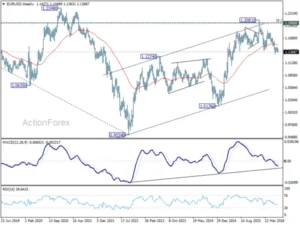
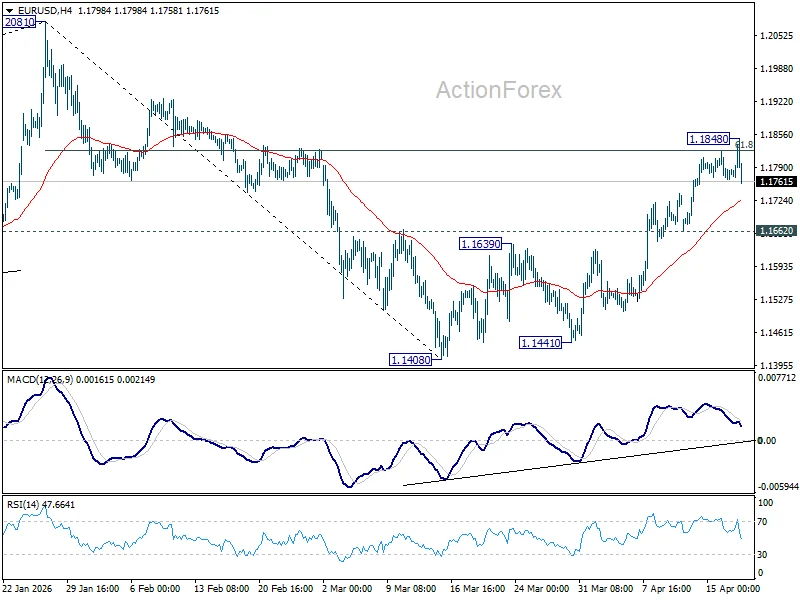
The greenback has seen modest declines against most other major currencies, with EUR/USD rising to 1.1416 and the US Dollar Index (DXY) retreating to 101.13. These movements are being characterized as technically irrelevant at this juncture, suggesting that broader market sentiment and geopolitical factors are overshadowing minor currency fluctuations. The EUR/GBP pair, however, continues its recent recovery, approaching the 0.8533 level, indicating a degree of strength in the Euro against the British Pound.
Belgian Consumer Confidence Shows Gradual Improvement
Shifting focus to economic sentiment within Europe, the National Bank of Belgium’s consumer confidence indicator has continued its upward trend, a pattern observed in the previous month. The overall index has improved from -7 to -5. For the fourth consecutive month, Belgian consumers are expressing more optimism about the economic situation in their country, with the relevant subindex rising from -33 to -27. This indicates a gradual shift in consumer perception, moving away from the deep pessimism that characterized earlier periods.

However, expectations concerning unemployment remain a persistent concern for Belgian consumers. The subindex related to unemployment expectations has dropped back to levels seen two months ago, suggesting that job security fears continue to weigh on household sentiment. On a more positive note, consumers have become more optimistic about their capacity to save, with the relevant subindex increasing from 19 to 23. Despite this improvement in savings outlook, expectations regarding their personal financial situation have remained unchanged, holding steady at -2. It is important to note the stark contrast with the period prior to the escalation of the Middle East conflict; in February, before the geopolitical tensions intensified, the overall consumer confidence indicator stood at a more robust +1. This suggests that the recent geopolitical events and their economic ramifications may be starting to temper the improving consumer sentiment.
Poland’s Retail Sales Surge, Signaling Economic Resilience
In contrast to some of the broader economic headwinds, retail sales in Poland demonstrated a stronger-than-expected performance in June, according to data released by the Statistical Office of Poland. Real sales experienced a notable increase of 1.4% month-on-month and a robust 6.2% year-on-year. This represents a significant turnaround from May, when real sales contracted by 1.7% month-on-month and grew by only 3% year-on-year.
Over the period of January-June 2026, retail sales in Poland have increased by 3.5% year-on-year, indicating a healthy expansion in consumer spending. The year-on-year growth in June 2026 was broad-based, with all subgroups reporting increases. Particularly strong growth was observed in categories such as furniture, radio, TV, and household appliances (up 14.8%), pharmaceuticals, cosmetics, and orthopedic equipment (up 10.2%), motor vehicles, motorcycles, and parts (up 9.6%), and solid, liquid, and gaseous fuels (up 9%). This widespread consumer demand suggests underlying economic strength and a positive consumer response to prevailing economic conditions.
Furthermore, the value of retail sales conducted via the internet, measured at current prices, was 12.3% higher than a year ago, underscoring the continued growth and importance of e-commerce in the Polish market.
Despite the positive retail sales figures, the Polish Zloty (PLN) has eased marginally against the Euro, trading at EUR/PLN 4.33. The pair is currently holding above the 4.30 range top that had guided trading from the end of 2024 until after the National Bank of Poland (NBP) policy decision earlier this month. During the press conference following that decision, Governor Glapiński expressed a preference for a potential interest rate cut after the summer break. However, statements from other members of the Monetary Policy Council (MPC) have revealed significant internal divisions on the matter, creating uncertainty about the future direction of Polish monetary policy. This division could contribute to the Zloty’s current trading range and its sensitivity to policy pronouncements.
Broader Implications and Future Outlook
The confluence of geopolitical tensions in the Middle East and their ripple effects on energy markets presents a complex challenge for global economic policymakers. The potential for sustained high energy prices could reignite inflationary pressures, forcing central banks to reassess their monetary policy stances. This, in turn, could impact economic growth prospects and financial market stability.
For European economies, heavily reliant on imported energy, the current situation is particularly sensitive. The surge in gas prices, in particular, poses a direct threat to industrial competitiveness and household budgets. The ECB’s ability to manage these inflationary risks without stifling economic recovery will be a critical factor in the coming months.
In Poland, the robust retail sales data offer a sign of domestic economic resilience. However, the divergence between consumer spending strength and the policy divisions within the NBP could create a degree of uncertainty for the Zloty and broader financial markets. The central bank’s approach to monetary policy will be closely watched as it navigates the trade-offs between inflation control and economic growth support.
The performance of Big Tech companies, particularly Alphabet, in the upcoming earnings season will provide a crucial insight into the broader technological landscape and the investment outlook for key growth sectors. Any signs of slowing investment or weakening demand within the tech sector could have significant implications for global equity markets.
The Japanese yen’s volatility, driven by speculation about the BoJ’s future policy, highlights the ongoing global divergence in monetary policy approaches. As major central banks grapple with inflation and growth dynamics, their policy decisions will continue to shape currency markets and international capital flows.
Ultimately, the current market environment is characterized by heightened uncertainty. The ongoing geopolitical developments in the Middle East, coupled with evolving inflation and growth dynamics, create a volatile backdrop for investors and policymakers alike. Navigating this complex landscape will require careful analysis, strategic decision-making, and a keen understanding of the interconnectedness of global economic forces.