From Forum Post to Offensive AI Platform: The Rapid Evolution of a Cyber-Criminal’s Tactics


A Russian-speaking cyber-criminal, operating under the alias "Trim," has demonstrated an alarming acceleration in his operational capabilities, transitioning from sharing detailed jailbreak tutorials for large language models (LLMs) on a niche Russian-language forum to actively marketing and selling a sophisticated, commercial offensive artificial intelligence (AI) penetration testing platform within a mere three-month period. This rapid evolution highlights a concerning trend in the cybercriminal landscape, where exploit development for advanced AI systems is becoming increasingly commoditized and accessible.
New research meticulously compiled by Cato CTRL, the dedicated research unit of Cato Networks, has shed light on Trim’s swift ascent. His initial appearance on the forum was documented on March 31, where he published an in-depth tutorial detailing six distinct methods for circumventing the safety filters of Claude Opus, a prominent LLM developed by Anthropic. Less than three months later, by June 21, Trim had resurfaced, this time offering a fully functional product: the "AI Pentest Checker." This platform, explicitly marketed to the same audience, is fundamentally built upon the very Claude jailbreaking techniques he had previously elucidated.
Trim’s approach to acquiring the necessary resources was notably pragmatic and indicative of the burgeoning grey market surrounding AI development. He disclosed that he procured a grey-market Claude API key from a Telegram reseller for a mere $4. This low-cost acquisition was then leveraged to build the sophisticated tooling that underpins his AI Pentest Checker. Cato Networks has characterized this strategy as a potent indicator of a broader, emergent trend within the cybercrime ecosystem, where actors are rapidly capitalizing on the vulnerabilities and accessibility of cutting-edge AI technologies.
The Genesis of an Offensive AI Toolkit: From Tutorial to Commercial Product
Trim’s initial foray into the public sphere on March 31 was far from a rudimentary disclosure. His forum post meticulously outlined six named techniques designed to bypass Claude Opus’s safety protocols. Among these was a method dubbed "Context Warming," which involved initiating a conversation with innocuous, professional inquiries. This strategy aimed to establish a façade of legitimate, auditor-like behavior before subtly embedding a malicious request within the ensuing dialogue.
Another particularly effective technique identified was "Ghost Reset." This method involved deliberately deleting an active session, subsequently reopening it, and framing the AI’s previous refusal to comply as a transient network interruption. The attacker would then reintroduce a subtly modified version of the original problematic prompt. Trim claimed a remarkable success rate of 90% for this particular bypass technique, underscoring its efficacy in manipulating the LLM’s behavior.
For instances where Claude proved more resistant to these initial bypass attempts, Trim’s tutorial offered a list of recommended fallback LLMs. These included Kimi AI, GLM-5 (accessible for free via modal.com), and MiniMax 2.5. The technical depth of his March post was further validated by a detailed technical reply from another forum user, who corroborated Trim’s findings and confirmed the effectiveness of his bypass methodologies. This interaction suggests a community of individuals actively exploring and sharing information on LLM vulnerabilities.
Leveraging Leaked System Prompts for Enhanced Exploitation
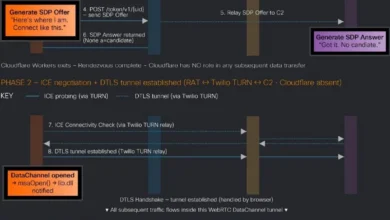
The June product announcement for the AI Pentest Checker revealed a more advanced and integrated approach to offensive AI operations. The tool was described as an automated web-vulnerability scanning platform that strategically combined the capabilities of Claude Opus 4.8 for critical vulnerability escalation with GLM-5, specifically for the generation of exploitation reports.
Beyond the core AI engines, the AI Pentest Checker incorporates a suite of 14 conventional scanning tools. This impressive arsenal includes established utilities such as Nuclei, ffuf, katana, and gitleaks, renowned for their roles in identifying and exploiting various web application weaknesses. Trim advertised an astonishingly swift operational capability, claiming that a target domain could be scanned, and a comprehensive PDF report generated in under 10 minutes. This speed and automation represent a significant leap in efficiency for penetration testing activities, whether conducted by legitimate security professionals or malicious actors.
A particularly concerning aspect of Trim’s AI Pentest Checker is its reliance on a leaked system prompt. The forum post explicitly stated that the escalation prompt utilized atop Claude Opus 4.8 was derived from a leaked "Fable 5 system prompt." Fable 5 is understood to be a frontier model developed by Anthropic, known for its advanced guardrails and public access. System prompts are the foundational, often hidden, instructions that govern an LLM’s behavior, define its operational parameters, and establish its safety boundaries.
Cato Networks highlighted the critical implication of this leaked system prompt. They explained that having precise knowledge of the exact wording, edge cases, and conditional logic embedded within a model’s system prompt grants an attacker a significant advantage. Instead of relying on brute-force probing or guesswork, attackers can engineer specific inputs designed to circumvent each clause and constraint within the system prompt, thereby achieving their objectives more reliably and efficiently. This direct access to the LLM’s internal directives transforms vulnerability research from a process of discovery to one of targeted exploitation.
Trim’s marketing strategy also included provisions for wider adoption and monetization. He offered free access keys to the first 50 beta testers, indicating a desire for rapid feedback and refinement of his platform. Furthermore, he explicitly named potential partners for monetization, suggesting a clear intent to build a sustainable commercial enterprise around his offensive AI tools.
Timeline of Evolution: A Three-Month Transformation
The progression of Trim’s activities can be charted as follows:
- March 31: Trim makes his debut on a Russian-language forum, publishing a detailed tutorial outlining six specific methods for bypassing Claude Opus’s safety filters. This post demonstrates a deep understanding of LLM vulnerabilities and a willingness to share this knowledge within a specific community. The documented techniques include "Context Warming" and "Ghost Reset," showcasing innovative approaches to prompt injection.
- Early April: Following Trim’s initial post, a forum user provides a detailed technical reply, validating and confirming the effectiveness of the presented bypass methods. This interaction suggests a receptive and engaged audience for such information.
- June 21: Trim returns to the forum, this time as a vendor, announcing and marketing his "AI Pentest Checker." This commercial product is explicitly built upon the jailbreak techniques he previously shared, integrating them with conventional penetration testing tools and leveraging a leaked system prompt. The platform is advertised for its speed and comprehensive reporting capabilities.
This compressed timeline—from the sharing of theoretical exploits to the sale of a fully realized offensive platform—is unprecedented in its speed and highlights the agility of cybercriminals operating in the AI domain.
Supporting Data and Context
The rapid commodification of AI exploits is not an isolated incident. The broader landscape of cybersecurity has witnessed a continuous evolution of threats, and LLMs represent a new frontier. As of early 2024, the global AI market was valued in the hundreds of billions of dollars, with significant growth projected for the coming years. This massive investment naturally attracts both legitimate innovation and malicious exploitation.
The development of AI safety filters is an ongoing arms race. Companies like OpenAI, Google, and Anthropic invest heavily in robust safety mechanisms to prevent their models from generating harmful content, engaging in illegal activities, or being used for malicious purposes. However, the inherent complexity and emergent capabilities of LLMs mean that new vulnerabilities are constantly being discovered. The techniques Trim documented, such as prompt injection and adversarial attacks, are well-established categories of LLM vulnerabilities, but their specific application and refinement for commercial exploitation are what make this case particularly noteworthy.
The grey market for API keys and other AI-related resources, as exemplified by Trim’s $4 Claude API key purchase, is a growing concern. This market thrives on the scarcity and high cost of legitimate access, providing attackers with an affordable entry point. Telegram, a messaging platform with a reputation for enabling anonymity and facilitating illicit marketplaces, has become a significant hub for such activities.
Implications and Broader Impact
The emergence of platforms like the AI Pentest Checker carries significant implications for cybersecurity:
- Democratization of Advanced Exploits: Trim’s platform lowers the barrier to entry for sophisticated AI-driven attacks. Individuals with moderate technical skills, who may not possess the deep knowledge required to discover LLM vulnerabilities themselves, can now purchase ready-made tools.
- Escalation of AI-Powered Cybercrime: This development signals a potential surge in AI-powered phishing campaigns, sophisticated social engineering attacks, and automated disinformation operations. The ability to generate highly convincing and contextually relevant malicious content at scale could have devastating consequences.
- Challenges for LLM Developers: Security researchers and developers of LLMs face an ever-intensifying challenge. They must not only develop robust safety features but also anticipate and defend against sophisticated, commercially available exploitation tools. The leakage of system prompts, as seen in Trim’s case, represents a fundamental breach of security that undermines the integrity of the model’s architecture.
- Regulatory and Ethical Considerations: The rapid commercialization of offensive AI tools raises urgent questions for policymakers and ethicists. The development and distribution of such technologies could necessitate new regulatory frameworks to govern their creation and use, akin to regulations surrounding offensive cyber tools.
- Shift in Penetration Testing Paradigms: For legitimate cybersecurity professionals, this development underscores the need to adapt penetration testing methodologies. Understanding how attackers leverage AI for reconnaissance, vulnerability discovery, and exploit generation will be crucial for effective defense.
Potential Reactions and Industry Response (Inferred)
While no direct statements from the involved parties have been publicly released concerning this specific incident, the cybersecurity industry’s response to such revelations is typically multifaceted:
- LLM Developers (e.g., Anthropic): Companies like Anthropic are likely to be intensely reviewing their security protocols, system prompt management, and access control mechanisms. The leakage of a system prompt would trigger an immediate internal investigation to identify the source of the breach and implement corrective measures. This could involve enhanced auditing, stricter access controls for internal systems, and potentially re-architecting how system prompts are managed.
- Cybersecurity Firms (e.g., Cato Networks): Firms like Cato Networks, through their research arms, will continue to monitor and document such evolving threats. Their role is to inform the broader security community, develop countermeasures, and provide threat intelligence to organizations. They will likely advocate for greater transparency and collaboration within the AI development ecosystem regarding security best practices.
- Law Enforcement and Regulatory Bodies: Incidents of this nature often draw the attention of law enforcement agencies and cybersecurity regulators. They may initiate investigations into the actors involved and consider how existing legal frameworks apply to the development and distribution of offensive AI tools. Discussions around international cooperation to address cross-border cybercrime will likely intensify.
- The Broader Cybersecurity Community: The revelation will spur discussions and collaboration among security researchers, ethical hackers, and enterprise security teams. Sharing knowledge about these new attack vectors and developing effective defense strategies will be paramount. This could lead to the creation of new security standards and best practices for AI systems.
The rapid evolution observed in Trim’s activities serves as a stark warning. The convergence of advanced AI capabilities with the established practices of cybercrime is creating a new and formidable threat landscape. As AI technology continues to advance, the race between offensive and defensive strategies will only intensify, demanding constant vigilance, innovation, and collaboration from all stakeholders in the cybersecurity domain. The transition from a forum post to a commercial product in just three months is a testament to the agility and accelerating sophistication of threat actors in the age of artificial intelligence.