HaasOnline TradeServer Cloud Integrates AI Agent Access via Model Context Protocol

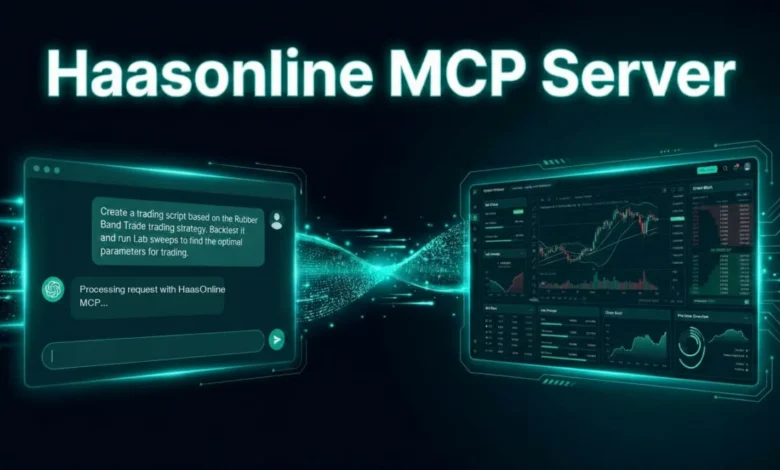
HaasOnline has officially announced the expansion of its AI agent integration to the TradeServer Cloud platform, effectively removing the technical barriers associated with self-hosting for users looking to leverage artificial intelligence in their trading operations. By integrating the Model Context Protocol (MCP), the platform now enables users to connect popular AI assistants—including Claude, Cursor, and VS Code—directly to their cloud-based trading environments. This transition marks a significant milestone in the evolution of algorithmic trading, moving away from complex API key management toward a secure, standardized authorization model.
The Evolution of Algorithmic Trading Infrastructure
The introduction of this cloud-based MCP support follows the successful deployment of the protocol in HaasOnline’s self-hosted TradeServer product, which was rolled out in April. Previously, developers and traders wishing to utilize AI-driven analysis were required to maintain their own infrastructure, which necessitated the manual generation and storage of sensitive API keys within local configuration files. This process, while functional, introduced potential security vulnerabilities and friction for non-technical traders.
The shift to a cloud-based model eliminates the need for users to download local instances or manage persistent, long-lived credentials. By utilizing the OAuth 2.1 authorization-code flow with Proof Key for Code Exchange (PKCE), HaasOnline has adopted a security standard widely used by major financial and productivity platforms to allow third-party applications to interact with private data securely. This methodology ensures that the connection can be revoked at any time from the agent side, providing users with granular control over their digital environment.
Chronology of Implementation
The integration of MCP into the broader HaasOnline ecosystem represents a multi-stage rollout strategy designed to democratize access to AI-assisted trading tools:
- April 2024: HaasOnline introduces the Model Context Protocol for its self-hosted TradeServer, allowing users to interface with AI models locally.
- Q2 2024: Internal testing of cloud-based OAuth workflows begins to address the friction of API key management.
- Late 2024: Full integration of MCP into the TradeServer Cloud, enabling one-click connectivity for VS Code and Cursor users.
- Current Status: The feature is now available across Standard, Pro, and TradeServer subscription tiers, with a trial period provided for potential users.
Technical Architecture and Safety Protocols
A critical aspect of the current implementation is the clear delineation between data access and trade execution. As users connect their AI agents to their trading environment, there is a legitimate concern regarding the autonomy of these agents. To address this, HaasOnline has architected the interface to strictly limit the capabilities of connected assistants.
Under the current security framework, no tool exposed via the MCP interface has the authority to execute trades, cancel orders, initiate fund transfers, or modify the state of automated bots. These capabilities are omitted from the interface entirely, ensuring that even in the event of an unintended prompt or agent error, the capital risk remains isolated from the AI’s influence. Exchange API keys remain securely handled by the TradeServer backend and are never exposed to the external AI assistant.
Conversely, the agents are granted permission to read and write to scripts, lab environments, and backtesting modules. This allows users to leverage AI for complex tasks such as auditing existing bot parameters, refactoring HaasScript, or iterating on strategy development without the manual overhead of traditional programming environments.
Practical Applications in Modern Trading
The primary utility of this integration lies in its ability to synthesize large volumes of market and bot data into actionable insights. Historically, traders managing diversified portfolios across multiple exchanges—such as Binance, Kraken, or Bybit—faced significant time constraints when attempting to audit performance. A manual audit of twenty disparate bots could occupy a trader for hours.
With the new AI agent access, the operational workflow is inverted. Traders can now query their infrastructure using natural language:
- "Identify which grid bots have underperformed during the previous 30-day window."
- "Analyze the correlation between my current drawdowns and the volatility parameters set in my active scripts."
- "Draft a new HaasScript logic based on the following backtest failure patterns."
This shift enables a feedback loop where the AI acts as an assistant to the human operator, facilitating rapid iteration on scripts and providing an objective audit trail of bot performance. However, HaasOnline emphasizes that this does not replace the requirement for technical competency. The assistant serves as a processor of data, not a decision-maker, and the ultimate responsibility for risk management and market strategy remains firmly with the human trader.
Market Implications and Future Outlook
The broader implication of this update is the standardization of how trading platforms interact with LLMs (Large Language Models). By adopting the Model Context Protocol, HaasOnline is positioning its infrastructure to be "agent-ready," anticipating a future where AI assistants will play a larger role in the quantitative analysis of market data.
From a competitive standpoint, this move reduces the "barrier to entry" for algorithmic trading. By stripping away the need for local server management and manual key configuration, the platform appeals to a broader demographic of traders—including those with strong trading intuition but limited software engineering experience.
Industry observers note that the risk of "AI-assisted trading" is often misunderstood. By enforcing a hard-coded separation between read-only data analysis and write-access strategy development, platforms are establishing a "human-in-the-loop" requirement that aligns with current best practices in financial software engineering. As these tools become more sophisticated, the focus will likely shift from the mechanics of connection to the quality of the prompts and the depth of the data analysis.
Subscription Tiers and Accessibility
HaasOnline has structured the availability of this feature to coincide with its core professional offerings. Access to the AI agent suite is included in the Standard, Pro, and TradeServer tiers. The company has explicitly excluded the Starter plan, indicating a strategic decision to position AI agent support as a value-added service for advanced users.
For those currently maintaining self-hosted infrastructure, the release does not mandate a transition to the cloud. The existing self-hosted MCP server remains fully supported, ensuring that users who prioritize total physical isolation of their exchange credentials can continue to operate in their current environment.
Risk Disclosure and Regulatory Context
As with all automated trading systems, the integration of AI tools carries inherent risks. The use of an AI assistant to analyze, draft, or edit trading strategies does not guarantee profitability, nor does it mitigate the volatility of the underlying digital asset markets.
The company maintains a rigorous policy regarding the disclosure of these risks. Past performance, whether audited by an AI or reviewed by a human, is not indicative of future results. The platform’s documentation reinforces the necessity of "only deploying capital that one can afford to lose." By providing these tools, HaasOnline is not offering financial advice or automated asset management, but rather providing a sophisticated analytical framework that requires the trader to possess a comprehensive understanding of their own risk tolerance and market objectives.
As the financial technology sector continues to integrate generative AI, the success of such tools will likely depend on their ability to balance sophisticated automation with robust security protocols. HaasOnline’s decision to adopt a standardized, protocol-based approach suggests a maturation in how trading platforms intend to handle the integration of external intelligence into the high-stakes environment of live crypto markets.
Related posts: