Navigating Short-Term Financial Market Volatility: Insights from KBC Bank Analysis and Global Economic Trends


Financial markets across the globe continue to navigate an intricate landscape defined by shifting monetary policies, inflationary pressures, and geopolitical uncertainties. In an environment where asset prices react swiftly to incoming macroeconomic data, institutional research remains a vital tool for understanding short-term market dynamics. Recent commentary and forecasting models provided by KBC Bank’s dealing room shed light on the projected trajectories of major currency pairs, fixed-income securities, and broader equity indexes. While financial institutions utilize sophisticated tools to anticipate market movements, the inherent unpredictability of global commerce requires a cautious approach to risk management and investment strategy. This analysis explores the methodologies behind short-term financial forecasting, the limitations of predictive modeling, the regulatory and institutional frameworks governing market commentary, and the broader implications for investors operating in today’s volatile economic climate.
The Mechanics of Short-Term Financial Forecasting
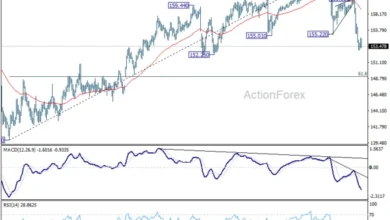
Short-term forecasting in the financial sector relies heavily on quantitative models, historical price action, central bank communications, and high-frequency economic indicators. Analysts within institutional dealing rooms, such as those at KBC Bank, synthesize vast amounts of data to project near-term trends over horizons ranging from a few days to several weeks. These projections typically incorporate technical analysis—evaluating chart patterns, momentum indicators, and support-resistance levels—alongside fundamental analysis, which assesses macroeconomic releases such as employment figures, inflation prints, and gross domestic product growth rates.
The primary objective of short-term forecasting is to identify temporary market dislocations, arbitrage opportunities, or emerging risks that could impact trading portfolios. For corporate treasurers, portfolio managers, and institutional clients, these insights serve as a compass for hedging currency exposure, adjusting duration in fixed-income portfolios, or managing liquidity. However, the accuracy of these models is constantly tested by unexpected macroeconomic shocks, sudden shifts in geopolitical sentiment, and algorithmic trading behaviors that can amplify intraday volatility. Consequently, professional institutions emphasize that short-term forecasts are probabilistic rather than deterministic, serving as guides rather than guarantees for future market behavior.
Regulatory Disclaimers and Institutional Accountability
Transparent communication is a cornerstone of institutional financial research. Disclaimers provided by financial entities like KBC Bank are not merely legal formalities; they are critical components of consumer protection and regulatory compliance mandated by financial authorities across the European Union and international jurisdictions. These disclosures establish the boundary between generalized market commentary and personalized investment advice.
Under regulatory frameworks established by bodies such as the European Securities and Markets Authority (ESMA), financial institutions must clearly state that short-term forecasts carry inherent risks and may not materialize. This distinction protects retail and institutional investors by ensuring they understand that market analyses are based on conditions at a specific point in time. Furthermore, institutions are required to source their data responsibly, utilizing reputable providers while acknowledging that information may be condensed or subject to revision as new economic data emerges. By maintaining this standard of transparency, financial institutions uphold market integrity and prevent the misinterpretation of proprietary research as definitive guarantees of financial return.
Macroeconomic Drivers Influencing Current Market Dynamics
To contextualize short-term financial forecasts, it is essential to examine the overarching macroeconomic drivers shaping current market conditions. Over recent quarters, global markets have grappled with the transition from an era of aggressive monetary tightening to a more nuanced phase of policy normalization. Central banks, including the United States Federal Reserve, the European Central Bank, and the Bank of England, have balanced the necessity of subduing lingering inflationary pressures against the risk of inducing economic recessions.
Inflationary trends have proven to be more persistent than initially anticipated by policymakers, driven by structural shifts in labor markets, global supply chain realignments, and commodity price volatility stemming from ongoing geopolitical conflicts in Eastern Europe and the Middle East. As a result, bond yields have experienced significant fluctuations, directly influencing foreign exchange markets. Currency valuations, in particular, remain highly sensitive to interest rate differentials between major economies. When central banks signal a potential pivot in their monetary policy stance, capital flows shift rapidly, triggering sharp appreciations or depreciations in major currency pairs such as the EUR/USD, GBP/USD, and USD/JPY.
The Role of Dealing Rooms in Modern Banking

The dealing room of a commercial and investment bank, such as KBC’s specialized division, functions as the nerve center for financial transactions, risk management, and market intelligence. Dealing rooms facilitate foreign exchange transactions, interest rate swaps, and bond issuances while simultaneously providing critical insights to commercial clients seeking to mitigate financial risks.
In contemporary banking, the dealing room operates around the clock, interfacing with global liquidity pools and executing trades at lightning speed. Professionals within these environments must synthesize real-time news feeds, macroeconomic data releases, and order-flow dynamics to manage the bank’s proprietary risk and execute client orders efficiently. The insights generated within these spaces—often encapsulated in short-term market updates—reflect the collective expertise and ongoing observations of traders, strategists, and economists who monitor market pulses on a second-by-second basis. Despite the advanced technology and analytical rigor employed in these settings, dealing rooms operate under the perpetual acknowledgment that financial markets are complex adaptive systems capable of defying even the most sophisticated predictive models.
Analyzing the Limitations of Predictive Market Modeling
While quantitative forecasting and qualitative assessments provide valuable frameworks for navigating financial markets, investors must remain cognizant of the inherent limitations of predictive modeling. Financial markets are driven by human psychology, geopolitical events, and unpredictable macroeconomic shocks that defy algorithmic quantification.
Black swan events—rare, high-impact occurrences that are completely unforeseen by standard analytical models—frequently disrupt established financial trends. Examples include sudden geopolitical escalations, unexpected regulatory interventions, or systemic liquidity crunches. When such events occur, historical correlations often break down, rendering short-term models temporarily ineffective. Furthermore, the increasing prevalence of algorithmic and high-frequency trading has accelerated the speed at which markets price in information, frequently leading to exaggerated price movements and heightened intraday volatility. Recognizing these limitations is crucial for market participants, underscoring the importance of diversification, robust risk management frameworks, and dynamic asset allocation strategies.
Implications for Institutional and Retail Investors
The complexities highlighted in short-term financial market forecasts carry profound implications for both institutional and retail market participants. For institutional investors managing pension funds, insurance portfolios, or mutual funds, managing short-term volatility requires a disciplined approach to asset liability matching and hedging. Utilizing derivatives such as options and futures can help cushion portfolios against sudden downward corrections in equity or fixed-income markets.
Retail investors, on the other hand, face unique challenges when interpreting financial market commentary. Without the dedicated risk management infrastructure available to large institutions, individual investors are often more vulnerable to emotional decision-making during periods of heightened market stress. Consequently, financial advisors consistently stress the importance of long-term financial planning over speculative short-term trading. While short-term forecasts offer valuable context regarding immediate market trends, building resilient investment portfolios requires adherence to fundamental principles such as asset class diversification, regular rebalancing, and alignment with individual risk tolerance and investment horizons.
Looking Ahead: Navigating Uncertainty in the Global Economy
As the global economy continues to evolve, the interplay between monetary policy, technological innovation, and geopolitical stability will remain the primary determinant of financial market behavior. Central banks are entering a delicate phase where data-dependent decision-making will dictate the pace and magnitude of future interest rate adjustments. At the same time, structural shifts such as the transition toward green energy, demographic changes, and the rapid adoption of artificial intelligence in financial services are reshaping the long-term economic landscape.
In this dynamic environment, the role of institutional research and market commentary—such as the insights provided by KBC Bank’s dealing room—remains indispensable. By offering structured analyses of short-term developments while maintaining rigorous standards of transparency and risk disclosure, financial institutions empower market participants to make informed decisions. Ultimately, while no forecast can eliminate uncertainty, a thorough understanding of macroeconomic fundamentals, institutional methodologies, and inherent market limitations provides investors with the analytical foundation needed to navigate the complexities of the modern financial world.