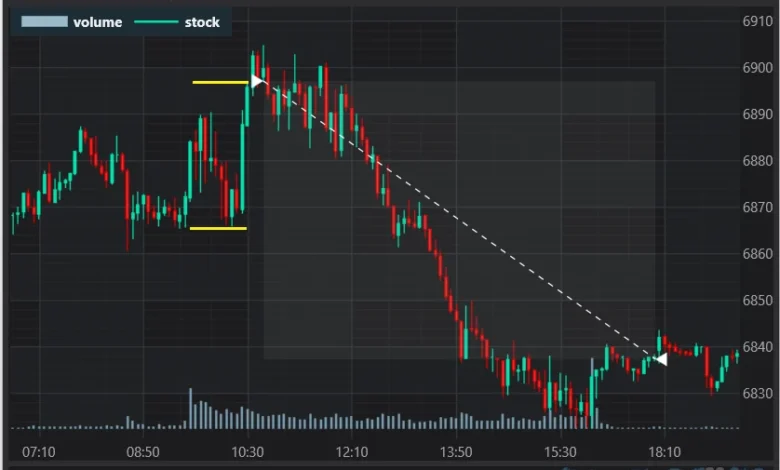
The Opening Range Breakout (ORB) strategy stands as a cornerstone of systematic intraday trading, meticulously studied for its potential to capture early market momentum. This comprehensive guide delves into the fundamental rules, diverse trade setups, common pitfalls, rigorous validation methodologies, and the construction of resilient ORB systems designed to thrive in live market conditions.
Understanding the Opening Range Breakout Strategy
At its core, the Opening Range Breakout (ORB) strategy is a trading methodology that leverages the price range established during the initial trading period of a session to identify potential breakout opportunities. This defined early session typically spans from the first 5 to 60 minutes of trading. Traders employing this strategy aim to enter positions when the price decisively moves beyond the established high or low of this initial range, thereby capitalizing on the directional conviction that often emerges at the market’s open.
The key levels derived from this opening period are the Opening Range High (ORH) and the Opening Range Low (ORL). These two price points become critical reference points for the remainder of the trading session. They function dynamically, serving as potential support and resistance levels, acting as entry triggers for trades, defining stop-loss placements, and even indicating potential profit targets – all derived from a single, early-session observation.
Opening Range Breakout: Quick Summary
- Concept: Capture directional momentum by trading breakouts beyond the initial trading range.
- Key Levels: Opening Range High (ORH) and Opening Range Low (ORL).
- Timeframe: Typically the first 5-60 minutes of the trading session.
- Objective: Profit from sustained price movement following a breakout.
The Mechanics of the Opening Range Breakout Strategy
The implementation of an ORB strategy follows a structured four-step process:
- Define the Range: The first step involves establishing the trading range by recording the highest and lowest prices achieved within a predetermined period, commonly 30 minutes, though this can vary.
- Wait for Formation: Patience is paramount. Traders must allow the entire opening range to form completely, resisting the urge to enter prematurely before the range is fully defined.
- Execute the Breakout Entry: A buy order is typically placed when the price breaks decisively above the ORH, signaling upward momentum. Conversely, a short sell order is initiated when the price falls below the ORL, indicating downward pressure.
- Manage the Trade: Once a trade is entered, meticulous management is crucial. Stop-loss orders are strategically placed either within the opening range or based on volatility measures. Profit targets can be set at predetermined levels, through trailing stops, or by exiting the trade at the end of the session.
The opening range, therefore, distills the market’s initial price action into two pivotal levels that guide subsequent trading decisions.
Underlying Principles: Why Opening Range Breakouts Work
The efficacy of Opening Range Breakouts is not merely a matter of pattern recognition; it is rooted in fundamental structural market behaviors:
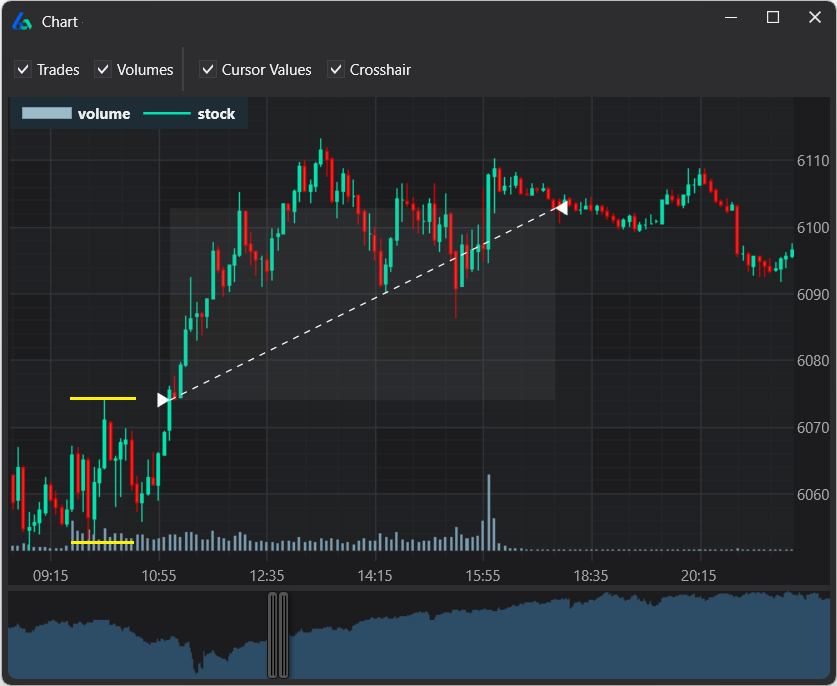
- Institutional Order Flow: The market open is a period of significant activity for institutional investors and large funds as they execute overnight decisions and rebalance portfolios. This concentrated order flow can generate substantial directional pressure that, once established, often exhibits persistence throughout the session.
- Volatility Expansion: The initial hour of trading typically witnesses the highest levels of market volatility. The opening range effectively captures this period of compressed volatility. A breakout from this range can be interpreted as a release of this stored energy, leading to potentially significant price movements.
- Price Discovery: The opening period represents the confluence of overnight market sentiment and new information that has emerged. The opening range can be seen as the market’s initial consensus on price. A break beyond this consensus suggests a shift in conviction and the emergence of a new directional bias.
- Liquidity Concentration: Trading volume is generally highest during the opening minutes and hours. Breakouts that occur on substantial liquidity are often considered more significant and sustainable than those occurring on thinner volume later in the trading day.
Four Distinct Opening Range Breakout Trade Setups
While the basic ORB strategy involves a straightforward breakout, experienced traders employ several nuanced setups to enhance probability and risk management. These four distinct setups illustrate how price can interact with the opening range levels:
Setup 1: The Classic Breakout Above ORH
This is the archetypal ORB trade. The price breaches the Opening Range High and continues its upward trajectory. The entry occurs on the breakout itself, with a stop-loss placed below the ORH or at the ORL. The trade is typically held until the end of the session or a predetermined target is reached.
Setup 2: Fading the False Breakout
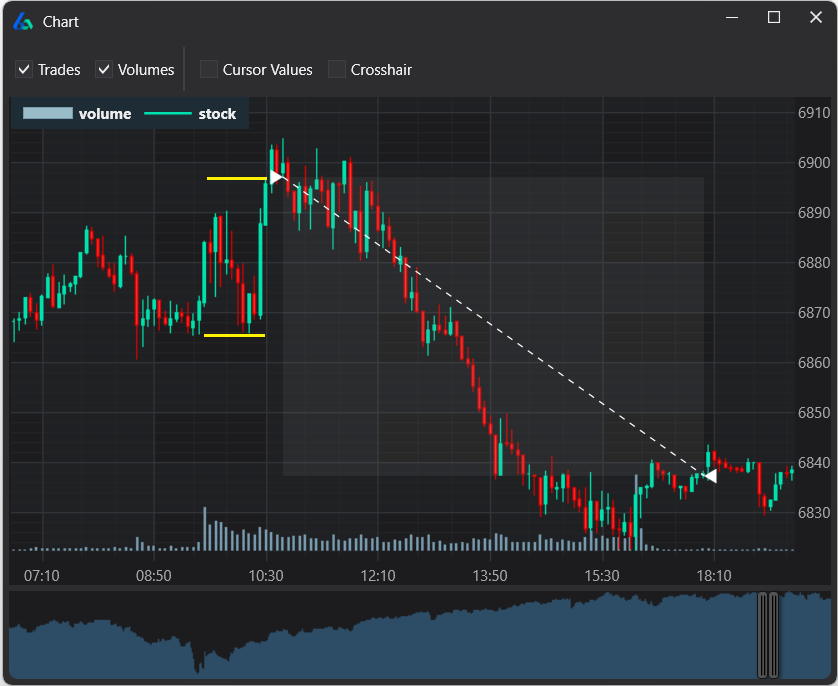
In this scenario, the price initially breaks above the ORH but subsequently reverses and falls back within the opening range. Instead of chasing the initial breakout, this setup involves entering a short position when the price retreats below the ORH, capitalizing on the trapped long positions that are forced to liquidate, thus adding selling pressure.
Setup 3: The Retest and Limit Entry
This setup is often considered one of the highest probability ORB trades. After breaking above the ORH, the price pulls back to retest the ORH, which now acts as a support level. A limit buy order is placed at the ORH, confirming the breakout level’s new support before entering the trade as the price potentially moves higher.
Setup 4: Entry at the Opposite Range Support
When the price is range-bound or remains within the opening range, it may pull back to the ORL, which can then act as a support level. This setup involves a long entry at the ORL, with a stop-loss placed below it. The target is typically set at the ORH or a higher price level.
Video Demonstrations: Building and Applying ORB Strategies
To provide a practical understanding of ORB strategy development and application, several video resources are available. One walkthrough demonstrates the process of building, testing, and validating a 5-minute opening range breakout strategy within a specialized algorithmic trading platform. This includes signal selection, robustness testing, and code export.
Another series of videos explores various applications of opening range trading strategies, including a 30-minute ORB strategy with five different trading approaches. These resources highlight how sophisticated platforms can enhance ORB strategies in a matter of minutes, enabling strategy discovery without extensive coding.
Essential Trade Management: Exits, Limits, and Filters
The success of an ORB strategy hinges critically on robust trade management. While entry signals are vital, the implementation of precise exit rules, trade limits, and filtering mechanisms often determines the strategy’s profitability and survivability in live markets.
Strategic Exit at Opposite Range Levels
A common and effective exit strategy involves using the opposite end of the opening range as a protective stop-loss. For a long trade initiated above the ORH, the ORL or the midpoint of the opening range can serve as an exit point. This approach leverages the natural support and resistance characteristics of the opening range levels. While a midpoint exit offers a more conservative approach, it may lead to premature stops in certain market conditions, underscoring the need for thorough testing of all trade-offs.
Implementing Daily Trade Limits
To mitigate the impact of choppy market conditions and avoid excessive losses from false breakouts, most ORB strategies benefit from limiting the number of trades executed per session. Typically, one or two trades per day is a prudent limit. This prevents the system from entering numerous losing trades on volatile days. Advanced trading platforms allow for the specification of a maximum number of trades per day as part of the core strategy rules.
Mandating End-of-Day Exits
As an intraday strategy, ORB trades should be systematically closed before the market session concludes. Holding ORB positions overnight introduces significant gap risk, which the strategy is not designed to manage. Implementing a forced exit at a specific time before the close, such as 15 minutes prior, ensures the strategy remains purely intraday and avoids overnight exposure.
Utilizing Opening Range Size Filters
The size of the opening range itself can be a critical indicator. An excessively wide range can lead to a poor risk-reward ratio, as the entry point may be too far from the stop-loss. Conversely, a very narrow range may indicate insufficient momentum, increasing the likelihood of false breakouts. A popular method for filtering is to measure the opening range width relative to the Average True Range (ATR), often expressed as OR / ATR. This normalization accounts for current market volatility, allowing traders to focus on sessions where the opening range is sufficiently defined for a profitable trade or stable enough for the system to operate effectively. Different OR / ATR ratios may suggest distinct trading approaches.
Key Variations of the Opening Range Breakout Strategy
The fundamental ORB concept can be adapted and refined through various modifications, each suited to different market conditions and trading styles:
| Variation | Description | Best For |
|---|---|---|
| 5-Minute ORB | Utilizes a very short opening range, leading to faster signals and higher frequency trading; may increase noise. | Scalpers, highly liquid futures markets |
| 30-Minute ORB | Represents a balanced approach, widely studied and often considered a standard window for ORB analysis. | General intraday trading |
| 60-Minute ORB | Employs a wider opening range, resulting in fewer signals but potentially more stable and significant moves. Often referred to as the "Initial Balance" in market profile terminology. | Swing-oriented intraday traders |
| Volatility-Filtered | Trades are only initiated when the Average True Range (ATR) exceeds a predefined threshold. | Avoiding choppy, low-volatility trading days |
| Gap-Based ORB | Trades are considered only when the market exhibits a pre-market gap up or gap down. | Capturing pre-existing directional bias |
| Volume-Confirmed | Requires a significant spike in trading volume to accompany the breakout signal. | Filtering out false breakouts |
Common Mistakes in Opening Range Breakout Trading
Several recurring errors can undermine the effectiveness of ORB strategies:
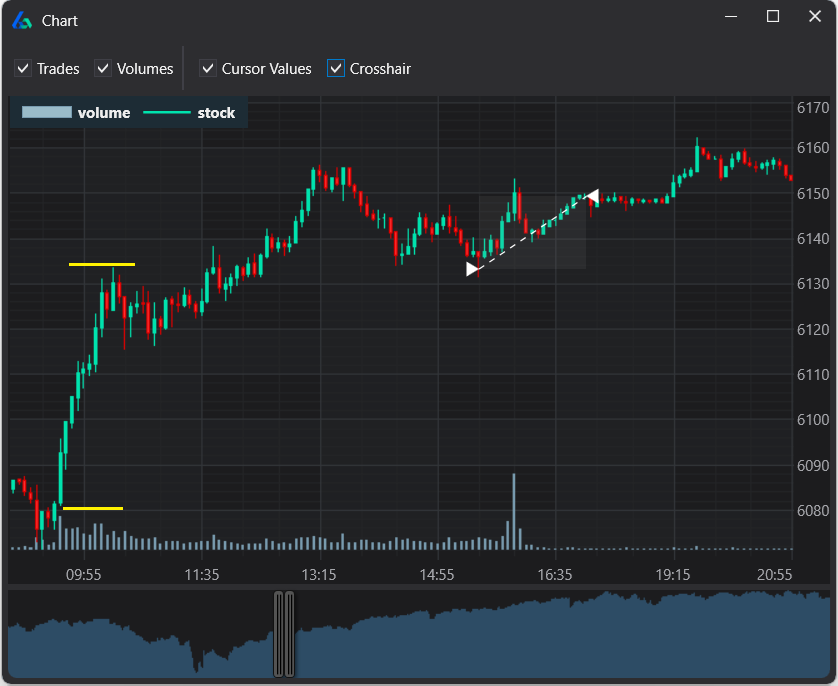
- Overfitting the Time Window: Systematically testing numerous opening range durations (e.g., 5, 7, 10, 15, 20, 30 minutes) can lead to finding a window that appears highly profitable on historical data but fails in live trading. This is known as parameter mining or curve fitting.
- Ignoring Market Regime: ORB strategies perform differently in trending versus mean-reverting markets. A strategy optimized for trending conditions may struggle significantly when the market enters a period of consolidation or chop, and vice versa. Understanding and accounting for market regime is crucial.
- Lack of Trade Limits: Without daily trade limits, the strategy can become prone to chasing noise in choppy sessions by taking every breakout signal. Limiting trades to one or two per day is often a more robust approach.
Validating Opening Range Breakout Strategies for Robustness
To ensure an ORB strategy is not merely a product of historical data anomalies, it must undergo rigorous validation:
- Out-of-Sample Testing: Performance is evaluated on data unseen during the development and optimization phase.
- Walk-Forward Analysis: This technique assesses the strategy’s stability across successive rolling windows of historical data, simulating real-time adaptation.
- Monte Carlo Simulation: This method estimates the range of potential outcomes by introducing randomness to trade parameters, providing insights into the strategy’s resilience.
- Noise Testing: This evaluates how sensitive the strategy’s performance is to minor changes or perturbations in the input data.
- Vs. Random Benchmarking: This comparison ensures that the strategy’s edge significantly outperforms what could be achieved through random entry and exit points.
A comprehensive robustness testing guide outlines these methodologies in detail.
Why Most Opening Range Breakout Strategies Fail
The proliferation of ORB strategies that ultimately fail can be attributed to the inherent risk of curve fitting. The vast search space of potential ORB parameters – including various time windows, stop-loss methodologies, and profit target mechanisms – means that by chance alone, some combinations will appear highly profitable in historical backtests. This statistical artifact, where apparent profitability is due to luck rather than a genuine edge, is a significant challenge.
Understanding the distinction between strategy generation and optimization is paramount. The goal is to discover robust ORB systems that exhibit consistent performance, not to over-optimize parameters to historical noise. A case study on "Lying Backtests" illustrates how two strategies with identical historical performance can yield vastly different results in forward testing, highlighting the dangers of relying solely on backtested results.
How Build Alpha Enhances ORB Development
Platforms like Build Alpha aim to revolutionize ORB strategy development by automating the entire research workflow. Instead of manually testing individual ORB variations, these tools can generate and validate thousands of trading strategies automatically. This process transforms ORB development from a speculative endeavor into a statistically validated system. Each discovered strategy is unique and proprietary to the user, offering a significant advantage in the competitive trading landscape.
The framework typically involves:
- Automated Strategy Generation: Utilizing genetic algorithms or similar techniques to explore a vast search space of potential ORB parameters and logic.
- Integrated Robustness Testing: Automatically performing multiple validation tests to assess the strategy’s reliability.
- Code Export: Generating tradable code for various platforms, enabling seamless deployment.
This approach facilitates the discovery of original and proprietary trading systems, moving beyond the limitations of manually tested or copied strategies.
Advanced Optimization of ORB Strategies
Further enhancements to ORB strategies can be achieved through advanced optimization techniques:
- Combining with Filters: Integrating trend filters (e.g., 200-day Moving Average), volatility thresholds (e.g., ATR levels), or seasonal effects (e.g., day-of-week anomalies) can significantly improve the quality of ORB signals. Automated platforms can discover which filters most effectively complement specific ORB rules.
- Portfolio of ORBs: Constructing a diversified portfolio of uncorrelated ORB variations—employing different time windows, trading across various markets, or utilizing distinct entry types—can mitigate drawdown and enhance risk-adjusted returns.
- Cross-Market ORB Application: The behavior of ORB strategies can differ across asset classes. Testing and applying ORB concepts to futures (e.g., E-mini S&P, Nasdaq), commodities (e.g., Gold, Oil), forex, and individual stocks can reveal unique structural behaviors and improve overall portfolio stability.
Frequently Asked Questions on Opening Range Breakout Trading
What is the best time frame for an Opening Range Breakout?
While the 30-minute opening range is commonly used, the optimal timeframe is market-dependent and requires rigorous validation through robustness testing. Testing numerous windows without validation is a recipe for overfitting.
Does the Opening Range Breakout work in all markets?
No. ORB strategies tend to perform best in volatile, trending markets, particularly in equity index futures and highly liquid stocks. They may underperform in range-bound or low-volatility environments. The use of regime filters can help.
How do you avoid false breakouts in ORB trading?
Employing filters such as volume confirmation, volatility thresholds, and trend direction is crucial. Considering the retest entry setup (Setup 3), which confirms the breakout level as support, can also improve probability. Robust validation, including noise testing and random benchmarking, is essential.
Is the Opening Range Breakout still profitable today?
Profitability is contingent upon rigorous validation, avoiding overfitting, and integrating the strategy within a diversified portfolio. The edge lies not in the ORB concept itself, but in the disciplined testing and validation process.
What is the difference between a clean breakout and a retest entry?
A clean breakout enters immediately upon price breaching the ORH. A retest entry waits for the price to break ORH, pull back to retest it as support, and then enters on confirmation. The retest setup typically offers higher probability but fewer trading signals.
Should I hold ORB trades overnight?
No. ORB is fundamentally an intraday strategy. All positions should be closed before the session ends to avoid overnight gap risk, for which the strategy was not designed. A forced end-of-day exit is recommended.