The End of Regulatory Cover: SEC Commissioner Hester Peirce Issues Critical Warning to DeFi Builders Over Curated Vaults and Active Management

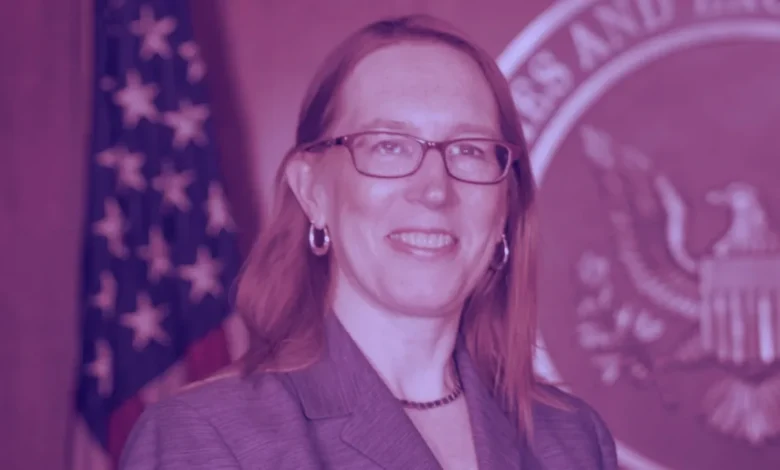
For years, the decentralized finance (DeFi) sector has operated under a prevailing narrative that the United States Securities and Exchange Commission (SEC) was a monolithic entity driven by political hostility toward innovation. When the agency brought enforcement actions against crypto projects, developers and legal counsel had a reliable strategic counter-move: they would point to the dissenting statements of Commissioner Hester Peirce. Known affectionately in the industry as "Crypto Mom," Peirce has spent much of her tenure at the SEC arguing that the agency was overreaching, applying inconsistent legal standards, and stifling the growth of a nascent technology through "regulation by enforcement." However, on July 22, 2024, that defensive shield was significantly weakened. In a statement that sent ripples through the DeFi community, Peirce herself issued a stern warning that many current DeFi structures—specifically curated vaults—likely fall within the crosshairs of existing federal securities laws.
The Shift from Dissenter to Messenger of Caution
Commissioner Peirce’s statement, titled "Headstands and Summervaults," represents a pivotal moment in the regulatory history of blockchain technology. Historically, Peirce’s dissents functioned as a form of "living proof" that reasonable legal minds within the Commission disagreed with the aggressive crackdown led by Chair Gary Gensler. Builders cited her disagreements in court filings and public manifestos, using them as a form of political and legal cover. The implication was clear: if the industry’s most sympathetic regulator says the SEC is overreaching, then the SEC must be wrong.
By issuing this warning, Peirce has effectively removed that cover. This was not a hostile communication from an adversary, but rather a cautionary note from an ally. She argued that the attempt to bypass securities, investment company, or investment adviser laws through complex technical "gymnastics" would ultimately fail. Her choice of language—describing these efforts as "backflips" and "headstands"—suggests that the SEC is looking past the technical jargon of "smart contracts" and "decentralization" to the underlying economic realities of how these products function.
Defining the Regulatory Line: Curators vs. Contracts
The crux of Peirce’s warning centers on the distinction between immutable software and discretionary management. In the view of the SEC, and now apparently in the view of Commissioner Peirce, the legal status of a DeFi protocol depends heavily on where the decision-making power resides.
To understand the regulatory landscape, one must look at the different layers of a typical DeFi vault:
- The Smart Contract Layer: This consists of fixed logic, deployed to a blockchain, which is unchangeable once live. This layer is generally treated as software publishing, which receives significant protection under free speech and intellectual property frameworks.
- The Curator or Parameter Layer: This is where ongoing human decisions are made. It involves setting collateral requirements, adjusting Loan-to-Value (LTV) limits, and selecting which assets are eligible for a vault.
- The Dynamic Yield Routing Layer: This involves the movement of capital between various protocols to "chase" the highest interest rates or yield opportunities.
Peirce’s statement clarifies that when a "curator" or manager continuously adjusts these parameters, they are exercising the kind of managerial judgment that the Howey Test was designed to identify. The Howey Test, a cornerstone of U.S. securities law, determines whether a transaction qualifies as an "investment contract" based on whether there is an investment of money in a common enterprise with a reasonable expectation of profits to be derived from the efforts of others. If a user deposits funds into a vault because they trust a specific curator’s ability to manage risk and optimize yield, that user is relying on the "efforts of others," potentially transforming a software interaction into a regulated financial service.
The Morpho Case Study: A Market in Immediate Reaction
The immediate impact of Peirce’s statement was felt most acutely by Morpho, a decentralized lending protocol. Morpho’s "MetaMorpho" vaults rely on independent curators who actively manage risk parameters for depositors. These curators are often professional firms with public track records, and users choose specific vaults based on the reputation of these managers.
Following the release of Peirce’s statement, the Morpho token experienced a 5% drop in value within a single hour. This was not a broad market decline; it was a targeted reaction to the realization that MetaMorpho’s structure almost perfectly mirrors the "curated vault" model Peirce identified as a regulatory risk. The market quickly priced in the possibility that these curators could be classified as investment advisers, requiring them to register with the SEC and comply with burdensome fiduciary and reporting requirements.
This reaction highlights a fundamental tension in DeFi. Proponents argue that because the curator never takes custody of the funds—only publishing a numerical parameter to a blockchain—they are not "managing" money in the traditional sense. However, the SEC’s perspective is that the influence over the capital is what matters, regardless of whether the manager physically holds the "keys" to the vault.
A Chronology of SEC Oversight in DeFi
To understand the weight of Peirce’s July 22 statement, it is necessary to view it within the broader timeline of SEC actions regarding decentralized protocols:

- September 2021: Reports surface that the SEC is investigating Uniswap Labs, the lead developer behind the world’s largest decentralized exchange.
- February 2023: The SEC reaches a settlement with Kraken over its "staking-as-a-service" program, arguing that providing a managed yield on crypto assets constitutes a securities offering.
- June 2023: Major lawsuits are filed against Binance and Coinbase, with the SEC alleging that several tokens and services offered by the exchanges are unregistered securities.
- July 2024: Commissioner Peirce issues "Headstands and Summervaults," specifically targeting the "curator" model in DeFi vaults.
This timeline shows a narrowing of the SEC’s focus. The agency began with centralized exchanges, moved to staking services, and is now addressing the specific architectural nuances of "decentralized" lending and yield protocols.
Technical and Legal Counter-Arguments from the Industry
The DeFi development community has not remained silent in the face of these warnings. The primary counter-argument is that adjusting a risk parameter is an act of software maintenance or data publication, not financial advice.
Legal experts within the crypto space argue that if the SEC treats the publication of a "collateral factor" as investment advice, it sets a dangerous precedent. Under such a framework, any open-source developer who ships an update to a protocol that affects its performance could theoretically be classified as an investment adviser. This would create an impossible regulatory burden for independent developers and potentially violate First Amendment protections regarding the publication of code.
Furthermore, critics point out that curators in protocols like Morpho do not execute trades on behalf of clients. They simply provide the "rules of the road" for a smart contract. The user retains the ultimate choice of whether to interact with that contract. However, Peirce’s statement suggests that the SEC is increasingly skeptical of this "user choice" defense when the product is marketed as a managed investment vehicle.
The High Stakes of Tokenized Real-World Assets (RWA)
While the current DeFi vault market represents approximately $8 billion in Total Value Locked (TVL), the real stakes of this regulatory battle lie in the future of tokenized Real-World Assets (RWA). Financial giants like BlackRock and Franklin Templeton are already moving toward putting Treasuries, corporate bonds, and money market instruments on-chain.
The Investment Company Act of 1940 and the Investment Advisers Act were designed to ensure that entities managing pools of securities are transparent and act in the best interests of investors. If traditional asset managers could avoid these 80-year-old frameworks simply by wrapping their products in a smart contract and calling their managers "curators," it would represent a massive regulatory loophole.
Commissioner Peirce’s statement serves as a marker. It signals that the SEC intends to ensure the 1940 Act framework travels on-chain alongside the assets. As Wall Street begins to rebuild its infrastructure using Solidity and blockchain technology, the SEC is making it clear that "code is law" does not supersede federal securities law.
Broader Implications and Future Outlook
The fallout from Peirce’s warning is likely to manifest in two primary ways in the near term:
1. The Push for Hyper-Immutability: To avoid being classified as "managed" products, DeFi builders may retreat toward "hyper-immutable" designs. These are protocols where no parameters can be changed after deployment. While this provides maximum legal safety, it sacrifices the ability to optimize yield or respond to market volatility, pushing 100% of the risk management burden back onto the end user.
2. Retail Exclusion by Gateways: Retail-facing platforms like Coinbase, Robinhood, or MetaMask may become increasingly hesitant to offer "curated" DeFi products to non-accredited investors. To avoid the risk of litigation, these gateways may quietly restrict high-yield on-chain products to wealthy, "sophisticated" investors who meet the SEC’s accreditation standards. This would result in a "walled garden" version of DeFi, far removed from the original vision of financial permissionlessness.
In conclusion, Hester Peirce’s "Headstands and Summervaults" statement marks the end of an era where DeFi builders could easily claim that the SEC’s concerns were merely the result of a "hostile" leadership. By articulating the legal risks inherent in active curation, Peirce has provided a roadmap for how the SEC will likely pursue enforcement in the DeFi space for years to come. The industry now faces a choice: adapt to the rigorous standards of traditional financial regulation, or innovate toward a level of true decentralization that leaves no room for human "gymnastics."