The Hidden Cost of Being the Sole Financial Provider: Balancing Venture Capital Strains with Family Obligations


The psychological weight borne by primary household breadwinners often remains invisible until unexpected financial pressures collide with personal milestones. Recent discussions surrounding family logistics, investment forecasting, and household economics have brought the silent anxieties of primary financial providers into sharp focus. For many high-earning individuals and private market investors, the intersection of macroeconomic volatility, private equity capital calls, and family expectations creates a uniquely challenging environment that requires careful navigation and emotional resilience.
Chronology of Events Leading to the Family Excursion
The sequence of events began approximately nine days prior to a scheduled long weekend, when a family discussion about visiting Las Vegas evolved into concrete logistical planning. Unbeknownst to the primary earner, a spouse invested several hours researching flights, accommodations, shows, and overall itineraries to secure optimal pricing and seating availability before peak holiday rates took effect.
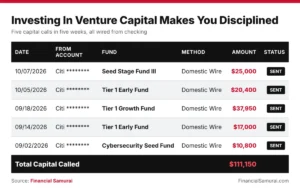
However, this planning phase coincided with an unexpected $25,000 capital call from a private venture capital fund. This liquidity demand followed an earlier miscalculation in projected fund drawdowns—wherein 46% of capital was called within a six-month period, drastically outpacing the initially forecasted 30% annual projection. Consequently, the primary provider hesitated when presented with a finalized vacation budget ranging between $6,000 and $7,000, resulting in a tense "let me get back to you" response rather than immediate enthusiasm.
To mitigate financial exposure, the household implemented several adjustments:
- Shortening the duration of the trip from four nights to three, reducing lodging expenses by $1,000 to $1,500.
- Utilizing a structured liquidity and money-manifesting exercise to confirm short-term obligations over the subsequent three-to-six-month horizon.
- Establishing clear behavioral boundaries to ensure the vacation experience remained untainted by ongoing financial apprehension.
Financial Data and Market Context
Private equity and venture capital investments are characterized by capital calls—binding legal obligations where investors must supply committed funds upon short notice when general partners identify investment opportunities or operational needs. Industry data indicates that macroeconomic tightening and a slowdown in initial public offerings (IPOs) and mergers and acquisitions (M&As) have extended holding periods for private assets, frequently resulting in unpredictable liquidity events for limited partners.

For individual investors managing private portfolios alongside traditional household expenses, the lack of liquidity in venture capital necessitates maintaining robust cash buffers. Financial advisors generally recommend holding a minimum of six months to one year of living expenses in highly liquid instruments, such as high-yield savings accounts or short-term Treasury bills, to insulate daily household consumption from market fluctuations and unexpected capital demands.
Family Dynamics and the Psychology of the Provider
The intersection of private investment stress and domestic life highlights broader socio-economic themes regarding the role of the primary provider. Sociological studies consistently show that individuals bearing the primary responsibility for household financial security often internalize economic stressors to protect family members from anxiety. This stoicism, while well-intentioned, frequently manifests as irritability, hyper-sensitivity, and an inability to fully engage in leisure activities.
During the Las Vegas excursion—which ultimately featured adjoining rooms at the Palazzo, educational museum visits, outdoor excursions to Red Rocks, and multiple theatrical performances averaging $450 to $500 per show—underlying financial anxieties occasionally surfaced. A minor point of friction occurred during a photography session at Red Rocks, where fatigue from a late-night poker session and lingering portfolio concerns contributed to heightened sensitivity regarding composition and camera angles. Subsequent reflection by the provider underscored how unexpressed financial stress can distort minor interpersonal interactions into perceived emotional rejections.
Broader Economic Implications and Expert Analysis
The broader implications of this scenario resonate across contemporary personal finance discourse, particularly for dual-income and single-income households managing complex investment portfolios. Economic analysts emphasize three primary takeaways for modern financial providers:
- Liquidity Management as Emotional Capital: Holding cash is frequently criticized during bull markets due to opportunity cost. However, behavioral economists argue that liquidity serves as psychological insurance, reducing cortisol levels and preventing panic-driven financial decisions.
- The Diminishing Marginal Utility of Optimization: Squeezing every dollar through aggressive budgeting yields diminishing returns when weighed against the cumulative cost to personal relationships and mental health.
- Communication as a Risk Mitigation Strategy: Experts in family dynamics recommend proactive communication between partners regarding financial stressors. Articulating generalized anxiety—such as noting increased irritability due to market conditions—prevents partners from misinterpreting tension as personal rejection.
Conclusion and Outlook
Ultimately, the experience serves as a case study in the reconciliation of aggressive wealth accumulation strategies with family well-being. By recognizing that past financial traumas—such as early career instability—often dictate current over-saving behaviors, individuals can better calibrate their risk tolerance. Transitioning from a mindset of constant optimization to one of intentional presence allows financial providers to meet their fiduciary and familial obligations without sacrificing the relational capital that underpins a stable home life.