The Illusion of Optimization: Why Data Mining and Vibe Quanting Fail in Modern Quantitative Finance


The rapid evolution of retail quantitative finance over the past decade has given rise to two distinct yet philosophically identical methodologies: traditional data mining and its modern successor, artificial intelligence-driven "vibe quanting." As retail participation in global financial markets surges—bolstered by accessible cloud computing, advanced machine learning APIs, and decentralized trading infrastructure—a growing number of independent traders are attempting to bypass fundamental market research. By delegating the heavy lifting of hypothesis generation to algorithms or large language models, these practitioners seek to extract consistent alpha from complex markets without answering the foundational question of modern trading: who is on the other side of the trade, and why are they willing to lose money?
This phenomenon has sparked a broader debate among institutional researchers, retail educators, and market microstructure analysts regarding the sustainability of automated optimization strategies. While the tools available to independent traders have grown exponentially more sophisticated, the underlying economics of market liquidity and edge generation remain stubbornly unchanged.
The Philosophical Convergence of Data Mining and AI-Driven Quanting
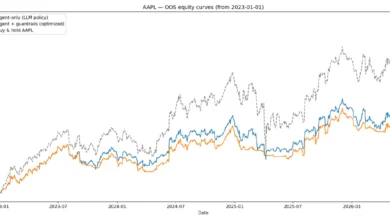
At its core, traditional data mining operates on a brute-force premise: test a sufficiently large number of parameter combinations against historical price action until a rule set yields an acceptable backtested return. In recent years, this practice has evolved into "vibe quanting," wherein traders instruct artificial intelligence models to iterate through vast datasets and generate trading rules based on generalized market sentiment or statistical anomalies.
Industry veterans argue that both approaches represent a fundamental misunderstanding of market mechanics. Rather than uncovering genuine structural inefficiencies, these methods rely on curve-fitting and data snooping. Historically, academic studies in financial econometrics—such as those popularized by Professor Harvey Campbell in research on the multiple testing problem—have demonstrated that searching through thousands of potential trading rules almost always yields false positives. When researchers test enough hypotheses, random noise inevitably masquerades as a statistically significant edge.
The introduction of large language models and automated machine learning pipelines has accelerated this cycle. Traders can now generate, test, and discard hundreds of strategies in the time it once took to conceptualize a single hypothesis. However, financial economists emphasize that accelerating a flawed research methodology does not solve its underlying deficiency. A strategy optimized via machine learning remains susceptible to regime changes if it lacks a coherent economic rationale explaining why the anomaly exists and why institutional participants or structural mandates will allow it to persist.
Anatomy of a True Market Edge
To understand why automated data dredging frequently results in live trading losses, market analysts point to the zero-sum nature of short-term alpha generation. Every dollar of profit secured by a systematic trader represents a corresponding loss for a counterparty. Consequently, sustainable quantitative strategies are built upon identifiable structural flows, regulatory mandates, or behavioral biases rather than historical pattern recognition alone.
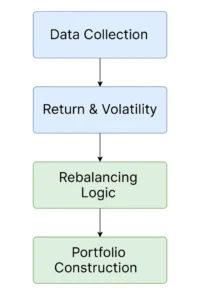
Prominent examples of structural edges include institutional portfolio rebalancing and cryptocurrency funding rate differentials. Institutional wealth managers operating under strict risk parameters and mandate-driven allocation models are frequently required to rebalance portfolios at specific calendar intervals, such as month-end. These massive, price-insensitive flows can temporarily distort asset prices. Independent traders who recognize the mechanics of these rebalancing schedules can absorb the resulting liquidity, capturing a reliable premium.
Similarly, in cryptocurrency derivatives markets, leveraged speculators trading perpetual futures regularly pay funding rates to maintain their leveraged long or short positions. This recurring transfer of capital is not an accidental market glitch; it is the explicit economic cost of leverage. Traders who act as the passive counterparty by collecting these funding fees understand precisely who is paying, why they are paying, and under what conditions that behavior will continue.
By contrast, a strategy derived purely from technical optimization—such as a moving average crossover or a relative strength index threshold that demonstrated a theoretical 23 percent annual return between 2019 and 2025—fails to identify its economic counterparty. Without understanding the behavioral or structural driver of the returns, practitioners cannot determine whether a historical pattern reflects a durable market inefficiency or a temporary statistical artifact.
The Seduction of Rigorous Statistics and the Risk of Zero Compounding
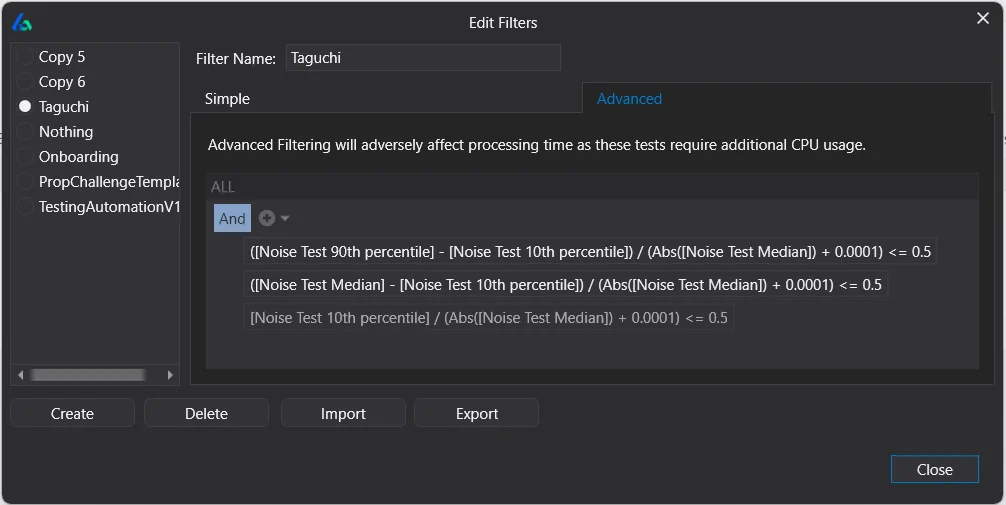
A central challenge within the retail quantitative community is the psychological appeal of complex statistical validation tools. Many traders who recognize the dangers of simple data mining attempt to resolve the issue through advanced statistical hygiene, employing techniques such as walk-forward optimization, combinatorial cross-validation, Monte Carlo simulations, and strict multiple-comparison corrections.
While these methodologies are standard practice in institutional risk management, financial researchers caution that statistical rigor alone cannot bridge the gap between historical correlation and structural causation. A statistical correction can establish that a pattern is unlikely to be the result of random noise based on past data; however, it cannot prove that a structural mechanism will continue to generate returns in the future.
This dynamic creates a divergence in long-term skill development among market participants. Traders who engage in hypothesis-driven research—studying market structure, participant constraints, and order flow dynamics—gradually build a compounding framework of market intuition. Over years of research, these practitioners develop the ability to anticipate how market changes will impact their strategies and can identify dead ends before committing computational resources.
Conversely, practitioners who rely entirely on automated data mining or vibe quanting often experience zero intellectual compounding. A trader who runs one thousand backtests without formulating an economic hypothesis learns no more about market microstructure on the final test than on the first. Because the underlying mechanics remain opaque, any degradation in strategy performance leaves the practitioner with no diagnostic framework other than restarting the optimization cycle.
Educational Shifts and Industry Implications
As retail participation matures, educational platforms and quantitative bootcamps report a distinct bifurcation in student outcomes. Program directors note that roughly one-third of independent learners naturally gravitate toward the rigorous, hypothesis-driven exploration of market puzzles, developing sustainable quantitative intuition. Another third choose to pursue semi-passive risk-premial harvesting, managing systematic allocations with minimal ongoing time commitments. The remaining participants frequently conclude that active quantitative research does not align with their personal interests.
Industry observers suggest that this self-selection process highlights an essential reality of modern finance: active trading success requires an inherent curiosity regarding economic systems that transcends the pursuit of short-term financial returns. As artificial intelligence continues to democratize data analysis and code generation, the raw ability to process historical market data is rapidly becoming a commodity. Consequently, sustainable competitive advantage in quantitative trading is increasingly concentrated among those who prioritize foundational market understanding over algorithmic optimization.