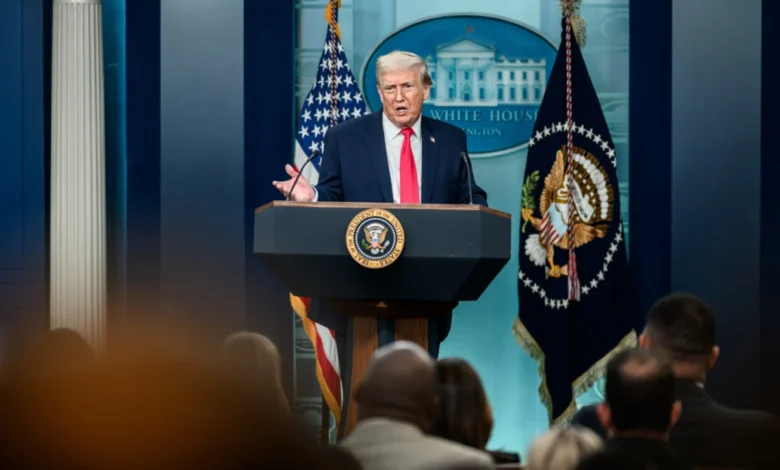
The White House and a bipartisan coalition of senators have reached a pivotal agreement regarding the enforcement of ethics provisions within the CLARITY Act, designating the Department of Justice as the sole arbiter for policing the cryptocurrency holdings of the President of the United States. This development follows months of legislative deadlock over how to handle potential conflicts of interest arising from high-level federal officials’ involvement in the digital asset market. The decision specifically targets the financial disclosures and crypto-linked activities of Donald Trump, whose portfolio has grown significantly in value and complexity. Under the new agreement, the Department of Justice (DOJ)—currently led by Acting Attorney General Todd Blanche—will hold exclusive authority to investigate and prosecute ethics violations related to the President’s crypto assets. This move has sparked intense debate, as Blanche previously served as Trump’s personal defense attorney before his appointment to the administration, raising questions among critics about the impartiality of future enforcement.
The breakthrough was first reported by Fox Business, citing industry sources who indicated that the White House had finalized an ethics package for the bill. This was subsequently corroborated by Senator Kevin Cramer and other legislative figures. The compromise is significant because it applies the same ethics restrictions to the President as those applied to other federal officials, but it simultaneously removes a controversial "state mechanism." This mechanism would have allowed state attorneys general to sue the DOJ if the federal government failed to act on credible allegations of corruption or conflict of interest. By stripping this provision, the bill ensures that all oversight remains centralized within the federal executive branch, effectively insulating the presidency from state-level legal challenges regarding digital asset holdings.
The Conflict of Interest Debate and the Role of Todd Blanche
The central controversy surrounding the CLARITY Act’s ethics package involves the intersection of private wealth and public oversight. According to financial disclosures filed on July 1, 2025, Donald Trump reported crypto-linked income totaling approximately $1.4 billion. The majority of this wealth is tied to World Liberty Financial, a decentralized finance (DeFi) project, as well as various holdings in "meme coins" and other digital tokens. Critics of the current agreement point to a hypothetical scenario in which a whistleblower alleges that a new token utility or protocol change was designed specifically to inflate the President’s equity stake. Under the DOJ-only model, such a whistleblower would have to rely on a Department of Justice led by a political appointee with deep personal and professional ties to the individual being investigated.
Todd Blanche’s transition from Trump’s lead defense attorney to the Acting Attorney General has become a focal point for Congressional Democrats. Opponents of the current bill text argue that a politically aligned DOJ could allow complaints to languish or decline to issue subpoenas, effectively granting the executive branch a "pocket veto" over ethics enforcement. The original proposal supported by many Democrats would have empowered state attorneys general in jurisdictions like New York or California to intervene. Under that model, if the federal DOJ remained stagnant, state-level officials could have utilized consumer-protection or conflict-of-interest statutes to initiate independent investigations. The removal of this "safety valve" in the June compromise represents a major shift in the bill’s power dynamics.
Chronology of the CLARITY Act Negotiations
The path to the current agreement has been marked by shifting alliances and narrow misses. In June 2024, a bipartisan group including Senators Kirsten Gillibrand, Ruben Gallego, Bernie Moreno, and Cynthia Lummis reached a tentative deal that included the state-level enforcement mechanism. However, the White House withdrew its support during a closed-door session, citing concerns that Democratic attorneys general would use the power for "targeted litigation" rather than legitimate ethics oversight. This withdrawal led to several weeks of uncertainty before a new round of negotiations began in July.
On July 16, 2024, Donald Trump met personally with Senators Moreno and Lummis, along with White House crypto adviser Patrick Witt, to discuss the final language of the bill. Reports indicate that Chief of Staff Susie Wiles and Witt framed the resulting DOJ-centric language as a genuine concession from the executive branch, arguing that the President was voluntarily submitting to federal ethics laws. The urgency of the matter was underscored by the news that Witt postponed his mandatory Georgia Army National Guard training specifically to ensure the bill’s progression through the Senate. This level of prioritization suggests that the administration views the CLARITY Act as a cornerstone of its 2025 legislative agenda.
Market Reactions and Supporting Data
While the political fight over ethics language continues, the broader cryptocurrency market has responded positively to the prospect of a unified federal framework. Following the news of the White House signing off on the ethics package, Bitcoin surged to a one-month high of $66,500, representing a 1.9% increase within 24 hours. This price action was supported by significant institutional interest, with spot Bitcoin ETFs recording their fifth consecutive day of net inflows. Investors appear to be prioritizing the "clarity" promised by the bill over the specific details of its enforcement mechanisms.

Market analysts and prediction platforms have also weighed in on the bill’s chances of passage. On Polymarket, the odds of the CLARITY Act being signed into law in its current form fluctuate based on Senate floor movements. As of late July, a "Bipartisan Compromise" (where Republicans allow limited state intervention to gain Democratic votes) sits at 43%, while "Gridlock to Recess" (where Democrats block the bill over transparency concerns) is at 35%. A "Lame-duck Postponement," which would shelve the bill until after the 2026 midterms, is currently priced at 22%. These figures reflect a market that is cautiously optimistic but remains wary of the razor-thin margins in the Senate.
The Legislative Structure of the CLARITY Act
Beyond the ethics controversy, the CLARITY Act aims to resolve years of jurisdictional disputes between the Commodity Futures Trading Commission (CFTC) and the Securities and Exchange Commission (SEC). The bill is a piece of market-structure legislation that seeks to provide a definitive classification for digital assets. Key provisions include:
- CFTC Jurisdiction: The act grants the CFTC primary oversight of "digital commodities," which would likely include Bitcoin and Ether. This is a major victory for the crypto industry, which generally views the CFTC as a more favorable regulator than the SEC.
- SEC Jurisdiction: The SEC would maintain a narrower authority over "investment contracts," focusing on tokens that function like traditional securities or are marketed as investment vehicles with an expectation of profit from a common enterprise.
- Banking Protections: The bill includes language supported by the American Bankers Association (ABA) regarding bankruptcy protections. These provisions would allow traditional financial institutions to custody digital assets without the prohibitive capital requirements currently imposed by the SEC’s Staff Accounting Bulletin (SAB) 121.
- Yield and Stablecoin Regulations: The bill attempts to set standards for stablecoins and yield-bearing products, though this remains a point of contention for banks who fear crypto platforms will offer "bank-like" services without the same anti-money laundering (AML) and "Know Your Customer" (KYC) safeguards.
Official Responses and Political Opposition
The reaction from Capitol Hill has been sharply divided. Kristin Smith, president of the Solana Policy Institute, has emerged as a vocal advocate for the bill, urging the Senate to move to a floor vote immediately. Smith’s position reflects the prevailing sentiment in the crypto lobby: that any federal framework is better than the current "regulation by enforcement" model. According to Smith, the industry requires the certainty of a statute to foster long-term investment, even if the ethics language is imperfect.
However, a group of influential Senate Democrats remains unmoved. Senators Chris Murphy, Chris Van Hollen, and Jeff Merkley held a joint press conference to denounce the merged text of the bill. Senator Murphy was particularly critical, describing the arrangement as a "legalization of a corruption scheme." He argued that by centralizing power in the hands of a Trump-appointed DOJ, the bill essentially creates a "get out of jail free card" for executive-level financial misconduct in the crypto space.
The political math in the Senate remains the greatest obstacle to the bill’s passage. With Republicans holding 53 seats (effectively 52 due to the hospitalization of Mitch McConnell), Majority Leader John Thune needs to secure at least eight Democratic votes to overcome a filibuster. While moderate Democrats facing difficult 2026 midterm elections are under immense pressure from crypto-funded Super PACs to support the bill, the vocal opposition from the party’s progressive wing makes a 60-vote threshold difficult to reach before the August recess.
Broader Impact and Future Implications
The resolution of the CLARITY Act will have far-reaching consequences for the future of digital asset regulation in the United States. If the bill passes with the DOJ-only enforcement model, it will establish a precedent for executive control over emerging financial technologies. It will also signal a shift away from the "dual-enforcement" model where state and federal authorities share oversight responsibilities.
For the cryptocurrency industry, the bill represents the most significant legislative milestone since the inception of Bitcoin. By providing a clear division between the CFTC and SEC, the act could unlock billions of dollars in institutional capital that has remained on the sidelines due to regulatory ambiguity. However, the controversy surrounding Todd Blanche and the President’s personal finances ensures that the bill will remain a lightning rod for political debate.
As the Senate moves toward a potential vote, the focus remains on whether a handful of moderate Democrats will break ranks to support the Republican-led initiative. Research groups such as TD Cowen’s Washington Research Group have warned that if the bill does not pass before the upcoming recess, it risks being pushed into 2027, leaving the industry in a state of continued uncertainty. For now, the crypto markets remain buoyed by the hope of a resolution, even as the ethical and legal questions surrounding the "Blanche DOJ" continue to intensify. Regardless of the outcome, the CLARITY Act has permanently altered the intersection of digital finance and executive accountability in Washington.