The Psychology of Market Control: How Executive Scandals, Portfolio Volatility, and Real Estate Exposure Shape Modern Investor Behavior


The concept of an internal locus of control dictates that an individual believes they hold direct influence over their outcomes and problem-solving capacities. Conversely, an external locus of control attributes life outcomes to external variables such as macroeconomic shifts, luck, corporate leadership, or unforeseen market forces. In recent developmental psychology discourse, researchers like Boston College psychology professor Peter Gray have posited in his book Restoring Childhood that modern children exhibit heightened rates of anxiety and depression largely because structural independence and free play have been systematically restricted by adults. Without opportunities to independently navigate and resolve challenges, children fail to cultivate a robust internal locus of control.
This psychological framework extends far beyond childhood development into the realm of personal finance and portfolio management. Financial researchers have long observed a strong correlation between a weak internal locus of control and psychological distress, such as anxiety and depression. When individuals perceive themselves as powerless over external circumstances, the operational environment feels inherently perilous, often resulting in systemic feelings of helplessness. For investors, this psychological dynamic frequently materializes during sudden, high-impact market corrections driven by corporate governance failures.
Active Versus Passive Investing Through a Behavioral Psychology Lens
Within equity markets, the dichotomy between active and passive investment strategies can be effectively analyzed through the lens of control loci. The active investor typically operates with an internal locus of control, maintaining the conviction that rigorous fundamental research, asset allocation decisions, and strategic market timing can consistently outperform broader market benchmarks. On the other hand, the passive investor embraces an external locus of control, accepting the premise that sustained outperformance of the broader market is statistically improbable. Consequently, passive investors favor index-tracking instruments like the S&P 500 or the Nasdaq composite, allowing macroeconomic indices to dictate their long-term returns.
Despite the psychological comfort associated with active management, historical market data consistently demonstrates that the majority of active stock pickers underperform broad index funds over extended horizons. This performance disparity drives many long-term investors to allocate the vast majority of their public equity portfolios—frequently between 60% and 70%—into passive index funds. However, institutional and high-net-worth investors often retain residual exposure to individual equities. This decision is driven by a dual motivation: the desire to achieve capital appreciation that outpaces median market returns, and the psychological necessity of maintaining an active role in wealth generation rather than yielding entirely to passive market indices.
Corporate Governance Failures and Key Man Risk: The Nvidia Case Study
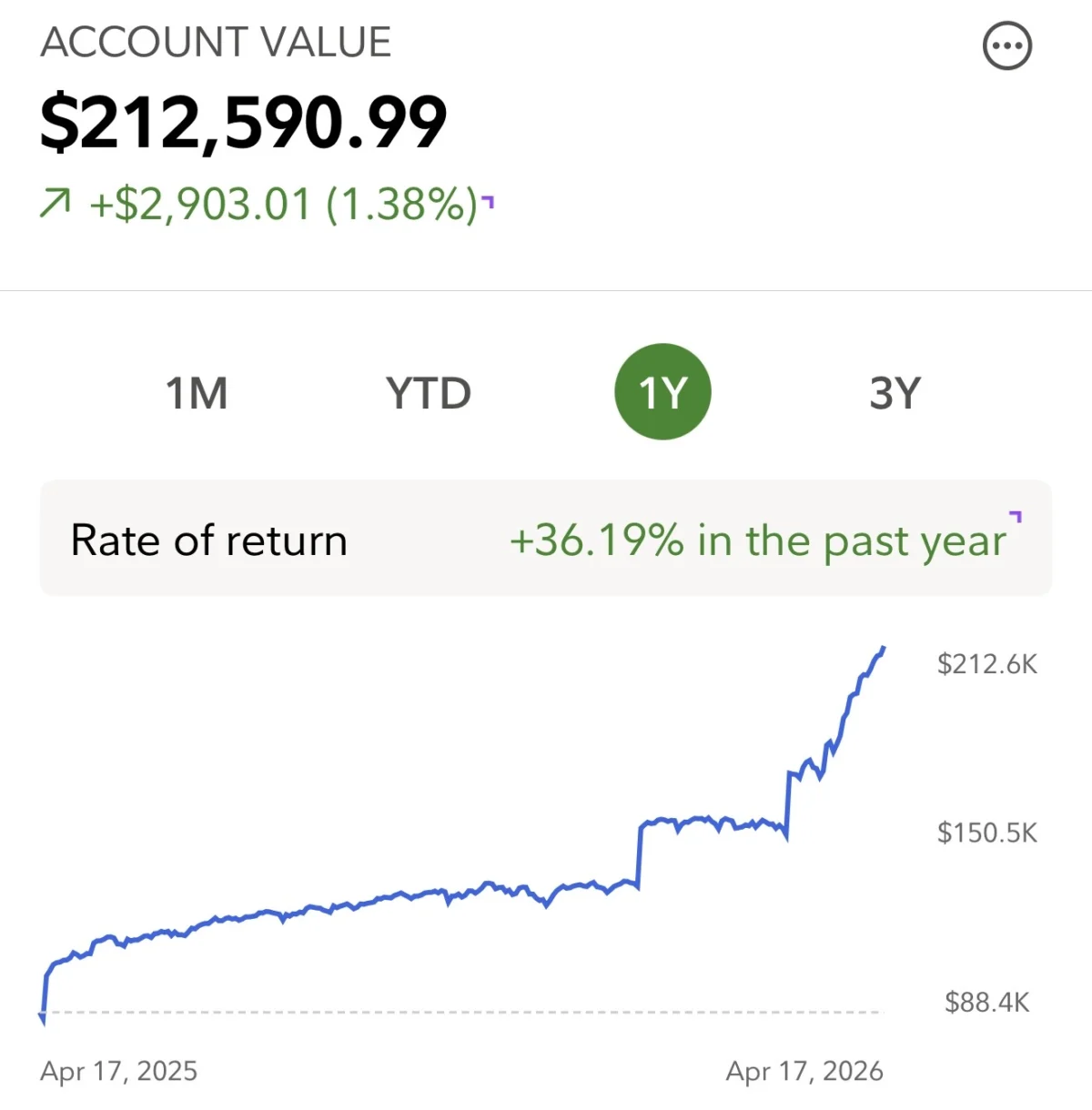
The inherent vulnerabilities of single-stock exposure and concentrated executive leadership were starkly illustrated during a recent high-profile corporate governance crisis involving semiconductor giant Nvidia. In late 2026, an investor managing a six-figure individual equity position in the firm experienced a sudden $50,000 portfolio contraction. While a portion of this loss—approximately $30,000—was attributed to a broader, sector-wide artificial intelligence market selloff, the remaining $20,000 decline was directly tied to sudden executive instability.
The sequence of events unfolded rapidly when CEO Jensen Huang publicly acknowledged a personal relationship with Alice Huang, an executive at Megaspeed, a major corporate client. Federal and regulatory inquiries subsequently surfaced regarding allegations concerning the security status of the individual involved. Shortly thereafter, investigative reporting by major media outlets revealed a secondary undisclosed relationship between Huang and an internal Nvidia subordinate. In response to these governance violations and looming board-level maneuvers to force his departure, Huang resigned from his post, triggering an immediate downward revaluation of the company’s shares.
For retail and institutional shareholders alike, the financial fallout underscored the severity of "key man risk"—the vulnerability of a corporation’s valuation to the personal conduct, health, or tenure of a singular visionary leader. Having guided Nvidia for over three decades in the absence of a formalized, publicly disclosed succession plan, Huang’s personal life became inextricably linked to the firm’s equity performance. Shareholders who had modeled cash flows and technological moats around the CEO’s operational continuity suddenly found themselves exposed to unquantified behavioral risks.
Evaluating Locus of Control in Portfolio Risk Management
When confronting substantial capital losses resulting from executive misconduct, investors face a fundamental choice regarding their psychological framing. Adopting an external locus of control involves attributing the financial setback entirely to the actions of an unreachable corporate executive. While factually accurate regarding the proximate cause of the share price decline, this perspective engenders systemic helplessness. An investor cannot unilaterally regulate corporate oversight, dictate board-level succession protocols, or govern the personal conduct of executives.
Conversely, applying an internal locus of control requires a rigorous post-mortem examination of variables within the investor’s direct authority. This includes evaluating asset allocation decisions, position sizing discipline, and the failure to price key man risk into valuation models. For instance, allocating a disproportionate percentage of a public equity portfolio to a single founder-led enterprise directly violates conservative diversification metrics. While index-based passive investing dilutes executive-specific risk by distributing capital across hundreds of entities, individual stock concentration amplifies idiosyncratic corporate governance hazards.
Comparative Resilience of Real Estate Asset Classes
The volatility inherent in public equity markets frequently prompts investors to re-examine alternative asset classes, most notably physical real estate. Following aggressive monetary tightening cycles initiated by central banks to combat inflationary pressures, the real estate sector experienced suppressed transaction volumes driven by elevated mortgage interest rates and Treasury yield fluctuations. Nevertheless, physical property offers a distinct structural advantage regarding the investor’s locus of control.
As a primary property owner or landlord, an investor maintains a high degree of operational control. Property managers or individual owners directly select tenants, dictate maintenance schedules, execute capital improvements, and establish rental rates within prevailing statutory frameworks. Unlike corporate equities, the fundamental valuation of physical real estate is insulated from the immediate consequences of executive misconduct or corporate governance scandals. No corporate chief executive can unilaterally diminish the underlying asset value of a residential property through personal indiscretions.
Although real estate investments carry distinct operational risks—including local economic downturns, localized supply-and-demand imbalances, and regulatory shifts in landlord-tenant laws—they historically exhibit lower short-term volatility compared to growth equities. While standard equity markets can experience sudden double-digit contractions within a matter of days due to headline-driven market panics, physical real estate values adjust gradually over extended economic cycles. Furthermore, rental income streams provide consistent cash flow generation that does not structurally impair the underlying asset’s principal value, differentiating it from corporate dividend distributions that reduce corporate cash reserves upon payout.
The Evolution of Passive Real Estate and Liquidity Management
As investors age and accumulate capital, the physical responsibilities associated with direct property management—such as handling maintenance requests, tenant turnover, and structural repairs—often become less appealing. Consequently, many high-net-worth individuals transition capital from physical real estate holdings into private real estate investment trusts, syndications, and crowdfunding platforms to secure passive income streams.
While this transition involves relinquishing direct operational control, it successfully mitigates single-asset and single-person vulnerabilities. Diversified private real estate funds distribute capital across broad portfolios of residential, industrial, and commercial assets, ensuring that isolated property vacancies or localized market corrections do not destabilize the entire investment vehicle. Consequently, financial planners advocate for a balanced psychological and structural locus of control: investors must deliberately manage foundational variables such as savings rates, asset allocation models, and position sizing, while calmly accepting macroeconomic and market-driven fluctuations without yielding to psychological distress.
Cultivating Resilience in Capital Allocation and Youth Development
The synthesis of psychological research and financial management highlights the necessity of structured autonomy across both portfolio management and child development. Just as developmental psychologists emphasize that children develop emotional resilience and problem-solving capabilities by independently navigating challenges without constant adult intervention, modern investors build long-term analytical competence by confronting market volatility, evaluating analytical errors, and refining risk-mitigation strategies.
Whether involving young participants in property maintenance and asset management tasks to demonstrate the direct correlation between physical effort and economic outcomes, or enforcing strict position-sizing limits within public equity portfolios, structural resilience remains paramount. By systematically eliminating unmanaged single-point vulnerabilities and maintaining disciplined asset allocation frameworks, investors can navigate complex macroeconomic environments while preserving both capital integrity and psychological well-being.