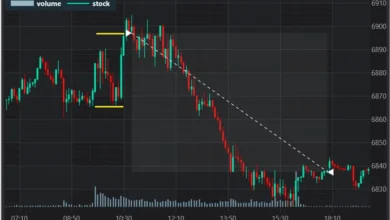
The advent of artificial intelligence has dramatically lowered the barriers to entry for developing quantitative trading strategies, a development that, while seemingly empowering, is poised to inundate the market with ineffective systems and lead to widespread financial losses for aspiring traders. This seismic shift, driven by the accessibility of AI tools like Large Language Models (LLMs), enables individuals to generate, test, and optimize trading algorithms with unprecedented speed and ease. However, this democratization of strategy creation is not fostering genuine discovery but rather amplifying a well-documented phenomenon: the proliferation of false positives and illusory edges derived from extensive data mining.
The Illusion of Progress: AI and the Democratization of Strategy Creation
For decades, the pursuit of quantitative trading success was the exclusive domain of individuals and institutions possessing a formidable combination of skills: advanced programming expertise, access to vast datasets, robust technological infrastructure, and deep theoretical knowledge. Acquiring these prerequisites typically involved years of dedicated learning and significant investment. Today, however, a user with a basic understanding of market mechanics and a subscription to an AI assistant can, within minutes, generate code for a trading strategy, backtest it against historical data, and fine-tune its parameters. This accelerated workflow, while undeniably a technological leap, carries a critical caveat: the ease of experimentation does not equate to an increase in genuine, sustainable trading advantages.
This phenomenon mirrors historical parallels observed in academic research, the evolution of factor investing, and competitive machine learning environments. In each of these fields, periods of reduced experimentation costs have consistently led to an explosion of results that appear statistically significant but lack true predictive power. The unique aspect of the current AI-driven surge is its accessibility, extending this potential for "research" to virtually anyone with a laptop and an internet connection.
The Backtest Cycle of Doom: Amplified by AI
The journey of an aspiring quantitative trader has long been characterized by what can be termed the "Backtest Cycle of Doom." This iterative process typically involves:
- Hypothesizing an Edge: Based on an initial idea, often a superficial observation or a common market adage.
- Coding the Strategy: Translating the hypothesis into programmable rules.
- Backtesting: Running the coded strategy against historical market data to assess its performance.
- Parameter Optimization: Adjusting variables within the strategy to improve its historical results.
- Iterative Refinement: Repeating steps 2-4, making incremental changes based on the backtest outcomes.
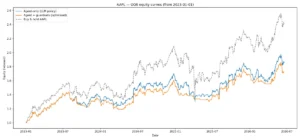
This cycle can create a powerful illusion of progress, leading individuals to believe they are converging on a robust trading strategy. However, the underlying reality is often one of overfitting noise. Each adjustment, each parameter tweak, constitutes an implicit hypothesis test. When conducted thousands or millions of times, as AI now facilitates, statistical principles dictate that some combinations will inevitably produce spectacular performance, not because they possess predictive power, but simply due to the laws of probability. The sheer volume of tested parameter combinations guarantees that some will align perfectly with historical noise, creating a compelling but ultimately misleading equity curve. AI acts as an accelerant, transforming a manual process of perhaps twenty suboptimal tests into a digital deluge of twenty thousand or more, all leading to the discovery of seemingly fantastic, yet fragile, trading systems.
The Diminishing Value of a Beautiful Backtest
In the current AI-driven landscape, a visually appealing backtest has become a significantly less reliable indicator of future success. The probability that some parameter combination, given enough permutations, will generate an impressive historical equity curve approaches certainty. This is a direct manifestation of the multiple testing problem, a concept well-established in statistical science for decades. When thousands of statistical tests are conducted, each at a conventional significance level (e.g., 5%), it is statistically predictable that a substantial number will yield false positives. AI’s capability to execute these tests effortlessly, often without the user fully comprehending the scope of their experimentation, transforms a once-difficult and informative process into an easily replicable, but ultimately uninformative, exercise. The once-arduous task of generating a promising backtest is now trivial, rendering its outcome far less meaningful.
The Core of Real Edge: A Theory of Why
The critical question that must precede any backtesting endeavor is: Why would the market pay me to execute this specific trade? This fundamental inquiry, often overlooked by individuals with technical backgrounds, particularly engineers accustomed to solving problems within well-defined physical laws, is the bedrock of sustainable trading. The engineer’s inclination is to dive directly into data, code, and backtests, assuming a direct correlation between technical execution and market reward. However, this approach is fundamentally backward.
To truly understand why a market might offer an exploitable inefficiency, one must first develop a "theory of edge." This requires delving into the underlying economic drivers, market structure, behavioral biases of participants, and institutional constraints that might create persistent, predictable patterns. These theories of edge often stem from structural factors, such as:
- Behavioral Biases: Exploiting predictable irrationalities in market participants, such as herding behavior, overconfidence, or loss aversion.
- Institutional Constraints: Capitalizing on limitations faced by large market players, such as regulatory hurdles, mandated selling, or slow capital reallocation processes.
- Information Asymmetry: Leveraging temporary informational advantages, though this is increasingly difficult in modern, efficient markets.
- Market Microstructure: Understanding the mechanics of trading, order flow, and liquidity provision to identify subtle, repeatable inefficiencies.
Consider the phenomenon of momentum. It is a well-documented factor that appears consistently across various asset classes in historical data. However, if one discovers momentum solely through data mining without understanding the underlying economic reasons for its existence – such as career risk aversion among fund managers leading to slow reaction to new information, or persistent underreaction to news – they are likely to overfit parameters to past data. At best, this is a wasted effort; at worst, it can destroy a genuinely viable edge by over-optimizing it to historical noise, rendering it useless in live trading.
The AI Blind Spot: A Lack of Economic Intuition
Current AI models, including advanced LLMs, possess a sophisticated understanding of how trading strategies are described, how backtests are structured, and the common indicators employed by traders. They can generate code that mimics professional standards and articulate strategies with an air of unwarranted confidence. However, they fundamentally lack the capacity to discern which ideas possess genuine economic drivers and which are mere statistical artifacts. They cannot differentiate between a statistically significant pattern that is purely a product of random chance and a structural opportunity that is likely to persist.
This limitation arises from the nature of the data upon which these models are trained. The internet is a vast repository of information, and unfortunately, a significant portion of it concerning trading strategies is filled with misinformation, flawed logic, and the echoes of past failures. When an AI is prompted to generate trading strategies, it is, in essence, synthesizing the collective wisdom (or lack thereof) of the internet, presenting it in a polished format. This means that without human oversight and critical judgment, AI-generated strategies often represent the average of the internet’s least effective ideas, cloaked in the guise of sophisticated technical execution. While AI is an invaluable tool for accelerating the technical aspects of strategy development, the technical execution itself has never been the primary challenge in successful trading.
The Scarce Commodity: Human Judgment in the AI Era
The landscape of quantitative trading is undergoing a profound transformation, and the most valuable resource is shifting. In the age of AI, the previously scarce commodities of coding ability, data access, and computational power are becoming increasingly abundant. While the computational demands of AI can indeed be substantial, leading to rising costs for intensive users, these are becoming manageable barriers for many.
What remains genuinely scarce, and will likely become even more so, is human judgment. This encompasses several critical qualities:
- Skepticism: The ability to critically evaluate generated strategies and backtests, questioning their validity and underlying assumptions.
- Research Discipline: Adhering to rigorous scientific principles, avoiding the temptation of data snooping and overfitting.
- Statistical Thinking: A nuanced understanding of uncertainty, probability, and the limitations of historical data.
- Market Intuition: A deep, ingrained understanding of how markets function, their participants, and the economic forces that drive them.
The prediction is that AI will revolutionize quantitative trading, but not by magically creating legions of profitable traders. Instead, it will empower millions to produce aesthetically pleasing backtests, the vast majority of which will be illusory. The traders who will continue to achieve success will be those who retain the capacity to look beyond the immediate allure of a beautiful equity curve. They will be the ones who begin their journey not with a backtest, but with that fundamental, yet still profoundly difficult, question: Why would the market pay me to do this trade? This foundational inquiry remains the genesis of every genuine trading edge, a testament to the enduring importance of human insight and critical thinking in the pursuit of market profitability. The ability to formulate and rigorously test a sound economic hypothesis, rather than simply generating statistically optimized patterns, will be the defining characteristic of successful traders in the AI era.