HaasOnline Integrates Model Context Protocol Server into Enterprise Licenses, Ushering in New Era of AI-Powered Trading Automation

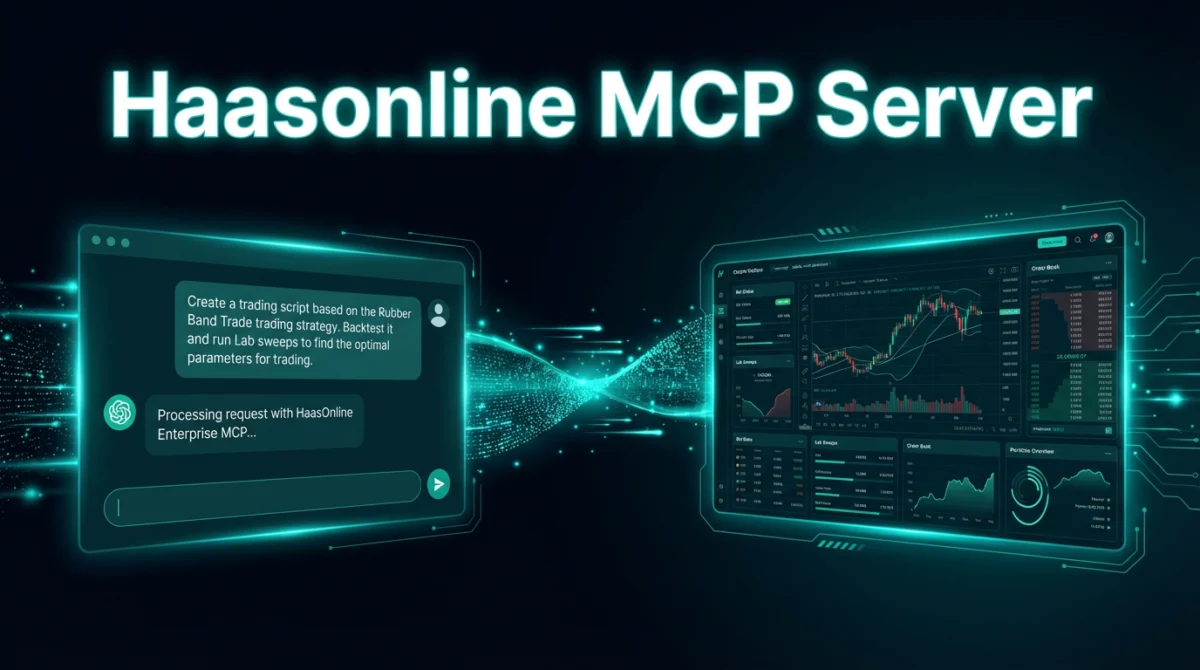
HaasOnline, a leading provider of automated cryptocurrency trading software, has announced a significant enhancement to its Enterprise offering: the seamless integration of a built-in Model Context Protocol (MCP) server. This development allows users to directly connect advanced AI assistants, such as Claude and Cursor, to their HaasOnline TradeServer instances in real-time. The move represents a pivotal step towards enabling sophisticated AI co-pilots for professional traders, moving beyond mere idea generation to active, context-aware trading execution.
The MCP, an open standard developed to facilitate structured interaction between AI assistants and external systems, acts as a universal API layer. Prior to this integration, AI interactions with trading platforms often involved cumbersome data copy-pasting or required AI models to operate on generalized, hypothetical data. MCP fundamentally changes this paradigm by allowing AI assistants to query live information directly from a TradeServer and, crucially, to initiate actions within the trading environment with full awareness of the current market and operational context. This integration promises to elevate the role of AI from an analytical tool to an active participant in the trading workflow.
Understanding the Model Context Protocol (MCP)
The Model Context Protocol (MCP) is an open specification designed to standardize how Artificial Intelligence (AI) agents interact with and influence external software and data. Established with the vision of bridging the gap between the expansive capabilities of AI models and the complex, dynamic environments of real-world applications, MCP aims to overcome the limitations of traditional API integrations and manual data handling.
At its core, MCP provides a structured framework that defines how an AI assistant can request information from, and send commands to, an external system. This framework ensures that the data exchanged is not only accurate and up-to-date but also contextualized within the operational state of the system it is interacting with. For instance, an AI assistant tasked with managing a trading portfolio could, through MCP, access real-time market data, current bot configurations, open orders, and account balances directly from the trading platform. This eliminates the need for the AI to rely on outdated information or for a human operator to manually extract and feed data.
The development of MCP addresses several key challenges in AI integration:
- Data Staleness: AI models often operate on datasets that are static or updated at infrequent intervals. MCP ensures that AI has access to live, streaming data, enabling more informed and timely decision-making.
- Contextual Understanding: Without direct access to the operational environment, AI can struggle to grasp the full context of a request. MCP allows AI to understand the current state of a system, such as active trading strategies, risk parameters, and available capital, leading to more relevant and accurate responses.
- Actionable Insights: MCP moves beyond passive analysis by enabling AI to not only understand but also act within the system. This means an AI could, for example, adjust trading parameters, place new orders, or pause specific bots based on real-time market conditions and pre-defined rules, all facilitated by the MCP protocol.
- Interoperability: As an open standard, MCP is designed to be adopted by a wide range of AI developers and software providers. This fosters an ecosystem where various AI assistants can seamlessly connect to any MCP-compliant application, creating a more versatile and integrated technological landscape.
The specification for MCP, as outlined on its official website (modelcontextprotocol.io), details the communication protocols, data structures, and authentication mechanisms necessary for secure and efficient AI-system interaction. The emphasis on a structured approach ensures that even complex queries and commands are processed reliably, reducing the likelihood of errors and misunderstandings. This standardization is crucial for building trust and reliability in AI-driven automation, particularly in high-stakes environments like financial trading.
HaasOnline’s MCP Server: Bridging AI and TradeServer
The newly integrated HaasOnline MCP server acts as a dedicated gateway, exposing the TradeServer’s capabilities to any MCP-compatible AI assistant. This direct connection unlocks a suite of functionalities for AI agents, transforming them into intelligent co-pilots for trading operations. Once an AI assistant is connected via the MCP server, it gains the ability to:
- Query Live Data: Access real-time market data, including price feeds, order books, and historical data, directly from the TradeServer. This allows AI to base its analysis and decisions on the most current information available.
- Monitor Bot Performance: Obtain detailed insights into the operational status of all active trading bots, including their current configurations, performance metrics (profit/loss, win rates), and any active trades.
- Analyze Strategy Parameters: Understand the specific settings and logic of deployed HaasScript strategies, enabling AI to assess their effectiveness in the current market environment.
- Retrieve Account Information: Access crucial details about the user’s exchange accounts, such as available balances, margin levels, and open positions across different trading pairs and exchanges.
- Execute Commands: Initiate actions within the TradeServer, such as placing new orders (market, limit, stop-limit), modifying existing orders, pausing or resuming bots, and adjusting strategy parameters.
This level of direct, real-time interaction elevates the AI assistant from a mere informational tool to a fully integrated operational partner. Instead of asking an AI to "analyze the RSI for Bitcoin" and then manually acting on its suggestions, a trader can instruct the AI to "adjust the RSI bot’s take-profit level for Bitcoin to 2% if the RSI crosses above 70," and the AI, empowered by the MCP server, can directly implement this change within the TradeServer. This capability significantly reduces the cognitive load on traders, allowing them to manage more complex portfolios and execute strategies with greater precision and efficiency.
A Timeline of Enhanced AI Integration in Trading
The journey towards sophisticated AI integration in trading platforms has been a gradual evolution. While algorithmic trading has existed for decades, the advent of powerful Large Language Models (LLMs) and accessible AI frameworks has accelerated this progress significantly in recent years.
- Early 2010s: Rise of algorithmic trading platforms and automated strategies, primarily driven by quantitative analysts and hedge funds. These systems relied on pre-programmed rules and statistical models.
- Mid-2010s: Increased accessibility of cloud computing and big data analytics allowed for more complex backtesting and strategy development. AI concepts like machine learning began to be explored, but integration remained largely experimental and required significant custom development.
- Late 2010s: Development of more user-friendly trading bots and platforms, including HaasOnline, made automated trading accessible to a broader audience. Focus remained on rule-based systems and optimizing existing strategies.
- Early 2020s: Breakthroughs in Natural Language Processing (NLP) and the emergence of advanced LLMs like GPT-3 and its successors opened new possibilities for human-AI interaction. Early applications focused on generating trading ideas, summarizing market news, and assisting with coding.
- 2023-2024: The concept of AI as a "co-pilot" began to gain traction. Developers recognized the need for AI to not just suggest actions but to understand and interact with the user’s live environment. This led to the development of protocols like MCP to facilitate such interactions.
- Late 2024/Early 2025 (Current Announcement): HaasOnline’s integration of the MCP server marks a significant milestone. It moves AI from an advisory role to a direct, operational one, enabling AI assistants to actively manage and influence trading strategies within the TradeServer environment. This represents a maturation of AI integration in trading, promising increased automation, efficiency, and potentially enhanced profitability for traders.
This progression highlights a clear trend: from automated execution of fixed rules to intelligent, adaptive systems capable of understanding context, learning, and actively participating in complex decision-making processes.
Setting Up the HaasOnline MCP Server: A Streamlined Process
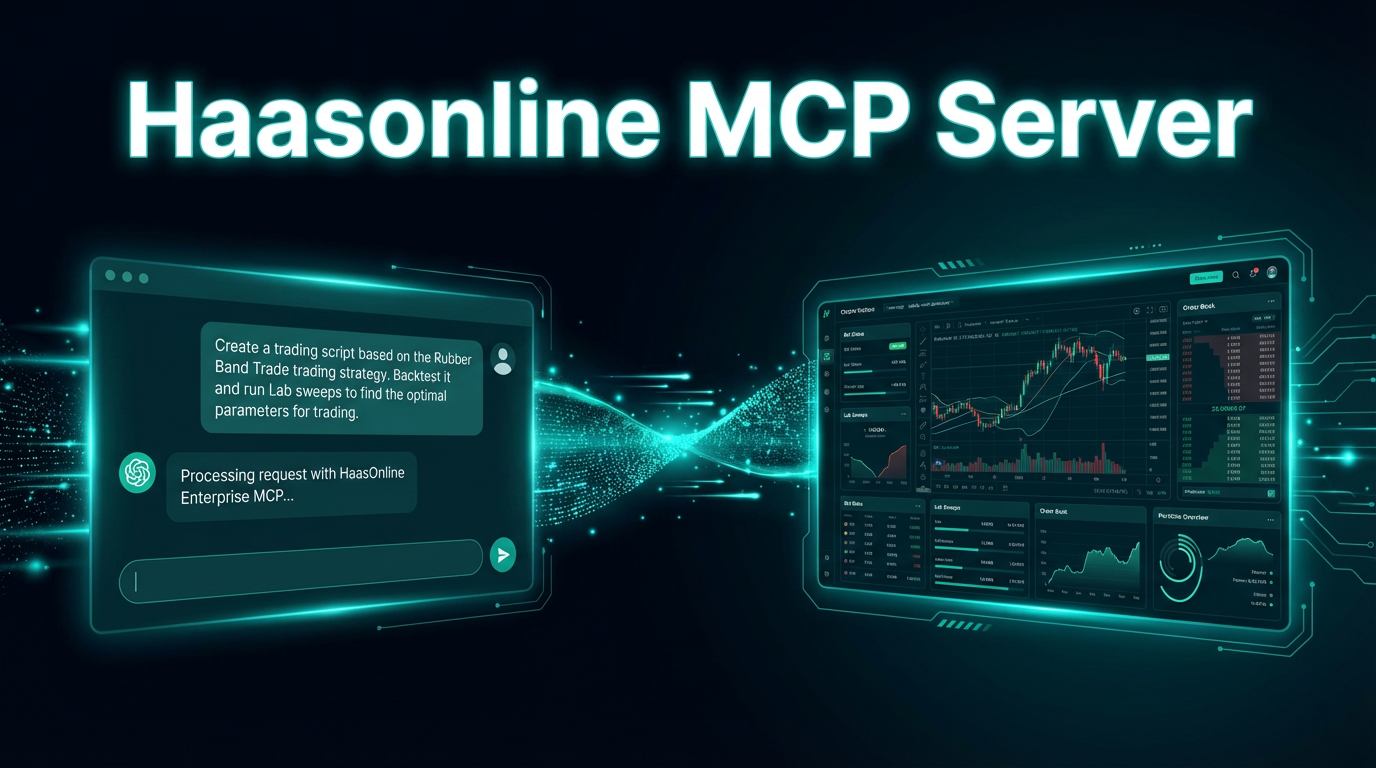
The HaasOnline MCP server is included as a native component within TradeServer Enterprise, designed for straightforward local deployment. The setup process is engineered to be user-friendly, requiring only a few minutes to configure.
- Accessing MCP Settings: Upon updating to the latest release of TradeServer Enterprise, users will find the MCP server options readily available within their TradeServer settings panel. This centralizes management and configuration.
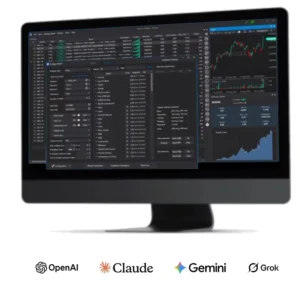
- Enabling and Configuring: The interface allows users to enable the MCP server with a simple toggle. Further configuration options enable users to define specific ports for communication and set API keys or tokens for authentication with their chosen AI assistants. The visual representation provided in the screenshot depicts an intuitive dashboard where these settings can be managed.
- Connecting AI Assistants: Once the MCP server is active, users can configure their AI assistants to connect to it. This typically involves providing the local IP address or hostname of the TradeServer and the designated port, along with any required authentication credentials.
The communication between the AI assistant and the MCP server occurs over a secure local connection. A critical security feature of this implementation is that the AI assistant never directly accesses the user’s exchange credentials. Instead, the MCP server acts as an intermediary, handling all authentication with the exchanges on behalf of the AI. This ensures that sensitive API keys and secrets remain secure within the TradeServer environment, mitigating the risk of exposure to the AI model or its developers.
A comprehensive setup guide is available on the HaasOnline help portal, providing detailed, step-by-step instructions for users to ensure a smooth and secure integration.
Implications for Enterprise Traders: Enhanced Control and Efficiency
The introduction of the MCP server holds particular significance for HaasOnline’s Enterprise clients. These users typically operate more intricate trading setups, managing a larger number of bots, engaging with multiple exchanges, and deploying numerous custom HaasScript strategies. The inherent complexity of such operations can lead to substantial cognitive overhead, making it challenging to maintain oversight and optimize performance across the board.
The ability for an AI assistant to possess live, contextual access to the TradeServer fundamentally alters this dynamic. It transforms the AI from a detached analytical tool into an integrated operational partner, capable of understanding and acting upon the specific intricacies of each user’s trading environment.
Early adopters and beta testers of the MCP integration have identified several key workflows that are proving particularly valuable:
- Proactive Risk Management: AI assistants can monitor market volatility and strategy performance in real-time. If a strategy begins to underperform or market conditions become unfavorable, the AI can automatically adjust risk parameters, reduce position sizes, or even pause the affected bot, preventing significant losses before they occur. For example, an AI could be programmed to automatically reduce trading volume by 50% if the 14-day Average True Range (ATR) for a specific asset exceeds a predefined threshold, mitigating exposure to sudden price swings.
- Automated Strategy Optimization: By analyzing live performance data and market conditions, AI can suggest or even implement real-time adjustments to strategy parameters. This could involve tweaking take-profit levels, stop-loss orders, or entry conditions based on observed market behavior. For instance, an AI might observe that a particular bot is consistently hitting its take-profit target too early in trending markets and suggest increasing the take-profit percentage or adjusting the trailing stop-loss mechanism.
- Intelligent Alerting and Reporting: Beyond simple threshold alerts, AI can provide more nuanced and actionable insights. Instead of just alerting a trader that an RSI is overbought, the AI can contextualize this information by stating, "The RSI for BTC/USDT is currently at 75, and given the current trend strength and your active strategy parameters, a potential pullback is likely. Consider reducing your next buy order size by 20% or setting a tighter stop-loss."
- Streamlined Trade Execution and Management: AI can assist in placing complex order types, managing multiple open positions across different assets, and ensuring that trades align with overall portfolio objectives. This can free up traders from tedious manual execution tasks, allowing them to focus on higher-level strategy development and market analysis. For example, an AI could be tasked with ensuring that the total capital allocated to any single volatile asset does not exceed 5% of the total portfolio value, automatically rebalancing or adjusting trades to maintain this constraint.
The critical advantage here is that the AI operates with direct access to the user’s actual configuration, not hypothetical examples. This ensures that the AI’s responses and actions are specific, actionable, and precisely tailored to the user’s live trading environment, leading to a higher degree of confidence and effectiveness in AI-driven trading operations.
Availability and Future Outlook
The MCP server functionality is available immediately for all active HaasOnline Enterprise licenses. Users running TradeServer Enterprise are encouraged to update to the latest release to access the new MCP options within their settings panel.
For individuals and entities not yet on the Enterprise plan who are interested in exploring the advanced capabilities offered by AI-powered trading automation, HaasOnline provides various pricing tiers. Prospective users can visit the HaasOnline pricing page to compare plans and select the one that best suits their needs. Alternatively, those seeking personalized advice or requiring a deeper understanding of how these features can be applied to their specific trading requirements are invited to contact the HaasOnline sales team.
The integration of the MCP server signifies HaasOnline’s commitment to staying at the forefront of trading technology. By bridging the gap between sophisticated AI assistants and their powerful trading platform, HaasOnline is empowering traders with tools that were once the exclusive domain of institutional players. This move is expected to foster a new wave of innovation in automated trading, where AI plays an increasingly integral and intelligent role in market participation.
The inclusion of the MCP server with every HaasOnline Enterprise license underscores the company’s strategic direction. It signals a clear intent to democratize access to cutting-edge AI integration for professional traders, enabling them to harness the power of AI for more efficient, intelligent, and potentially more profitable trading outcomes.
The HaasOnline Team reiterated their enthusiasm for this development, suggesting that this is just the beginning of a deeper integration between AI and automated trading systems. As AI capabilities continue to evolve, the MCP protocol and similar standards are poised to become essential components of any sophisticated trading infrastructure.