HaasOnline Unveils BitMEX Hedge Mode Support, Empowering Advanced Multi-Strategy Trading Automation

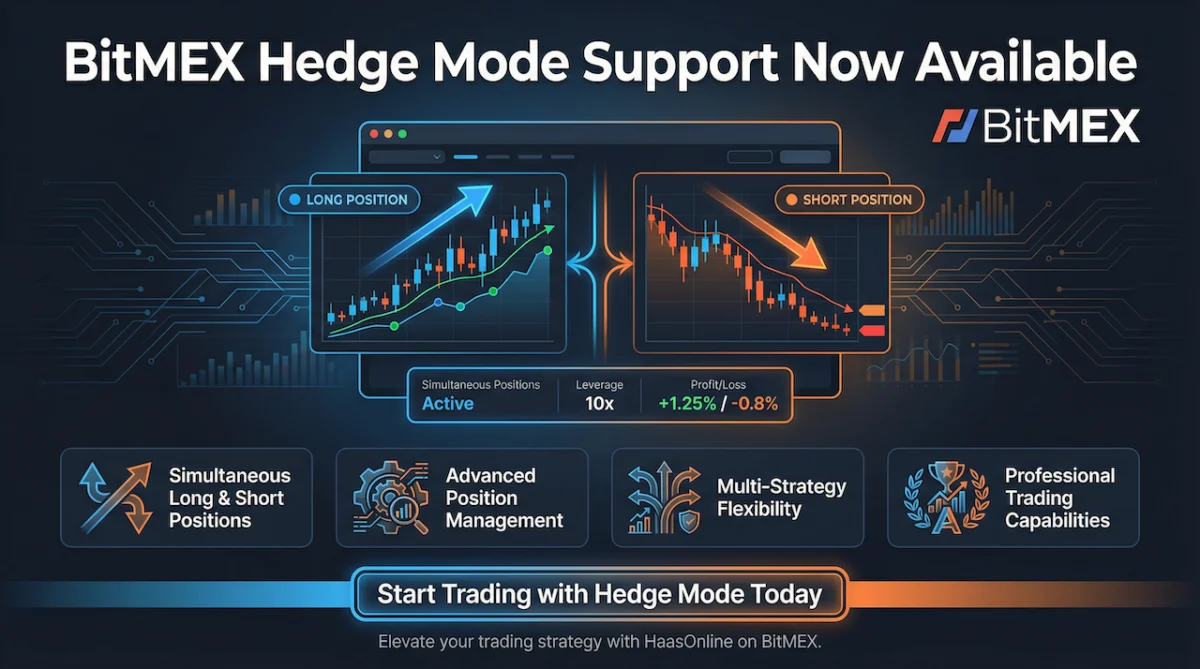
HaasOnline, a leading provider of automated cryptocurrency trading software, has announced full support for BitMEX’s Hedge Mode functionality, a significant development that promises to unlock a new era of sophisticated trading strategies for its users. This integration empowers traders to execute complex multi-strategy positions simultaneously on the same contract within the BitMEX ecosystem, offering unprecedented flexibility and control over their automated trading operations.
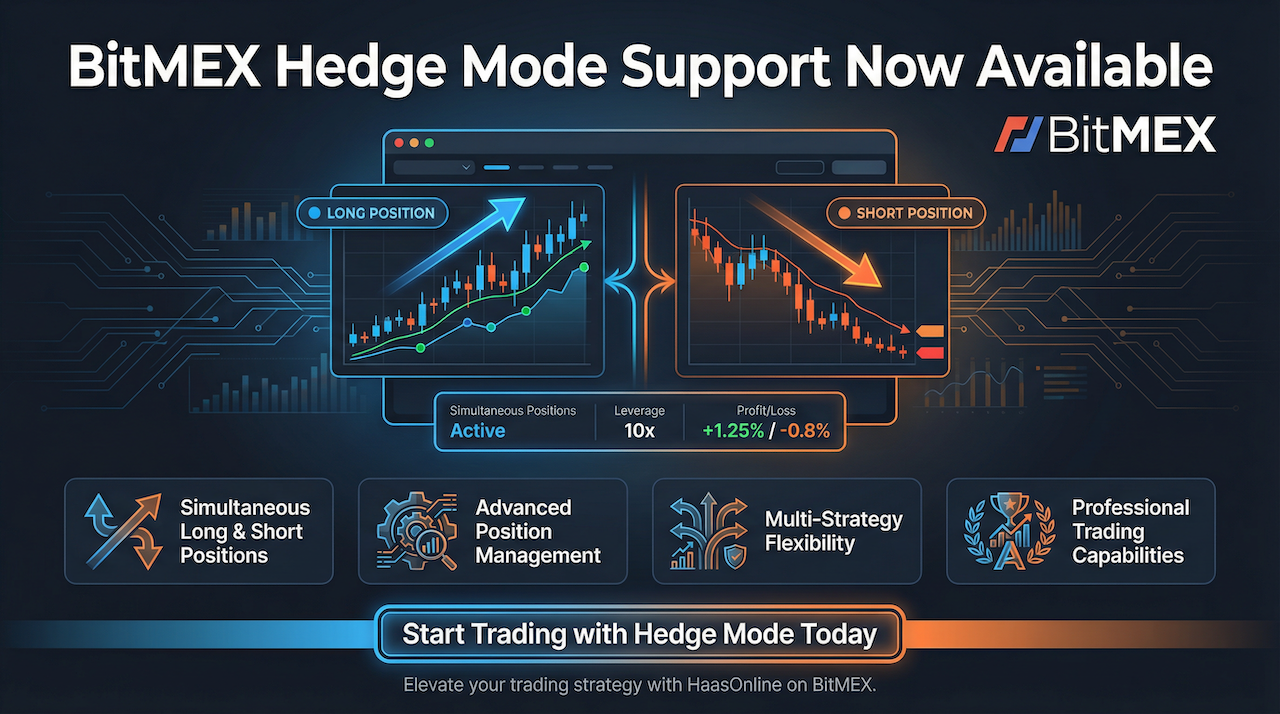
The enhancement allows HaasOnline’s TradeServer platform to leverage BitMEX’s advanced Hedge Mode, enabling automated bots to maintain both long and short positions concurrently on a single contract. This capability moves beyond the limitations of traditional one-way position management, where opening a position in an opposing direction automatically liquidates the existing one. The implications for algorithmic traders are substantial, opening the door to intricate strategies that were previously unfeasible, from dynamic hedging to complex arbitrage opportunities.
It is crucial to underscore that HaasOnline TradeServer operates as a non-custodial trading automation framework. Users are solely responsible for designing, implementing, and managing their trading logic using their personal exchange accounts. This announcement pertains to the technical capabilities of the platform and does not constitute trading advice, strategy recommendations, or financial guidance. All trading decisions and their associated risks remain the responsibility of the individual user.
Understanding BitMEX Hedge Mode: A Paradigm Shift in Position Management
BitMEX Hedge Mode represents a fundamental evolution in how traders can manage their exposure to derivative contracts. Traditionally, exchanges operate in a "one-way" mode, where a trader can hold either a long or a short position on a given contract at any given time. Attempting to open a position in the opposite direction would automatically close out the existing position.
Hedge Mode, conversely, liberates traders from this constraint. With Hedge Mode activated, traders can maintain two distinct positions on the same contract: one long and one short. These positions are treated independently, each possessing its own unique entry price, stop-loss order, and take-profit level. This architectural difference is pivotal for enabling advanced trading methodologies.
The introduction of Hedge Mode by BitMEX in recent years was a strategic move to cater to a growing demand for more nuanced trading strategies, particularly from institutional and sophisticated retail traders. Prior to its widespread adoption, achieving similar dual-positioning often required complex workarounds, such as using separate accounts or different contracts, which introduced additional fees, complexity, and potential for error.
The Strategic Advantages: Why Hedge Mode Matters for Automated Trading
The ability to hold simultaneous long and short positions on the same contract unlocks a spectrum of sophisticated trading strategies that were previously either impossible or prohibitively complex to automate effectively. This capability is particularly valuable for algorithmic traders who rely on precision and speed to capitalize on market inefficiencies.
- Enhanced Risk Management: Traders can implement strategies that hedge against adverse price movements on their primary position. For instance, a trader holding a long-term bullish position can simultaneously initiate a short position to mitigate potential losses during short-term market downturns or periods of high volatility. This allows for the preservation of capital without exiting a conviction trade.
- Multi-Timeframe Strategy Execution: Hedge Mode facilitates the simultaneous operation of bots employing different strategies across various timeframes. A bot could maintain a long position based on daily trends while another bot simultaneously executes a short-term scalping strategy on the same contract, capitalizing on intraday price fluctuations.
- Arbitrage Opportunities: Certain arbitrage strategies, such as those exploiting funding rate differentials, become significantly more accessible. Traders can establish delta-neutral positions (equal long and short exposure) to collect funding payments without taking on directional market risk. This strategy is particularly effective during periods of elevated funding rates.
- Market Neutral Strategies: Traders can construct strategies designed to profit from volatility or other market dynamics rather than outright directional price movements. This could involve strategies that benefit from the spread between long and short positions, or those that capitalize on anticipated price swings.
- Complex Hedging Techniques: Hedge Mode enables more sophisticated hedging protocols. For example, a trader might hold a large long position and use smaller, dynamic short positions to hedge against specific risk events or to lock in profits at predetermined levels.
Contrasting Position Management: Hedge Mode vs. One-Way Mode
A clear understanding of the distinction between Hedge Mode and One-Way Mode is fundamental for designing effective trading strategies within the BitMEX environment.
One-Way Mode (Traditional)
In One-Way Mode, the exchange operates under the principle of a single, dominant position.
- Single Position Limit: A trader can only hold one active position per contract at any given time, either long or short.
- Automatic Closure: Opening a new position in the opposite direction of an existing one will automatically close out the current position at the prevailing market price.
- Simplified Strategy Design: This mode is generally simpler to understand and implement, making it suitable for traders focused on straightforward directional bets or basic risk management.
Hedge Mode (Advanced)
Hedge Mode introduces a dual-positioning capability, offering greater strategic depth.
- Dual Position Capability: Traders can simultaneously hold both a long and a short position on the same contract.
- Independent Position Management: Each long and short position has its own independent entry price, stop-loss, and take-profit levels.
- Enables Complex Strategies: This mode is essential for implementing advanced hedging, arbitrage, and multi-strategy approaches that require simultaneous opposing exposures.
The shift to Hedge Mode represents a significant upgrade for traders seeking to leverage the full potential of BitMEX’s derivatives market.
Seamless Integration: Configuring BitMEX Hedge Mode in HaasOnline TradeServer
HaasOnline TradeServer has streamlined the process of enabling and utilizing BitMEX Hedge Mode, allowing users to configure this advanced feature directly within the platform’s intuitive interface.
To activate Hedge Mode for a specific trading pair on BitMEX, users typically navigate to the exchange connection settings or the bot configuration area within HaasOnline TradeServer. The exact steps may vary slightly depending on the version and specific deployment of TradeServer (e.g., Cloud or Enterprise), but the general process involves:
- Accessing Exchange Settings: Locate the settings for your BitMEX exchange connection within HaasOnline TradeServer.
- Selecting Position Mode: Within the configuration options for BitMEX, identify the setting related to "Position Mode."
- Enabling Hedge Mode: Choose the "Hedge Mode" option from the available choices.
- Saving Changes: Confirm and save the updated settings.
A visual representation often accompanies these instructions, typically showing a user interface element where the "Position Mode" can be togghed between "One-Way" and "Hedge."
Crucial Advisory: It is imperative that users understand the implications of changing position modes. Modifying the position mode affects how all active and future orders interact with existing positions. Before switching to Hedge Mode, traders must carefully review their existing strategies, assess the potential impact on open positions, and ensure they have a comprehensive understanding of how their automated logic will behave in this new mode. Failure to do so could lead to unintended consequences and adverse trading outcomes.
Practical Applications: Hedge Mode Strategy Examples
The following examples illustrate how traders can leverage HaasOnline’s automation capabilities with BitMEX Hedge Mode. These are for educational purposes only and do not constitute trading recommendations. Users are solely responsible for developing, testing, and validating their own trading strategies.
Strategy 1: Long-Term Hold with Short-Term Hedges
This strategy involves maintaining a core long position, built on the conviction of a long-term upward trend identified through daily or weekly chart analysis. Simultaneously, the trader can deploy a separate automated bot to execute short positions. These short positions are designed to act as a hedge against short-term volatility, intraday price corrections, or reactions to news events. This approach allows the trader to protect their primary long-term investment from temporary market downturns without exiting the underlying position, thereby preserving potential long-term gains.
Strategy 2: Dual-Timeframe Trading
This strategy capitalizes on the ability to run distinct trading bots on the same contract, operating on different analytical timeframes. For instance, a trader might configure one bot to follow long-term trends on a 4-hour chart, aiming for significant price movements. Concurrently, another bot can be programmed to execute a mean-reversion strategy on a much shorter timeframe, such as the 15-minute chart, seeking to profit from minor price fluctuations around an average. Hedge Mode ensures that the positions opened by each bot are independent and do not interfere with the other’s operations.
Strategy 3: Funding Rate Arbitrage
A classic application of Hedge Mode is in exploiting funding rate differentials on perpetual swap contracts. Traders can establish a delta-neutral position, meaning they hold an equal amount of long and short exposure on the same contract. The objective is not to profit from price direction but to collect the periodic funding rate payments, which can become substantial during periods of high market sentiment or volatility. By remaining market-neutral, the trader aims to isolate the funding rate income as their primary profit source.
Strategy 4: Volatility Scalping
This strategy involves having a primary directional position that aligns with the trader’s overall market outlook. Alongside this, a secondary bot is deployed to " அதிரடி " (scalp) short-term volatility spikes. When unexpected market turbulence causes sharp price swings, the secondary bot can initiate opportunistic trades, potentially in the opposite direction of the primary position, to capture quick profits from these movements. This can serve as an additional revenue stream or a method to manage the risk exposure of the main directional trade, particularly in sideways or ranging markets.
Optimizing Bot Configuration for Hedge Mode
When employing Hedge Mode with HaasOnline bots, traders should consider specific configuration approaches to maximize effectiveness and manage risk:
- Independent Bot Allocation: Assign distinct bots to manage the long and short sides of a Hedge Mode strategy. This ensures that each position is controlled by its own set of parameters, indicators, and risk management rules.
- Unique Entry/Exit Triggers: Configure unique entry and exit conditions for both the long and short bots. This allows for precise control over when each position is initiated and closed, tailored to the specific objective of that side of the trade.
- Granular Stop-Loss and Take-Profit: Set individual stop-loss and take-profit orders for each independent position. This is a cornerstone of Hedge Mode, allowing for differentiated risk management for the long and short legs of the strategy.
- Position Sizing Logic: Implement distinct position sizing logic for the long and short bots. The size of the hedged position may not be equal, depending on the strategy’s objective (e.g., a directional bias with a smaller hedge).
- Monitoring and Alerting: Configure robust monitoring and alerting systems for both positions. This ensures that traders are immediately notified of significant price movements, stop-loss activations, or other critical events related to either the long or short leg of the strategy.
Navigating the Risks: Essential Considerations for Hedge Mode
While Hedge Mode offers powerful capabilities, it also necessitates a heightened level of discipline in risk management. The ability to hold opposing positions can, if not managed carefully, lead to increased complexity and potential for amplified losses.
- Capital Requirements: Maintaining two positions simultaneously, especially with leverage, requires a greater allocation of capital compared to a single position. Traders must ensure they have sufficient funds to support both legs of their strategy and to meet margin requirements.
- Margin Management: Leverage amplifies both gains and losses. With two active positions, traders must be vigilant about margin levels to avoid liquidation. Understanding how BitMEX calculates margin for Hedge Mode positions is critical.
- Slippage Risk: When opening or closing positions, especially large ones or during volatile periods, slippage (the difference between the expected price and the executed price) can occur. This risk is present for both long and short positions and can impact strategy profitability.
- Complexity and Oversight: The sophisticated nature of Hedge Mode strategies demands thorough understanding and continuous monitoring. Over-complicating strategies or failing to adequately oversee automated execution can lead to errors and unexpected outcomes.
- Transaction Costs: Each trade, whether opening or closing a position, incurs transaction fees. With two active positions, these costs can accumulate more rapidly, impacting the net profitability of a strategy.
Embarking on Your Journey with Hedge Mode
For traders eager to explore the advanced capabilities of BitMEX Hedge Mode through HaasOnline TradeServer, the path forward is clear:
- Acquire HaasOnline TradeServer: Obtain a license for HaasOnline TradeServer, choosing between the Cloud or Enterprise editions based on your operational needs.
- Connect to BitMEX: Establish a secure API connection between your HaasOnline TradeServer instance and your BitMEX exchange account.
- Configure Hedge Mode: Navigate to the exchange settings within TradeServer and enable "Hedge Mode" for your BitMEX connection.
- Design and Deploy Strategies: Develop your multi-strategy trading bots within HaasOnline TradeServer, leveraging the Hedge Mode capability for your desired trading pairs.
- Monitor and Optimize: Continuously monitor the performance of your automated strategies, making adjustments as necessary to optimize profitability and risk management.
About BitMEX: A Pioneer in Digital Asset Derivatives
BitMEX stands as a globally recognized leader in the cryptocurrency derivatives market. Since its inception, the exchange has been at the forefront of innovation, particularly in pioneering perpetual swap contracts. BitMEX offers a comprehensive suite of perpetual and futures contracts across a wide range of digital assets, providing traders with access to high leverage options, deep liquidity, and robust, institutional-grade infrastructure.
Renowned for its advanced trading tools, including sophisticated order types and a focus on security and reliability, BitMEX has cemented its position as a preferred platform for professional traders worldwide. The exchange’s commitment to evolving its product offerings, such as the introduction of Hedge Mode and portfolio margin capabilities, underscores its dedication to serving the sophisticated needs of the derivatives trading community.
Seize the Opportunity: Trade with BitMEX Hedge Mode Today
The integration of BitMEX Hedge Mode support within HaasOnline TradeServer marks a significant milestone for automated cryptocurrency trading. Traders can now unlock a new dimension of strategic possibilities, executing complex multi-strategy positions with greater flexibility and control.
To begin leveraging these advanced capabilities, prospective users are encouraged to create a BitMEX account. Once established, connect your BitMEX account to HaasOnline TradeServer Cloud or Enterprise to deploy sophisticated automated trading strategies that take full advantage of Hedge Mode.
This enhanced functionality is available immediately across all editions of HaasOnline TradeServer. By upgrading your trading automation platform, you can position yourself to capitalize on the advanced position management features that Hedge Mode provides, potentially revolutionizing your approach to algorithmic trading.
Disclaimer: HaasOnline provides trading automation software solutions and does not offer investment advice, trading recommendations, or financial guidance. This article serves solely informational purposes. The software is provided "as-is," without any performance guarantees. All trading activities and associated risks are borne exclusively by the user, who is solely responsible for all trading decisions. No fiduciary relationship is established between HaasOnline and its users. Trading with leverage inherently carries substantial risk and may not be suitable for all investors. Users must possess a thorough understanding of the risks associated with cryptocurrency trading, particularly when utilizing advanced features like Hedge Mode. Past trading performance is not indicative of future results.