The AI Surge Propels Semiconductor ETFs to Record-Breaking Performance in 2026

The year 2026 has unequivocally belonged to the semiconductor sector, with the industry witnessing an unprecedented surge driven by the insatiable demand for Artificial Intelligence (AI) technologies. This boom has translated into spectacular returns for investors, particularly those tracking the performance of the sector through Exchange Traded Funds (ETFs). The Philadelphia Semiconductor Index (SOX) stands as a testament to this phenomenon, having experienced its best quarterly performance on record in the second quarter of 2026, skyrocketing by over 87%. This remarkable ascent underscores the profound impact of AI on chipmakers, their suppliers, and memory companies, reshaping the investment landscape.
The Dominance of AI and its Semiconductor Backbone
The explosive growth in AI capabilities, from sophisticated large language models to advanced machine learning algorithms, has created a voracious appetite for the underlying hardware that powers these innovations. Processors capable of handling complex computations at breakneck speeds, high-bandwidth memory to feed these processors, and specialized AI accelerators have become the critical components of this technological revolution. Consequently, companies at the forefront of semiconductor design and manufacturing have found themselves at the epicenter of this demand wave.
The narrative of 2026 for semiconductors is inextricably linked to the AI revolution. As businesses across various sectors – from cloud computing giants to autonomous vehicle developers and cutting-edge research institutions – race to integrate AI into their operations, the demand for the chips that enable these advancements has skyrocketed. This has led to a virtuous cycle where increased demand fuels innovation, which in turn further bolsters demand.
Tracking the Surge: SMH and SOXX ETFs
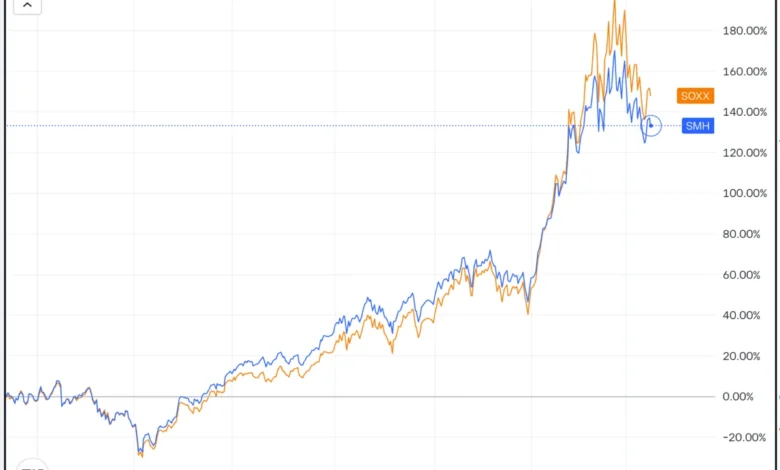
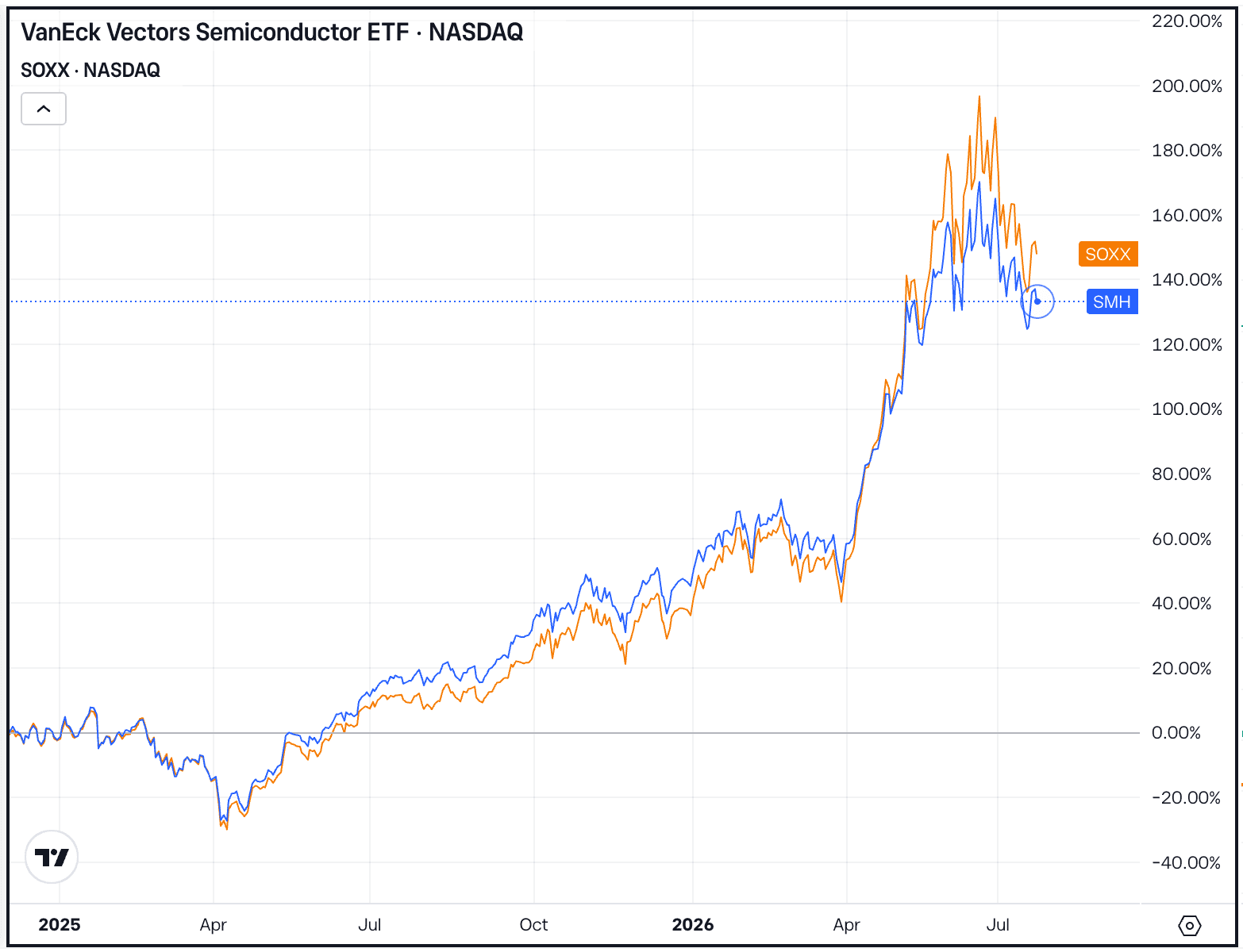
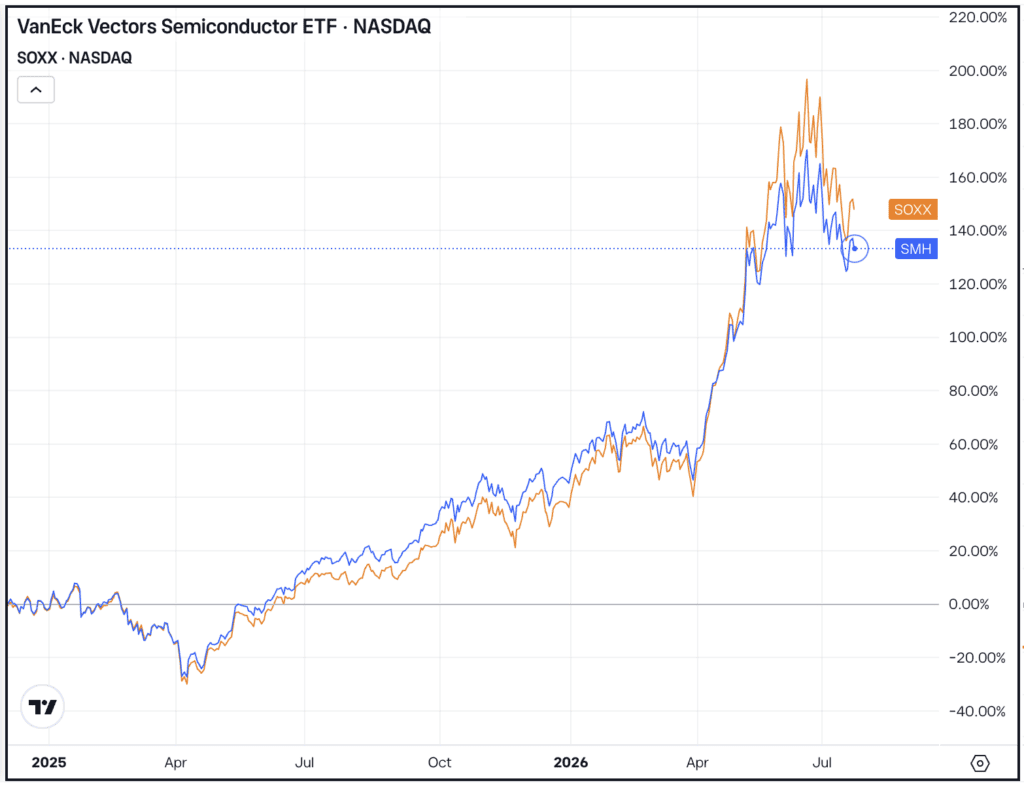
For investors seeking broad exposure to this booming sector, the two largest U.S.-listed semiconductor ETFs, the VanEck Semiconductor ETF (SMH) and the iShares Semiconductor ETF (SOXX), have become focal points. These ETFs, with substantial assets under management – SMH boasting approximately $70.6 billion and SOXX holding around $45.9 billion – offer diversified portfolios of companies involved in the design, manufacturing, and distribution of semiconductors. Their performance over various timeframes paints a compelling picture of the sector’s ascent.
While SOXX has demonstrated a stronger performance over the past year, with a gain of approximately 127% compared to SMH’s 102%, SMH has showcased superior long-term returns. Over the prior three-year periods, SMH surged by 279%, significantly outperforming SOXX’s 227%. The five-year horizon further amplifies this disparity, with SMH delivering a remarkable 362% return against SOXX’s 283%. This divergence in performance is largely attributable to their distinct allocation strategies and the weighting of their constituent holdings.
Allocation Strategies and Their Impact on Performance
The differing weightings within SMH and SOXX explain their varied performance trajectories. SMH’s top five holdings – Nvidia (20.8%), Taiwan Semiconductor Manufacturing Company (TSMC) (9.2%), Broadcom (6.2%), Advanced Micro Devices (AMD) (6%), and Micron Technology (5.3%) – reveal a heavier concentration in some of the industry’s largest and most influential players. Notably, SMH’s allocation to Nvidia, the undisputed leader in AI chip development, is more than double that of SOXX. This significant exposure to Nvidia has been a primary driver of SMH’s stronger long-term returns, as the company’s dominance in the AI space has been a consistent theme for years.
Conversely, SOXX’s top holdings – AMD (8.9%), Nvidia (8.3%), Micron (8.2%), Broadcom (7.4%), and Intel (5.4%) – present a more balanced approach. While still featuring major players like Nvidia and Broadcom, SOXX has also benefited from larger allocations to AMD, Micron, and Intel. These companies have experienced substantial growth in 2026, with each posting year-to-date gains of at least 100%. This more recent strong performance from these components has boosted SOXX’s short-term returns, particularly over the past year. The strategic choices in portfolio construction, therefore, have a direct and measurable impact on investor outcomes within the semiconductor sector.
Analyst Outlook: Continued Optimism Amidst Growth
Despite the remarkable gains already achieved, the analyst community largely maintains an optimistic outlook for both SMH and SOXX. For the SMH ETF, the consensus price target hovers around $749, suggesting an approximate 30% upside potential from current levels. Similarly, analysts have set a price target of roughly $692 for the SOXX ETF, implying about a 27% upside. This continued belief in the sector’s growth prospects, even after a period of significant appreciation, highlights the underlying strength of the AI narrative and its sustained demand for semiconductor innovation.
This analyst consensus suggests that the market still perceives ample room for further appreciation, driven by ongoing technological advancements, expanding AI applications, and continued investment in digital infrastructure. The ability of these companies to innovate and scale their production to meet demand will be critical in realizing these optimistic projections.
Valuation Dynamics in a High-Growth Environment
Examining the valuation of the Semiconductor Index reveals a dynamic landscape, influenced by the inherent volatility of its underlying assets. The index’s valuation has periodically peaked near 45 times forward earnings. Historically, support has often been observed around the 15 times forward earnings mark. However, in recent years, this floor has shifted upwards, settling closer to 18 times forward earnings. This recalibration reflects a higher growth premium being assigned to the sector, a consequence of the sustained and robust demand driven by AI.
Furthermore, recent data indicates a sharp upward revision in earnings expectations for both the current year and the next. This upward revision is a direct consequence of the strong revenue growth and profitability experienced by semiconductor companies, fueled by their critical role in the AI ecosystem. As AI adoption continues to accelerate, the demand for advanced chips is expected to remain robust, supporting these elevated earnings expectations.
Navigating the Risks in the Semiconductor Landscape
While the outlook for semiconductor ETFs remains largely positive, it is crucial for investors to acknowledge and understand the inherent risks associated with this dynamic sector. One of the most significant risks is the heavy dependence on hyperscaler spending from major technology companies such as Microsoft, Amazon, Alphabet, and Meta. These tech giants are the primary architects and deployers of large-scale AI infrastructure, and any slowdown in their AI infrastructure budgets could lead to a rapid deceleration in chip demand and a subsequent recalibration of earnings expectations.
Beyond hyperscaler dependence, the semiconductor industry is also susceptible to a range of other challenges. Export controls and tariffs imposed by governments can disrupt global supply chains and impact market access for certain companies. Supply chain disruptions, as witnessed in recent years, can lead to production delays and increased costs. The elevated valuations, while reflecting strong growth prospects, also mean that the sector is vulnerable to significant pullbacks if growth expectations are not met. Furthermore, the rapid pace of technological change means that market leadership can shift quickly, with companies that fail to innovate potentially losing their competitive edge. Shifting pricing power among manufacturers and their customers also presents a constant dynamic to monitor.
The Long-Term Opportunity Amidst Short-Term Volatility
The current market environment for semiconductors presents a compelling case for long-term investors, but it is not without its complexities. Semiconductors remain a cornerstone of the AI trade, offering significant growth potential. However, the sector’s inherent volatility means it may not be suitable for all investment portfolios, particularly for those with a low tolerance for risk.
While valuations have moderated from prior peaks, they remain elevated compared to historical lows. Sentiment and market leadership can shift rapidly, underscoring the need for diligent research and a nuanced understanding of the sector’s drivers. The long-term opportunity in semiconductors, fueled by the ongoing digital transformation and the pervasive integration of AI, is likely to remain intact. However, investors must carefully weigh the substantial recent gains against the potential for sharp pullbacks, potential shifts in demand, and the high expectations embedded in current valuations. A strategic approach that considers risk management alongside growth potential will be essential for navigating this exciting yet challenging investment landscape.
The continued evolution of AI, the increasing complexity of its applications, and the ongoing demand for more powerful and efficient computing will likely ensure that semiconductors remain a critical and high-growth sector for the foreseeable future. However, investors must remain vigilant, adaptable, and well-informed to capitalize on the opportunities while mitigating the inherent risks.