The Agony and Ecstasy of Stock Picking: Navigating Bull Markets Amidst Significant Drawdowns

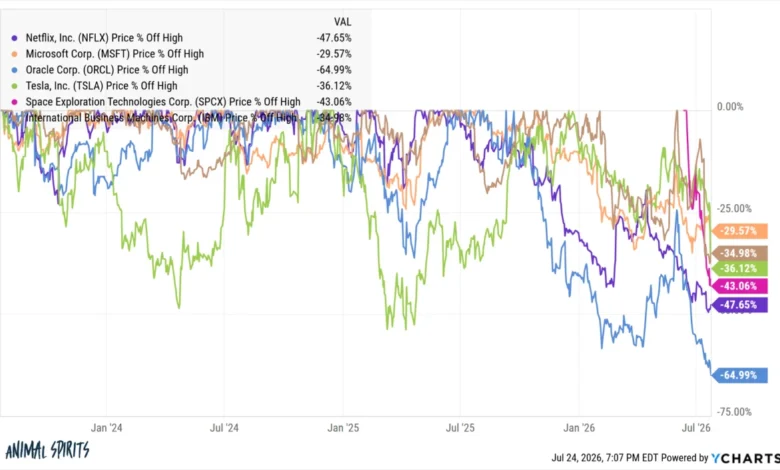
The U.S. stock market, by many broad measures, continues its upward trajectory in mid-2026. The S&P 500, a benchmark for a significant portion of the market, has shown robust performance, with gains approaching 10% year-to-date and nearly 20% over the past twelve months, nearing its all-time highs. However, beneath this seemingly uniform success lies a more complex narrative: a landscape dotted with individual stocks experiencing substantial drawdowns, challenging the notion of universal market prosperity. This dichotomy, where headline indices mask significant underperformance in specific sectors and companies, presents a compelling, albeit often painful, area of analysis for investors and market observers.
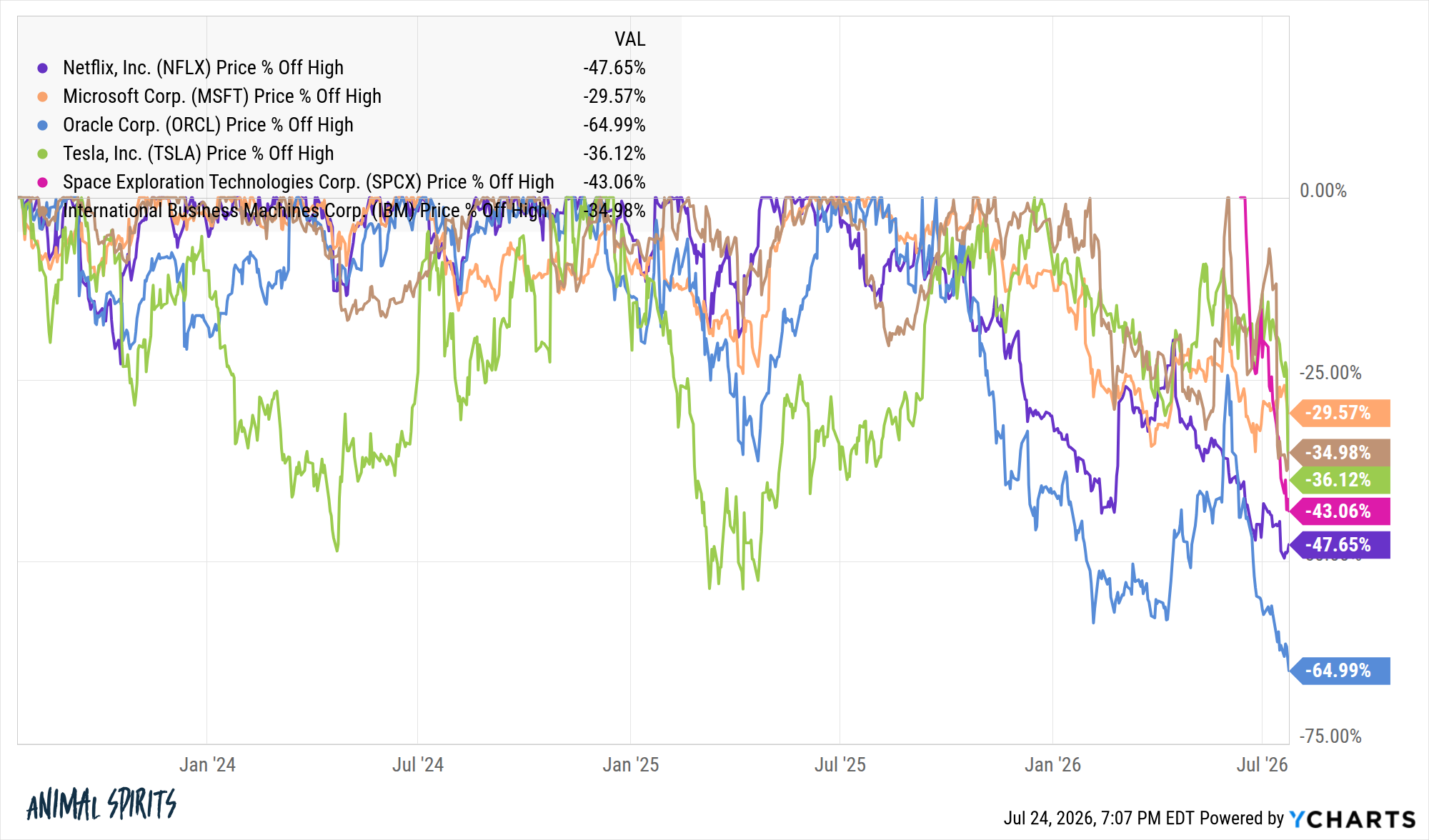
The allure of significant gains in technology stocks has been a dominant theme in recent market cycles. Yet, as the market advances, a closer examination reveals a significant number of prominent, large-capitalization technology firms that are currently facing considerable price depreciation. This phenomenon underscores the inherent volatility and sector-specific dynamics that can exist even within a broader bull market.
Shifting Fortunes in Consumer Brands
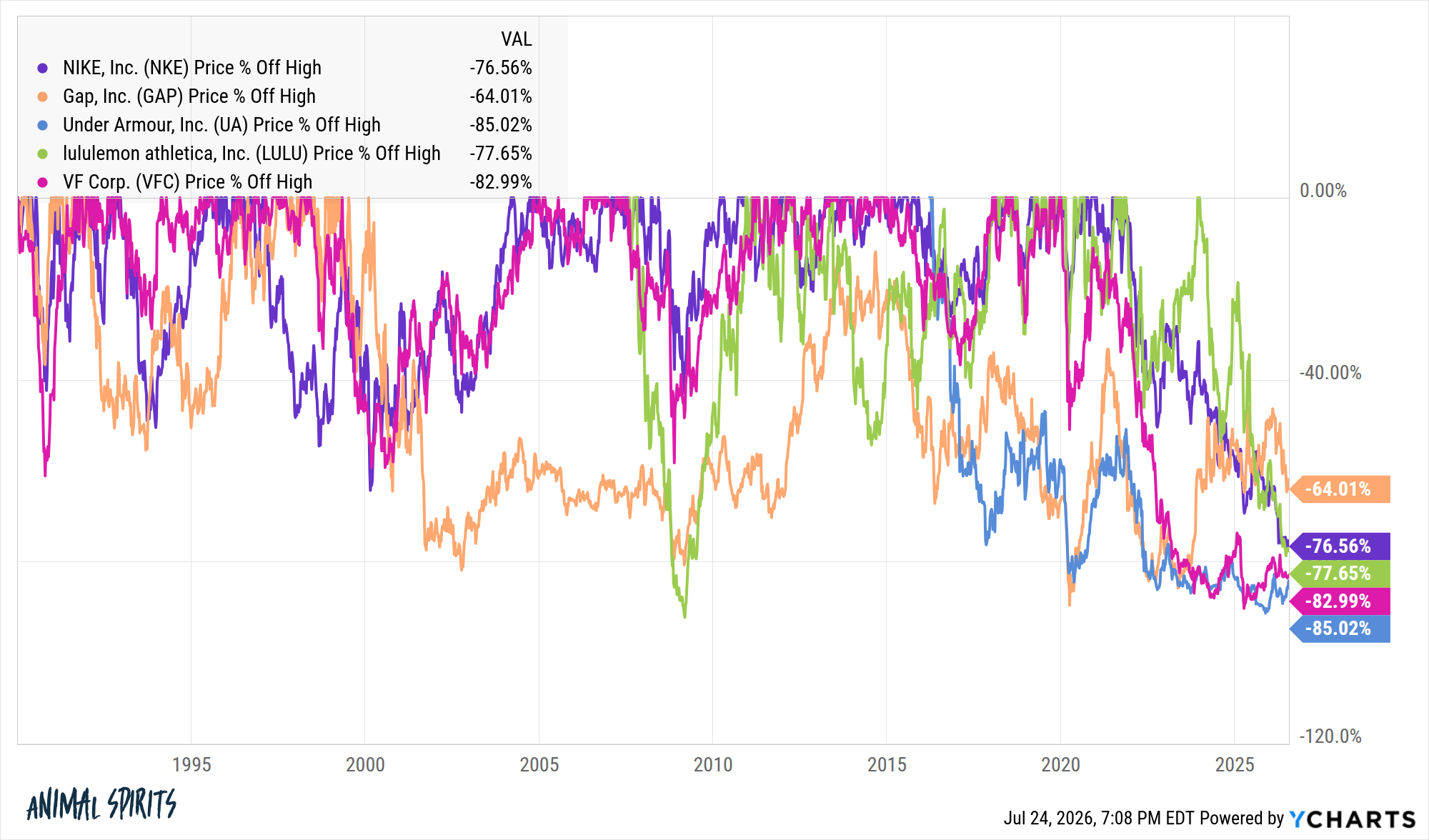
Beyond the tech sector, shifts in consumer preferences and evolving market landscapes are visibly impacting established brands, particularly within the apparel and fashion industries. Companies that were once considered titans of their respective markets are now grappling with significant market revaluations.
For instance, Nike, a brand synonymous with athletic dominance for decades, is experiencing a period of notable stock market underperformance. This situation is difficult to reconcile for those who have witnessed its consistent growth and brand power over many years. The market’s current sentiment suggests a recalibration, driven by changing consumer tastes, strategic missteps, or intensified competition, leading to a scenario where a formerly unassailable brand is being left behind by market momentum.
This trend extends to other apparel giants. The rapid evolution of fashion cycles, coupled with the rise of new competitors and direct-to-consumer models, has created an environment where even legacy brands face the imperative to adapt or risk obsolescence. The market’s pricing of these companies reflects a forward-looking assessment of their ability to navigate these evolving consumer landscapes.
The Lingering Impact of Pandemic Darlings
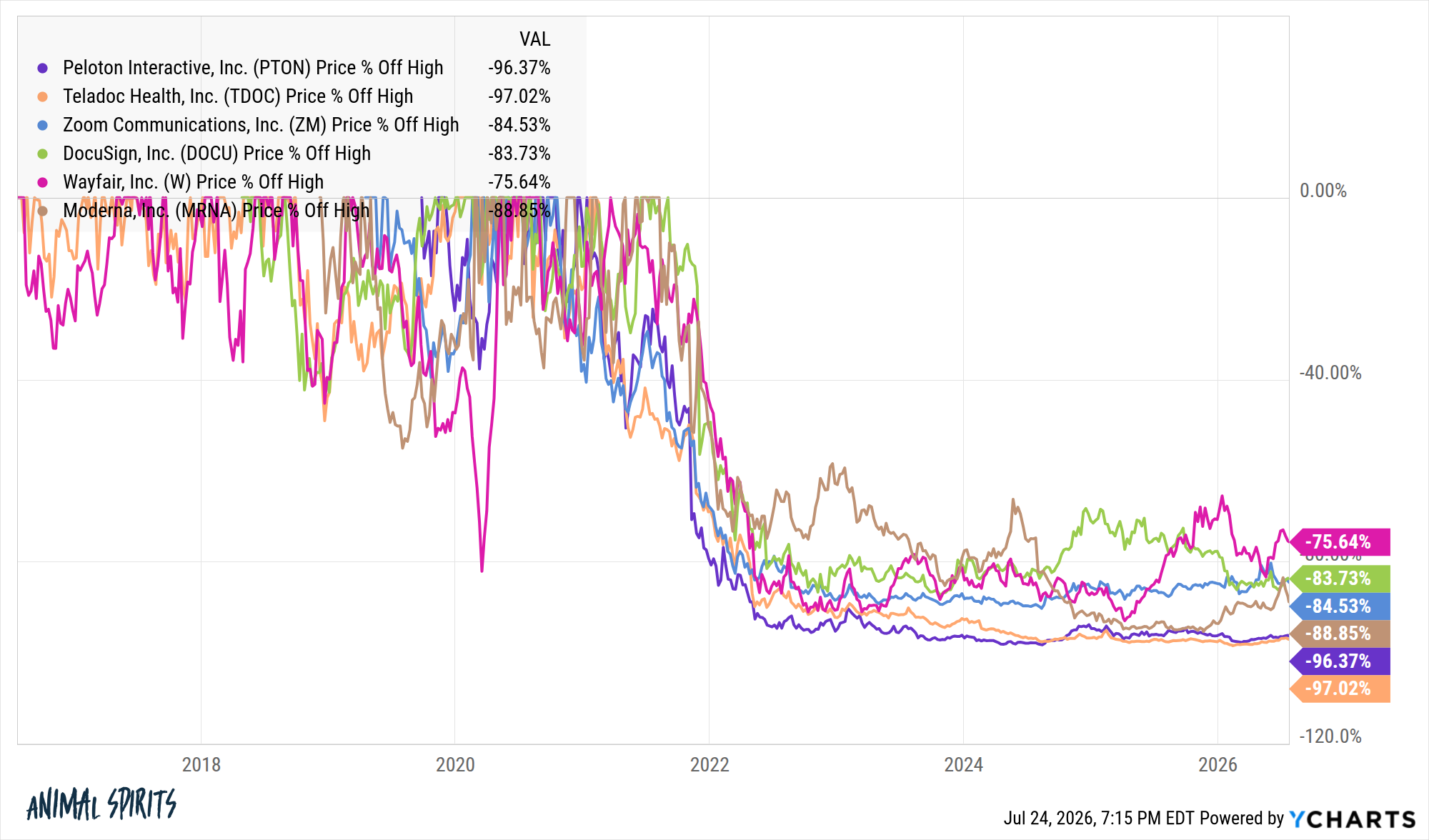
The COVID-19 pandemic catalyzed a surge in demand for certain digital services and at-home solutions, leading to unprecedented valuations for many companies perceived as beneficiaries of these shifts. As the world recalibrates and economies reopen, many of these "pandemic darlings" are now experiencing severe corrections, illustrating the speculative froth that can accumulate during periods of rapid, uncertain change.
Companies that experienced explosive growth during lockdowns, fueled by a temporary surge in demand for remote work tools, virtual fitness, and telehealth services, are now confronting a new reality. As user behaviors normalize and competitive landscapes intensify, the sustainability of their prior growth rates is being questioned by investors. The charts depicting the performance of companies like Peloton, Teladoc Health, Zoom Video Communications, DocuSign, and Moderna, among others, reveal a landscape of "absolute wreckage" for many of these former high-flyers.
This dramatic reversal highlights the difficulty in distinguishing between sustainable long-term trends and temporary pandemic-induced demand. Investors who piled into these names at peak valuations are now facing significant paper losses, a stark reminder of the risks associated with chasing growth in rapidly evolving sectors.
Analyzing the Netflix Phenomenon: A Case Study in Volatility
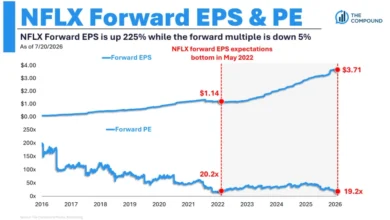
Netflix, a company that fundamentally reshaped the entertainment industry and delivered exceptional returns to early investors, provides a compelling case study in the inherent volatility of even successful growth stories. Over its nearly 25 years as a public company, Netflix has achieved an average annual return of approximately 30%, a remarkable feat. However, this impressive long-term performance has been punctuated by numerous severe drawdowns.
Data indicates that Netflix has experienced drawdowns of 63%, 76%, 44%, 56%, 82%, 76%, and most recently, a decline of around 50%. These figures illustrate that even companies that ultimately achieve significant long-term success can subject investors to periods of extreme pain and uncertainty.
This presents investors with two fundamentally different interpretations of the current situation for Netflix:
- A Compelling Buying Opportunity: Proponents of this view argue that historical patterns suggest Netflix’s stock has a propensity to rebound powerfully after significant declines. Each past crash, from this perspective, has presented a "gift" to patient investors who could weather the storm and wait for the inevitable resurgence. The argument is that the company’s foundational strength and market position will enable it to overcome current challenges and continue its upward trajectory.
- A Fundamental Shift: Conversely, the "this time is different" perspective suggests that Netflix may be transitioning from a hyper-growth phase to a more mature business model. Under this interpretation, the peak growth days for the company might be in the past, and current valuations or future growth prospects may not justify a return to previous highs. This viewpoint emphasizes the changing competitive landscape, the increasing cost of content, and the maturation of the streaming market.
The inherent difficulty in stock picking lies precisely in this ambiguity. Both narratives hold a degree of validity, and an investor’s conviction in one over the other often hinges on their broader market outlook, risk tolerance, and fundamental analysis of the company. The analogy of Netflix having "won the streaming wars" but perhaps at a great cost, similar to Russell Crowe’s character at the end of Gladiator, captures this complex dynamic of achievement coupled with potential long-term consequences.
The Investor’s Dilemma: Bottom-Fishing or Diversification?
The current market environment, characterized by significant divergences between broad market indices and individual stock performance, offers a fertile ground for investors looking to identify potential opportunities. For those inclined towards "bottom-fishing," the allure of purchasing stocks at deeply discounted prices, amidst widespread negative sentiment, can be particularly strong.
Several motivations might drive such an approach:
- Diversification from AI Dominance: Many investors may find themselves overexposed to the Artificial Intelligence (AI) trade, which has been a dominant narrative and driver of market gains. Seeking out undervalued companies in other sectors could be a strategy to diversify risk and capture returns from areas currently out of favor.
- Opportunistic Value Investing: The principle of buying low and selling high is a cornerstone of value investing. When the "streets are full of blood," as the adage goes, there is a perceived opportunity to acquire quality assets at a significant discount to their intrinsic value.
- Psychological Appeal of Contrarianism: For some investors, the act of buying into unpopular assets, defying the prevailing market sentiment, holds a certain psychological appeal. This contrarian approach, if successful, can lead to outsized returns.
However, the adage "never catch a falling knife" also serves as a cautionary tale. Stocks that are experiencing steep declines may continue to fall, and not all companies that experience severe drawdowns will recover to their former highs. The distinction between a temporary setback and a terminal decline is often difficult to discern in real-time.
Broader Market Implications and Future Outlook
The current market dynamic, where a select few mega-cap stocks often drive headline index performance while a broader swath of the market languishes, raises questions about market breadth and sustainability. While broad market indices may reflect overall economic health to some extent, the underlying performance of individual companies provides a more granular view of sector-specific challenges and opportunities.
The continued divergence between leading indices and the performance of many individual stocks suggests a market that is highly selective. Investors are increasingly focused on fundamentals, profitability, and sustainable growth trajectories, particularly in the post-pandemic era. Companies that fail to adapt to evolving consumer demands, technological shifts, or competitive pressures are likely to face continued scrutiny and potential valuation corrections.
For portfolio managers and individual investors, navigating this complex environment requires a robust analytical framework. Understanding the drivers of individual stock performance, assessing the long-term viability of business models, and managing risk through diversification are paramount. The "agony and ecstasy" of stock picking, as characterized by the potential for both immense gains and significant losses, remains a defining characteristic of equity investing. The market’s ability to punish underperformers with severity, even within a generally positive economic backdrop, serves as a perpetual reminder of the importance of due diligence and a disciplined investment approach. The coming months and years will likely reveal which of these currently struggling companies can successfully navigate their challenges and which will become cautionary tales of market cycles and evolving consumer landscapes.