Long-Term Treasury Yields Spike, 1- to 7-Year Yields Explode, Mortgage Rates Hit 7.12%, Bond Market Gets Spooked

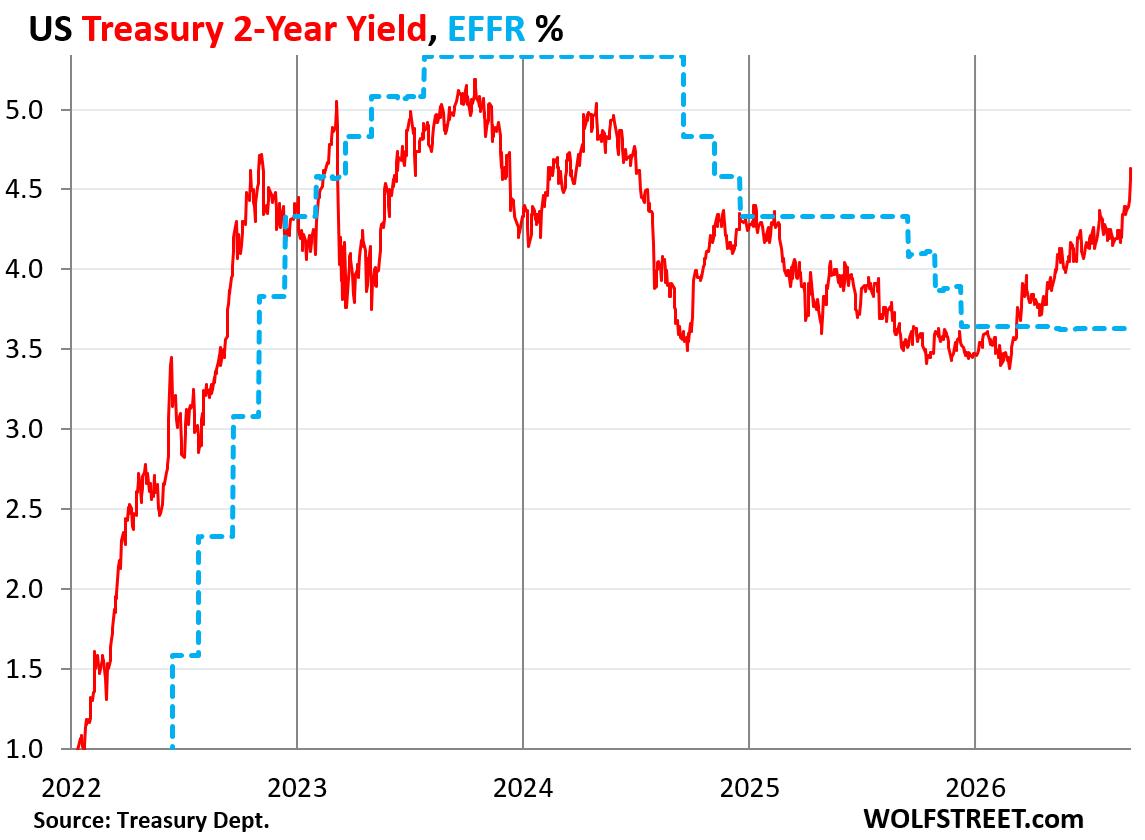
The United States bond market endured a tumultuous four-day stretch this past week, characterized by a broad-based surge in yields that signals deep-seated investor anxiety regarding the macroeconomic horizon. As yields climbed across the entire maturity spectrum, the market began aggressively pricing in a more hawkish path for Federal Reserve policy, driven by a combination of persistent inflation, swelling fiscal deficits, and the compounding impact of massive private-sector debt issuance.
The catalyst for this volatility was a convergence of unfavorable data points. Two critical reports released earlier in the week—the Producer Price Index (PPI) and the Consumer Price Index (CPI)—underscored the stubborn nature of current inflationary pressures. These figures effectively dismantled the narrative that inflation was safely retreating, forcing traders to recalibrate their expectations for interest rates. The market now reflects a growing consensus that the Federal Reserve may be forced into a series of additional rate hikes, a departure from the earlier anticipation of a pivot toward monetary easing.
A Chronology of Market Turbulence
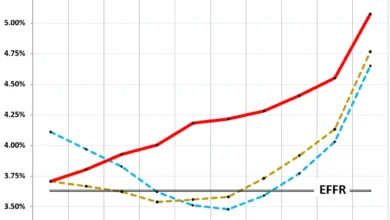
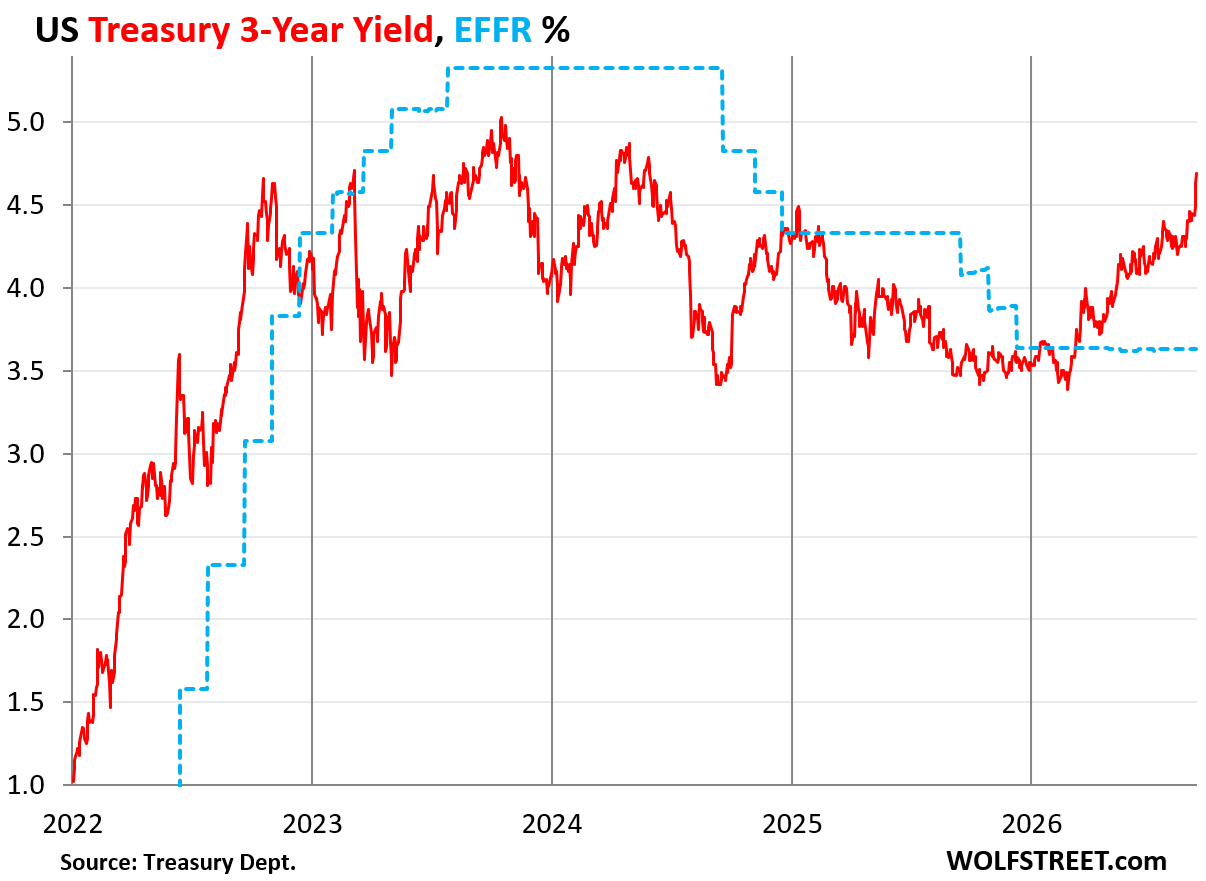
The week’s volatility was punctuated by a series of Treasury auctions that revealed a growing disconnect between government supply and market demand. On Tuesday, the 3-year Treasury note auction required a yield of 4.474% to clear $58 billion in notes. By Friday, that yield had spiked 25 basis points in the secondary market to close at 4.72%. This represents a staggering 108-basis-point increase since late February, a movement indicative of a market that is no longer content to wait for official central bank guidance, but is instead dictating terms based on real-time data.
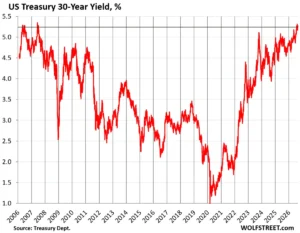
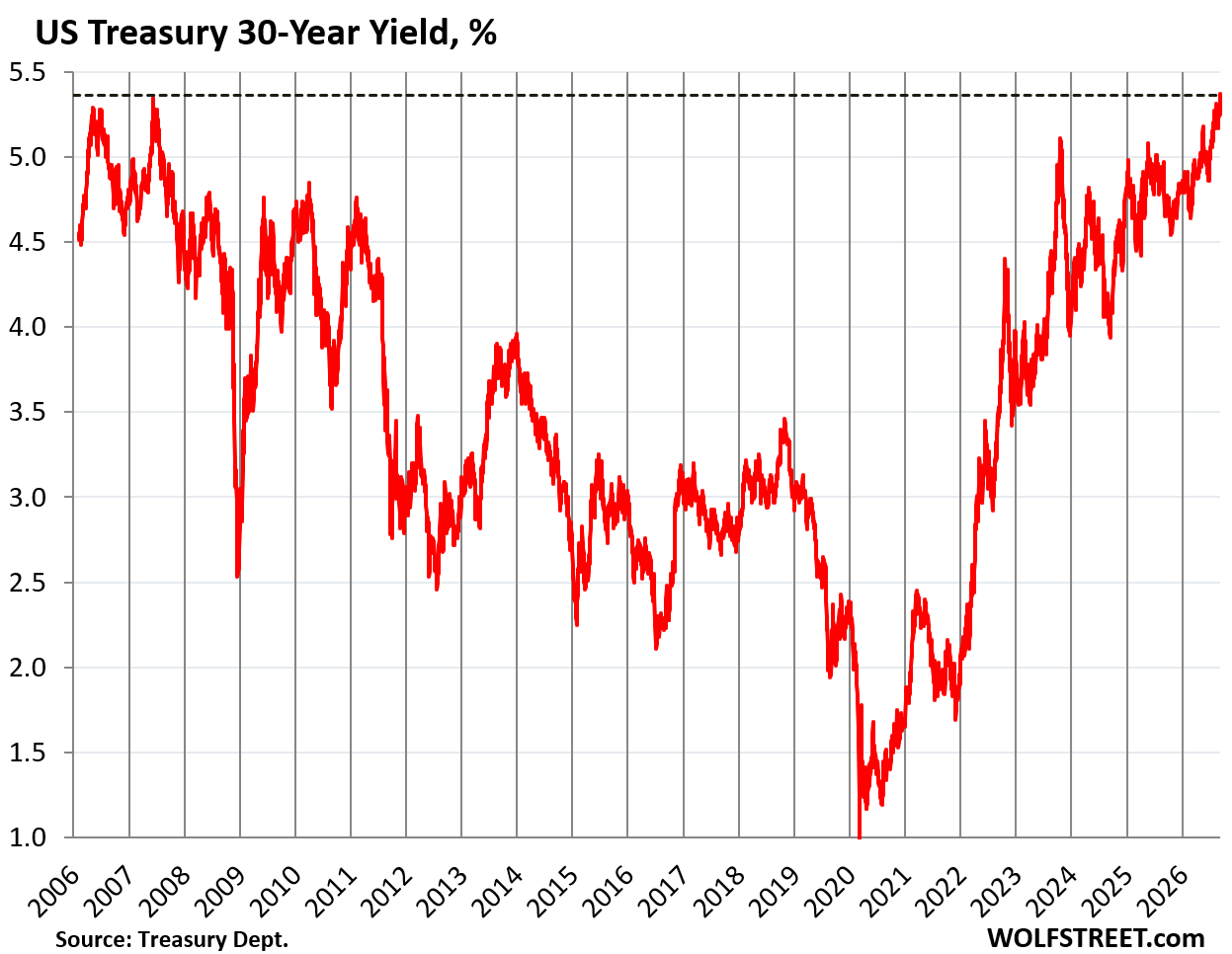
The 10-year Treasury, a benchmark for global borrowing costs, faced similar pressures. Wednesday’s auction saw a yield of 4.834%—the highest level since August 2007—to move $39 billion in debt. By the end of the week, the yield climbed to 4.97%, teetering on the edge of the 5% threshold last breached in late 2023. Meanwhile, the 30-year bond auction on Thursday commanded a yield of 5.308%, marking its highest auction level since August 2001.
The Role of Fiscal Policy and Political Rhetoric
The market’s frustration was further exacerbated by external political factors. Recent promises of significant fiscal stimulus, specifically proposals for direct cash transfers to the public, have been met with skepticism by bond vigilantes. Analysts estimate that such measures could add over $1 trillion to the federal deficit, further ballooning a national debt load that has already surpassed $40 trillion. When political leaders signal policies that prioritize liquidity over fiscal restraint, the bond market—which relies on stability and predictable supply—frequently responds with a sharp increase in required risk premiums.
This political backdrop is compounded by the Treasury’s ongoing attempt to manage the debt profile through buyback auctions. Announced in mid-August, these operations were intended to provide liquidity and manage the maturity profile of government debt. However, the latest execution proved underwhelming. Of the $10.5 billion in debt offered by investors, the government accepted only $5.2 billion, falling short of the $6 billion target. The discrepancy highlights a fundamental structural issue: the government must borrow new funds to buy back old debt, often replacing lower-interest legacy bonds with new issuance at significantly higher current market rates.
The AI Debt Binge and Crowding Out
Beyond government borrowing, the private sector is contributing to the supply-side strain. The massive capital expenditure requirements for AI infrastructure have led to a surge in bond issuance by "hyperscalers"—large technology firms investing billions in data centers and specialized hardware. This "AI debt binge" creates direct competition for capital, forcing Treasury yields to rise to remain attractive to institutional investors who are currently faced with a buffet of high-yielding corporate and sovereign debt options.
Implications for the Mortgage Market
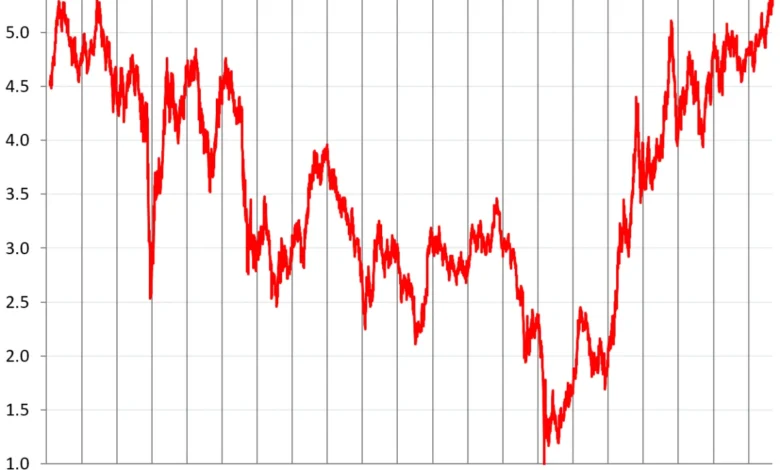
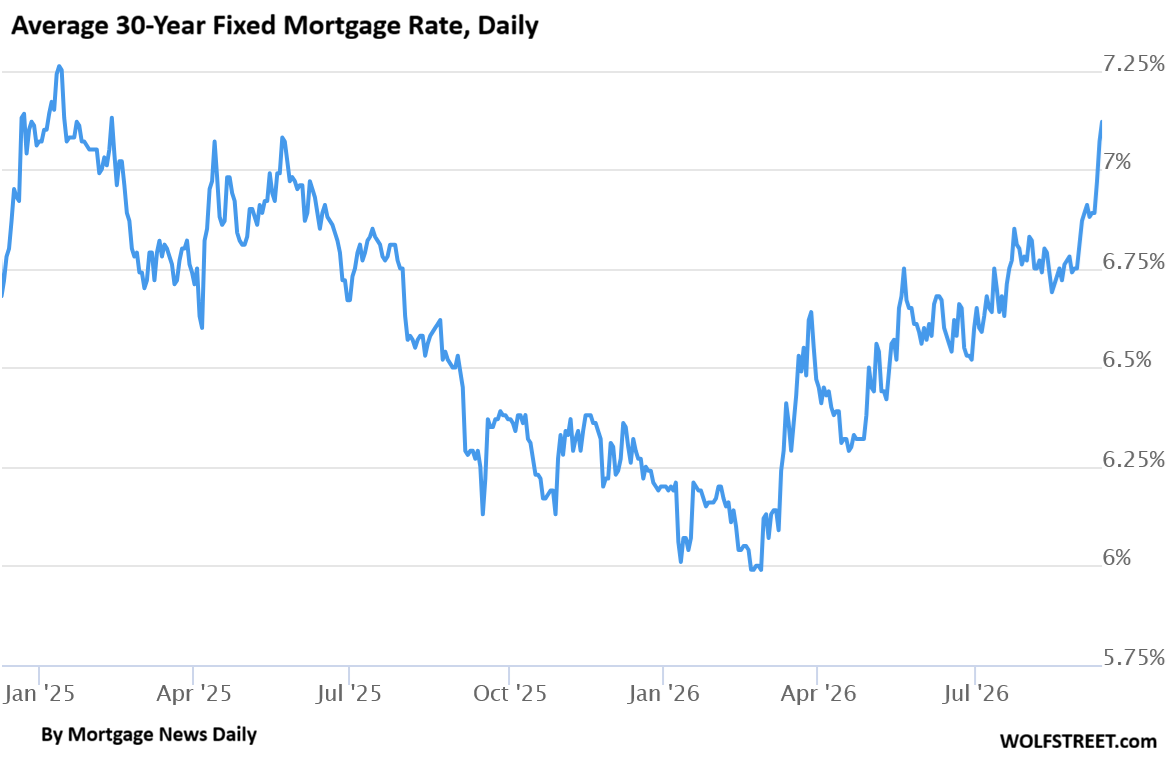
The spillover effect into the mortgage sector has been immediate and severe. Because the 30-year fixed mortgage rate is closely pegged to the 10-year Treasury yield, the recent bond market sell-off has translated into a rapid rise in borrowing costs for homeowners. By Friday, the average 30-year fixed mortgage rate reached 7.12%, marking a 112-basis-point increase since late February.
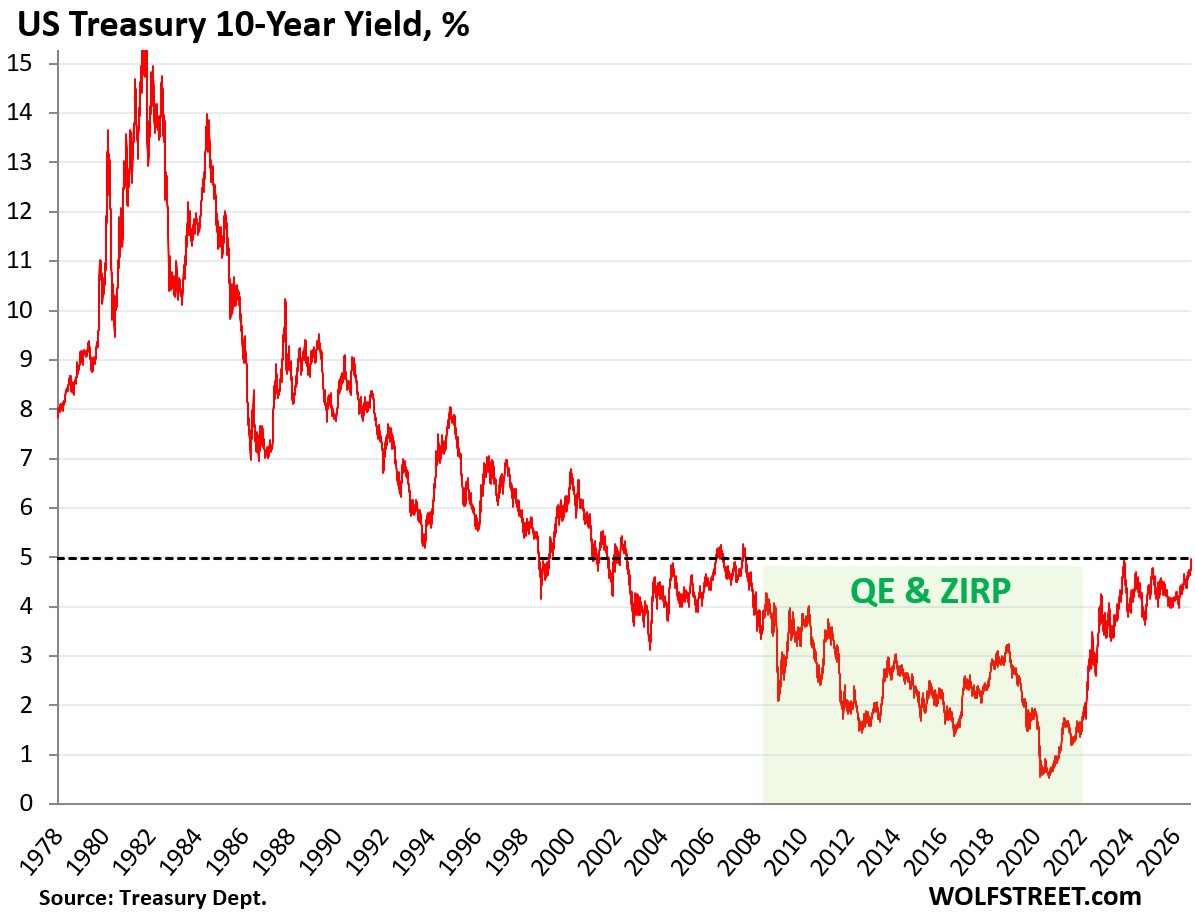
This shift presents a significant challenge to the housing market, which has struggled with low inventory and high prices. As financing costs move further into the 7% range, the barrier to entry for prospective homebuyers rises, potentially cooling demand in an already stagnant market. While current rates remain below the historical highs of the early 1980s, the speed of the ascent is causing acute friction for mortgage originators and prospective buyers alike.
Fed Strategy and the End of Forward Guidance
The current climate suggests a transition in how the Federal Reserve interacts with the financial markets. Under the current leadership, there has been a notable shift away from the reliance on "forward guidance"—the practice of providing explicit signals about future policy moves to manage market expectations. By allowing the bond market to engage in its own price discovery, the Fed is essentially delegating the task of assessing inflation and economic growth to the collective wisdom of thousands of global participants.
This hands-off approach, while volatile, is viewed by some economists as a return to more traditional monetary policy. When the Fed uses forward guidance, it risks manipulating market sentiment to the point where price signals are distorted. The recent spike in yields, therefore, can be interpreted as a necessary normalization. After nearly 14 years of "financial repression"—a period where interest rates were kept artificially low to stimulate growth—the market is now recalibrating to a regime of positive real interest rates.
Broader Economic Outlook
The implications for the broader economy are multifaceted. Higher yields increase the cost of capital for businesses, which can dampen capital expenditure and slow employment growth. For the federal government, the interest burden on the $40 trillion debt pile will continue to rise, necessitating difficult decisions regarding future fiscal budgets.
Furthermore, the "bloodied" state of portfolios that were heavily allocated to long-term bonds in 2020 and 2021 serves as a stark reminder of interest rate risk. Investors who sought the safety of government paper during the pandemic are now grappling with significant mark-to-market losses. Conversely, for those who remained on the sidelines, the current yield environment offers the most attractive risk-adjusted returns in over a decade.
As the economy enters the final quarter of the year, the focus will remain on whether inflation data shows signs of stabilization or if it will continue to trend upward, necessitating a more aggressive posture from the Federal Reserve. The bond market has clearly signaled its lack of confidence in a "soft landing" scenario, and until fiscal and monetary policies provide a clearer path toward stability, volatility is expected to remain the defining characteristic of the credit markets.
In summary, the confluence of persistent inflation, aggressive fiscal expansion, and the cooling of the "free money" era has left the bond market in a state of high alert. Whether this current repricing leads to a long-term adjustment or a temporary overshoot will depend heavily on the upcoming economic data and the ability of policymakers to navigate a landscape where the market, rather than the central bank, is once again in the driver’s seat.