Building a Robust JSON Serialization Pipeline in Python for Complex Machine Learning Systems

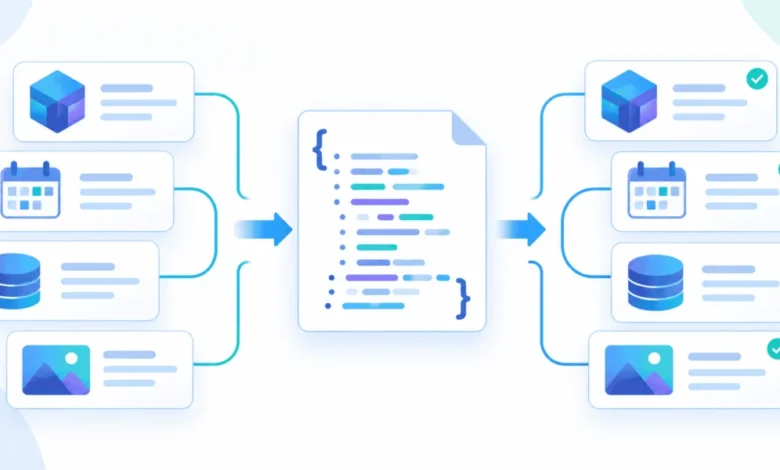
The backbone of modern machine learning engineering is rarely the model architecture itself, but rather the intricate data plumbing required to prepare, move, and validate datasets across distributed systems. As machine learning models transition from research notebooks to production-grade microservices, the requirement for reliable, schema-aware data serialization has become a critical bottleneck. Standard JSON serialization, while universal, lacks the native ability to handle complex Python objects, often leading to runtime failures that jeopardize the integrity of production pipelines.
The Problem of Serialization in Production Environments
In the lifecycle of a machine learning experiment, data must frequently travel between various environments: from local feature engineering scripts to cloud-based training clusters, and finally to inference APIs. During these transitions, developers rely on serialization to convert complex objects into a transportable format. JSON is the industry standard for this task due to its human-readability and cross-language compatibility. However, the standard library’s json module is limited to primitive types such as integers, strings, floats, lists, and dictionaries.
When a developer attempts to serialize more complex structures—such as datetime objects for experiment logging, set objects for feature collections, Path objects for file management, or Enum classes for model configuration—the default encoder triggers a TypeError. This limitation forces developers to manually convert these types before serialization, a process that is error-prone, violates the DRY (Don’t Repeat Yourself) principle, and increases the likelihood of data loss or corruption.
Chronology of Data Plumbing Challenges
The evolution of data pipelines has shifted from monolithic scripts to microservice architectures. A decade ago, serialized data was typically stored in flat files. Today, data is passed across asynchronous message queues, distributed databases, and high-throughput APIs.
- Early Development Phase: Developers often ignore serialization overhead, relying on ad-hoc casting to strings. This works until the system scales and the need for type preservation becomes apparent.
- Intermediate Maturity: Teams begin writing helper functions to manually "clean" data before serialization. This introduces technical debt as every new data type requires a manual update to the serialization logic.
- Production Maturity: Robust, automated serialization pipelines are implemented using custom encoders and object hooks, ensuring that schema evolution does not break downstream processes.
Architecting a Custom Serialization Framework
To address these limitations, engineers must move beyond the default json.dumps() method. The standard approach involves creating a custom encoder class that inherits from json.JSONEncoder. By overriding the default() method, developers can explicitly define how the serializer should handle non-standard types.
For instance, when encountering a datetime object, the encoder should automatically convert it into an ISO 8601 formatted string, wrapping it in a metadata container. This container typically uses a __type__ key to identify the original type, ensuring that the deserialization layer knows exactly how to reconstruct the object. This technique, known as "type tagging," is essential for maintaining high-fidelity data reconstruction.
Implementation Strategy
A robust encoder should be designed to handle four primary categories of non-primitive types:
- Temporal Data: Converting
datetimeortimedeltato ISO strings. - Collection Types: Converting
settolist, with a flag to prevent loss of original type identity. - Filesystem Objects: Converting
Pathobjects to absolute or relative strings. - Domain Models: Extracting values from
Enumclasses to ensure consistency across service boundaries.
By centralizing this logic within a class such as RobustEncoder, the serialization logic becomes a reusable component, drastically reducing the surface area for bugs.
The Role of Object Hooks in Deserialization
While the encoder manages the outbound flow, the inbound flow requires an object_hook. This is a function passed to json.loads() that intercepts every dictionary as it is parsed from the JSON string. If the dictionary contains the __type__ tag, the object_hook performs a reverse operation—casting the string back into a datetime, set, or Path object.
This layer also serves as a critical security and stability boundary. In production, malformed data is an inevitability. A robust decoder should wrap reconstruction attempts in try-except blocks. If an object fails to deserialize—perhaps due to a corrupted timestamp or an incompatible path—the system should log the warning and either return the raw data or a fallback value, rather than allowing an unhandled exception to crash the entire ingestion pipeline.
Managing Schema Migrations and System Evolution
Perhaps the greatest challenge in long-term machine learning operations (MLOps) is schema migration. A model trained in January might produce configuration files with a specific set of parameters, while a model deployed in June might require a new set of hyperparameters, such as a learning_rate or dropout_ratio.
If the deserialization pipeline is too rigid, it will fail when it encounters old JSON files that do not match the current expected structure. To mitigate this, engineers should implement a "Factory Function" pattern for configuration loading. This function performs three essential steps:
- Deserialization: Using the
object_hookto restore Python objects. - Schema Validation and Defaulting: Using the
.get()method to check for missing keys and injecting default values for deprecated or newly added parameters. - Sanitization: Removing legacy fields that are no longer supported by the current model architecture.
By decoupling the storage format from the internal object state, organizations can ensure that their systems remain backward compatible, allowing for seamless updates to production pipelines without requiring mass migration of existing configuration files.
Implications for Data Integrity and Pipeline Efficiency
The move toward robust serialization has significant implications for data integrity. In automated machine learning (AutoML) workflows, configuration files often act as the "source of truth" for training runs. If a set of features is accidentally converted to a list and then back to a list upon loading, the model may fail to perform set-based operations (like membership testing) during runtime, leading to silent failures or incorrect predictions.
Furthermore, by automating the handling of Path objects, teams can ensure that their code is environment-agnostic. A path defined on a local Windows machine can be serialized and subsequently deserialized on a Linux-based cloud server, provided the code handles the path conversion logically.
Industry Best Practices and Recommendations
Leading software engineering teams at major technology firms have largely converged on these patterns. While libraries such as pydantic or marshmallow offer sophisticated schema validation, understanding the underlying mechanism of custom json encoders is foundational.
For developers building high-performance machine learning pipelines, the following practices are recommended:
- Fail-Soft Policies: Always include logging for failed deserializations. A failed configuration load should rarely be a fatal error for an entire system; rather, it should trigger a fallback to safe, default parameters.
- Versioning Schemas: Include a
schema_versionfield in all serialized JSON files. This allows the decoder to choose the correct migration logic for older versions. - Testing Serialization: Treat the serialization/deserialization logic as part of the core business logic. Include unit tests that verify that
obj == deserialize(serialize(obj))for all custom types.
Conclusion
The transition from a prototype script to a production-ready system is defined by the resilience of its data pipeline. By implementing custom JSON encoders, utilizing object hooks for type reconstruction, and building flexible schema migration factories, engineers can create a robust infrastructure capable of handling the complexities of modern machine learning. This approach not only prevents common runtime errors but also provides the flexibility required for the rapid iteration cycles inherent in data science, ultimately leading to more stable and maintainable AI applications. As the field continues to mature, the focus on these "plumbing" tasks will remain a primary differentiator between reliable, high-performance systems and those plagued by constant, avoidable downtime.