Apple Issues Urgent Security Updates to Patch Actively Exploited CoreGraphics Zero-Day Vulnerability Affecting Legacy Operating Systems

Apple has rolled out emergency security updates to remediate a critical vulnerability residing in legacy versions of its iOS, iPadOS, and macOS software ecosystems. Identified under the tracking identifier CVE-2026-86950, the flaw has reportedly been weaponized in highly sophisticated, targeted digital intrusions aimed at specific high-profile individuals. The disclosure underscores the persistent threat landscape targeting older device architectures and highlights the ongoing cat-and-mouse game between threat actors and platform security engineers.
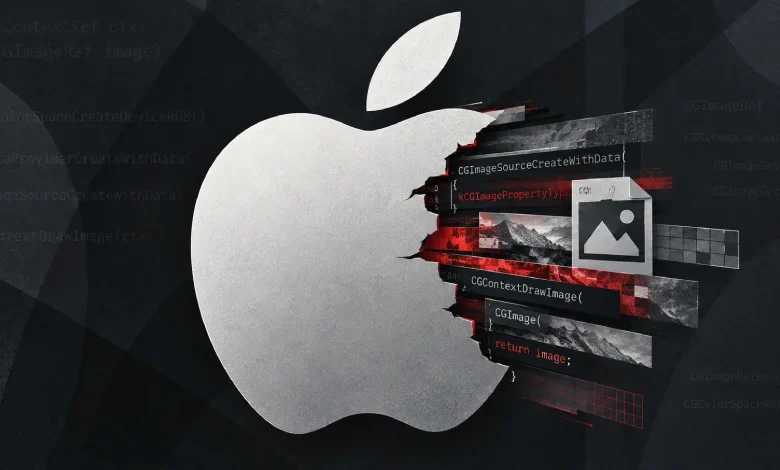
The core of the vulnerability lies within the CoreGraphics framework, a fundamental graphics rendering engine deeply integrated across Apple’s software stack. Specifically characterized as an out-of-bounds write flaw, CVE-2026-86950 can allow an attacker to execute arbitrary code on a compromised system simply by tricking a user into opening or processing a maliciously crafted file. Because CoreGraphics handles essential visual elements, document rendering, and image processing, vulnerabilities in this component present an exceptionally wide attack surface for malicious actors seeking deep system persistence.
Anatomy of the CoreGraphics Flaw and the Mechanics of Out-of-Bounds Writes
To understand the severity of CVE-2026-86950, one must examine the technical mechanics of an out-of-bounds write vulnerability. In software engineering, memory buffers are allocated with strict boundaries to store specific amounts of data. When an application fails to perform rigorous validation checks on the size of incoming data before writing it to memory, a malicious payload can overflow these boundaries, overwriting adjacent memory spaces.
In the context of Apple’s CoreGraphics, the vulnerability manifests when handling files that contain corrupted or maliciously structured graphical instructions. When the system attempts to parse these instructions without adequate bounds checking, the memory corruption can be leveraged by an attacker to overwrite critical system pointers. This manipulation ultimately grants the attacker the ability to execute arbitrary code within the context of the application or, in more severe cases, gain broader privileges on the host device.
Security researchers note that graphics rendering engines are historically lucrative targets for exploitation. Because these components must parse complex, highly variable file formats—such as PDFs, JPEGs, and vector graphics—they inherently process untrusted data from external sources. If an attacker can successfully deliver a weaponized file via messaging applications, email, or compromised websites, the rendering engine’s automatic processing of that file can trigger the vulnerability without requiring any active interaction beyond opening the file.
Discovery and Attribution to Meta Product Security
The discovery of CVE-2026-86950 is credited to the Product Security team at Meta, who identified the zero-day flaw during internal threat hunting and telemetry analysis. Meta’s security researchers flagged the anomaly and responsibly disclosed the technical details to Apple, enabling the Cupertino-based tech giant to initiate emergency patch development.
While Apple has officially acknowledged the existence of the vulnerability and its exploitation in the wild, the company has remained tight-lipped regarding the specific identities of the threat actors or the precise scope of the targeted campaigns. In its advisory, Apple stated that the issue was addressed through significantly improved bounds checking within the affected CoreGraphics libraries. However, executives and public relations representatives have declined to comment on whether the attacks bore the hallmarks of state-sponsored Advanced Persistent Threat (APT) groups or commercial spyware vendors.
Historically, zero-day vulnerabilities affecting core rendering components of mobile and desktop operating systems are frequently utilized by sophisticated mercenary spyware firms. These entities develop bespoke exploit chains—often referred to as click-free or zero-click exploits—to covertly infiltrate the devices of journalists, dissidents, political figures, and human rights activists. The involvement of Meta’s security apparatus in uncovering the bug further suggests that the exploitation vector may have intersected with social media platforms, messaging vectors, or enterprise communication channels monitored by large technology conglomerates.
Chronology of Recent Apple Zero-Day Exploits
The disclosure of CVE-2026-86950 is part of a broader, ongoing trend of sophisticated zero-day exploitation targeting Apple ecosystems. Software architectures as complex as iOS, iPadOS, and macOS inevitably contain residual vulnerabilities, which malicious actors continuously probe for weaknesses. A review of Apple’s recent security bulletins reveals a persistent cadence of emergency patches deployed to mitigate actively exploited flaws.

Earlier this year in February, Apple was forced to issue an out-of-band security advisory to patch a severe memory corruption vulnerability in dyld, the dynamic linker for macOS and iOS. Tracked as CVE-2026-20700 with a CVSS score of 7.8, that particular flaw was likewise weaponized in highly targeted cyber attacks before a patch could be disseminated to the public. The dyld vulnerability allowed malicious actors to manipulate how libraries were loaded into memory, facilitating unauthorized code execution and privilege escalation.
When mapped across a timeline, these recurring incidents illustrate that threat actors frequently pivot between different subsystems of the operating system. While one campaign may leverage dynamic linkers to subvert system integrity, another—such as the current incident—exploits graphics rendering pipelines like CoreGraphics. This diversity in attack vectors forces security teams to continuously audit disparate components of the OS, moving far beyond traditional perimeter defenses to harden internal application programming interfaces (APIs) and system daemons.
The Broader Implications for Legacy Software Support
One of the most notable aspects of the CVE-2026-86950 advisory is its specific impact on older versions of Apple’s operating systems—specifically noting that the targeted individuals were operating on software versions preceding iOS 27. This detail highlights a critical and ongoing challenge in consumer and enterprise cybersecurity: the security posture of legacy devices.
As technology companies release new major iterations of their operating systems annually, older hardware inevitably reaches the end of its official feature and security support lifecycle. However, millions of users continue to operate legacy devices due to hardware incompatibility, enterprise software dependencies, or personal preference. When a zero-day vulnerability is discovered to affect these older environments, vendors face a complex engineering and operational dilemma.
In many instances, architectural changes implemented in modern operating systems make it technically difficult or impossible to backport security patches to older, legacy codebases. Consequently, users running older software versions may be left permanently exposed unless the vendor makes an exception for critical, actively exploited zero-days. Apple’s decision to issue updates for these legacy versions underscores the severity of the threat posed by CVE-2026-86950, signaling that the attacks were deemed dangerous enough to warrant extraordinary remediation efforts outside the standard support window.
Industry Reaction and Enterprise Risk Management
Cybersecurity analysts and enterprise risk management professionals have responded to the disclosure of CVE-2026-86950 with renewed calls for rigorous endpoint monitoring and aggressive patch management strategies. While consumer devices often receive automated updates, enterprise device fleets—such as those managed via Mobile Device Management (MDM) platforms—require systematic oversight to ensure that zero-day patches are deployed swiftly before threat actors can weaponize public disclosures into widespread automated attacks.
Furthermore, the involvement of Meta Product Security in the discovery phase highlights the collaborative nature of modern threat intelligence. Major technology enterprises frequently share threat telemetry and vulnerability research to preemptively neutralize campaigns that threaten the broader digital ecosystem. Security experts emphasize that as threat actors become increasingly sophisticated—leveraging memory corruption and out-of-bounds write flaws to bypass modern exploit mitigations like Pointer Authentication (PAC) and Data Execution Prevention (DEP)—defenders must rely on cross-industry intelligence sharing and deep binary analysis.
Conclusion and Recommended Remediation Steps
The revelation of CVE-2026-86950 serves as a stark reminder that no operating system is impervious to sophisticated, targeted exploitation. Even as Apple continues to harden its modern software architectures with advanced security sandboxing and memory safety features, legacy systems remain attractive targets for malicious actors seeking paths of least resistance.
All organizations and individuals utilizing legacy versions of Apple operating systems impacted by this flaw are strongly advised to apply the latest security updates immediately. Administrators managing fleet devices via MDM solutions should verify that their endpoints have successfully processed the patches to mitigate the risk of arbitrary code execution and potential data compromise. As the threat landscape continues to evolve, maintaining an aggressive posture toward patch management and zero-day defense remains the single most effective countermeasure against advanced cyber espionage and targeted attacks.